

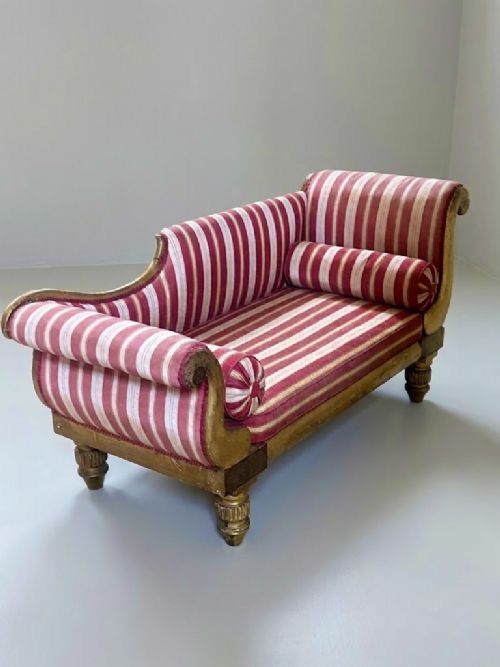
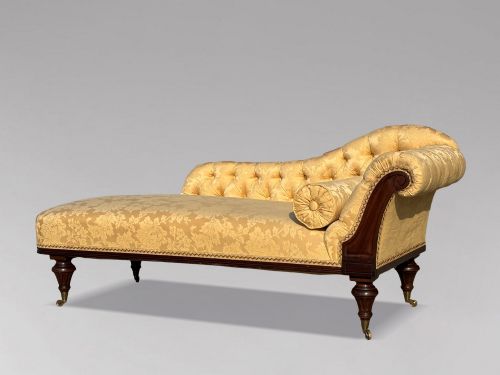
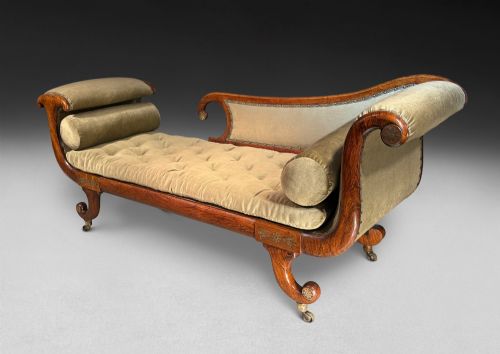
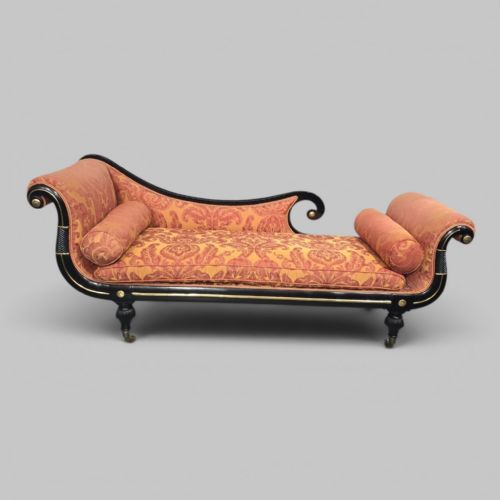



Regency Period Daybed
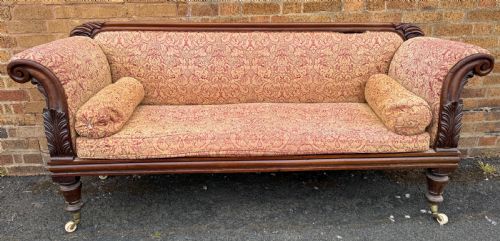
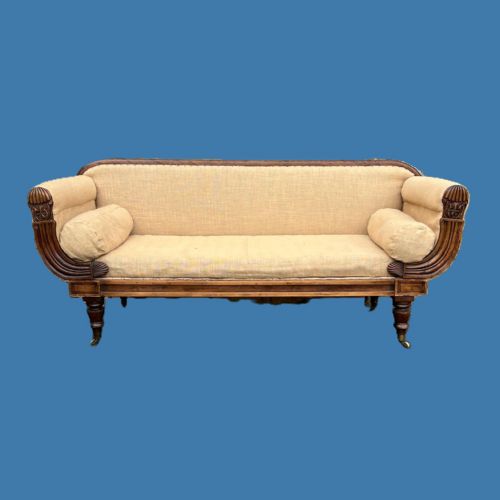
These regency period daybed examples are striking early nineteenth-century seating forms designed for reclining, bringing undeniable architectural elegance to a room.
Regency Period Daybed
When you search for a regency period daybed, you encounter sophisticated forms spanning chaise longues, scroll-end sofas, and daybeds. Most examples belong strictly to the Regency, George IV, and William IV eras of the nineteenth century.
The versions most frequently met on this page include mahogany and simulated rosewood frames, often featuring graceful scroll ends. These pieces function historically as daybeds, settees, and chaise longues intended for country house halls and principal rooms.
How they were made
Cabinet makers utilised solid and veneered timbers including mahogany and ebonised wood, alongside simulated rosewood finishes. Frames frequently incorporate intricate brass inlay and carved wooden details executed by hand.
Upholstery forms an essential component of construction, utilising traditional materials such as velvet, damask fabric, and antique striped silk. These textiles are secured to generous frames designed for both display and extended reclining.
Regency Period Daybed Retail Price Guide 2026
Typical asking prices for regency period daybed among the pieces listed under this phrase on Sellingantiques today, from the lower quarter to the upper quarter. They describe what is for sale here now, not the wider market.
Upholstery materials recorded across the inventory include silk, damask, and velvet, paired with ebonised wood and carved framing.
What varies in quality
The distinction between standard examples and superior pieces rests in the sharpness of the timber carving and the precision of the brass inlay work. Finer frames display deeper figuration in the mahogany and more fluid curves along the scroll ends.
Quality also resides in the integrity of the structural joinery and the authenticity of the secondary timbers used beneath the polished surfaces. Selection of textiles, from heavy damask to fine silk, reflects the original status of the seating.
The Regency Period Daybed Glossary
- Regency
- The period in British history spanning the early nineteenth century, characterised by classical revival styles and refined furniture design.
- Chaise Longue
- An upholstered long chair for reclining, combining the elements of a chair and a daybed.
- Simulated Rosewood
- A painted or stained wood finish designed to imitate the appearance of genuine rosewood through graining techniques.
- Scroll-End
- A furniture terminal curving outward in a scroll shape, frequently seen on arms and ends of nineteenth-century sofas.
- Damask Fabric
- A reversible figured fabric traditionally woven on a jacquard loom with patterns visible on both sides.
Regency Period Daybed: Frequently Asked Questions
What is a regency period daybed?
A regency period daybed is an early nineteenth-century seating form designed for reclining, typically featuring a single raised scroll end and open framework.
These pieces combine functional resting surfaces with the classical architectural ornamentation characteristic of the Regency and George IV eras.
How do I identify a daybed period?
Period identification relies on observing specific construction traits, timber selections, and stylistic motifs associated with the early nineteenth century.
Looking for characteristic mahogany framing, brass inlay, and simulated rosewood finishes helps establish the correct historical timeframe.
Where were these daybeds placed?
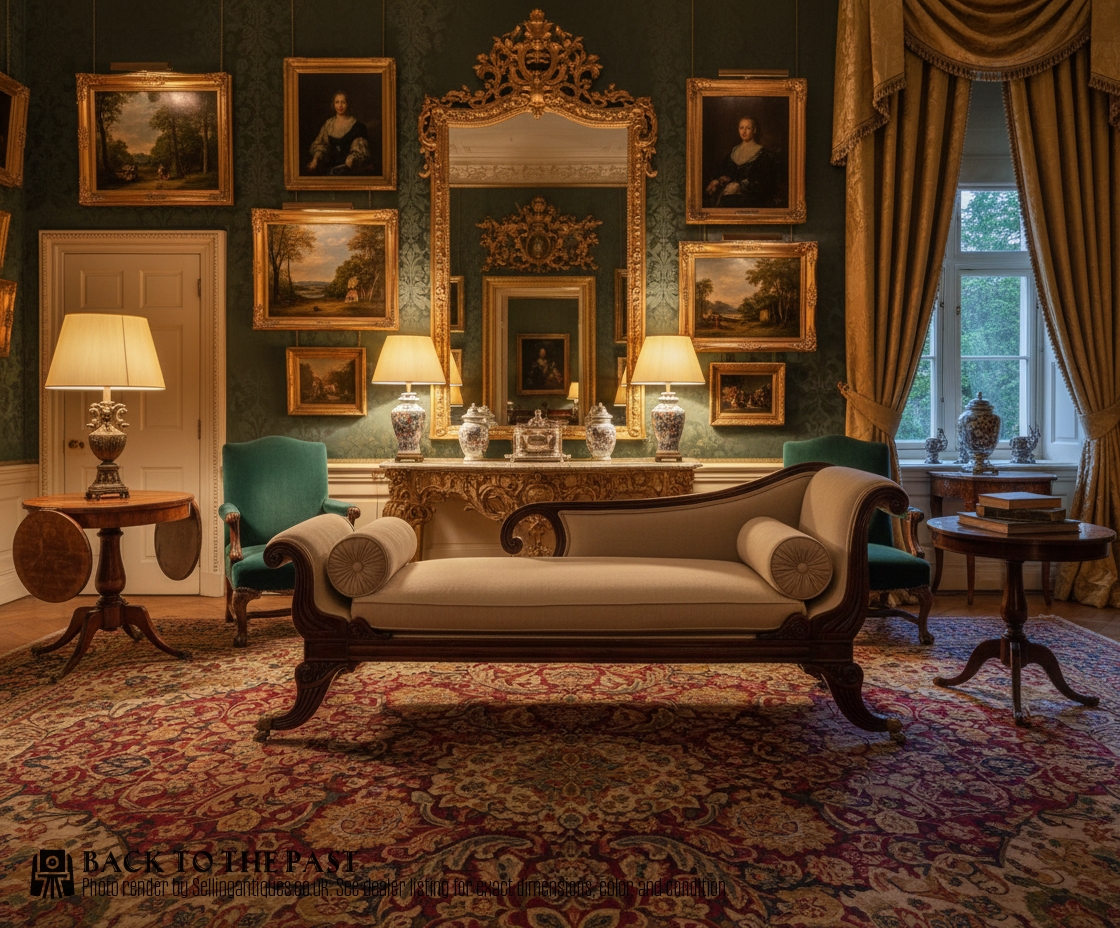
Historical daybeds and chaise longues were positioned in principal rooms, drawing rooms, and country house halls for daytime resting.
Their decorative backs and scroll ends allowed them to sit freestanding within large interior spaces rather than pushed against walls.
What woods were commonly used?
Cabinet makers predominantly utilised mahogany, ebonised wood, and painted or stained timbers configured to resemble exotic species like rosewood.
Solid construction and quality veneers formed the structural foundation for the intricate brass inlay and carved details.