



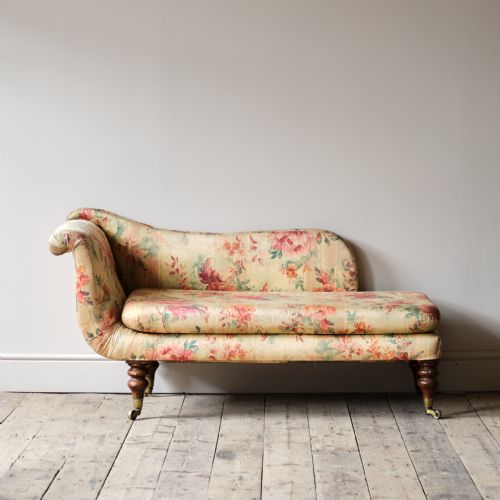


Georgian Chaise Longue
A georgian chaise longue is a reclining seat designed for daytime resting, offering a blend of classical elegance and comfort.
Georgian Chaise Longue
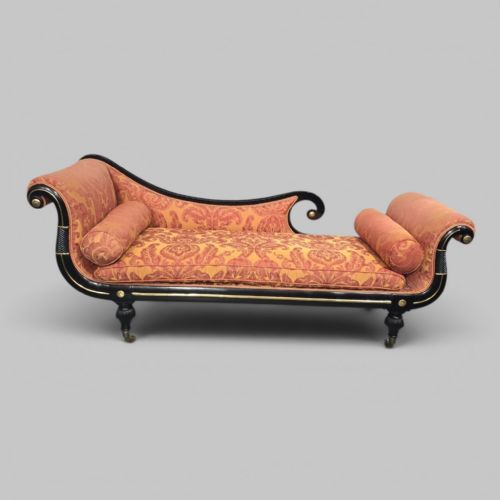
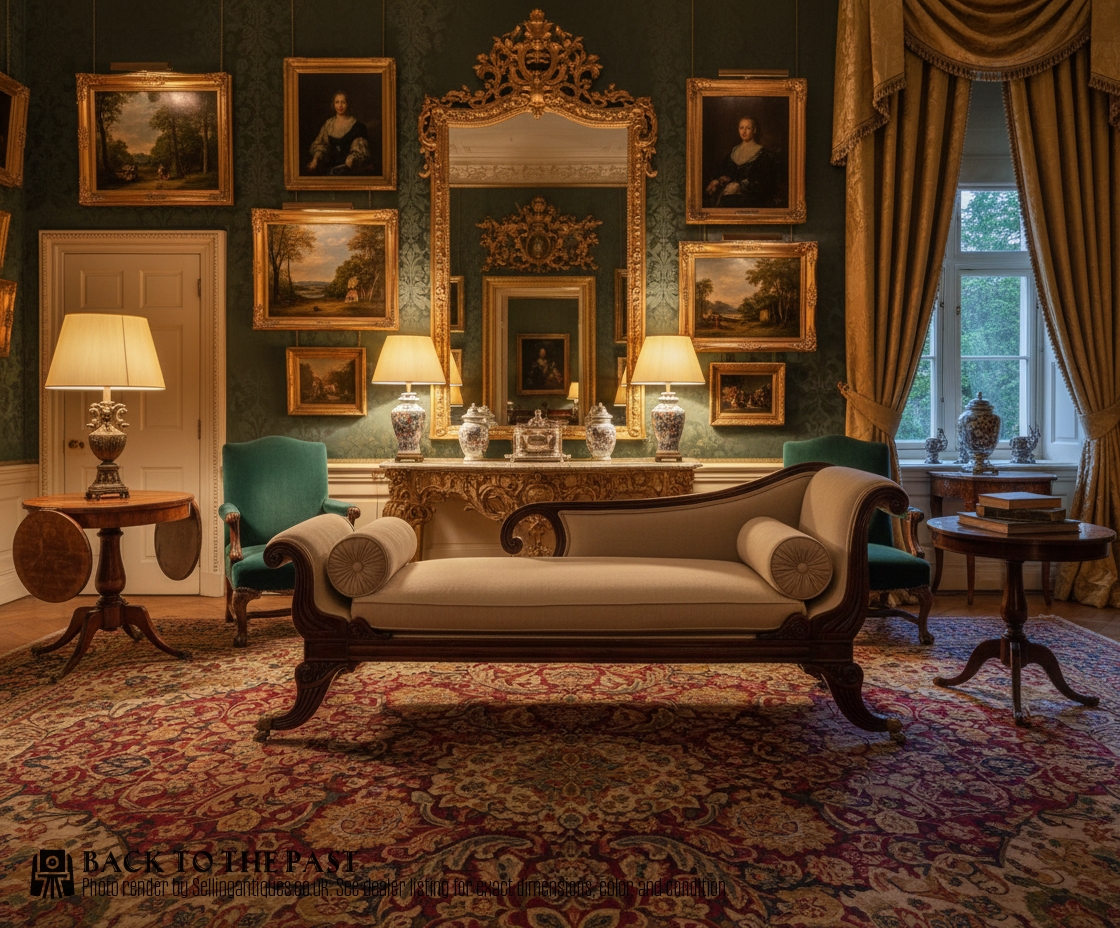
When buyers search for a georgian chaise longue, they encounter sophisticated daybeds and scroll-end sofas originating primarily from the Regency and early nineteenth-century periods. These seating forms served as both functional daybeds and formal reception furniture in period interiors.
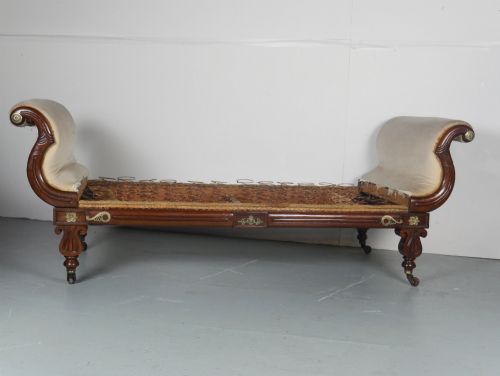
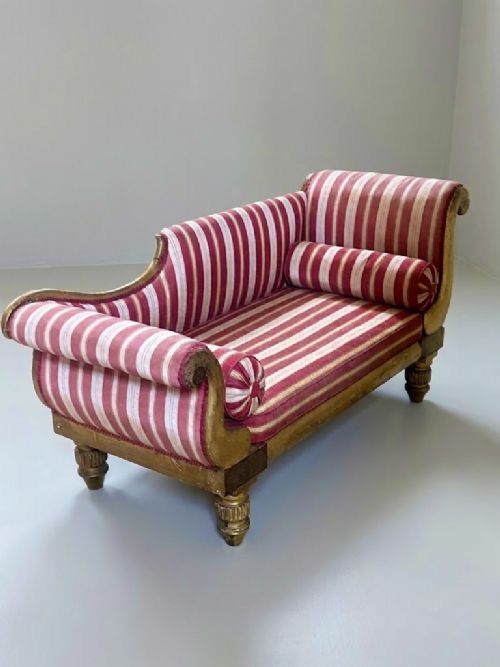
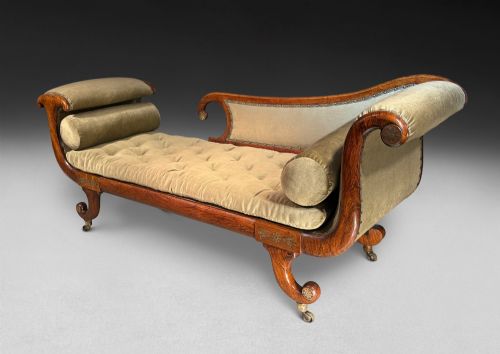
The versions most frequently met on this page include mahogany framed scroll-end settees and giltwood daybeds upholstered in antique silks or striped fabrics. They combine architectural frames with extended seating designed for reclining.
The evidence shows examples linked to the Regency style alongside William IV designs and pieces created in the manner of Gillows. Their forms range from simple country house hall sofas to grand giltwood creations.
How they were made
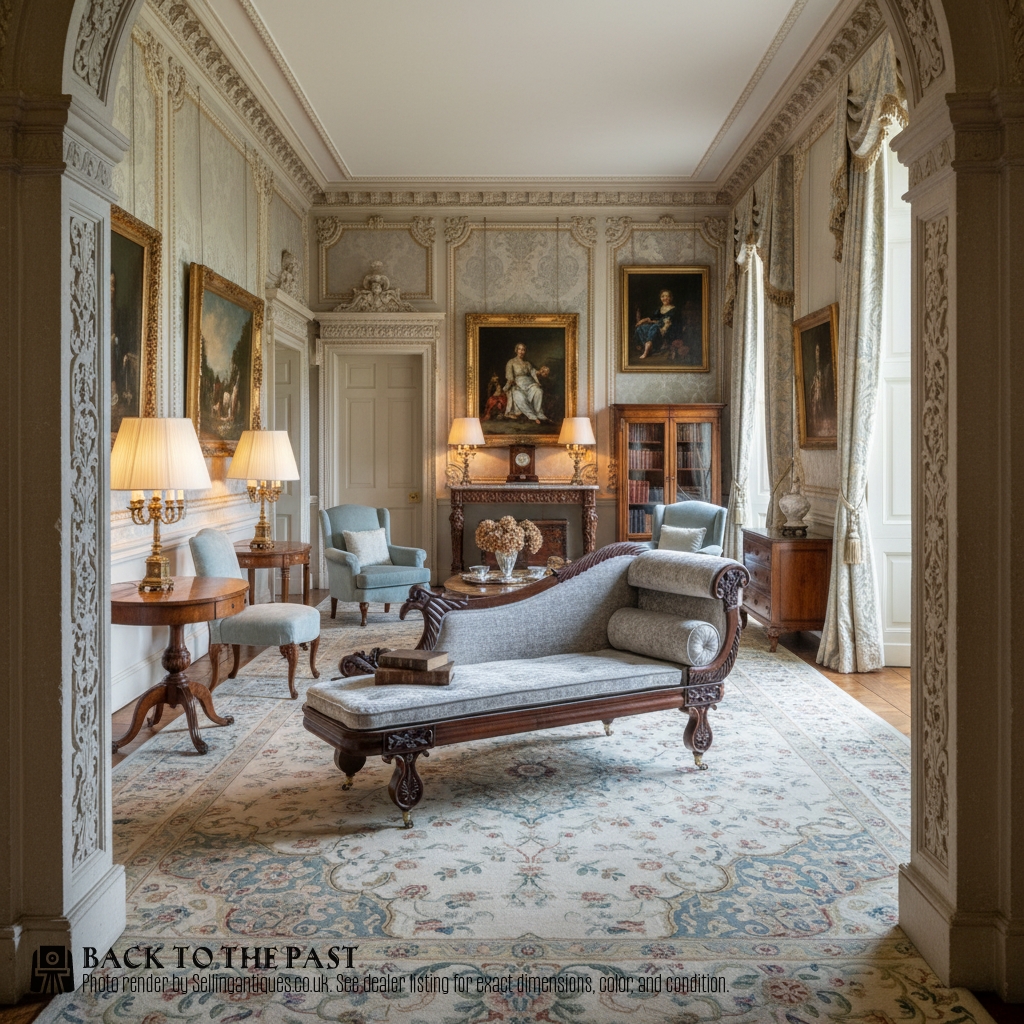
Makers constructed the primary frames of a georgian chaise longue using solid mahogany, simulated rosewood, or carved giltwood. These timbers provided the structural strength required for the sweeping scroll ends and curved backs.
Decoration relied upon brass inlay, intricate wood carving, and polished finishes that highlighted the natural grain of the mahogany or the rich lustre of the gilt. Frames were subsequently upholstered in textiles such as silk and patterned fabrics.
Georgian Chaise Longue Retail Price Guide 2026
Typical asking prices for georgian chaise longue among the pieces listed under this phrase on Sellingantiques today, from the lower quarter to the upper quarter. They describe what is for sale here now, not the wider market.
Listings feature mahogany, giltwood, and simulated rosewood as the primary materials used in these historic frames.
What varies in quality
The distinction between standard examples and the finest pieces rests upon the crispness of the wood carving and the sophistication of brass inlay work. Finer frames exhibit deeper relief and more fluid scrollwork.
Upholstery choices also define the hierarchy, with pieces retaining antique striped silks or high-grade fabrics representing a higher standard of presentation compared to later recovered surfaces.
Gillows
The Georgian Chaise Longue Glossary
- Scroll end
- A sweeping, outward-curving wooden terminal found at one or both ends of a sofa frame. This architectural feature defines much of the silhouette.
- Giltwood
- Timber that has been coated with a thin layer of gold leaf. It creates a bright, reflective surface favoured in formal reception rooms.
- Simulated rosewood
- Painted or stained wood mimicking the dark grain and warm tones of genuine rosewood. It was utilised as a decorative alternative during the Regency period.
Georgian Chaise Longue: Frequently Asked Questions
How were they used?
These pieces were utilised in parlours, bedrooms, and drawing rooms for daytime reclining, reading, and receiving close visitors. They offered a comfortable half-sitting posture without requiring the user to retire to a bed.
Their placement was often focal, anchoring the arrangement of seating furniture within formal reception spaces.
How do I live with one?
Living with a georgian chaise longue involves placing it away from direct sunlight to protect antique silk and fabric upholsteries from fading. Regular dusting of the mahogany or giltwood frame preserves the polished finish.
Because of their asymmetrical scroll ends, they work particularly well positioned against a wall or floating in a large room where the profile remains visible.
How do I tell periods apart?
Differentiating periods relies on observing the decorative vocabulary and framing characteristics of the woodwork. Regency examples often display brass inlay and simulated rosewood finishes, while later nineteenth-century pieces may show heavier proportions.
Comparing the sweep of the scroll ends and the integration of the upholstery helps establish whether a piece belongs to the early Regency era or the subsequent William IV period.