

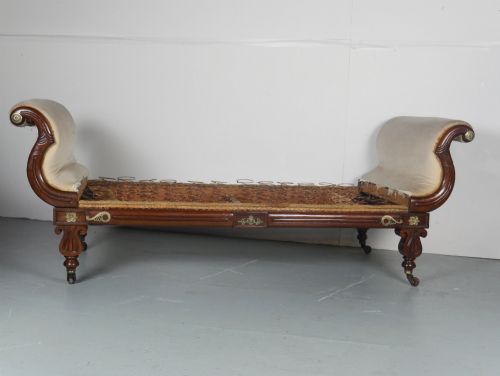
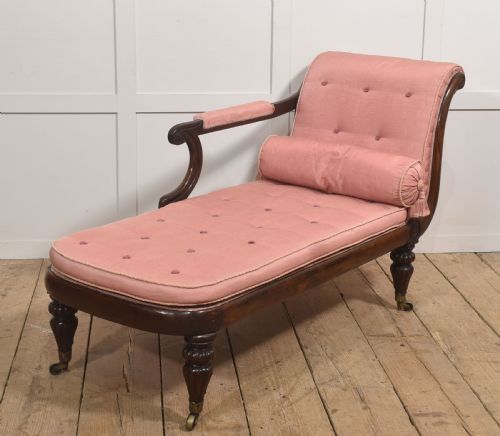

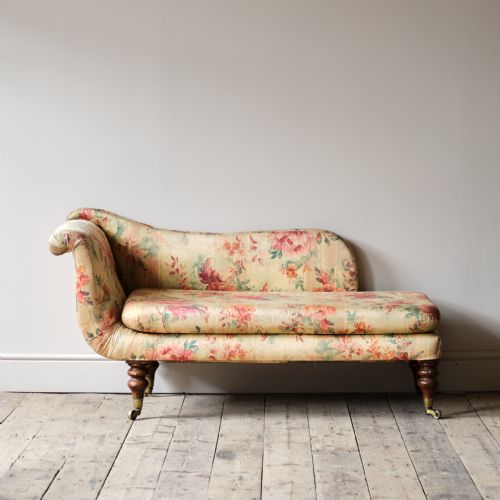


Regency Day Bed
A regency day bed brings neoclassical elegance and reclining comfort to a drawing room, offering the graceful lines of a classical chaise alongside day-long lounging.
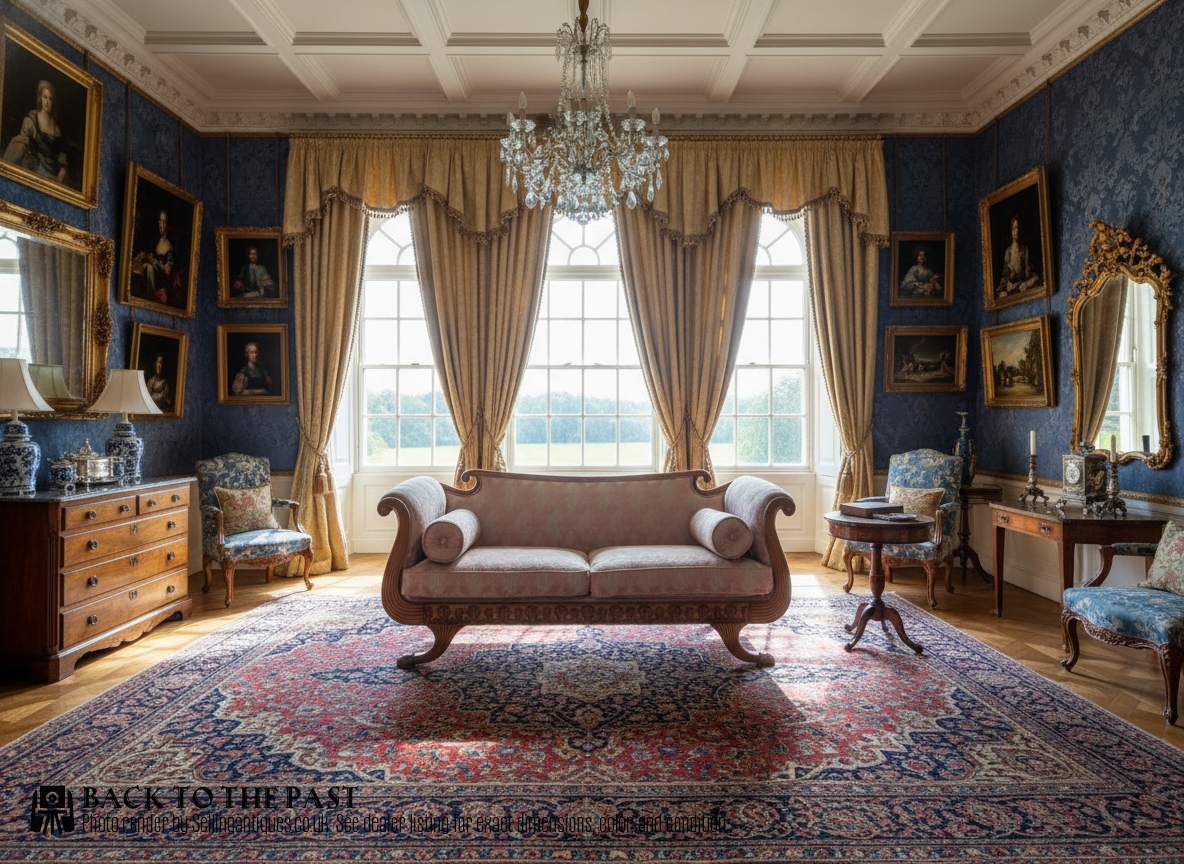
Regency Day Bed
A regency day bed encompasses versatile reclining seating, often catalogued alongside chaise longues, scroll end sofas, and long stools from the nineteenth century. These pieces bridge the gap between formal seating and a bed, intended for daytime rest rather than overnight sleeping.
The pieces appearing on this page span the 19th Century, Regency, William IV, and later interpretations, with the majority reflecting the classical revival of the early eighteen hundreds. Forms range from simple mahogany frames to elaborate scroll-ended couches bearing carved details or simulated bamboo and rosewood finishes.
Origins trace primarily to English workshops of the Regency period, though variations extend into Victorian times and even twentieth-century surrealist interpretations. Buyers frequently encounter solid timbers paired with cane seating or upholstered cushions dressed in fabric, satin, and velvet.
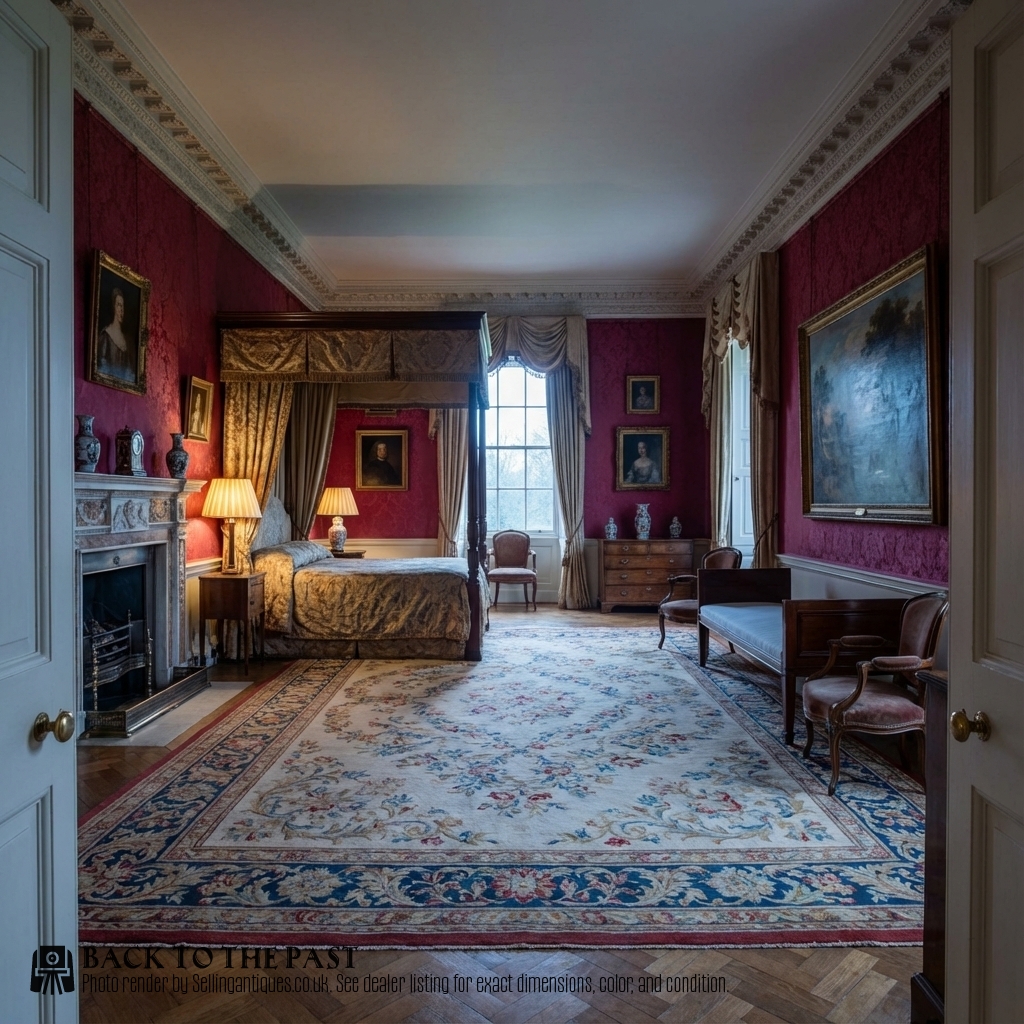
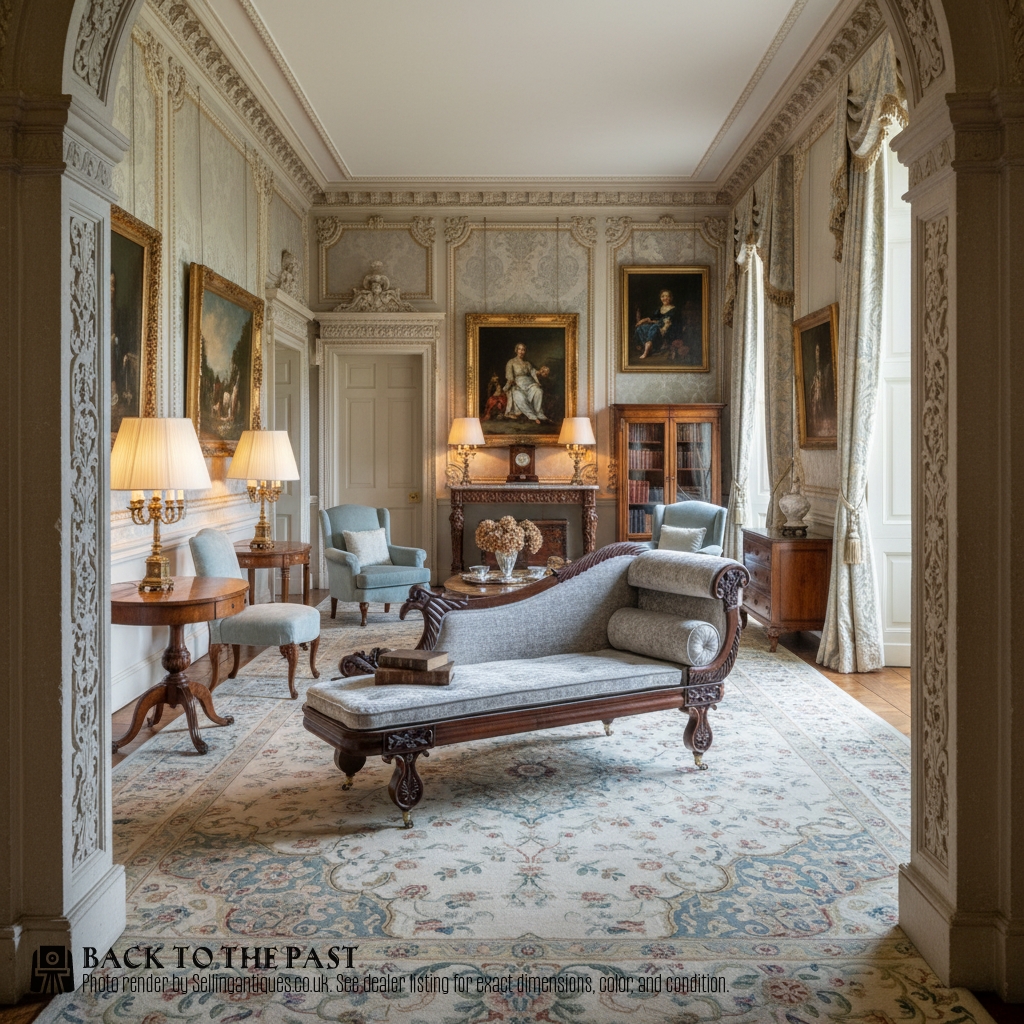
Distinctions in Quality
Quality reveals itself in the selection and figure of the timber, whether solid mahogany, rich rosewood, or finely ebonised wood. Superior examples display crisp carving on scroll ends and frame rails, whereas lesser pieces rely on simpler turnings.
The integration of materials dictates much of the distinction, such as finely woven cane seating paired with well-proportioned frames or substantial giltwood and carved details attributed to prominent makers. The integrity of the original timber structure and the sophistication of the classical silhouette ultimately set the finest pieces apart.
Regency Day Bed Retail Price Guide 2026
Typical asking prices for regency day bed among the pieces listed under this phrase on Sellingantiques today, from the lower quarter to the upper quarter. They describe what is for sale here now, not the wider market.
Listings for this phrase frequently feature mahogany, rosewood, and ebonised wood frames, often incorporating cane seating or upholstered velvet and linen.
Thomas Hope·Gillows·Willian Trotter·Holland and Sons·Morel and Hughes
The Regency Day Bed Glossary
- Regency
- A stylistic period spanning the early nineteenth century defined by neoclassical lines, classical motifs, and influence from ancient Rome, Greece, and Egypt. This aesthetic guides the proportions and decorative vocabulary of these day beds.
- Chaise Longue
- A long reclining chair or day bed allowing the user to stretch out the legs, frequently featuring one raised scroll end or a partially open side. The term often interchanges with daybed in period listings.
- Ebonised Wood
- Timber treated with a finish to imitate expensive ebony, creating a dark, glossy black surface popular on nineteenth-century frames. This technique offered a striking contrast against upholstered fabrics.
- Cane
- Woven rattan material used to form resilient, breathable seat panels within a wooden frame. It appears frequently on the seating bases of nineteenth-century day beds.
Regency Day Bed: Frequently Asked Questions
How were day beds used?
These pieces served for daytime resting, reading, and receiving visitors in drawing rooms and country house boudoirs. They provided a comfortable reclining space without requiring guests to retire to a bedchamber.
Their placement was typically prominent within the room, often angled to catch natural light or positioned against a wall as a decorative statement of wealth and taste.
Where should I place a day bed?
A day bed works well floating in a spacious living room, study, or master bedroom where its profile can be appreciated from multiple angles. Placing it against a primary wall allows the scroll end and backrest to serve as a visual anchor.
Ensure adequate clearance around the piece so the length of the frame and any associated upholstery remain accessible and unobstructed by other furniture.
How do I care for cane seating?
Cane requires gentle maintenance to prevent drying out and splitting over time, keeping it away from direct heat sources and harsh sunlight. Occasional dusting with a soft brush helps keep the woven surface clean.
Avoid placing excessive or localized weight on the woven panels, as nineteenth-century cane can weaken with age despite its initial resilience.
How can I tell a Regency day bed apart from later copies?
Examine the timber species, construction joints, and hand-cut details such as turnings and scrollwork, which reflect early nineteenth-century cabinet-making techniques. Period pieces utilise solid mahogany, rosewood, or walnut rather than modern composite boards.
Look for signs of age in the wood patina, wear patterns on the frame, and construction methods consistent with the 1800s rather than twentieth-century reproductions.