





Regency Scroll Arm Sofa
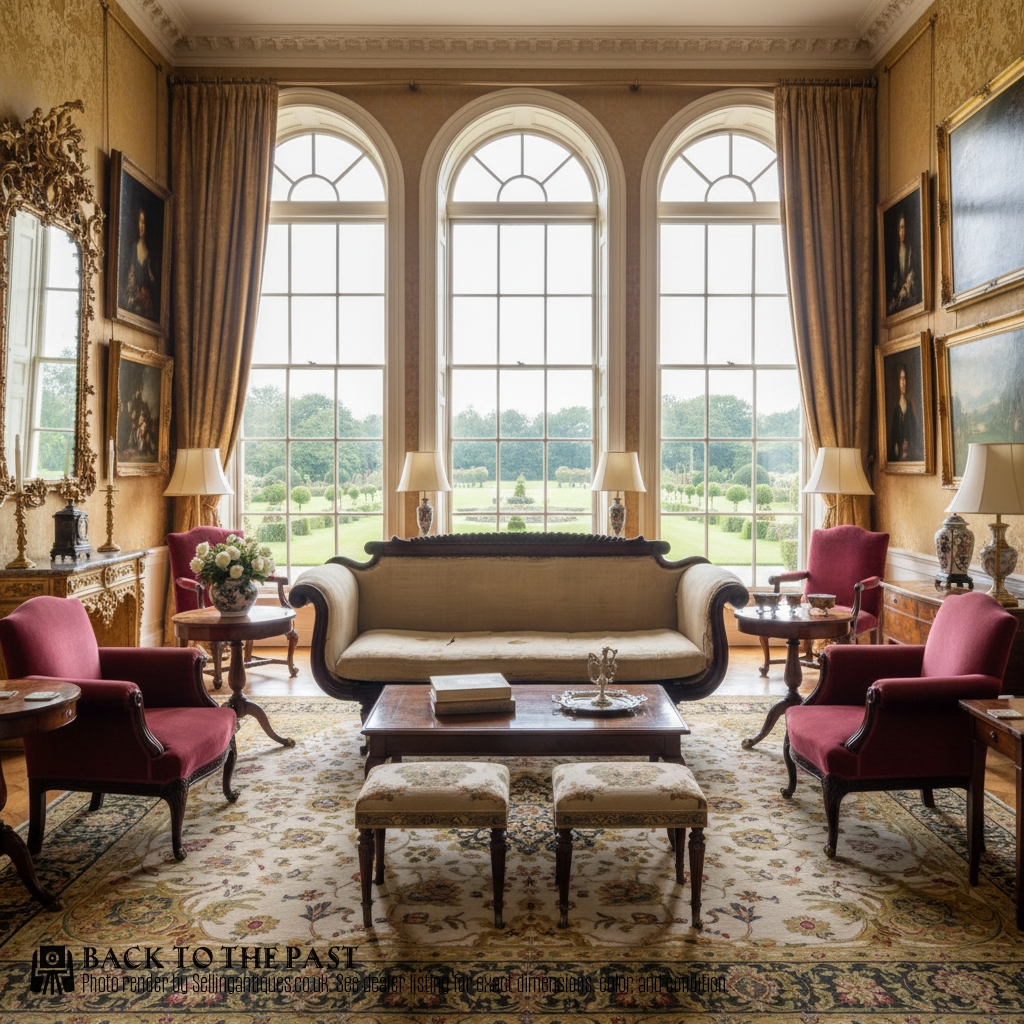
A regency scroll arm sofa brings architectural grace to a room with its sweeping wooden arms and substantial nineteenth-century presence.
Regency Scroll Arm Sofa
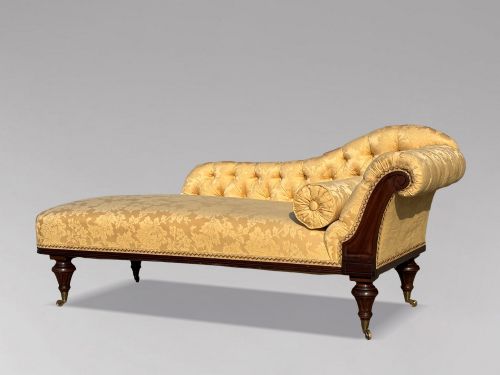
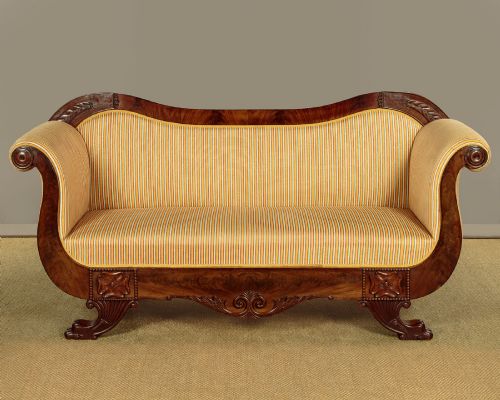
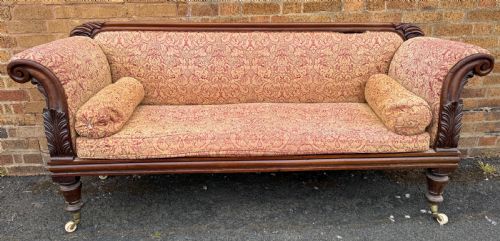
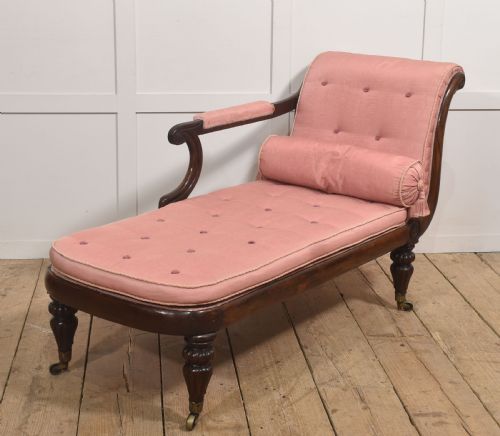
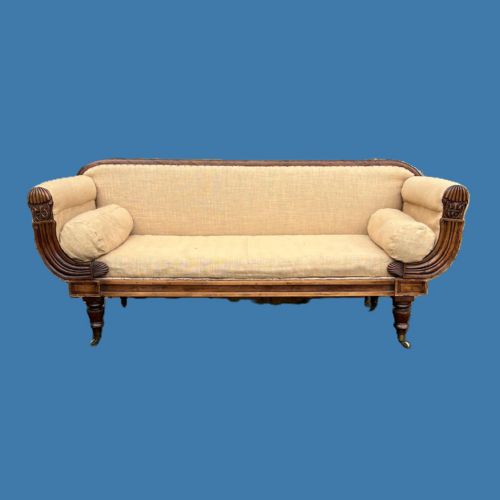
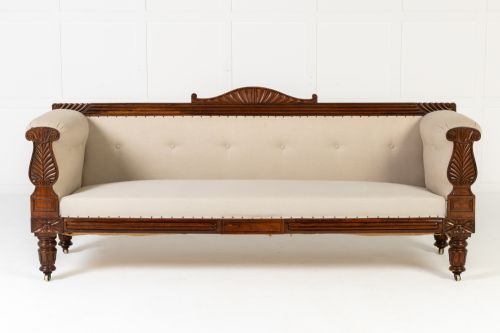
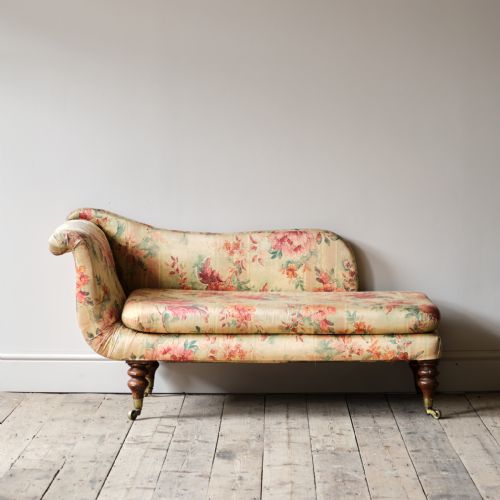
A regency scroll arm sofa is a nineteenth-century seating form designed for principal reception rooms, encompassing both double-ended settees and single-ended daybeds. The listings here centre primarily on pieces from the Regency and William IV periods, alongside later nineteenth-century examples and twentieth-century revivals.
Makers and makers' workshops constructed these pieces as country house sofas, library seating, and drawing room settees. The forms range from compact chaises longues to large four-seater settees and campaign sofas.
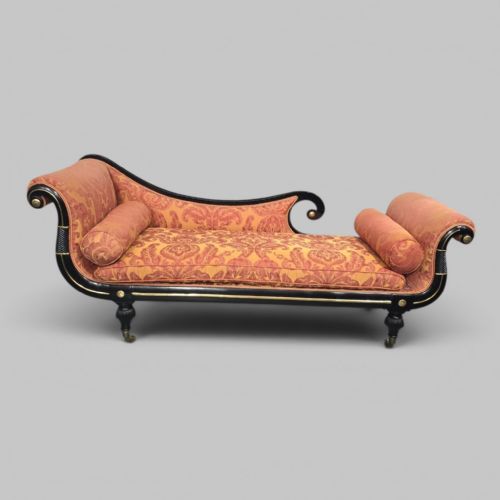
Buyers will encounter frame variations including lyre-shaped ends, flat backs, and Récamier daybeds. Timber choices span solid mahogany, rosewood, simulated rosewood, and ebonised wood.
How They Were Made
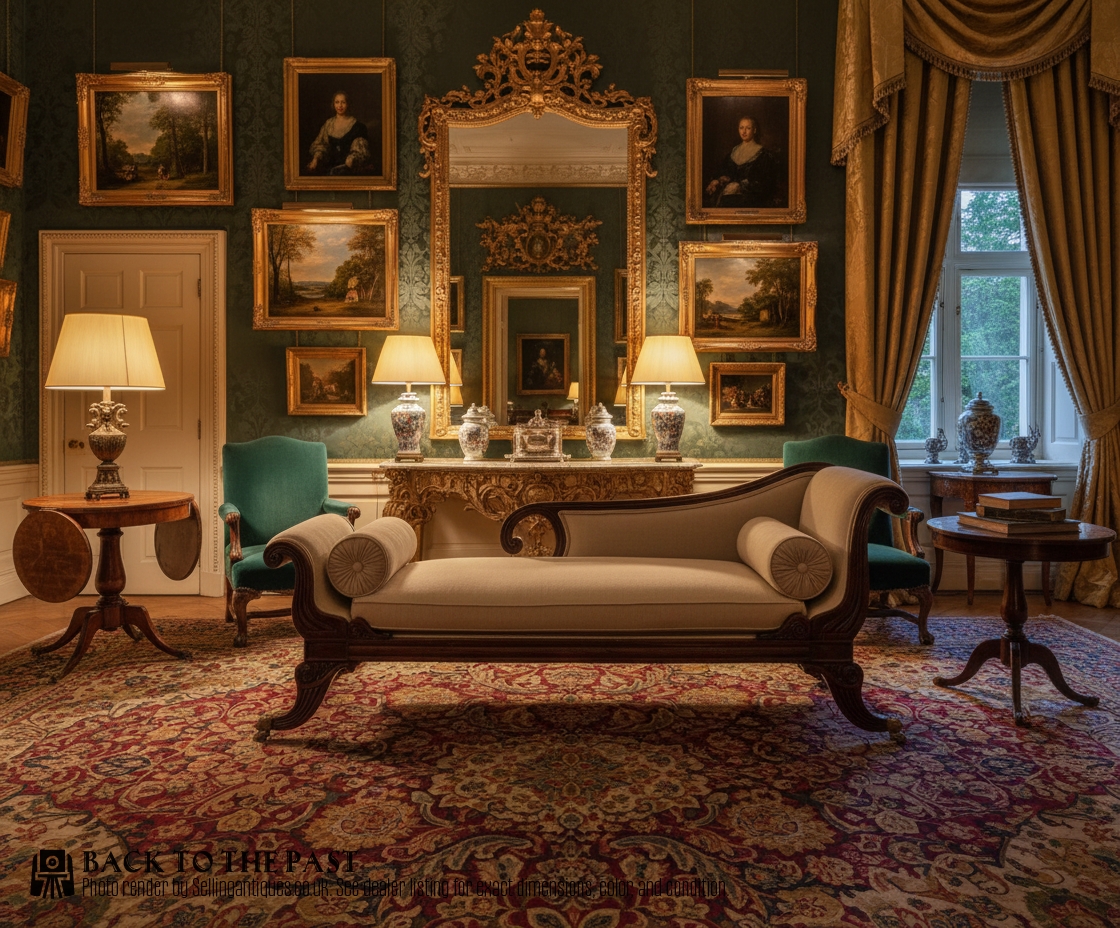
Cabinet makers utilised dense hardwoods such as mahogany and rosewood for the structural show frames, often applying ebonisation or grain painting to simulate more exotic timbers. Brass inlays and castors frequently accented the feet and lower rails.
Upholstery relied on traditional foundations including hessian and springing beneath fabric, leather, or specialised upholstery coverings. Carved mahogany show frames displayed crisp mouldings and scroll-end terminals fashioned by hand.
Listings demonstrate that nineteenth-century makers utilised mahogany, rosewood, and ebonised wood for frames, while twentieth-century examples reflect later Regency style revivals.
What Varies in Quality
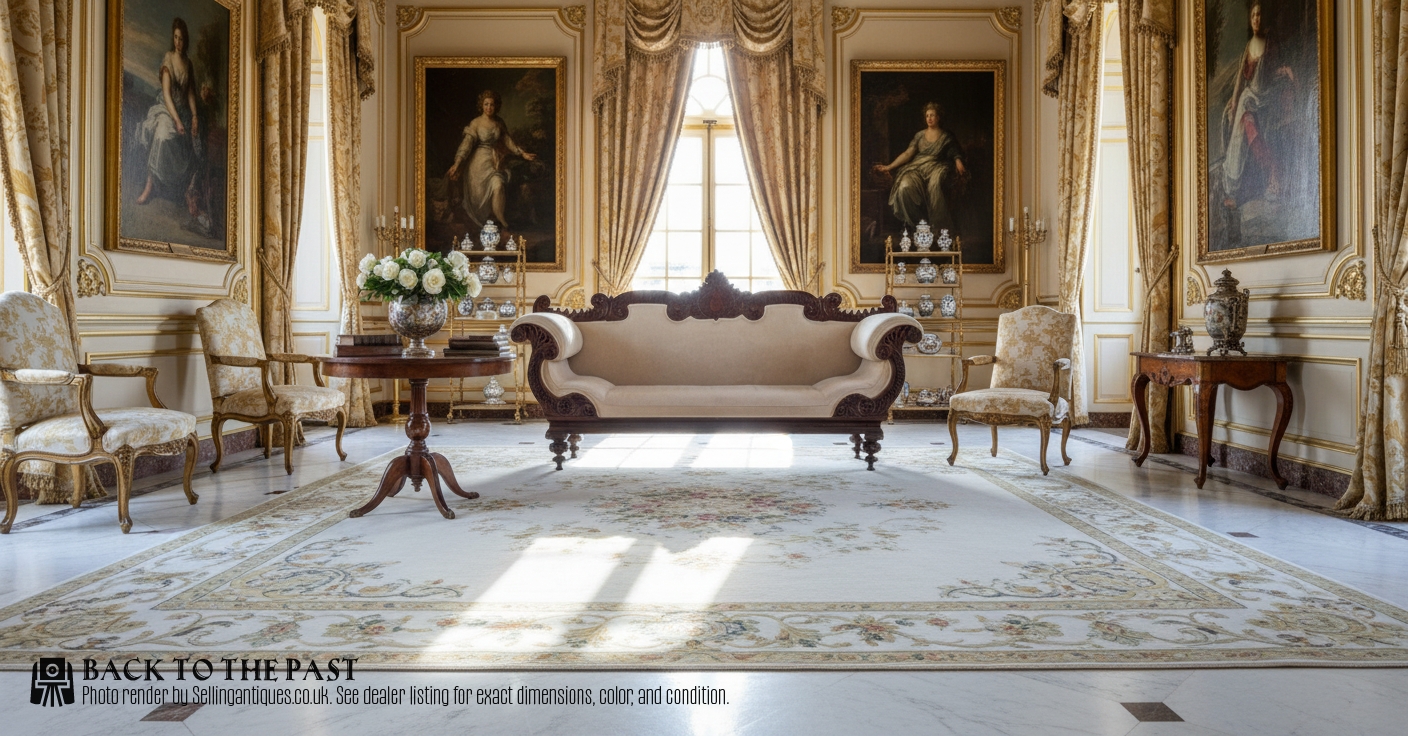
The degree of hand-carving on the show frame separates standard production from exceptional examples, particularly in the definition of the scroll arms and reeded or turned legs. Timber selection dictates visual weight, with figured rosewood and dense mahogany commanding distinct presence compared to simulated alternatives.
Structural integrity rests on the preservation of the original wooden frame and the precision of the joinery at the scroll joints. Pieces retaining their structural timber without excessive replacement demonstrate superior survival through the nineteenth century.
Willian Trotter·Gillows
The Regency Scroll Arm Sofa Glossary
- Scroll Arm
- A structural wooden arm shaped into a sweeping inward or outward spiral. This defining feature curves from the backrest down to the seat rail.
- Chaise Longue
- An elongated seating form designed for reclining, combining a sofa back with an extended seat. Many examples feature a single raised scroll end.
- Simulated Rosewood
- A surface treatment where cabinet makers painted common timbers to imitate the rich grain of rosewood. This technique was common in the early nineteenth century.
- Double Ended Settee
- A sofa featuring matching scroll arms at both ends with a symmetric backrest. These pieces allow a sitter to recline facing either direction.
- Show Frame
- The exposed wooden structure of a sofa that remains visible around the upholstered portions. Fine examples display carved mahogany or rosewood ornament.
Regency Scroll Arm Sofa: Frequently Asked Questions
How do I date a regency scroll arm sofa?
Dating relies on timber choice, carving styles, and structural proportions observed across the nineteenth-century listings. Regency pieces often display lighter mahogany or rosewood with restrained brass mounts.
Later William IV and early Victorian examples tend towards heavier proportions, bolder carved scroll ends, and darker woods. Comparing the show frame details to documented pieces helps narrow the decade of manufacture.
How should I care for the show frame timber?
Maintain the mahogany or rosewood show frame by dusting regularly with a dry, soft cloth. Avoid placing the sofa near direct heat sources that can dry out nineteenth-century timber and crack polish.
Apply occasional appropriate wax polish to nourish the wood surface. Protect ebonised and simulated finishes from abrasive cleaners to preserve the original decorative layers.
Can I use these sofas for daily seating?
These nineteenth-century frames accommodate daily use provided the internal webbing, hessian, and upholstery foundations are structurally sound. Many pieces survive with modern or traditional upholstery ready for domestic integration.
Larger four-seater settees and country house sofas offer substantial seating capacity for modern reception rooms. Consulting the specific listing details reveals whether a piece requires reupholstery before active use.