



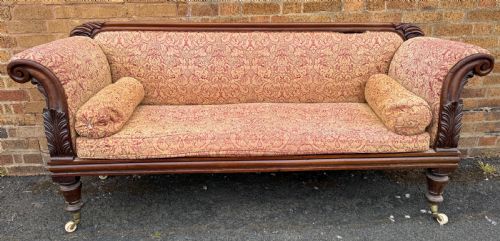


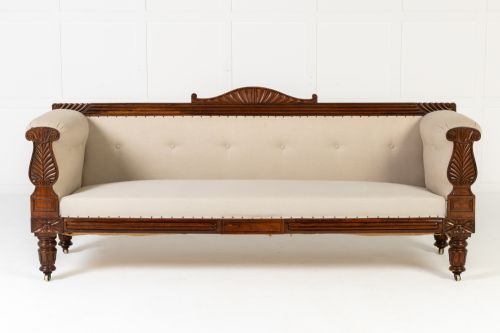
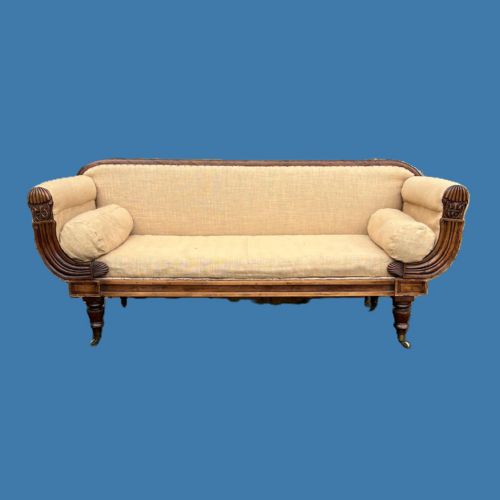


Regency Settee
A regency settee brings architectural presence and fluid scroll ends to a drawing room, offering structured seating shaped by classicism.
Regency Settee
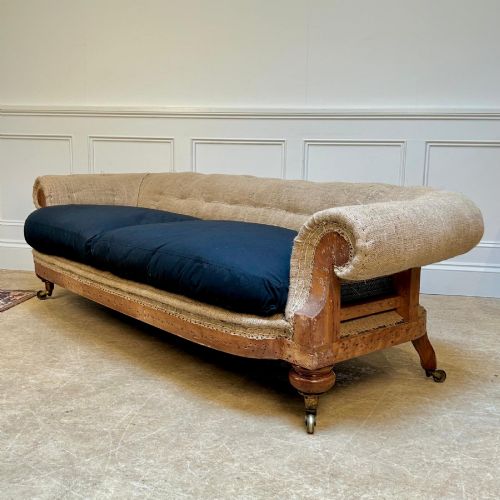
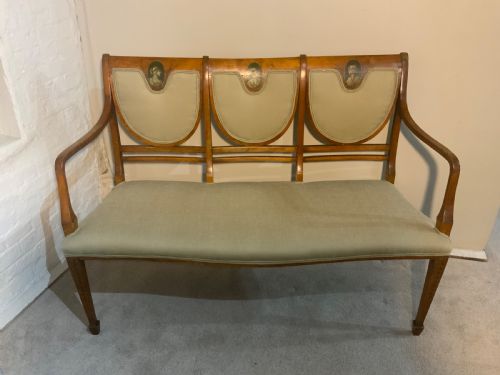
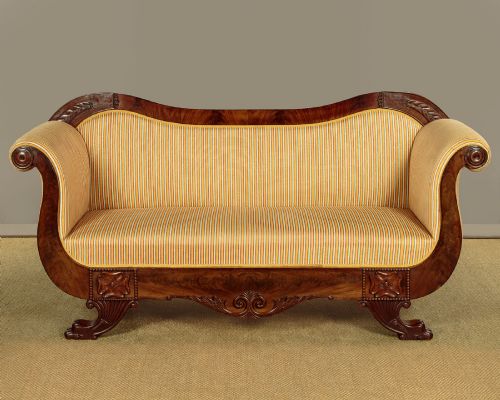
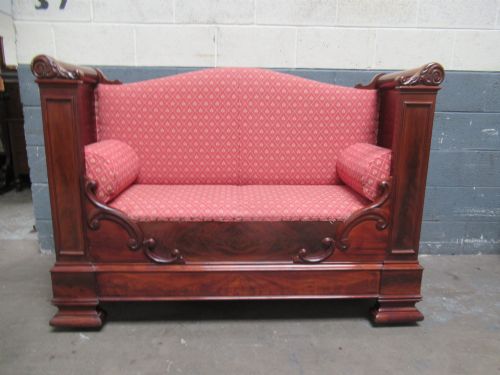
A regency settee encompasses upholstered sofas, scroll-end couches, and double-ended day beds originating primarily from the early nineteenth century and later revival periods. Pieces range from grand mahogany country house sofas to lighter satinwood chair-back designs and painted window seats.
How they were made
Frames rely on dense timbers such as mahogany, rosewood, walnut, and satinwood, frequently shaped with steam-bent scroll ends or carved show frames. Decoration employs contrasting giltwood, ebonised details, and painted finishes alongside brass inlays and castors.
Upholstery demands traditional foundations utilising materials like horsehair, leather, hessian, and various woven fabrics. Caned panels appear on lighter seating variants, while structural support relies on robust joinery and pegged frames.
Regency Settee Retail Price Guide 2026
Typical asking prices for regency settee among the pieces listed under this phrase on Sellingantiques today, from the lower quarter to the upper quarter. They describe what is for sale here now, not the wider market.
Several settees hide small brass castors designed to protect delicate drawing room carpets from heavy mahogany feet.
What varies in quality
The standard of timber selection and the crispness of the hand-carved ornamentation dictate the calibre of a frame. Superior examples display balanced proportions, finely figured veneers, and intricate gilding or brass mounts rather than mechanical uniformity.
Integrity of construction and the retention of original framing elements separate distinguished pieces from later adaptations. The fluidity of the scroll work and the sophistication of design motifs reflect the original maker's ambition.
Thomas Hope
The Regency Settee Glossary
- Scroll end
- A sweeping, outward-curving arm or back termination characteristic of classical seating forms. This silhouette defines much of the nineteenth-century aesthetic.
- Double-ended sofa
- A couch featuring matching scroll ends at both extremities, allowing a user to recline comfortably from either direction. These forms often stand centrally within a room.
- Caned
- Woven rattan panels utilised on seat bases or backrests to provide flexible support. This technique lightens the visual weight of wooden frames.
- Simulated rosewood
- Painted or stained timber imitating the rich grain patterns of exotic rosewood. Craftsmen utilised maple or beech to achieve this decorative effect.
Regency Settee: Frequently Asked Questions
Where should a regency settee go?
These pieces suit formal drawing rooms, libraries, or spacious hallways where their architectural lines can be appreciated from multiple angles. Double-ended variants work well placed away from walls.
Ensure adequate clearance around the piece to showcase the carved scroll arms and show frames without crowding the surrounding furniture.
How do I identify a genuine period piece?
Examine the timber framing for traditional joinery methods, hand-cut screws, and the natural patination acquired through decades of use. Period examples exhibit dense hardwoods and distinct tool marks.
Compare the proportions and carved motifs against documented neoclassical design books from the early nineteenth century for further context.
Are these settees comfortable for daily lounging?
While designed for formal entertaining and upright posture, many versions offer deep seating and supportive squabs. Their comfort depends largely on the internal upholstery padding.
Traditional webbed foundations filled with horsehair provide a firmer sit than modern foam equivalents, matching the historical intent of the design.
Can I mix these sofas with modern interiors?
The clean classical lines of neoclassical furniture anchor contemporary spaces by introducing texture and historical contrast. Bold wood grains and gilt accents complement minimalist decor.
Pairing a dark mahogany frame with neutral modern upholstery bridges the gap between historical craftsmanship and contemporary living.