
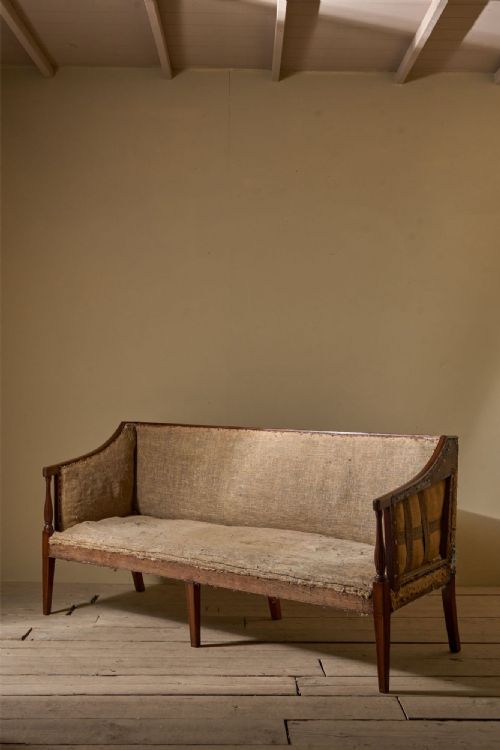
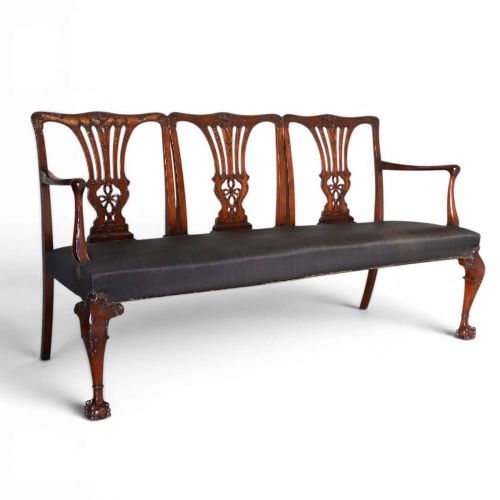
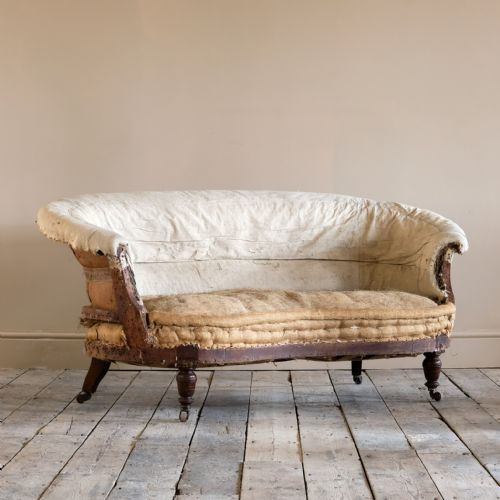


Brown Mahogany Settee
A brown mahogany settee brings solid timber warmth and seating presence to a room, drawing on decades of revival and period forms.
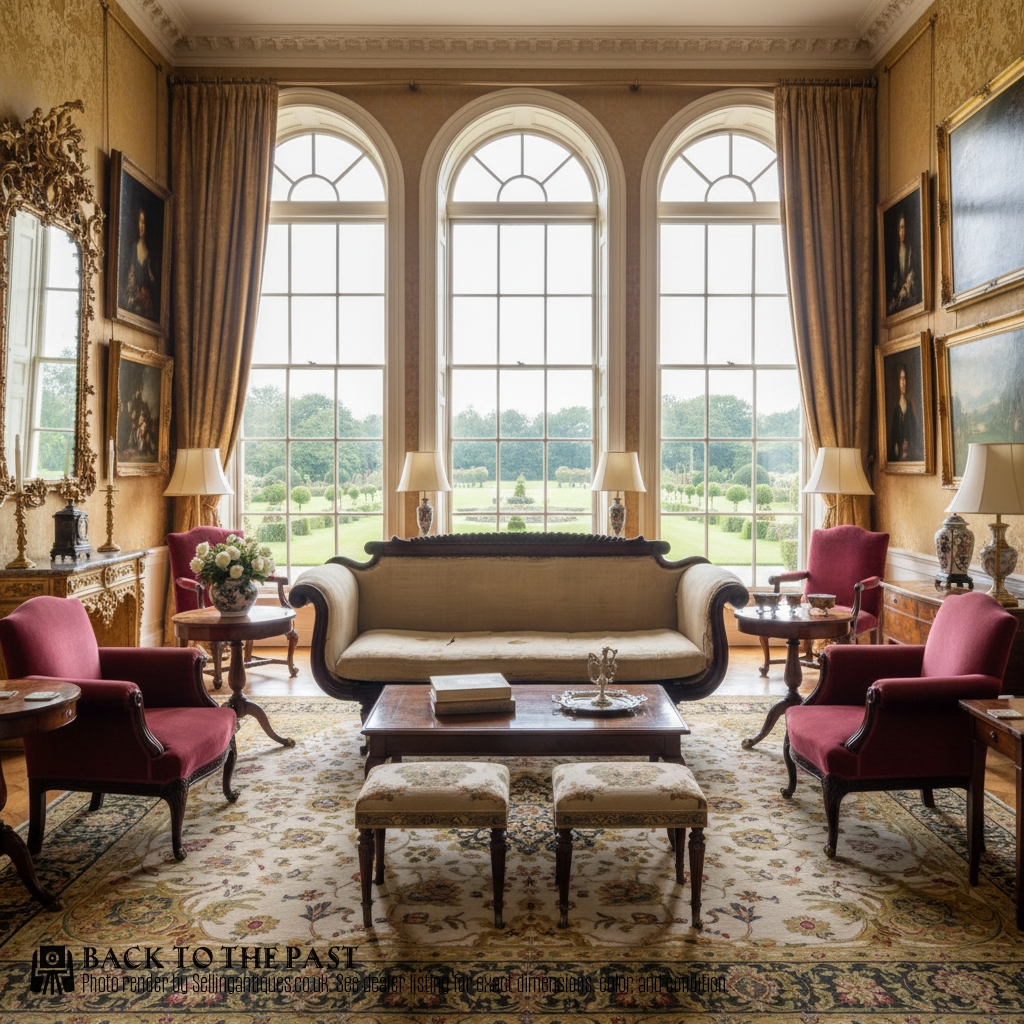
Brown Mahogany Settee
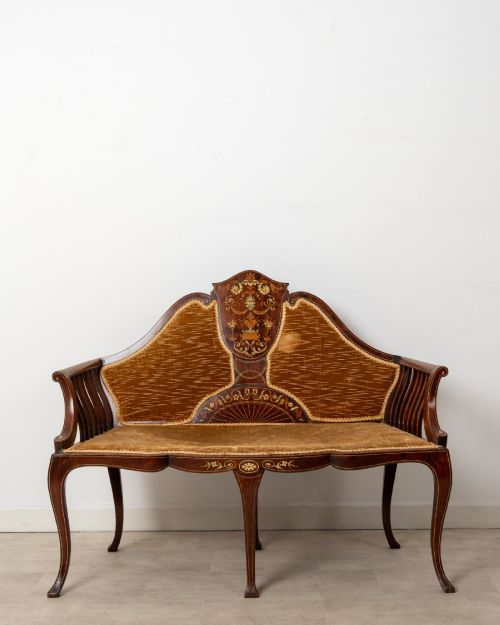
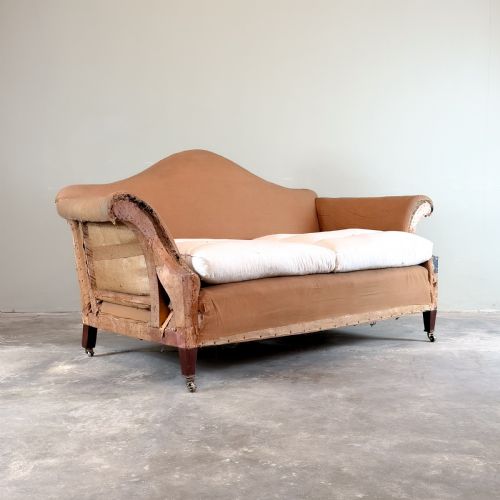
A brown mahogany settee combines structural hardwood framing with seating forms spanning the Georgian, Regency, Victorian, and Edwardian eras. Buyers encounter everything from serpentine camel back sofas and chair-back designs to window seats and substantial leather suites.
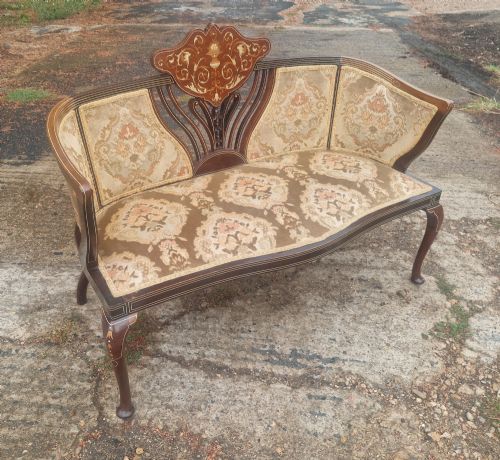
The pieces on this page lean heavily towards Edwardian and nineteenth-century interpretations of earlier styles, including Chippendale and George II revivals. Makers of these periods utilised rich timber alongside satinwood inlay and detailed carving to create formal and parlour seating.
Materials and construction methods
Construction relies on solid mahogany frames, frequently shaped into carved backs, scroll ends, or camel backs, and finished with brass fittings or leather upholstery. Workshops integrated marquetry and satinwood inlay into the show wood to decorate parlour and salon pieces.
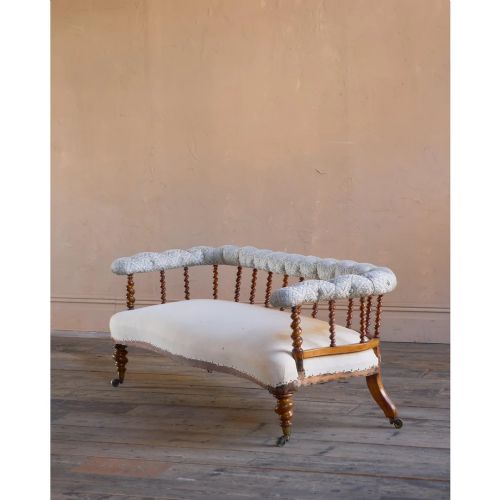
Upholstery methods range from button-backed leather and hand-dyed hides to fabric and hessian foundations. Many examples pair exposed mahogany frames with generous padding suitable for daily drawing room use.
Listings span the eighteenth, nineteenth, and early twentieth centuries, incorporating mahogany, leather, fabric, and satinwood inlay.
Distinctions in craftsmanship
Quality rests in the depth of timber figure, the precision of carved details on the mahogany frame, and the crispness of any satinwood inlay. Better examples demonstrate crisp cabinet-making where joinery remains tight and ornamental carving stays sharp across the crest and legs.
The execution of the upholstery and the integrity of the underlying frame separate standard production from superior workshop output. Original leather, hand-dyed finishes, and well-preserved structural woodwork elevate the standing of a piece.
C. Hindley & Sons·Hampton & Sons·Morison & Co - Edinburgh·Maple and Co·Gillows of Lancaster
The Brown Mahogany Settee Glossary
- Camel back
- A serpentine sofa back profile resembling a camel's hump, common on Georgian and Edwardian seating.
- Marquetry inlay
- Decorative patterns formed by fitting contrasting wood veneers into the primary mahogany surface.
- Scroll end
- A sweeping, curved wooden arm or terminal found on Regency and nineteenth-century couches.
- Chair-back settee
- A sofa style featuring a backrest constructed as a series of conjoined chair backs, such as ladderbacks or splatbacks.
- Satinwood
- A pale, lustrous timber frequently utilised for contrasting stringing and floral inlay on mahogany furniture.
Brown Mahogany Settee: Frequently Asked Questions
What periods do these settees come from?
The selection spans pieces made during the eighteenth, nineteenth, and early twentieth centuries. Many items reflect revival movements looking back to earlier Georgian and Regency designs.
Craftsmen in the Edwardian era frequently reinterpreted these classic proportions for contemporary drawing rooms.
How do I identify a Chippendale style settee?
Chippendale style frames often feature carved wooden backrests, intricate splats, and shaped structural supports. The influence draws on mid-eighteenth-century pattern books.
Later revival pieces from the Victorian and Edwardian periods adopted these characteristic motifs with varying degrees of ornamentation.
Are these settees upholstered in leather?
Several examples feature brown leather upholstery, ranging from button-backed Chesterfield designs to hand-dyed hide finishes. Some pieces combine exposed mahogany frames with supple leather seating.
Other listings present fabric coverings or bare frames intended for future upholstery.
Where should I place a window seat settee?
Window seats and end-of-bed settees offer compact seating designed for specific architectural spaces or bedroom layouts. Their slender proportions suit narrow areas where a standard sofa proves too bulky.
Inlaid mahogany frames allow these smaller forms to sit comfortably in light-filled bays or hallways.