



Carved Rosewood Chaise
A carved rosewood chaise is a striking nineteenth-century daybed designed for reclining, combining rich timber with deep upholstery.
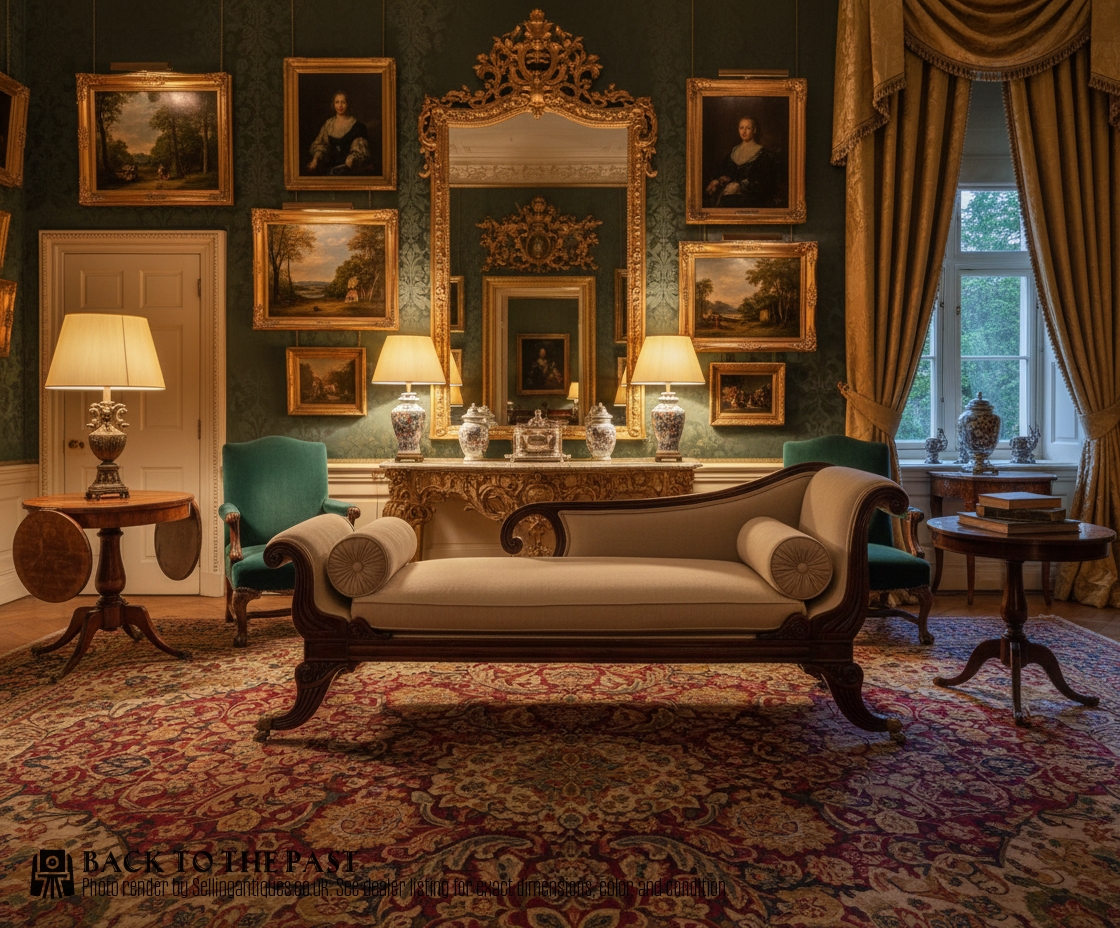
Carved Rosewood Chaise
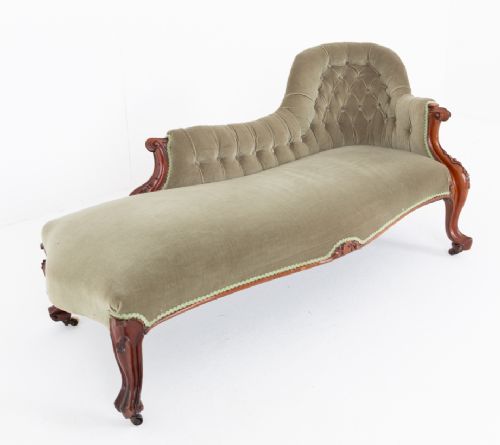
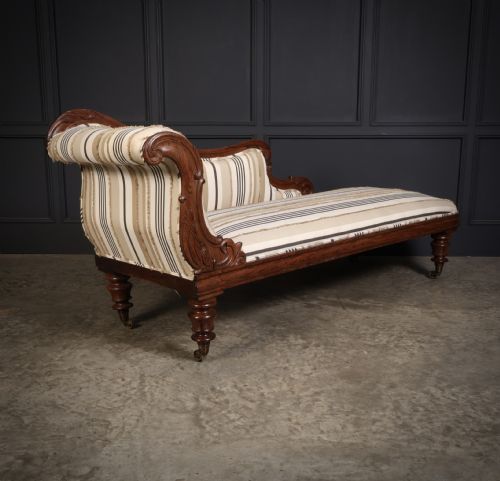
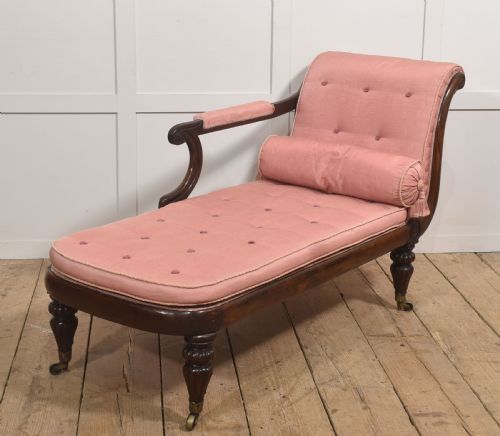
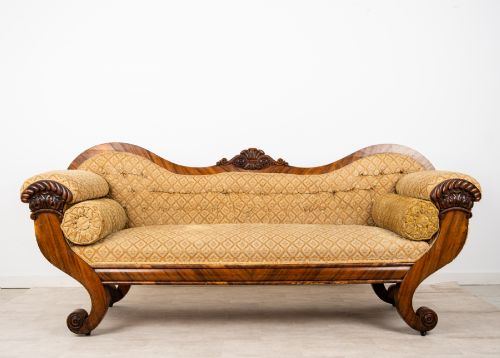
When you search for a carved rosewood chaise, you are looking at nineteenth-century daybeds and settees designed for reclining. The pieces appearing here span the Regency, William IV, and Victorian periods, alongside Anglo-Indian colonial examples.
You are most likely to meet Victorian and early Victorian forms, frequently featuring carved scroll ends and exposed timber frames. Occasional variations include corner bedroom chairs and double spoon back settees alongside the standard daybed silhouette.
How they were made
Maker workshops utilised dense rosewood and occasionally teak, shaping the timber into flowing scrolls and structural frames. Hand-carved details define the show wood, highlighting the natural grain and deep colour of the material.
The frames were constructed to support substantial fabric upholstery, velvet, and brass fittings. Traditional padding and textile coverings were secured to accommodate both formal sitting and horizontal resting.
Carved Rosewood Chaise Retail Price Guide 2026
Typical asking prices for carved rosewood chaise among the pieces listed under this phrase on Sellingantiques today, from the lower quarter to the upper quarter. They describe what is for sale here now, not the wider market.
Listings feature nineteenth-century pieces spanning Regency, William IV, and Victorian periods, constructed from rosewood, teak, brass, and velvet.
What varies in quality
The distinction between standard and superior examples lies in the crispness and depth of the timber carving. More ambitious pieces display deeply undercut scrollwork and finely detailed frames rather than shallow decoration.
Quality also rests in the integrity of the rosewood timber and the balance of the proportions. Heavier, larger frames from the early Victorian and William IV periods often show more substantial architectural presence.
The Carved Rosewood Chaise Glossary
- Chaise Longue
- A long chair for reclining, literally translating from French as long chair. These pieces combine the function of a chair and a sofa.
- Rosewood
- A heavy, dense timber prized for its dark grain and suitability for carving. It forms the primary structural and visual material for these pieces.
- Scroll End
- A curved terminal on the frame of a daybed or settee. This decorative feature typifies nineteenth-century seating design.
- William IV
- A British design period spanning the 1830s, bridging Regency elegance and early Victorian mass. Pieces from this era often display bold architectural lines.
- Anglo-Indian Colonial
- Furniture made in India for British residents during the nineteenth century. These items blend British furniture forms with local carving traditions.
Carved Rosewood Chaise: Frequently Asked Questions
What is a carved rosewood chaise?
A carved rosewood chaise is a nineteenth-century daybed or reclining sofa featuring exposed wooden frames made from rosewood. These pieces were designed for parlours and drawing rooms to allow half-sitting and resting.
They combine dense timber construction with upholstered surfaces, frequently finished with carved scroll ends and wooden feet.
How do I date a rosewood chaise?
Dating relies on stylistic markers from periods such as Regency, William IV, and Victorian eras. Earlier pieces from the Regency and William IV periods display restrained classical lines, while Victorian examples often introduce heavier scrollwork and bolder carved details.
Material choices like teak alongside rosewood and specific upholstery configurations also help place an item within the nineteenth century.
Where were these daybeds used?
These daybeds were traditionally placed in drawing rooms, master bedrooms, and parlours of nineteenth-century homes. They served as formal seating by day and private resting places.
The elongated form accommodated reclining fashions of the period without requiring occupants to retire entirely to a bedchamber.
How do I care for rosewood furniture?
Care involves keeping the dense rosewood timber away from direct sunlight and excessive heat fluctuations to prevent drying. Regular dusting with a dry cloth maintains the finish of the carved surfaces.
Upholstery requires separate maintenance depending on whether the fabric is velvet or standard textile.