
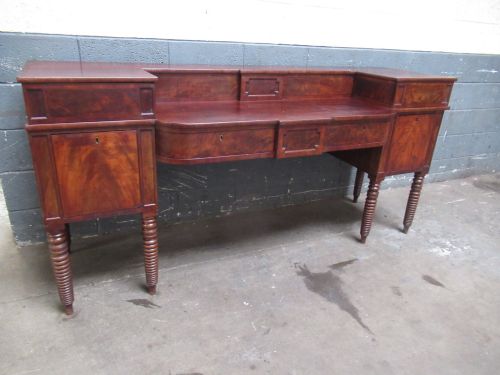
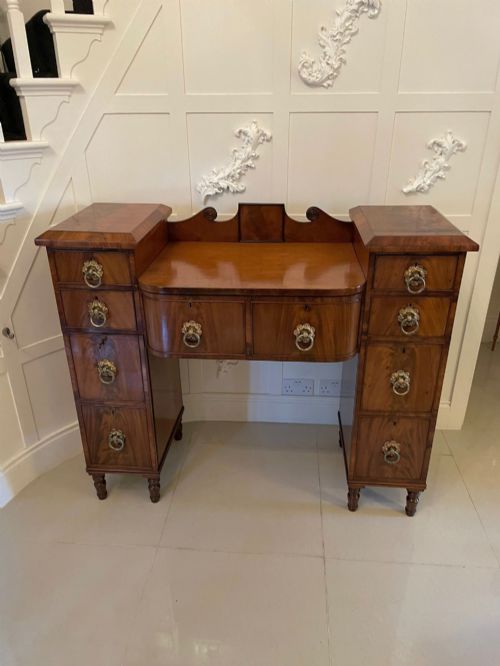
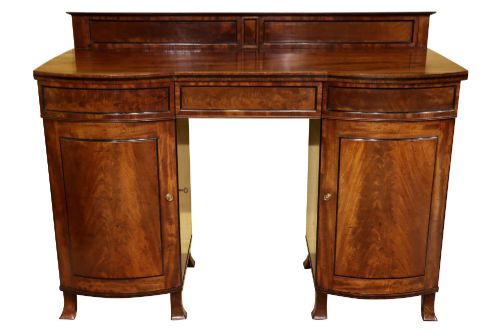
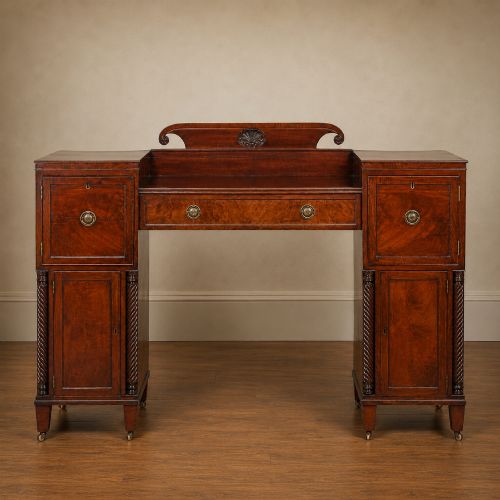
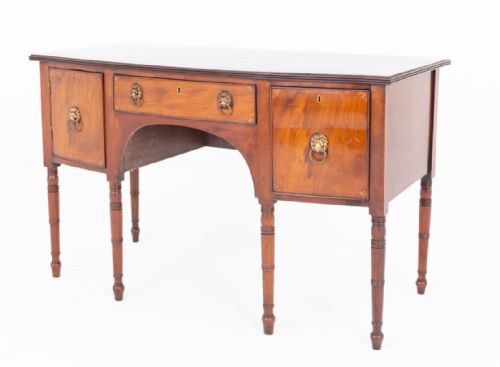

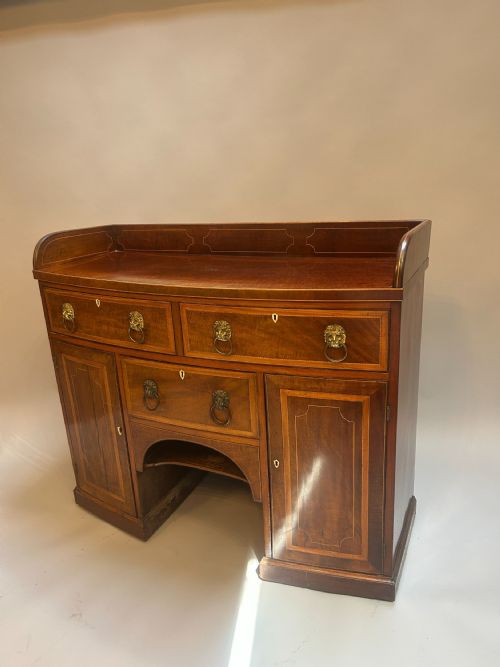
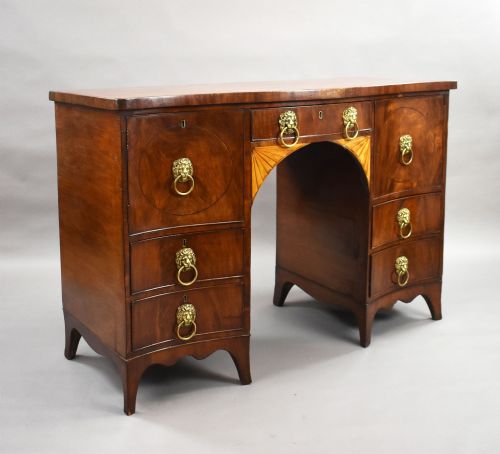


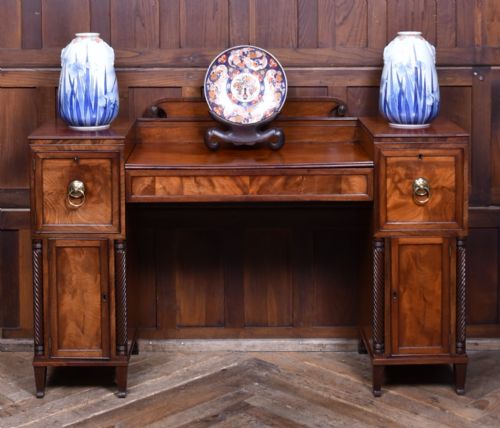
Regency Pedestal Sideboard
A regency pedestal sideboard is a substantial dining room server built with flanking cupboards, designed to anchor formal spaces with architectural gravity.
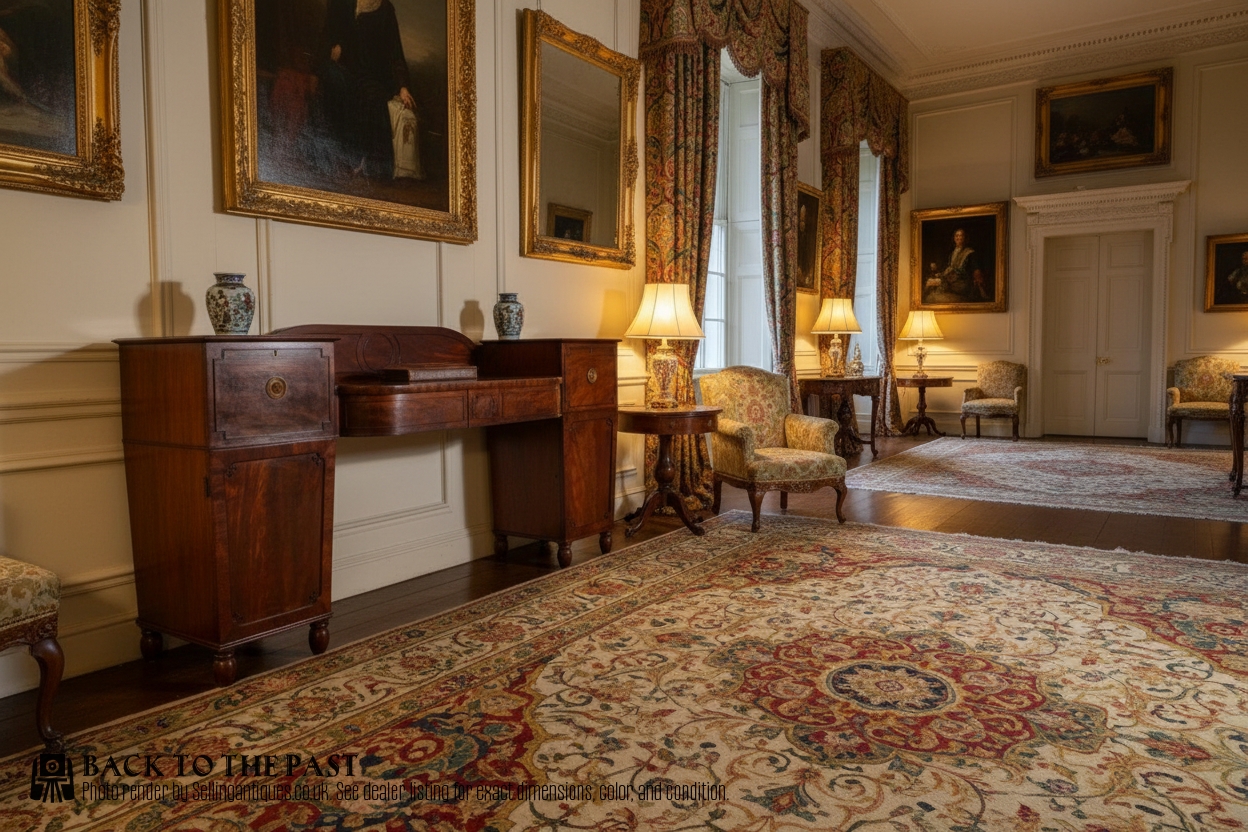
Regency Pedestal Sideboard
A regency pedestal sideboard combines a central serving surface flanked by independent or integrated pedestals, typically housing storage or cellarets. These pieces emerge predominantly from the early nineteenth century under Georgian, Regency, and William IV influences.
The version most commonly met on this page is constructed from mahogany, often featuring twin pedestals, bow fronts, or flame mahogany veneers arranged to highlight rich timber figuring.

Materials and Construction
Construction relies on deep carcases and heavy pedestals, occasionally incorporating carved details or turned feet characteristic of late Georgian and William IV workshops.
Regency Pedestal Sideboard Retail Price Guide 2026
Typical asking prices for regency pedestal sideboard among the pieces listed under this phrase on Sellingantiques today, from the lower quarter to the upper quarter. They describe what is for sale here now, not the wider market.
Listings feature mahogany, flame mahogany veneer, satinwood, and brass across nineteenth-century forms.
Design and Execution
The distinction between tiers of quality rests upon the choice of timber and the sophistication of the veneer matching, particularly where flame mahogany is mirrored across large cupboard doors. Superior examples display restrained, crisp carving and well-integrated brass galleries rather than heavy, over-adorned surfaces.
Proportion and scale dictate the success of the piece, with finer items maintaining balanced lines across twin pedestals and retaining original brass hardware.
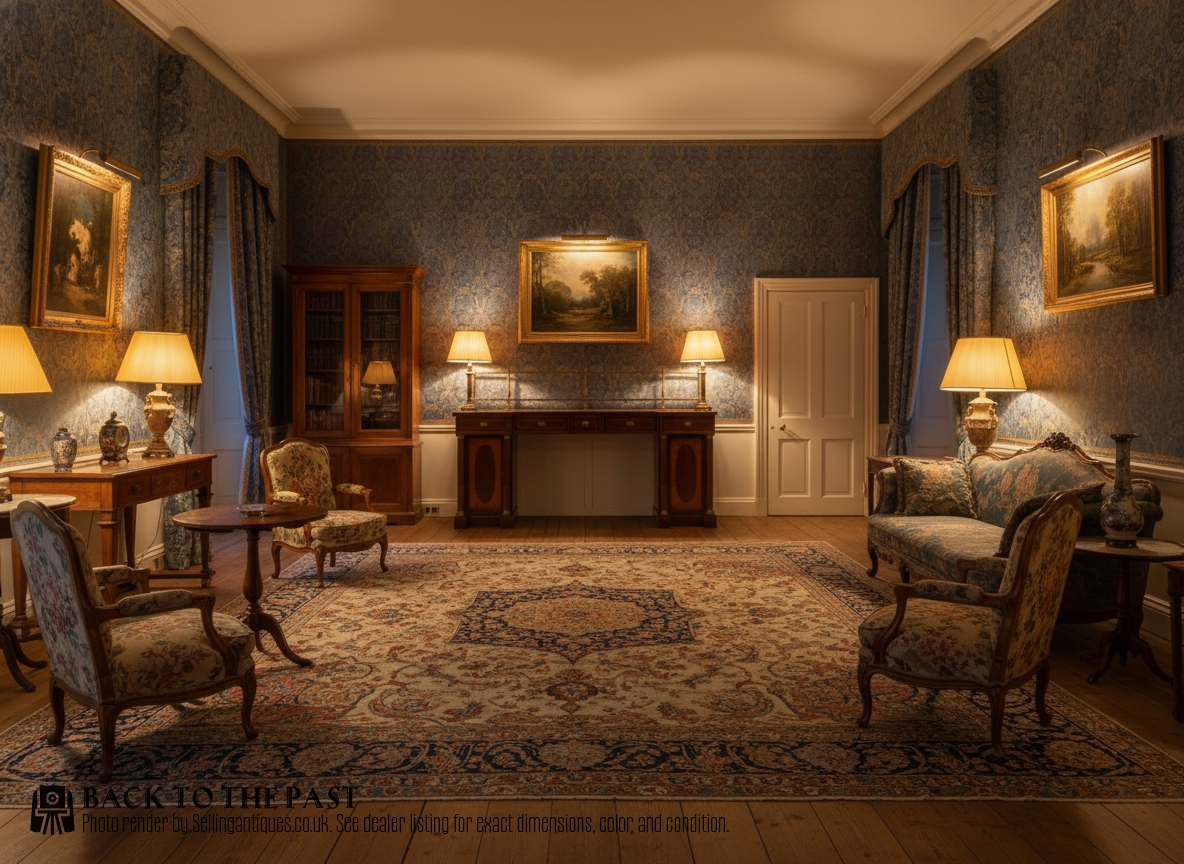
John Gregory London·S Jamar London·Gillington of Dublin·Gillows
The Regency Pedestal Sideboard Glossary
- Pedestal sideboard
- A dining room storage piece featuring two distinct side pillars or cupboards flanking a central board. This form provides substantial storage and a commanding visual presence.
- Flame mahogany
- A veneer cut from timber where the branch meets the trunk, producing a rippling, flame-like grain pattern. Cabinet makers prize this figure for statement panels.
- Brass gallery
- A metal rail mounted on the upper back edge of the sideboard to secure display items or plates. These galleries often feature intricate cast supports.
- Secretaire
- A drawer fitted with a drop-front writing surface and small internal compartments. This addition turns a section of the sideboard into a concealed desk.
Regency Pedestal Sideboard: Frequently Asked Questions
What is a regency pedestal sideboard?
A regency pedestal sideboard is a large dining room serving piece built with two side cabinets supporting or flanking a central console. These heavy case pieces were designed for formal nineteenth-century dining rooms to hold silver, linen, and wine.
They appear in various woods like solid mahogany and flame mahogany veneer, often decorated with brass galleries and fine inlay work.
How do I spot a genuine piece?
Examine the timber selection, secondary woods inside the drawers, and construction methods like hand-cut dovetails. Genuine pieces from the period show natural timber shrinkage and age-appropriate wear beneath the polish.
Hardware such as brass handles and gallery rails should match the period style and show consistent oxidation and fixing methods.
Where should I place it?
These sideboards require a large dining room or wide hallway where their considerable depth and length can be accommodated without blocking movement. They need a solid wall capable of supporting a heavy piece of furniture.
Keep them away from direct heat sources and strong sunlight to protect the fragile mahogany veneers and polished finishes.
How do I care for the surface?
Maintain the timber by dusting with a soft, dry cloth and applying traditional beeswax sparingly to nourish the antique polish. Avoid modern silicone sprays that build up and degrade the historic finish.
Protect the top surface from moisture and heat by using coasters and mats beneath any serving dishes or decorative objects.