
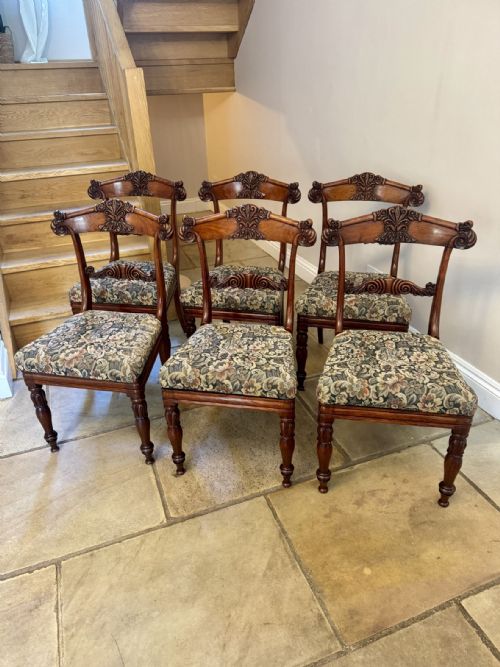
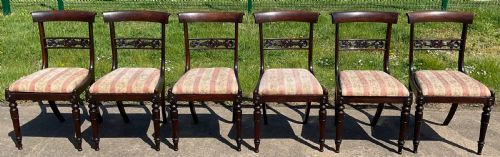


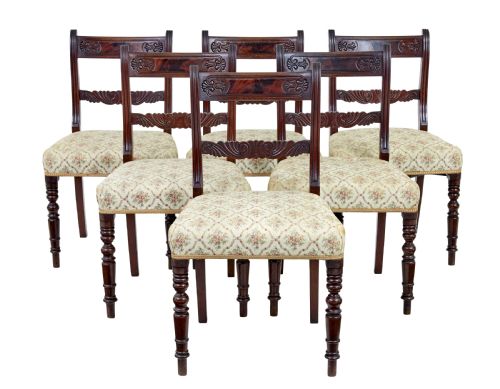


Regency Parlour Chairs
Regency parlour chairs offer a refined look for a formal interior, combining rich timbers and clean lines.
Regency Parlour Chairs
When you search for regency parlour chairs, you are looking at formal seating designed during the early nineteenth century and later revival periods. These pieces appear primarily as sets of dining chairs and side chairs, created to suit the elegant rooms of the period.
The selections on this page span the Regency era proper alongside later nineteenth century pieces and early twentieth century examples. You will frequently encounter matching sets of mahogany or rosewood chairs suited for a traditional dining table or parlour setting.
How they were made
Cabinetmakers utilised dense timbers such as mahogany and rosewood to construct the frames of these chairs. These woods were often polished to a high sheen, highlighting the natural grain and colour.
Seating portions were finished with upholstery, fabric, silk damask, or cane inserts. These materials provided both comfort and decorative contrast against the dark timber frames.
The listings here feature chairs spanning the Regency period, the nineteenth century, and into the twentieth century, constructed from mahogany, rosewood, and painted wood.
What varies in quality
Quality in these chairs rests upon the selection of timber and the crispness of the carving or painted decoration. Sets that retain uniform colour and well-preserved rosewood or mahogany demonstrate superior initial craftsmanship.
The integrity of the frame construction and the choice of covering materials, whether silk damask or traditional upholstery, distinguish standard examples from finer sets.
The Regency Parlour Chairs Glossary
- Mahogany
- A durable, dark reddish-brown tropical hardwood commonly used for fine furniture framing. It takes a high polish and resists warping.
- Rosewood
- A heavily grained, rich timber prized for its dark colour and decorative figuring. It appears frequently on finer Regency seating.
- Silk damask
- A reversible figured fabric woven from silk, often utilised for formal upholstery. It adds a luxurious texture to parlour chairs.
- Cane
- Woven rattan or plant material used to form light, flexible panels for chair seats or backs. It offers a breathable alternative to solid upholstery.
Regency Parlour Chairs: Frequently Asked Questions
What defines a regency parlour chair?
These chairs are characterised by their early nineteenth-century aesthetic, utilising dark woods like mahogany and rosewood with clean, classical lines. They were built primarily as dining or side chairs for formal rooms.
Today, they function well in traditional interiors as both practical seating and decorative elements. Their distinctive timber frames remain central to their visual appeal.
How do I care for rosewood furniture?
Rosewood requires protection from direct sunlight and excessive moisture to prevent fading and cracking. Regular dusting with a soft, dry cloth preserves the polished surface.
Avoid placing these chairs near heat sources which can dry out the timber and fragile joints. Conditioning oils should be used sparingly and only as needed.
Are these chairs suitable for daily dining?
Many examples on this page are sturdy dining chairs built to support regular use. However, older frames and delicate cane or silk upholstery demand a degree of care.
Evaluating the structural stability of each individual chair helps determine its suitability for everyday seating around a dining table.
How do I identify a reproduction?
Distinguishing period pieces involves examining the joinery, wear patterns, and timber characteristics for consistency with nineteenth-century methods. Later revivals from the twentieth century often display different construction markers.
Comparing the finish and wood density provides further clues to the actual age and origin of the chair.