
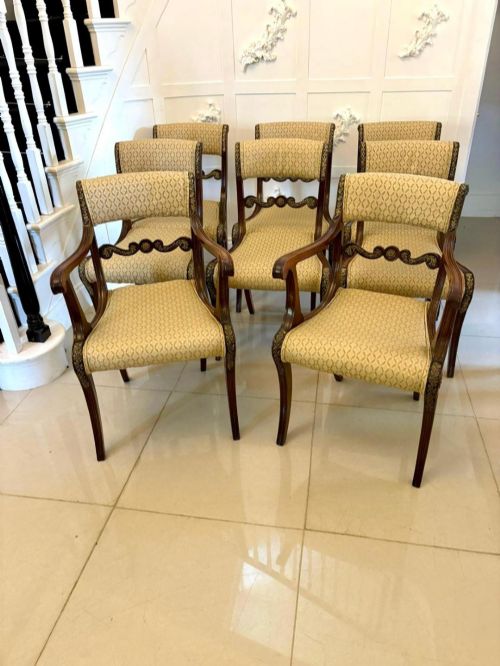

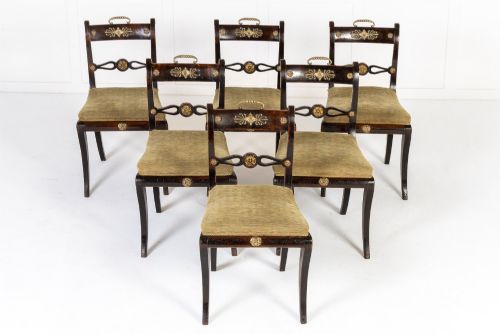
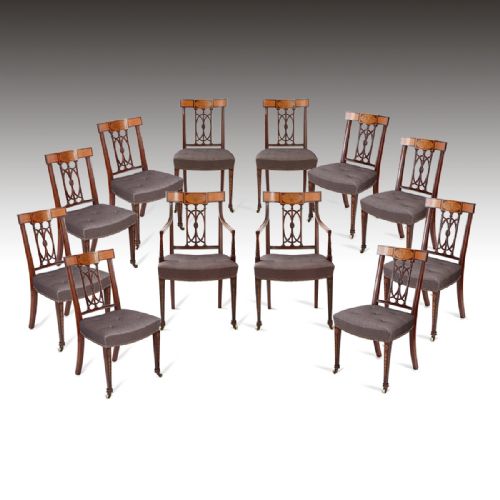
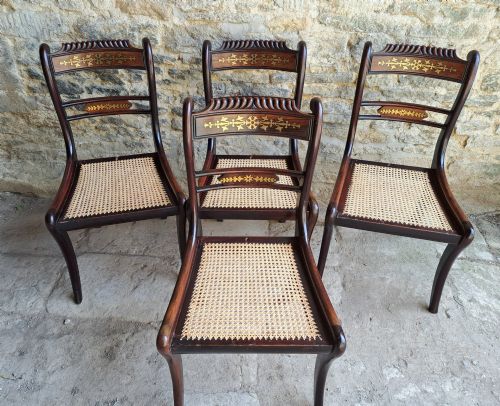


Regency Brass Inlaid Side Chairs
Regency brass inlaid side chairs bring sharp lines and gleaming metalwork into a room, offering both seating and striking period character.
Regency Brass Inlaid Side Chairs
The forms span individual hall chairs through to large matched sets of twelve, originating from the Regency era and associated nineteenth-century periods. These pieces serve as functional dining furniture and decorative statements, often appearing in sets of varying counts.
Materials and construction
The makers of these chairs utilised dense timbers including mahogany, rosewood, satinwood, and occasionally faux rosewood finishes to provide a dark, contrasting background. They then embedded intricate brass inlay directly into the wooden surfaces, creating sharp geometric or classical motifs.
Fabric upholstery was incorporated into the seats of these dining and side chairs, providing comfort to complement the rigid wooden frames. The combination of figured wood and polished metal required precise hand-fitting to ensure the brass flush-mounted smoothly with the timber.
Some nineteenth-century makers evidently grew tired of waiting for expensive timber shipments and simply painted ordinary wood to look like rosewood instead.
Judging the standard of execution
The distinction between tiers of quality rests in the crispness of the brass inlay and the selection of the timber ground. Highly finished examples display tightly fitted metalwork embedded seamlessly into richly grained rosewood or mahogany, while lesser pieces show wider gaps around the brass or simpler wood figures.
Set size and uniformity also divide the range, as matched gatherings of six, eight, or twelve pieces demand consistent timber selection across every frame. Single chairs and pairs rely entirely on the sharpness of their carving and the preservation of the original brass work.
John Gee
The Regency Brass Inlaid Side Chairs Glossary
- Regency
- A British design period spanning the early nineteenth century, characterised by classical revival motifs and refined furniture forms. It draws heavily on ancient Greek, Roman, and Egyptian aesthetics.
- Inlay
- A decorative technique where contrasting materials, such as brass, are set flush into recesses carved into the wood surface. This method creates smooth, patterned ornamentation across the backrests and rails.
- Side Chair
- An upright chair without arms, traditionally used around a dining table or placed against a wall when not in use. These forms constitute the majority of the seating seen in this group.
- Faux Rosewood
- A painted surface treatment designed to imitate the rich grain and deep colour of genuine rosewood timber. Makers utilised this technique on alternative woods to achieve a fashionable dark finish.
- Satinwood
- A luminous, hard timber with a golden yellow sheen, frequently used for contrasting details and inlay work on fine period furniture. Its bright tone stands out sharply against darker woods.
Regency Brass Inlaid Side Chairs: Frequently Asked Questions
What defines a regency brass inlaid side chair?
These chairs are defined by their early nineteenth-century origin, upright form without arms, and decorative brass metalwork set directly into the wood. They reflect the classical design trends of the period.
They typically feature mahogany, rosewood, or satinwood timbers, combining structural rigidity with ornamental metal lines along the crest rails and splats.
How were these chairs used historically?
Historically, they served primarily as dining furniture or as decorative seating placed around the perimeter of formal rooms. Their elegant backs made them suitable for display against walls when not gathered around a table.
Larger sets accommodated guests during formal meals, while single chairs and pairs often functioned as hall seats or occasional pieces in reception rooms.
How do I care for brass inlaid furniture?
Care involves maintaining stable indoor humidity levels and keeping the timber and metal away from direct heat sources. Regular dusting with a soft, dry cloth prevents grime accumulation in the recessed brass channels.
Polishing should be done sparingly and carefully to avoid lifting the thin brass strips from their wooden grooves or staining the surrounding fabric upholstery.
Are these chairs comfortable for daily use?
They provide an upright, formal sitting posture typical of nineteenth-century dining etiquette, rather than deep lounging comfort. The supportive backrests and upholstered seat pads make them suitable for meals and gatherings.
Modern daily use is practical provided the frame joints remain tight and the historical upholstery webbing is sound and supportive.
How can I tell the period of a chair?
Dating relies on examining the timber species, construction methods, and the style of the brass inlay work. Pieces from the Regency era and early nineteenth century show specific classical proportions and hand-cut joinery.
Later nineteenth-century or 1900s interpretations often display different secondary woods and machine-processed elements beneath the surface finish.