



Georgian Brass Inlaid Chairs
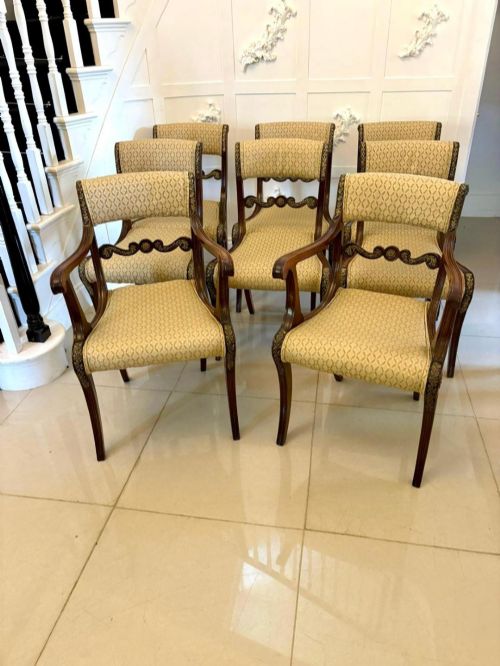
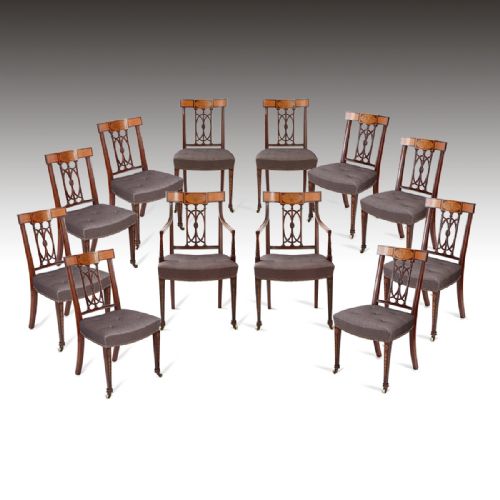
Georgian brass inlaid chairs bring linear brilliance and warm cabinet woods to a room, offering the sharp distinction of Regency design.
Georgian Brass Inlaid Chairs
The aesthetic relies on the contrast between dark or figured grounds and bright metal line work. Makers placed these seats around dining tables, in libraries, and in hallways, where the reflected light from the brass catch the eye instantly.
How they were made
Cabinetmakers constructed the frames primarily from mahogany, rosewood, faux rosewood, and satinwood, applying brass inlay into precision-cut channels along the crest rails and splats. This metalwork sits flush with the polished wood surface, secured by careful fitting and adhesives.
Upholstery and leather appear on seated examples, while others present plain timber panels for hall use. Turnings and saber legs support the frames, balancing the decorative weight of the brass.
Listings here feature mahogany, rosewood, faux rosewood, satinwood, and fabric upholstery across various nineteenth-century periods.
What varies in quality
The distinction between ordinary and exceptional seating lies in the crispness of the brass cutting and the selection of the timber grain underneath. Finer sets display perfectly regular inlay lines that follow the curves of the wood without lifting or showing gaps.
Timber choice also dictates value, with highly figured rosewood or satinwood grounds marking the upper tier of production. Frame integrity, original joinery, and matching grain patterns across a full set elevate certain pieces far above single replacements.
John Gee
The Georgian Brass Inlaid Chairs Glossary
- Regency
- A style period spanning the early nineteenth century defined by classical restraint and neoclassical motifs. It draws inspiration from ancient Roman, Greek, and Egyptian forms.
- Elbow chair
- An armchair designed with low arms that typically sits at the head of a dining table or functions as an occasional seat. These pieces match larger sets of dining chairs.
- Satinwood
- A durable exotic timber with a lustrous yellow or golden sheen used as a contrasting veneer or primary wood. It provides a bright ground for brass inlay.
- Faux rosewood
- A decorative painted finish applied to a secondary timber to imitate the dark grain and rich tones of genuine rosewood. Craftsmen used this technique during the Regency period.
- Hall chair
- A stiff timber seat intended for an entrance hall, usually without upholstered padding. These often feature carved or inlaid crests and solid wood bases.
Georgian Brass Inlaid Chairs: Frequently Asked Questions
How do I clean brass inlay?
Clean the brass gently using a soft cloth and avoid liquid polishes that can stain the surrounding wood grain.
Keep moisture away from the timber surface to protect both the polish and the adhesive holding the metal strips.
Are these chairs comfortable?
Dining chairs and elbow chairs from this period feature upholstered seats designed for formal dining rather than long lounging. The upright backs encourage a proper posture suited to period interiors.
Armchairs and desk chairs offer slightly more support through their enclosed arms and padded squabs.
Can I mix different wood tones?
Mahogany and rosewood pieces share dark foundational tones that allow them to sit together within the same room. Matching the style of the brass inlay matters more than securing an identical timber species across every seat.
Sets often show slight natural variations in the grain because every tree grew differently.
How do I date these chairs?
Look to the leg shape, timber choice, and the complexity of the brass motifs to narrow down the decade of production. Saber legs and citrus-toned woods point firmly toward the early nineteenth century.
Construction marks and the precision of the joinery also help distinguish authentic Regency pieces from later nineteenth-century interpretations.