
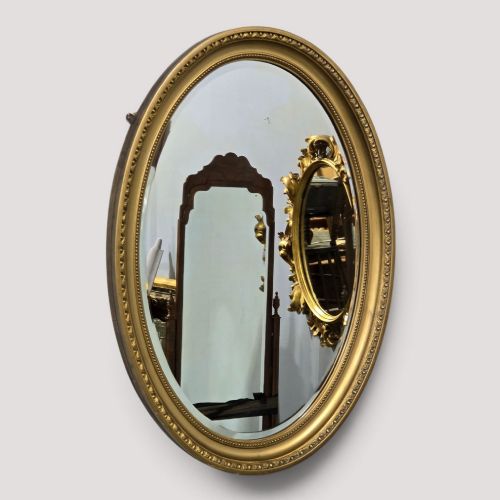
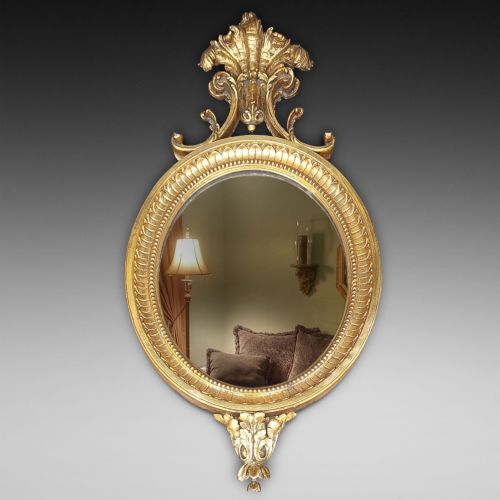
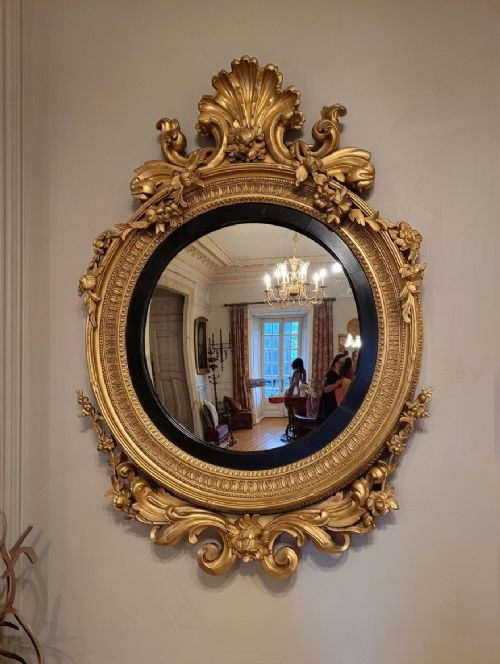
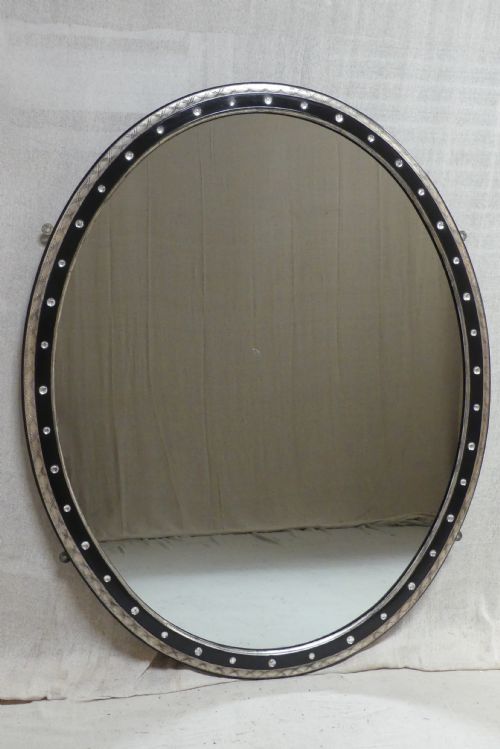




Regency Oval Wall Mirror
A regency oval wall mirror brings refined proportion and reflective light to a room, offering the clean curves characteristic of the period.
Regency Oval Wall Mirror
When you search for a regency oval wall mirror, you encounter pieces spanning the early nineteenth century alongside later nineteenth-century revivals. The forms range from simple hanging wall glasses to substantial overmantels designed for principal reception rooms.
Many examples emerge from English and Irish workshops, though continental interpretations also appear. They span original Regency production through to Victorian revivals and Edwardian craftsmanship.
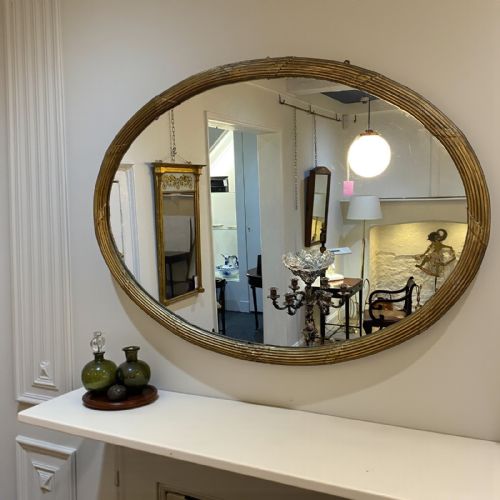
The oval format softens vertical wall spaces while maintaining the architectural symmetry favoured during the period. These mirrors appear in various scales, from intimate miniature pairs to large horizontal overmantel formats.
Materials and construction
Makers utilised timber substrates coated in gesso before applying gold leaf or liquid gilding. Carved wood details, rope twists and composition ornaments decorate the frames.
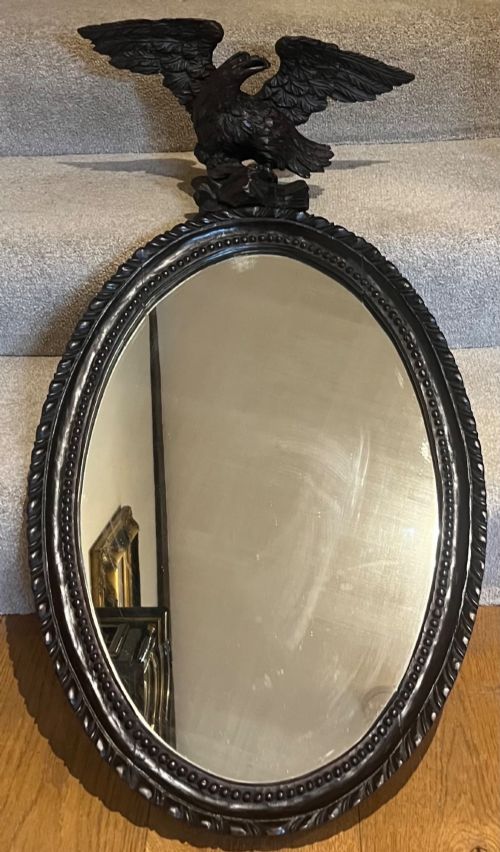
Mirrored glass plates are set within frames of giltwood, parcel gilt, or ebonised timber. Certain pieces incorporate detailed crests, eagles, or laurel wreaths worked in relief.
Certain frames feature attentive carved eagles peering down from the crest, watching over every reflection in the room.
Judging quality and execution
The crispness of the carved gesso decoration and the depth of the gilding separate standard production from finer examples. Hand-carved elements display sharper definition than moulded composition ornaments.
The preservation of the original mercury or silvered mirror glass plates influences the character of the piece. Proportion, balance, and the integration of decorative motifs such as eagles or griffins dictate the overall visual weight.
The Regency Oval Wall Mirror Glossary
- Giltwood
- Timber that has been covered with a thin layer of gold leaf. This finish defines the reflective warmth of traditional frames.
- Gesso
- A plaster mixture applied to wooden frames as a smooth base for gilding. It allows intricate relief modelling before leafing.
- Overmantel
- A large mirror specifically designed to hang above a fireplace mantelpiece. These pieces often feature extended horizontal proportions.
- Girandole
- A wall mirror fitted with attached candle branches or sconces. The candle light reflects directly off the mirror glass.
- Parcel Gilt
- A finish where only specific carved portions of a frame are highlighted with gold leaf against an ebonised or painted ground.
Regency Oval Wall Mirror: Frequently Asked Questions
Where should I hang an oval mirror?
These mirrors suit chimney breasts, entrance hallways, or above commodes and sideboards. Their curved silhouette softens rectangular architectural lines.
Ensure the hanging fixings match the weight of the timber and gesso frame, securing directly into wall studs or using appropriate masonry anchors.
How do I date a gilt mirror?
Examine the construction of the wooden frame, the composition of the gesso, and the backboards where visible. Early nineteenth-century pieces often show hand-carved details and older plate glass.
Revival pieces from later in the nineteenth century typically utilise machine-prepared timber and different fastening methods on the reverse.
What is the difference between Regency and Regency Revival?
Original Regency pieces date from the early nineteenth century, reflecting the neoclassical tastes of the Regency era and the reign of George IV. They carry the patination of genuine age.
Regency Revival pieces date from the Victorian and Edwardian periods, copying the earlier aesthetic using the manufacturing techniques of their own time.
How do I clean an antique mirror?
Dust the frame gently with a soft dry brush to protect delicate gesso and gold leaf surfaces. Avoid chemical sprays or water near the gilt.
Clean the glass plate sparingly using a cloth slightly dampened with distilled water, ensuring moisture does not seep behind the edge of the frame.