
Regency Nightstand
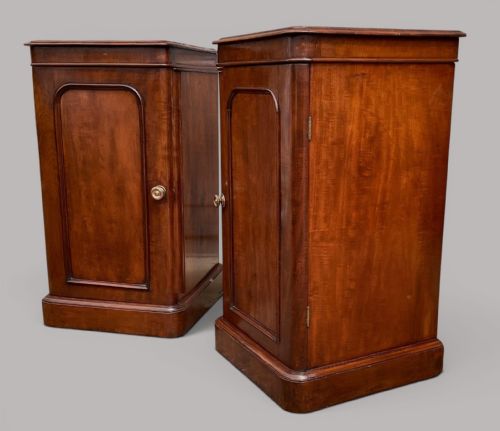
A regency nightstand brings restrained proportion and rich timber to the bedside, holding a candle or a book with absolute dignity.
Regency Nightstand
A regency nightstand embodies the classical lines and practical ingenuity of the early nineteenth century, serving as a compact bedside companion.
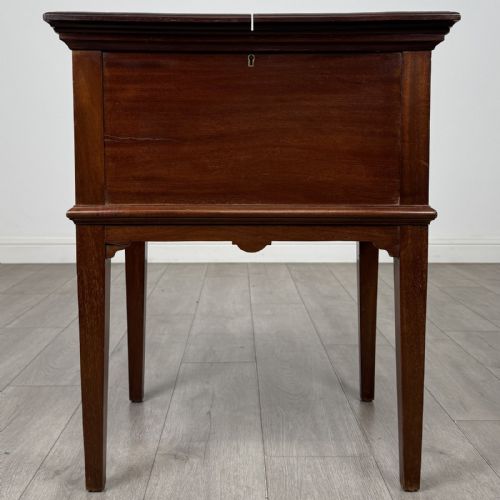
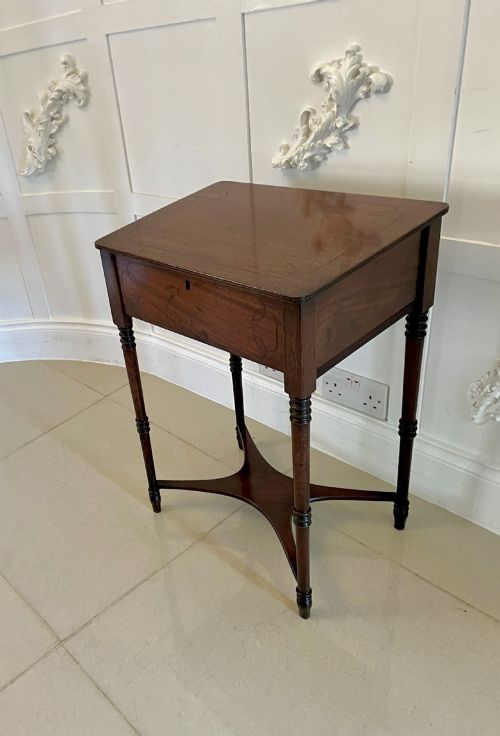
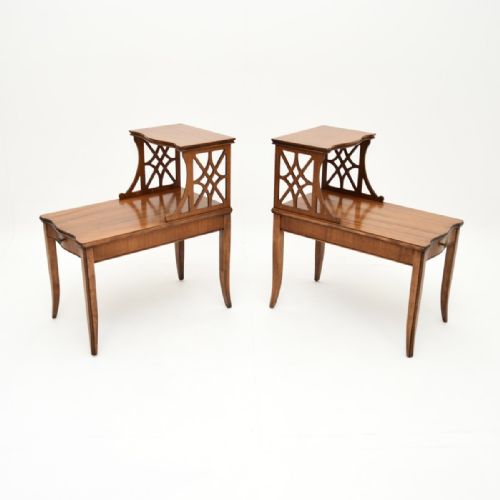
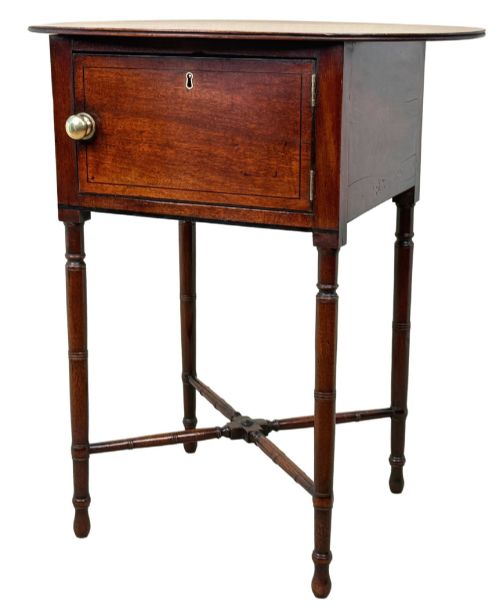
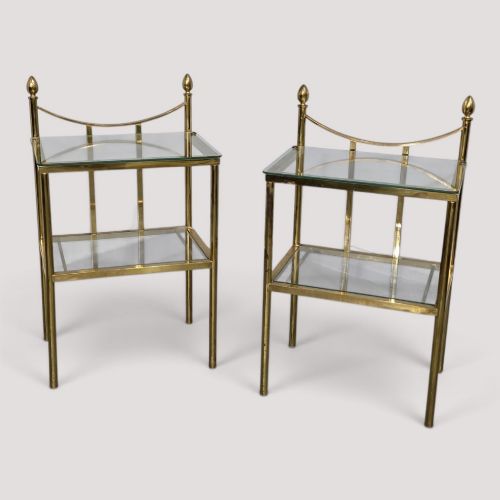
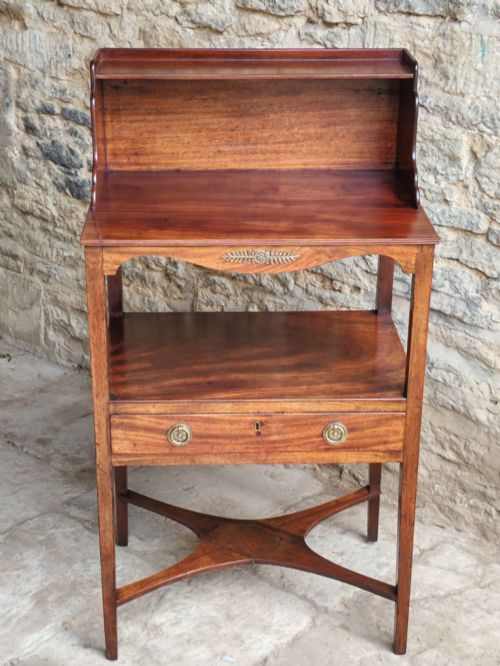
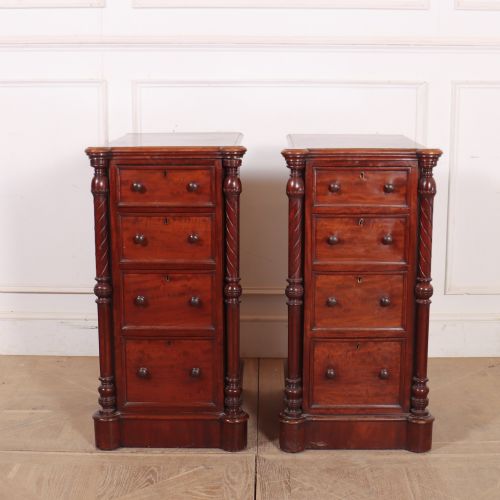
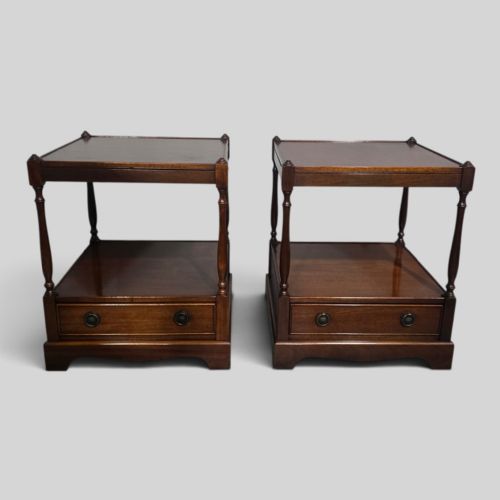
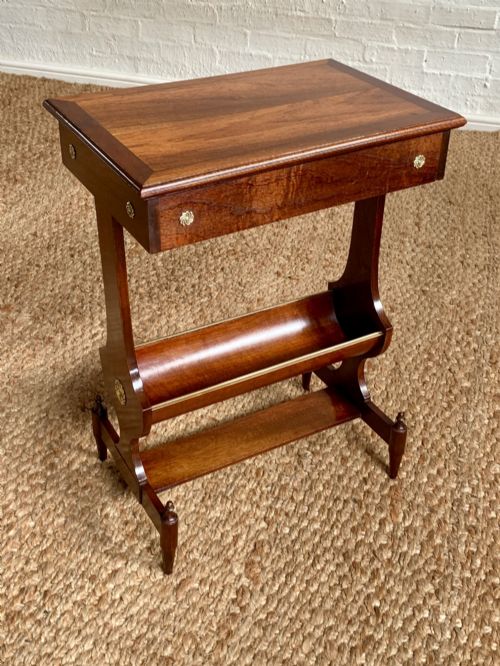
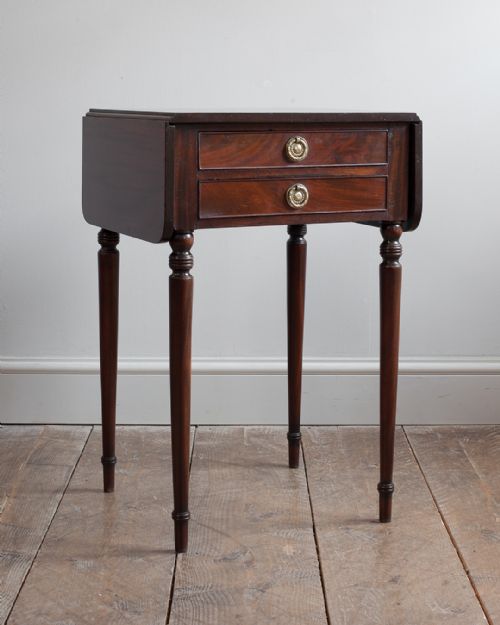
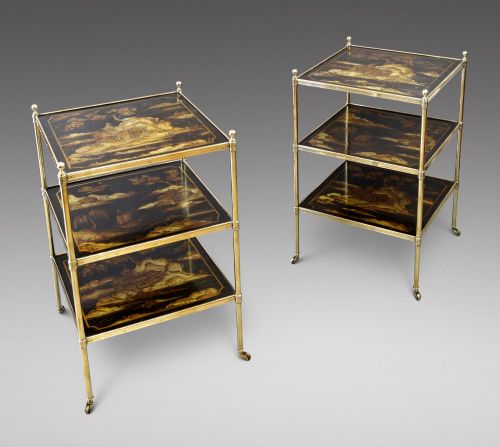
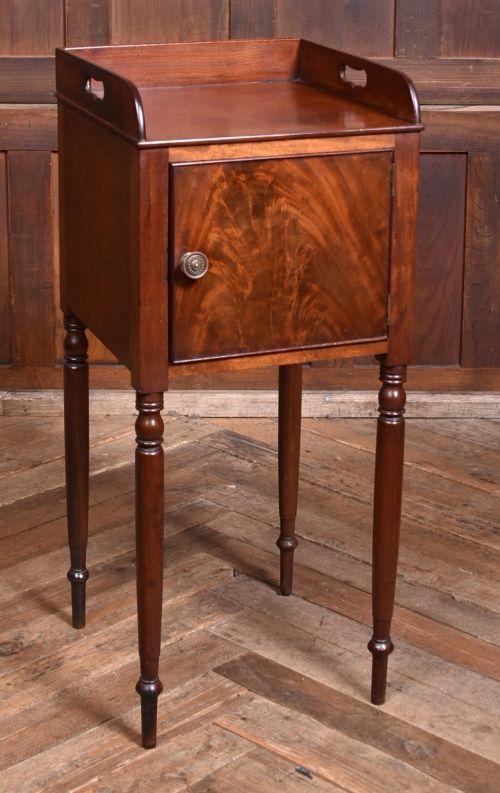
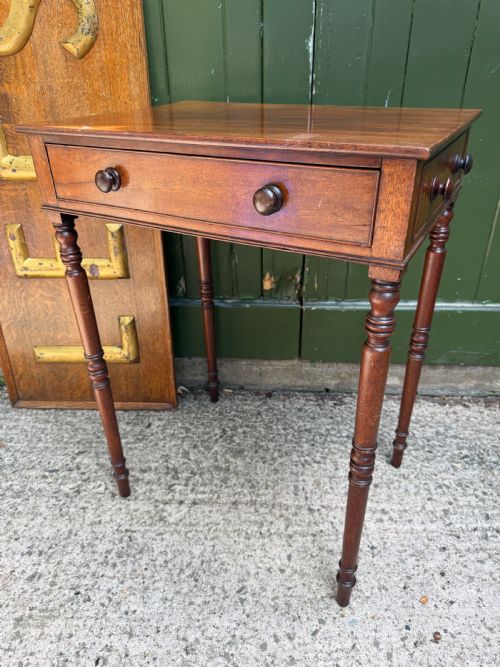
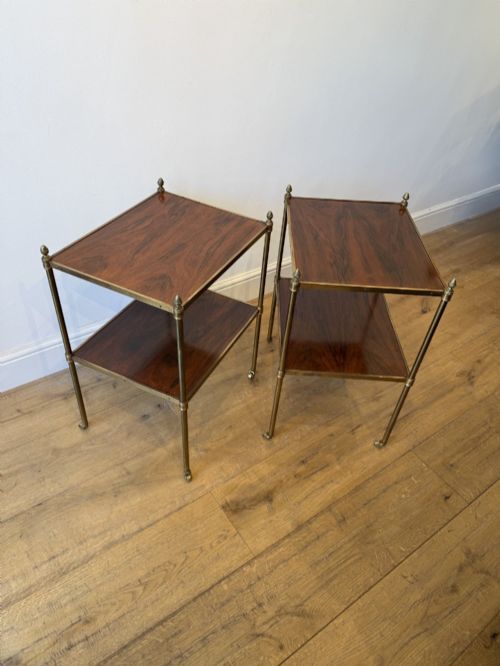
The pieces on this page encompass authentic period examples alongside later revivals, taking the form of enclosed cupboards, open lamp tables, and fitted work tables.
Mahogany predominates, frequently selected for its deep grain, while rosewood and ebonised timber appear in more formal rooms.
Materials and technique
Cabinetmakers relied upon solid mahogany and figured flame veneers applied to robust timber carcases, often incorporating turned or reeded legs.
Brass hardware, from drop handles to gallery rails, provides functional contrast, while occasional marble tops introduce a cooler, durable surface.
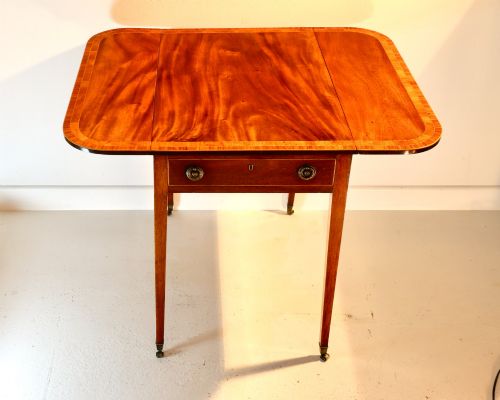
Object types span bedside cupboards, Pembroke tables, etageres, and work tables fitted with removable sewing baskets.
Gradations of quality
Quality rests upon the selection of timber figures, where matched flame mahogany and rich rosewood elevate a simple bedside cupboard into a considered piece of furniture.
Joinery details such as finely cut dovetails in drawer construction and the crispness of reeded or turned supports distinguish workshop standards.
Holland & Sons·Mallett·Gillows
The Regency Nightstand Glossary
- Flame mahogany
- A timber veneer displaying a swirling, flame-like grain pattern prized for its decorative impact on cabinet doors and tabletops.
- Pot cupboard
- A compact bedside cabinet originally designed to house a chamber pot behind a single panelled door.
- Work table
- A small occasional table fitted with a drawer or hanging bag for sewing and needlework supplies.
- Ebonised wood
- Timber stained or treated to imitate dense, black ebony, frequently used for contrasting details during the Regency period.
Regency Nightstand: Frequently Asked Questions
What is a regency nightstand?
A regency nightstand is a small bedside table or enclosed cupboard dating from the early nineteenth century or later revival periods.
These pieces typically feature mahogany timber, straightforward classical proportions, and occasionally drawers or shelves for nighttime essentials.
How were regency nightstands used?
They served beside sleeping quarters to hold candlesticks, pocket watches, books, and chamber pots.
Their compact footprints allowed them to fit snugly next to four-poster or canopy beds without crowding the bedchamber.
How do I care for mahogany?
Mahogany responds best to gentle dusting with a dry, soft cloth and occasional application of traditional beeswax to nourish the timber.
Keep these tables away from direct heat sources and strong sunlight to prevent the wood from drying out or fading.
How do I distinguish original pieces?
Original period pieces display traditional hand-cut joinery, timber shrinkage appropriate to age, and hardware consistent with early nineteenth-century brasswork.
Later revivals often show machine tooling or timber preparations that reflect twentieth-century manufacturing methods.