


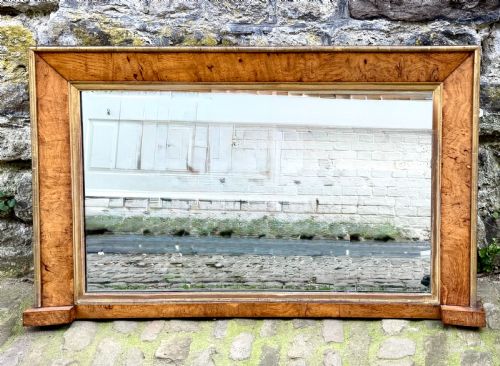


Regency Mirror Gilt Slip
A regency mirror gilt slip brings light and architectural proportion to a room, framing reflections with the sharp contrast of an ebonised inner moulding.
Regency Mirror Gilt Slip
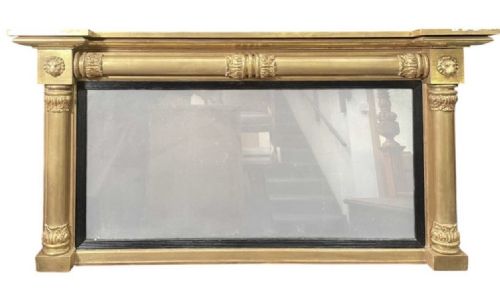
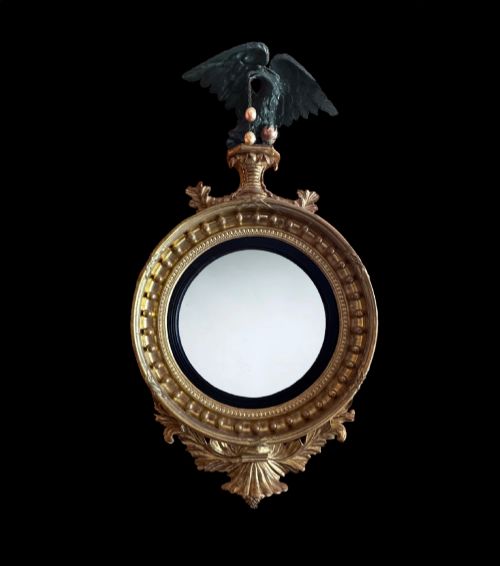
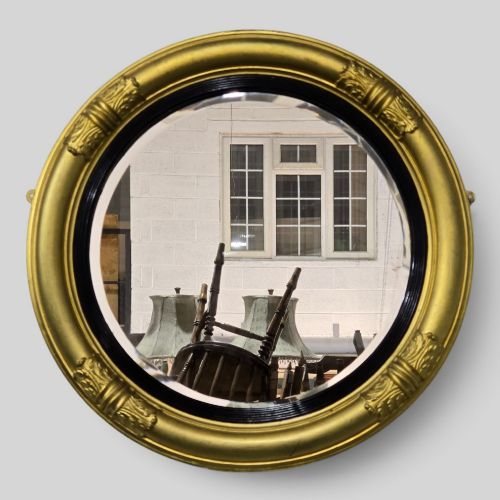
When searching for a regency mirror gilt slip, a buyer encounters wall-hanging convex mirrors and large architectural overmantels from the nineteenth century. These objects include round bullseye glasses with eagle surmounts and wide triptych frames designed to catch and spread daylight across an interior.
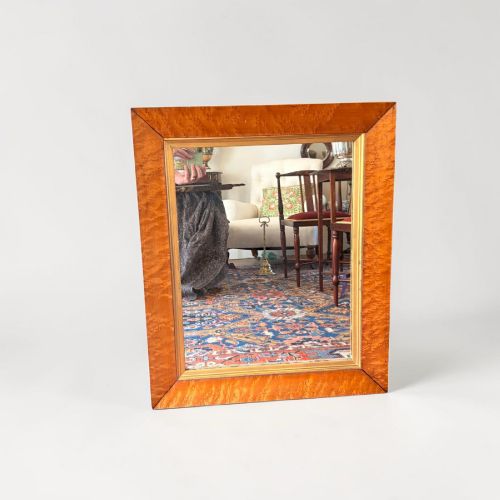
The dominant forms on this page span the genuine Regency era through the Victorian period and later revivals. Giltwood frames paired with dark inner slips appear frequently, alongside rosewood and birds eye maple constructions that reflect changing tastes across the decades.
Materials and construction methods
Carved giltwood and gesso form the primary structure of these frames, often built over a pine carcass to shape elaborate ornaments like eagles and acanthus columns. Artisans applied gold leaf over red bole grounds, producing the warm metallic lustre seen on the convex mouldings.
Ebonised wood and glass are integrated to create the characteristic slip that borders the reflective plate. Rosewood and brass details also appear in the framing, combining dark timbers with bright gilding.
Materials recorded across the inventory include giltwood, ebonised wood, rosewood, brass, and birds eye maple.
Distinctions in craftsmanship
The standard of carving in the giltwood ornament determines the distinction between finer examples and simpler work. Crisp detailing on eagle crests and acanthus leaves shows the hand of a skilled maker.
The preservation of the original mercury glass plate and the integrity of the gesso ground over the pine timber dictate the physical condition and visual depth of the piece.
The Regency Mirror Gilt Slip Glossary
- Giltwood
- Wood coated with gold leaf or gold paint. This finish creates the bright reflective surface characteristic of these frames.
- Gesso
- A plaster mixture applied to wood frames as a base for gilding. It allows craftsmen to carve intricate details before applying gold leaf.
- Convex mirror
- A round glass curved outward to provide a wide, distorted panoramic view of a room. These mirrors are frequently mounted with eagle crests.
- Overmantel mirror
- A wide mirror designed to hang above a fireplace mantelpiece. They often feature triptych glass plates and architectural columns.
- Ebonised wood
- Timber treated to imitate ebony. This dark finish forms the contrasting slip found inside gilt frames.
Regency Mirror Gilt Slip: Frequently Asked Questions
What is a gilt slip?
A gilt slip is an inner framing moulding, often ebonised or gilded, that sits between the main frame and the mirror glass.
It provides a distinct optical border that draws the eye inward toward the reflection.
How do I hang a heavy overmantel mirror?
These large architectural frames require secure fixing directly into wall studs or masonry using appropriate brackets.
Their substantial weight demands professional installation to ensure stability above a fireplace or on a principal wall.
Are convex mirrors original to the Regency period?
Convex wall mirrors were exceptionally popular during the Regency era and remained so through later Victorian revivals.
Distinguishing original period pieces involves examining the construction of the pine backing and the characteristics of the glass plate.
How should I clean a antique giltwood frame?
Dusting the carved surface gently with a soft, dry brush prevents the accumulation of dirt without disturbing the fragile gold leaf.
Water and chemical cleaning agents must be avoided entirely to protect the historic gesso and gilding.