
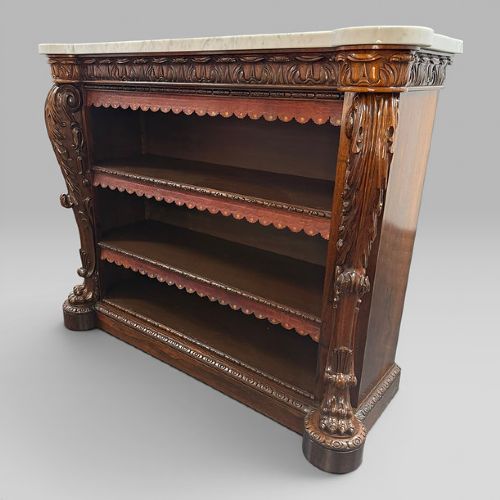


Regency Marble Top Credenza
A regency marble top credenza offers refined surface stone and enclosed storage, bringing classical proportion and figured timber to a formal interior.
Regency Marble Top Credenza
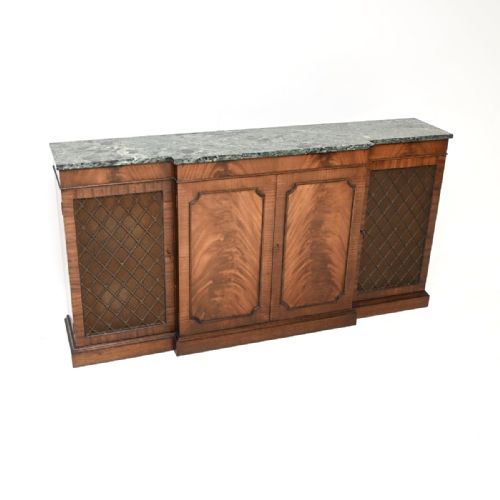
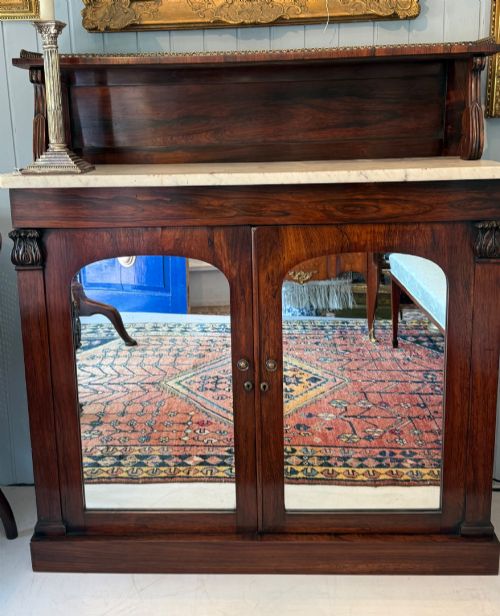
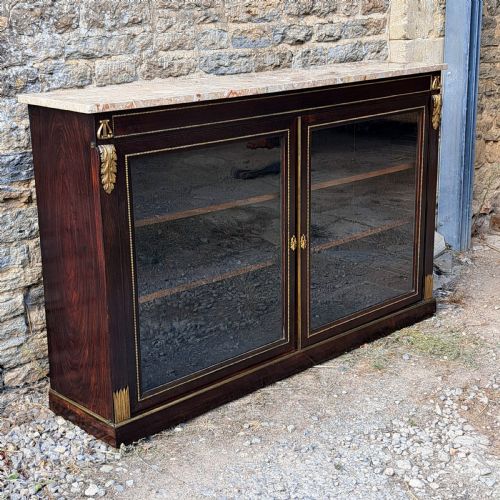
When searching for a regency marble top credenza, a buyer encounters a selection of low storage furniture spanning the Regency, William IV, and Victorian periods, alongside later twentieth-century interpretations. These forms include side cabinets, chiffoniers, console tables, and bookcases finished with fitted stone tops.
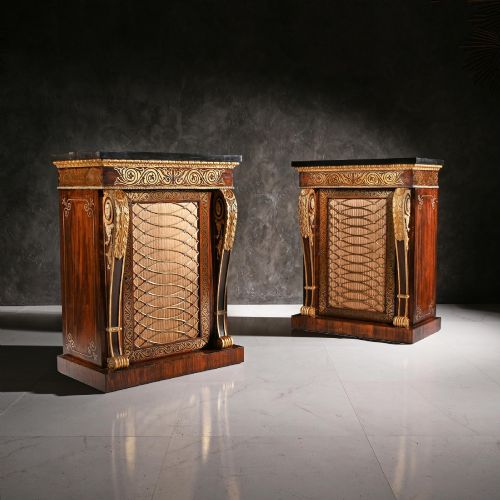
The material combination brings together polished marble slabs set upon timber cabinetry, predominantly executed in rosewood and mahogany. Many examples incorporate brass inlay, giltwood highlights, and fabric or grill panels across the doors.
Originating largely from nineteenth-century workshops, these pieces function as serving surfaces or display stands within dining rooms and drawing rooms. The selection demonstrates diverse regional interpretations, including English cabinet work and French Empire influences.
Materials and construction
Cabinet makers utilised dense imported hardwoods like rosewood and mahogany for the primary carcases, often applying veneers to achieve striking grain patterns. Structural elements incorporate secondary timbers to support the heavy stone slabs.
Decorations rely on precision metalwork, including brass stringing, gilt-bronze mounts, and cast brass grilles fitted into door frames. Giltwood accents and parcel gilding highlight carved mouldings and architectural details.
Fitted marble tops provide a cool, durable surface that contrasts with the warm timber tones below. Stonework is typically shaped to follow the breakfront or demi-lune contours of the cabinet base.
Listings feature pieces spanning the nineteenth century, including Regency, William IV, and Victorian periods, constructed primarily in rosewood, mahogany, and marble.
Distinctions in quality
Quality rests upon the selection of timber veneers and the precision of decorative metal inlay. Superior examples display continuous, book-matched grain patterns across wide cabinet doors and drawer fronts.
The refinement of carved details, from gilded mouldings to classical mounts, separates standard production from workshop pieces associated with notable cabinet makers. Structural integrity in the marble slab and its junction with the timber frame also indicates standard of manufacture.
Louis Constantin Le Gaigneur·Gillows·S Jamar of London
The Regency Marble Top Credenza Glossary
- Credenza
- A low cabinet or sideboard designed for display and storage, typically positioned against a dining room or drawing room wall. The form developed significantly during the nineteenth century to incorporate open shelving and enclosed cupboards.
- Chiffonier
- A compact sideboard or cabinet featuring shelves or a raised superstructure above a low storage base. These pieces frequently incorporate marble tops and fabric-backed door panels.
- Breakfront
- A cabinet design where the central section projects forward from the flanking wings. This architectural arrangement creates depth and rhythm across the front elevation.
- Demi-lune
- A half-moon or semicircular shape applied to console tables and side cabinets. This curve allows furniture to sit flush against a wall while softening room circulation.
- Parcel gilt
- A decorative technique where specific carved elements or mouldings receive a thin application of gold leaf while the surrounding timber remains visible. It accentuates structural lines on Regency and neoclassical furniture.
Regency Marble Top Credenza: Frequently Asked Questions
What is a regency marble top credenza used for?
These cabinets serve as principal display and storage furniture in reception rooms. The flat stone surface provides a durable platform for lamps, decorative objects, and serving items.
Enclosed lower cupboards and open shelving hold books, silver, or linens. Their low profile ensures they sit comfortably beneath large mirrors or artwork without dominating the wall.
How do I care for the marble top?
Clean the stone surface using a soft cloth dampened with warm water and mild, neutral soap. Avoid acidic liquids like vinegar, wine, or citrus juice, which can etch polished marble.
Permanent coasters and placemats protect the porous material from rings and scratches during daily use. Occasional application of a specialised stone wax maintains the sheen without sealing in moisture.
How do I identify Regency period pieces?
Regency furniture draws heavily on classical Greek and Roman motifs, featuring restrained carved details, architectural columns, and brass inlay. Rosewood and mahogany predominate, often paired with gilt bronze mounts.
Proportions remain balanced and symmetrical, reflecting the influence of neoclassical design principles between the late eighteenth and early nineteenth centuries.
Where should I place this cabinet?
Position the piece against a principal wall in a dining room, hallway, or drawing room where its proportions can be appreciated. Ensure adequate clearance for doors to open fully without striking adjacent furniture.
Keep the cabinet away from direct heat sources and strong sunlight to protect nineteenth-century wood veneers and polished finishes from drying or fading.