





Vintage Rosewood Console Table
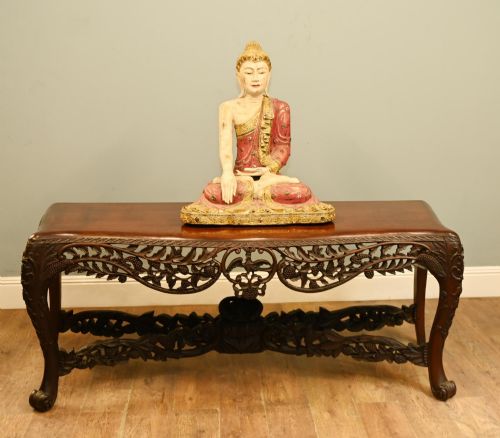
A vintage rosewood console table brings rich timber figure and formal presence to a hallway or drawing room.
Vintage Rosewood Console Table
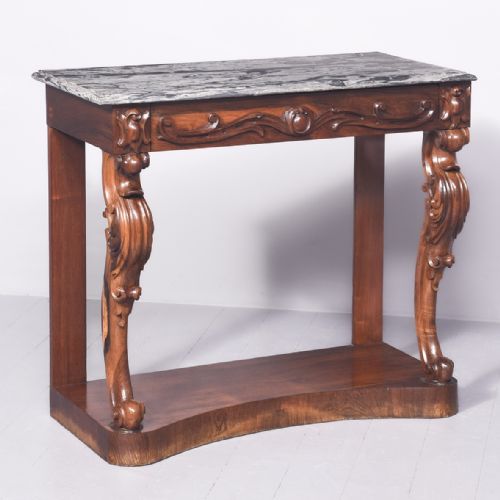
A vintage rosewood console table is a narrow form designed to stand against a wall, frequently paired with a matching mirror or fitted with a stone surface. The examples here span multiple periods, ranging from eighteenth-century Portuguese designs to nineteenth-century Regency and William IV pieces, alongside Edwardian and later interpretations.
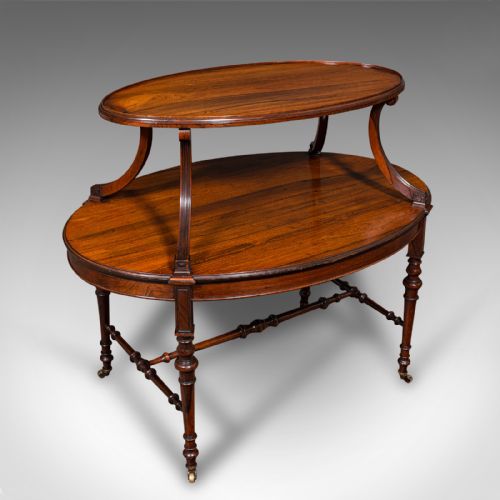
Beyond standard console tables, the selection includes related forms that serve a similar function in a room, such as pier tables, serving tables, and occasional tables. Makers utilise the striking grain of rosewood across diverse regional styles, including Anglo-Indian production and Austrian bentwood by Thonet.
Materials and construction
Craftsmen built these tables using dense rosewood, frequently applying it as a finely figured veneer over secondary timbers such as mahogany or beech to highlight the natural grain patterns. Structural stability was achieved through traditional joinery, while decorative impact often relied on contrasting boxwood inlay and intricate marquetry or parquetry work.
Many formal nineteenth-century surfaces incorporate heavy marble tops, requiring robust framing to support the stone safely against a wall. Metal accents such as brass fittings and ormolu mounts appear on specific stylistic examples, adding metallic contrast to the dark timber.
Vintage Rosewood Console Table Retail Price Guide 2026
Typical asking prices for vintage rosewood console table among the pieces listed under this phrase on Sellingantiques today, from the lower quarter to the upper quarter. They describe what is for sale here now, not the wider market.
Judging quality in rosewood furniture
Quality rests in the selection and matching of the rosewood veneer, where continuous grain patterns across the top and drawer fronts show superior cabinetmaking. Finer pieces integrate precise boxwood stringing and crisp carving rather than relying on heavy, unrefined mouldings.
The integrity of the structural frame, whether a heavy nineteenth-century pillar base or delicate Edwardian legs, dictates how well the table stands over time. Tables retaining their original marble tops or integrated brass elements demonstrate a higher degree of original craftsmanship.
Thonet
The Vintage Rosewood Console Table Glossary
- Console table
- A table designed to stand against a wall, traditionally fixed with brackets or supported by front legs.
- Pier table
- A low table specifically built to sit against the wall space between two windows, frequently topped with marble.
- Parquetry
- Geometric patterns formed by fitting small pieces of wood veneer together on a surface.
- Ormolu
- Gilded bronze mounts applied to furniture for decorative enrichment during the eighteenth and nineteenth centuries.
- Bentwood
- Wood softened by steam and bent into curved structural forms, famously utilised by Thonet.
Vintage Rosewood Console Table: Frequently Asked Questions
Where should a console table be placed?
A console table works well in a hallway, entranceway, or living room where floor space is restricted. Because many historic versions were designed to stand flat against a wall, they provide a surface for lamps and decorative objects without blocking movement.
Heavier examples with marble tops benefit from solid wall placement to ensure stability, while freestanding card tables can sit in the centre of a room when opened.
How do I care for rosewood surfaces?
Rosewood requires minimal intervention to maintain its natural lustre over decades of domestic use. Regular dusting with a soft, dry cloth prevents particulate build-up that can dull the polished finish.
Keep these tables away from direct sunlight and strong heat sources to prevent the timber veneers from drying out or splitting. Occasional application of appropriate wax feeds the wood without leaving a sticky residue.
What is the difference between a console and a pier table?
Console tables are generally designed to stand against any flat wall space to support decorative items or serve as a side surface. Pier tables specifically reference the architectural space between two windows, often historically paired with a matching wall mirror above.
Both forms utilise similar dense timbers like rosewood, but pier tables frequently feature marble surfaces designed to reflect light from adjacent windows.
How can I identify a Regency period table?
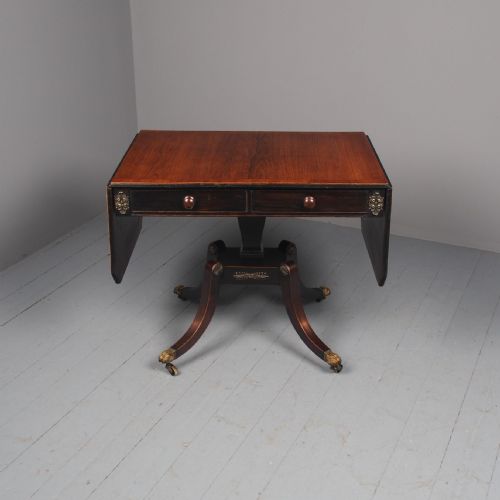
Regency tables typically display classical architectural influences, drawing inspiration from ancient Roman, Greek, and Egyptian motifs. Look for bold geometric lines, dark rosewood timber, and restrained brass or boxwood inlay rather than heavy carving.
These pieces often feature robust pillar supports or sabre legs, reflecting the aesthetic preferences of the early nineteenth century.