
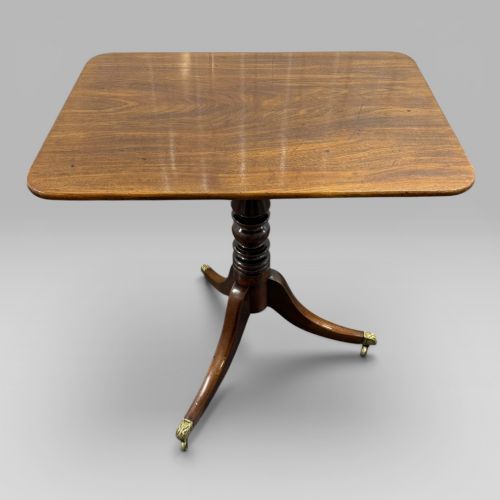
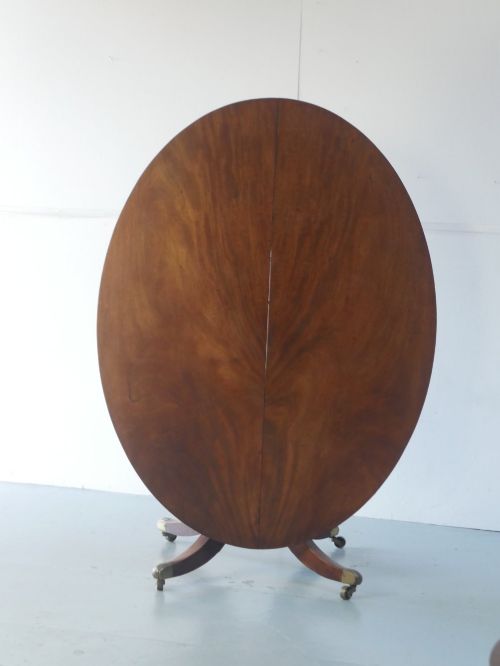
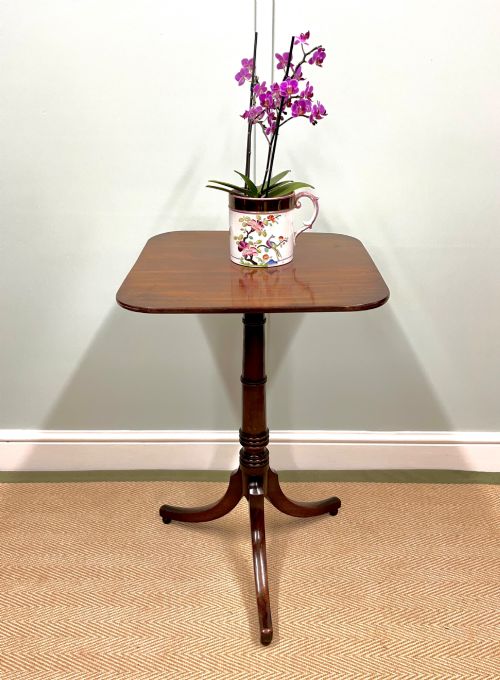
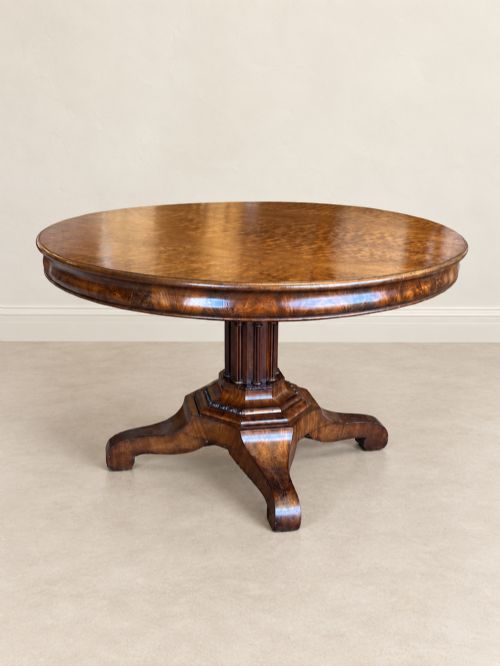
Regency Mahogany Tilt Top Table
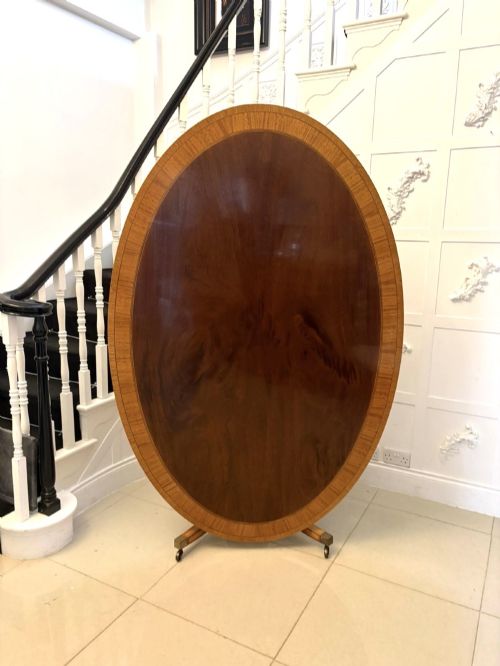
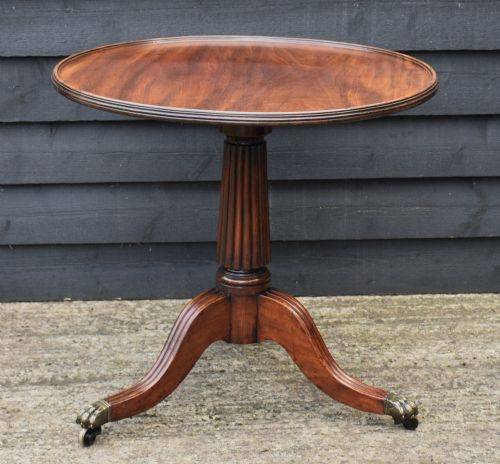
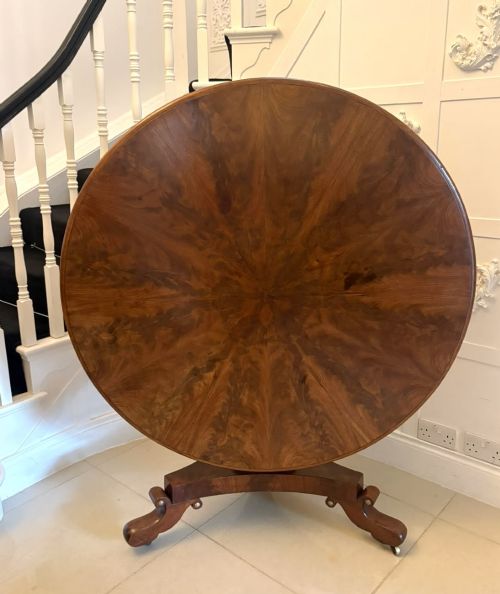
A regency mahogany tilt top table offers practical ingenuity combined with the rich grain of native and exotic timbers.
Regency Mahogany Tilt Top Table
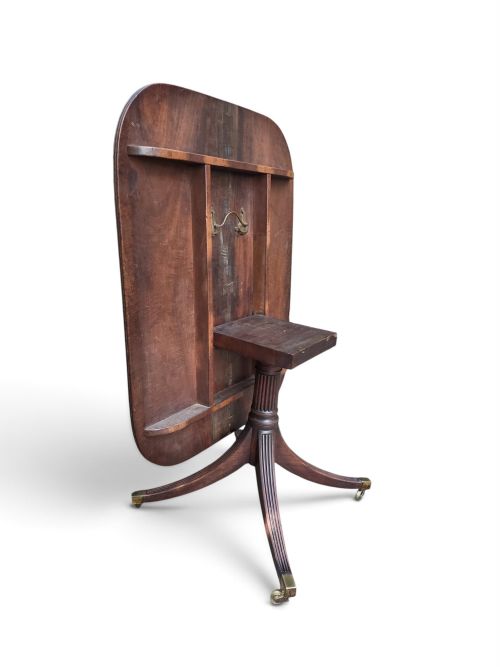
A regency mahogany tilt top table is a flexible piece designed to save space when not in use by tipping the tabletop vertical on a pivoting mechanism.
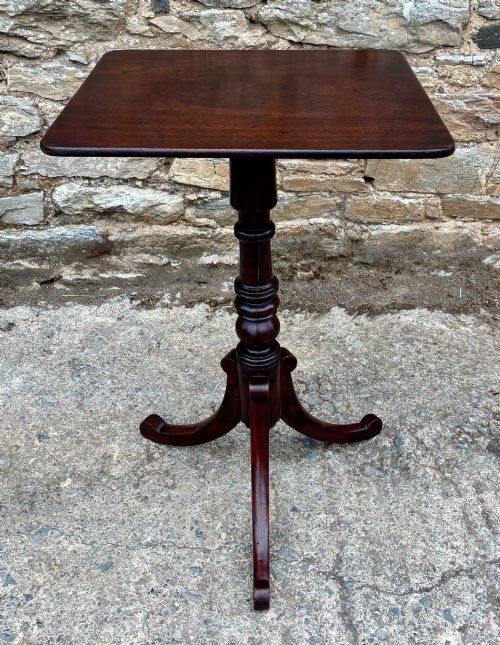
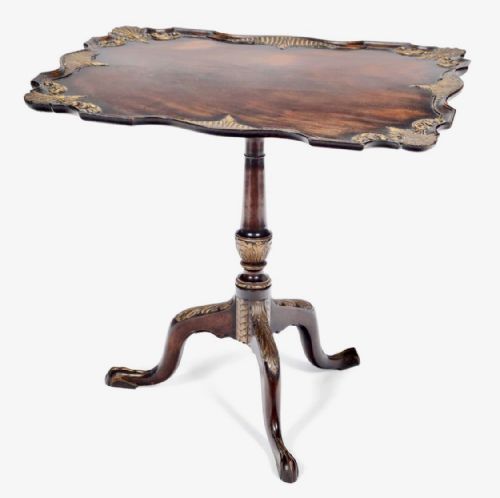
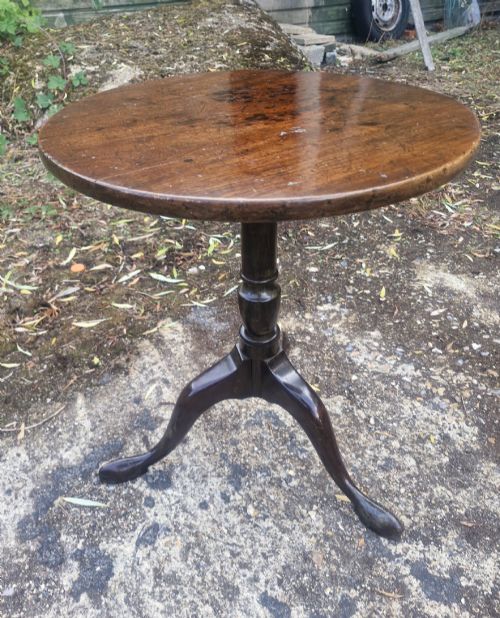
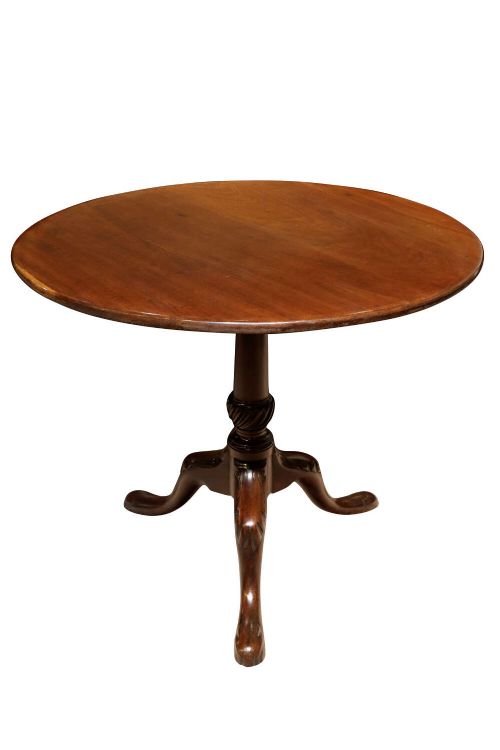
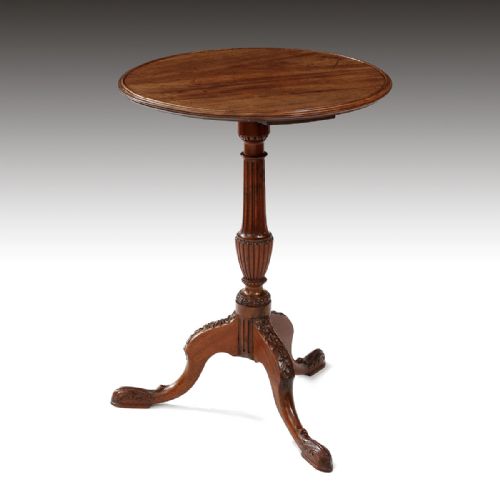
You are most likely to encounter circular breakfast tables, smaller wine tables, and tripod occasional tables on this page, spanning the Georgian, Regency, and William IV periods.
The form ranges from compact tripod stands suitable for a corner to large six-seater and eight-seater dining tables supported by a central pillar and pedestal base.
Materials and Construction
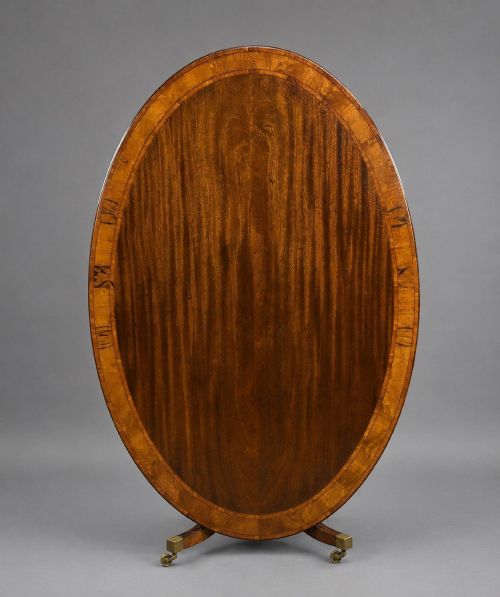
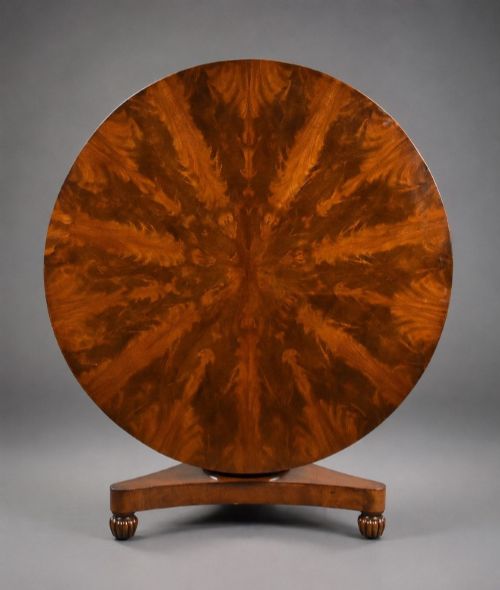
Cabinetmakers relied heavily on solid mahogany and figured mahogany veneer, often selecting flame or figured variations to create dramatic movement across the circular top.
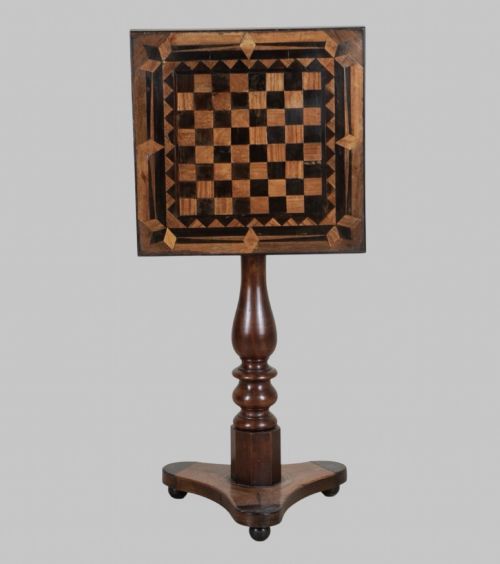
Inlays of satinwood, boxwood, and contrasting stringing provide geometric or floral borders, while brass inlay, parcel gilt accents, and brass casters appear on higher-status examples.
Listings feature mahogany, rosewood, walnut, satinwood, and brass inlay across Georgian, Regency, and Victorian periods.
Distinguishing Quality
Quality rests in the choice of timber and the precision of the catch mechanism that locks the top safely into position when horizontal.
The weight and stability of the tripod or pedestal base, along with the crispness of carved details like paw feet or reeded columns, dictate the tier of the piece.
Gillows·Walker Lancaster
The Regency Mahogany Tilt Top Table Glossary
- Tilt top
- A mechanism allowing the table surface to pivot upright for storage or display against a wall.
- Tripod base
- A three-legged support system commonly found on smaller occasional and wine tables.
- Crossbanding
- A border of veneer laid around the perimeter of the tabletop with the grain running in a different direction to the centre.
- Breakfast table
- A large circular or rectangular pedestal table originating in the Georgian and Regency periods for morning dining.
- Faded patina
- The mellow, lighter tone acquired by mahogany over decades of exposure to light and gentle polishing.
Regency Mahogany Tilt Top Table: Frequently Asked Questions
How do I operate the tilt mechanism safely?
Release the brass catch or wooden wedge beneath the top to allow the surface to pivot freely on its hinge. Support the weight of the timber firmly with one hand while guiding it between the vertical and horizontal positions.
Ensure the safety lock engages fully before releasing your grip to prevent the top from dropping unexpectedly while in use.
Where should I place a tilt top table at home?
Smaller tripod and wine tables suit corners or beside seating where their compact footprint and tipping action save floor space. Larger breakfast and dining versions anchor the centre of a room as statement pieces.
Keep them away from direct heat sources and strong sunlight to protect the polished mahogany veneer from drying and fading unevenly.
How do I tell a Regency table from a later revival piece?
Examine the construction methods underneath, including the timber of the block, the cut of the screws, and the way the pillar joins the legs. Genuine Regency pieces show period hand-cut joinery and natural ageing in the mahogany timbers.
Revival pieces from the Edwardian era or the twentieth century often display machine-made uniformity and different secondary woods beneath the top.
What is the difference between a breakfast table and a wine table?
A breakfast table is a large, sturdy pedestal piece designed for dining or central placement, often seating multiple people. A wine table is a miniature version built on a slender tripod base, intended for holding a single glass or bottle.
Both utilise the tilt top action, but their scale and intended function in a historic interior differ entirely.