
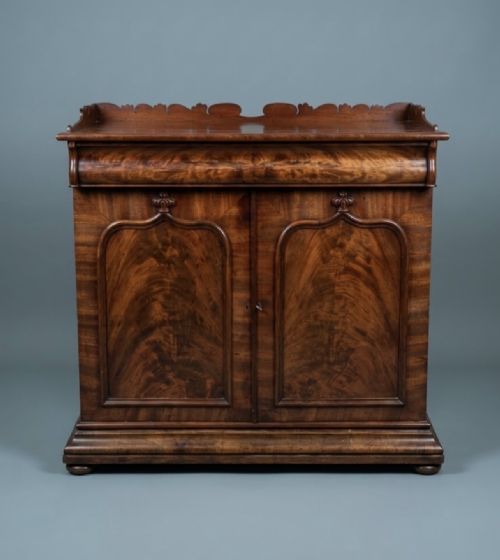
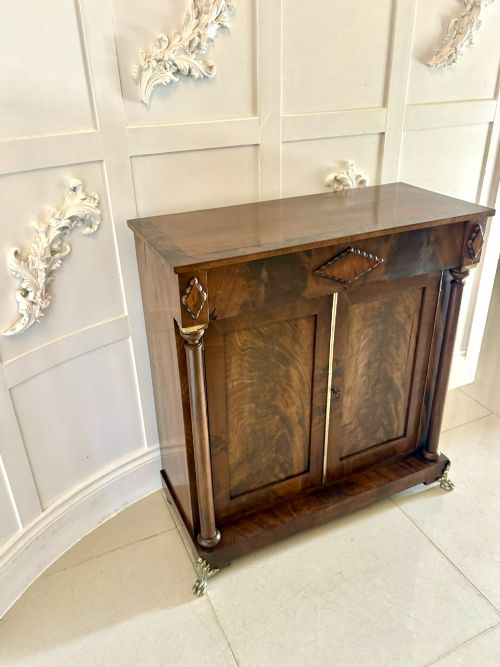
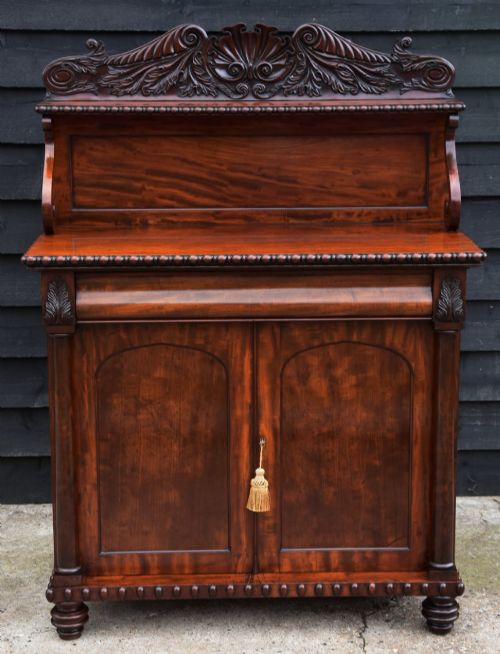
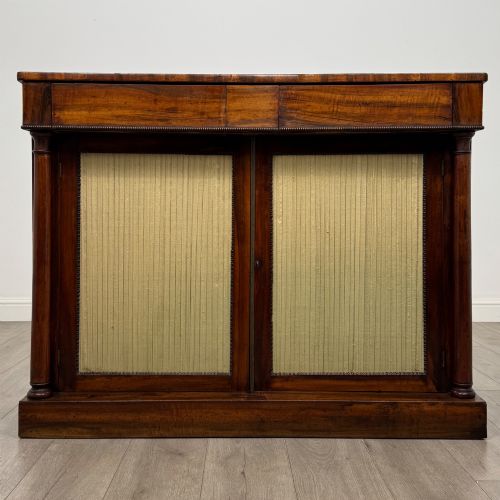
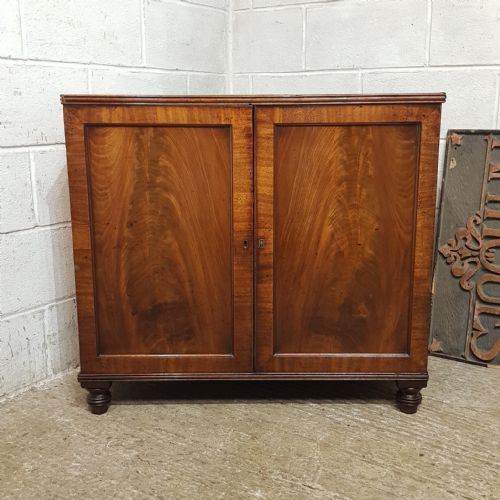

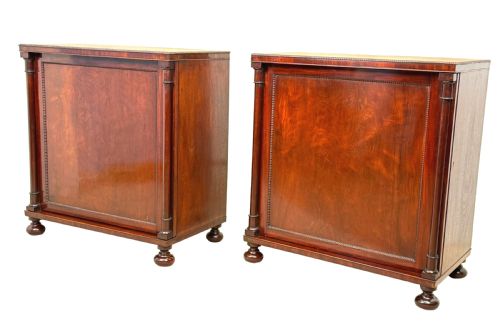


Regency Mahogany Side Cupboard
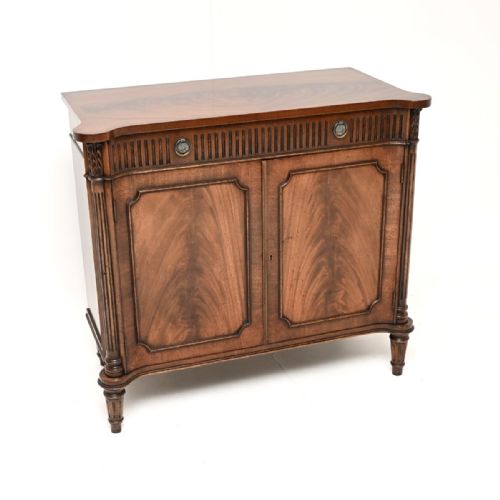
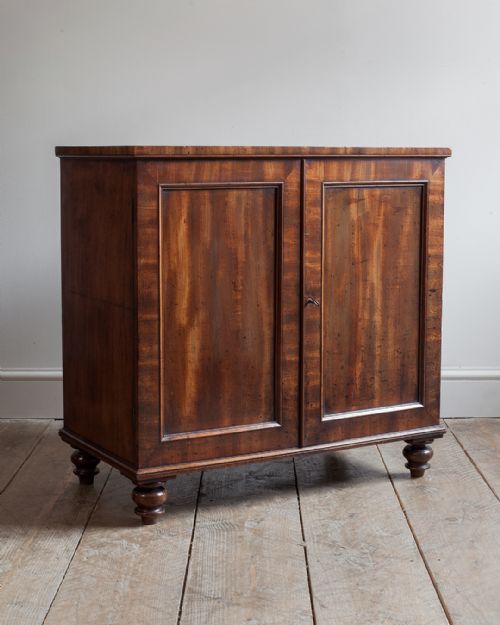
When you want a regency mahogany side cupboard, you are looking at practical timber storage with clean lines from the early nineteenth century.
Regency Mahogany Side Cupboard
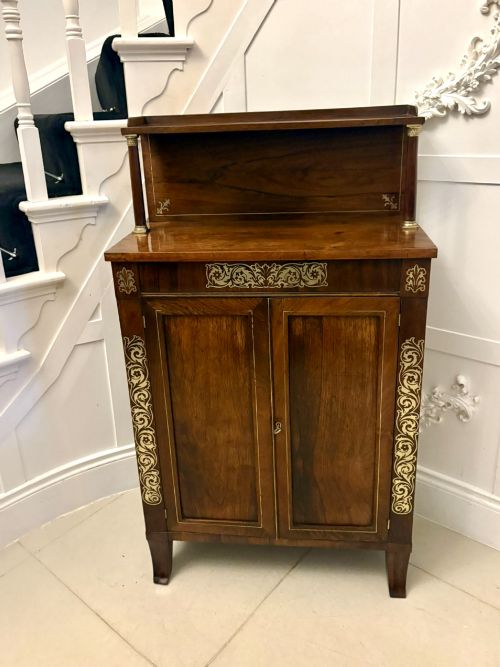
A regency mahogany side cupboard provides enclosed shelving alongside a compact footprint designed to fit neatly against dining room or parlour walls. Most examples on this page belong to the wider Regency and Georgian periods, spanning low cupboards, chiffoniers and bedside cabinets.
The form developed to meet domestic demands for concealed storage, often featuring a single pair of doors beneath a frieze drawer or upper surface. Makers adapted these proportions for different rooms, resulting in variations from small bedside pot cupboards to larger library and hall cabinets.
How they were made
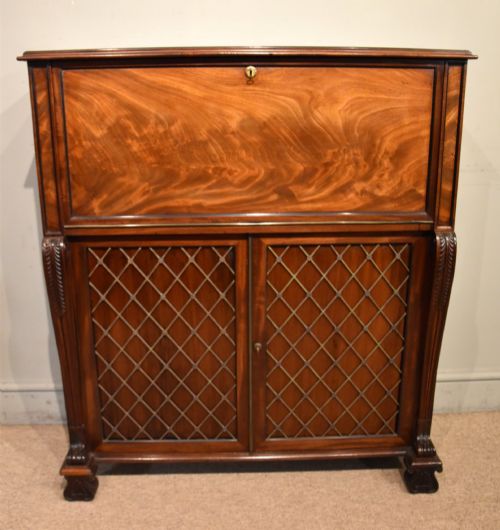
Cabinet makers relied primarily on solid mahogany and flame mahogany veneers applied over secondary woods such as oak, creating robust carcases with striking grain patterns. Fine brass hardware, including handles, hinges and occasionally inlay or grilles, completed the construction.
Surfaces were frequently finished to highlight the natural figure of the timber, whilst specialised pieces incorporated fabric panels behind glass doors or delicate ebony stringing to define the edges.
Listings feature mahogany, brass, ormolu, and flame mahogany veneer across Regency, Georgian, and Victorian periods.
What varies in quality
The distinction between standard utility furniture and superior cabinet work lies in the selection of timber and the precision of the joinery. Figured flame veneers and well-matched grain patterns elevate a piece, whereas plain stock timber indicates a more utilitarian workshop origin.
Proportion and detail also separate the tiers of manufacture. Cabinets featuring crisp brass mounts, restrained inlay and well-executed secondary woods demonstrate a higher grade of craftsmanship than plain regional equivalents.
Gillows
The Regency Mahogany Side Cupboard Glossary
- Chiffonier
- A low cabinet featuring doors below, often paired with a shelf or superstructure on top. This form emerged during the Regency period for dining and drawing rooms.
- Flame mahogany
- A veneer cut from the fork of the mahogany tree where branches join the trunk. It produces a dramatic, undulating pattern resembling flickering flames.
- Pot cupboard
- A small bedside cabinet originally designed to house a chamber pot. These pieces frequently feature a tray top or enclosed door storage.
- Frieze drawer
- A shallow drawer positioned directly beneath the top surface of a cabinet. It typically sits above the main cupboard doors.
- Stringing
- A narrow strip of contrasting timber or light-coloured wood inlaid into the surface. This technique creates delicate decorative borders on panels and drawers.
Regency Mahogany Side Cupboard: Frequently Asked Questions
What is a regency mahogany side cupboard used for?
These cabinets serve as versatile storage units in living spaces, hallways and bedrooms. They provide concealed shelving for tableware, books or everyday items while offering a flat surface on top for lamps or decorative objects.
Historically, smaller versions functioned as bedside tables or pot cupboards, whereas larger sideboard formats supported dining room service.
How can I tell a genuine Regency piece?
Examine the construction methods, timber choice and secondary woods used inside the carcase. Genuine pieces from the early nineteenth century typically feature hand-cut dovetails, solid mahogany drawer linings and appropriate ageing to the timber.
Stylistic markers such as brass inlay, ebony stringing and specific turning on the legs also align with the Regency and Georgian periods.
Where should I place a side cupboard at home?
These cabinets suit dining rooms, hallways and living areas where floor space is limited but surface storage is required. Their shallow depth allows them to sit comfortably against walls without dominating a room.
Pairing a low cupboard with a mirror or painting above creates a balanced focal point in a hallway or landing.
What is the difference between a chiffonier and a side cupboard?
A chiffonier generally includes a raised shelf or superstructure on top of the main cabinet carcase. Side cupboards feature a simple flat top surface above the doors or drawers.
Both forms utilise similar mahogany construction and date from the same nineteenth century periods.