

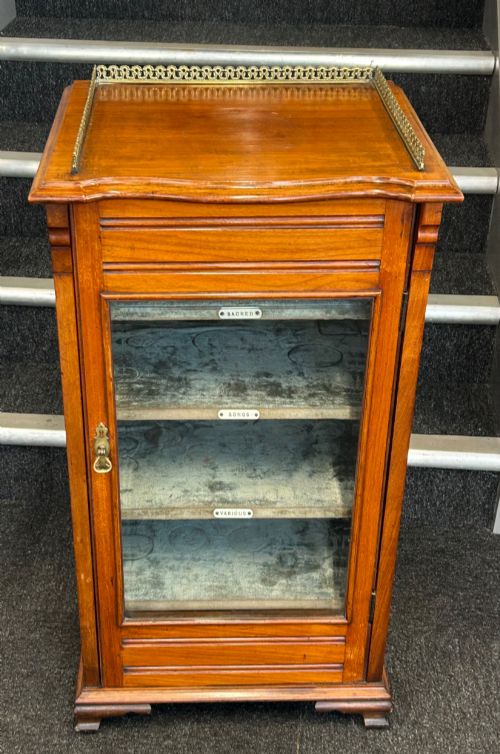

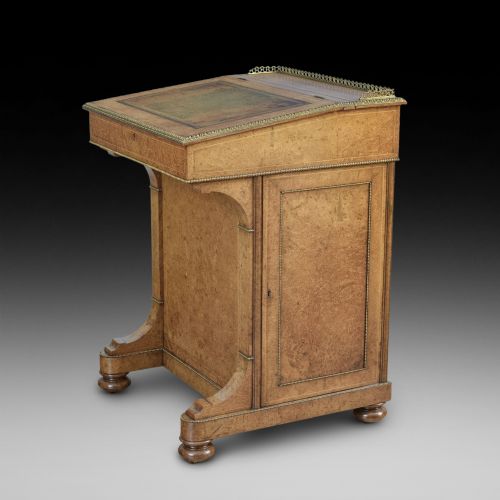

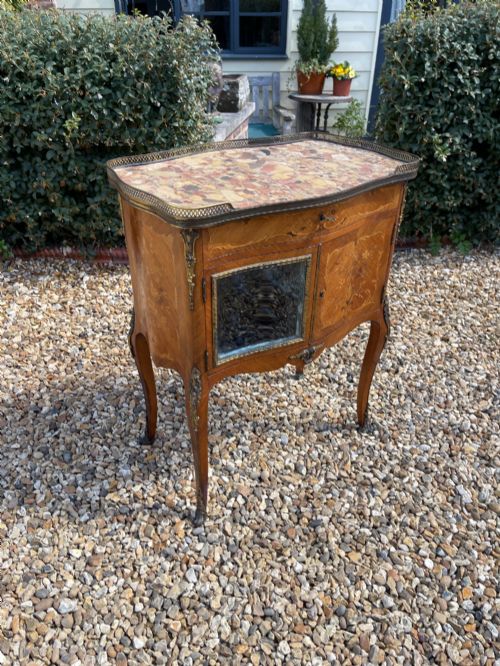


Brass Gallery Top Cabinet
A brass gallery top cabinet brings refined metalwork and practical containment together, offering a polished surface and secure display.
Brass Gallery Top Cabinet
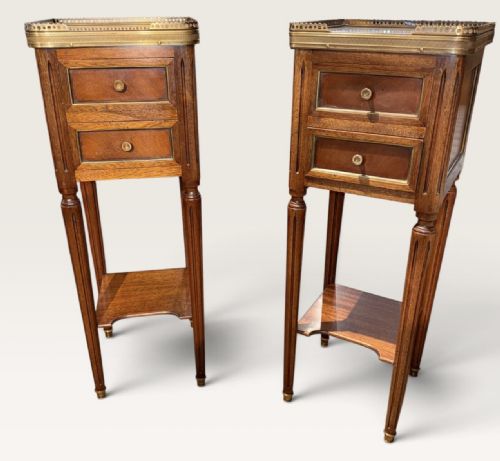
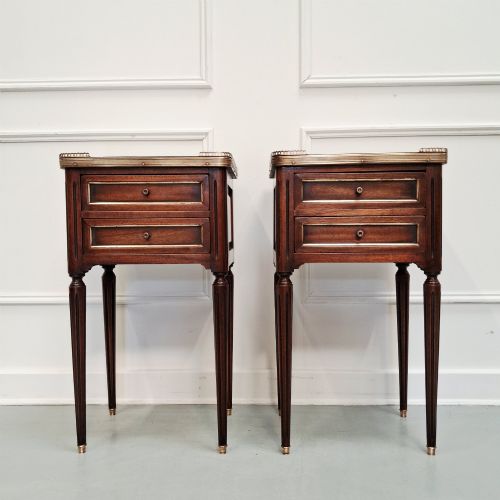
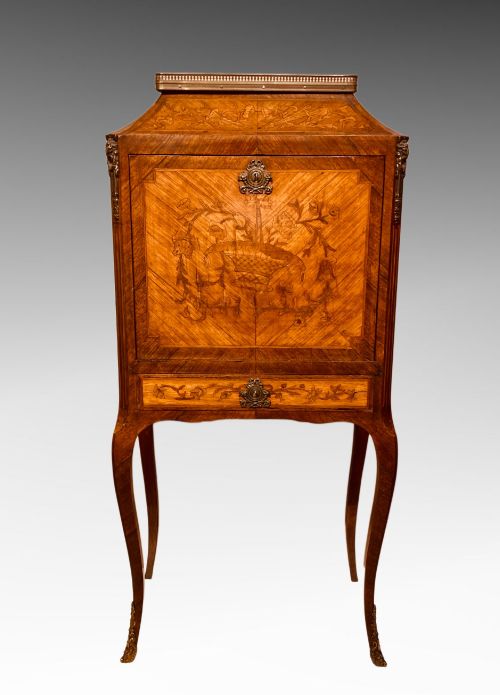
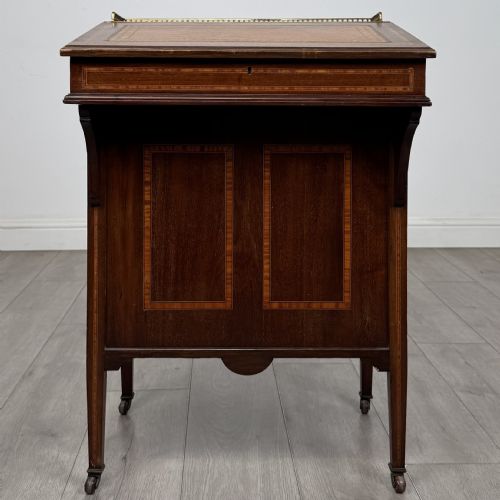
A brass gallery top cabinet combines fitted cabinetry with a protective open rail or spindle border mounted to the upper surface. These pieces appear across Georgian, Regency, Victorian, and Edwardian periods, manifesting as writing desks, side cabinets, bookcases, and bedside tables.
The materials span mahogany, rosewood, walnut, satinwood, and amboyna, often enhanced with marble tops, glass panels, or leather inserts. English workshops and French makers produced these forms in styles ranging from Neoclassical and French Empire to straightforward campaign designs.
The most frequent iterations on this page are compact writing desks and bedside cabinets dating from the nineteenth century. These items balance domestic utility with ornamental metal fixtures, providing a defined surface enclosed by decorative brasswork.
Materials and construction
Cabinet makers utilised dense hardwoods such as mahogany, rosewood, and walnut as the primary structural carcass, frequently applying finer timbers like satinwood and amboyna as veneers or crossbanding. Inlaid details, parcel gilt, and panelled doors demonstrate joinery traditions geared towards both visual depth and structural stability.
The defining brass gallery is secured to the upper surface through the table top, paired on various examples with ormolu mounts, cast fittings, and structural brass banding. Marble inserts, glass doors, and leather writing surfaces complete the construction, combining heavy stone and glass with polished timber.
Brass Gallery Top Cabinet Retail Price Guide 2026
Typical asking prices for brass gallery top cabinet among the pieces listed under this phrase on Sellingantiques today, from the lower quarter to the upper quarter. They describe what is for sale here now, not the wider market.
Listings span the Georgian, Regency, Victorian, and Edwardian periods, constructed in mahogany, rosewood, walnut, and satinwood.
Assessing craftsmanship and condition
Quality rests in the precision of the timber selection, the crispness of the brass castings, and the integration of secondary woods. Pieces utilising solid amboyna, burr elm, or figured rosewood alongside finely chased ormolu or robust brass galleries sit at the upper end of production.
Proportion and the handling of internal fittings dictate distinction. Writing desks with fitted drawers, secret compartments, or sliding top mechanisms demonstrate superior carpentry compared to plainer utility cupboards.
Gillows
The Brass Gallery Top Cabinet Glossary
- Brass gallery
- A low decorative railing of pierced or turned brass fixed around the top edge of a cabinet or desk to prevent items from sliding off. This metal border is characteristic of refined 19th-century case furniture.
- Davenport
- A small compact writing desk featuring a sloped leather-lined writing surface above a pedestal of drawers. Originating in the Georgian era, these desks often incorporate side drawers and upper stationery compartments.
- Ormolu
- Gilded bronze or brass applied as decorative mounts to furniture frames and corners. French Empire and revival pieces frequently employ this technique to highlight structural lines.
- Crossbanding
- A strip of veneer applied perpendicularly to the grain of the primary surface to form a contrasting border. Cabinet makers utilised this method on walnut and mahogany pieces to frame drawer fronts and tops.
- Bonheur du jour
- A light lady's writing desk featuring a small tiered superstructure with drawers, shelves, or a cabinet above the main writing surface. These tables became popular during the mid 19th century.
Brass Gallery Top Cabinet: Frequently Asked Questions
What is a brass gallery top cabinet used for?
These pieces served multiple functions across the home, acting as writing desks, bedside tables, or display cabinets for books and ornaments. The raised brass rail kept small items secure on the upper surface while the lower section provided enclosed storage.
In drawing rooms and bedrooms alike, they combined ornamental display with everyday domestic utility.
How do I date a brass gallery cabinet?
Dating relies on observing the primary timber, construction methods, and stylistic cues such as Regency proportions or Victorian ebonising. Earlier Georgian and Regency examples often feature rosewood or mahogany with restrained brass mounts, while later Victorian and Edwardian pieces incorporate varied veneers and lighter woods.
Hardware styles and secondary timbers inside the drawers also offer clear indicators of the decade of manufacture.
Are these cabinets English or French?
The selection includes both English workshop pieces and French furniture, particularly nightstands and commodes from the 19th and early 20th centuries. English makers favoured mahogany, walnut, and rosewood for desks and chiffoniers, whilst French pieces frequently paired walnut, tulipwood, and mahogany with marble tops and ormolu mounts.
Regional construction traits distinguish the two traditions.
How should I care for the marble top?
Marble surfaces require gentle cleaning with a damp cloth and mild soap, avoiding acidic cleaning agents that can etch the polished stone. Regular dusting preserves the natural finish of both the marble insert and the surrounding timber.
Keeping the piece away from direct heat sources protects the underlying wood and veneer integrity.
What woods are most common?
Mahogany and walnut form the structural backbone of the majority of these listings, appearing across Victorian, Georgian, and Edwardian items. Rosewood, satinwood, and amboyna also feature significantly, particularly on Regency and mid 19th-century desks and side cabinets.
Finer decorative pieces utilise these exotic timbers as veneers over robust secondary woods.