
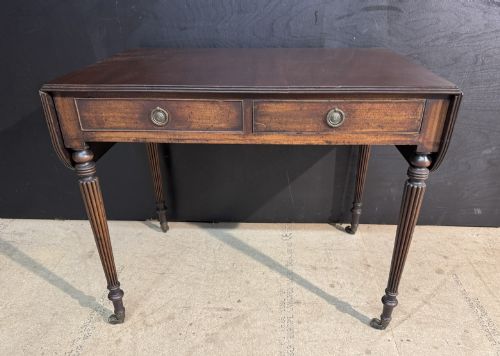
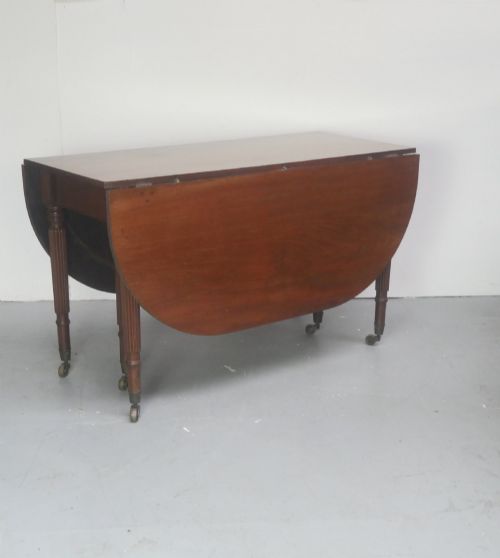
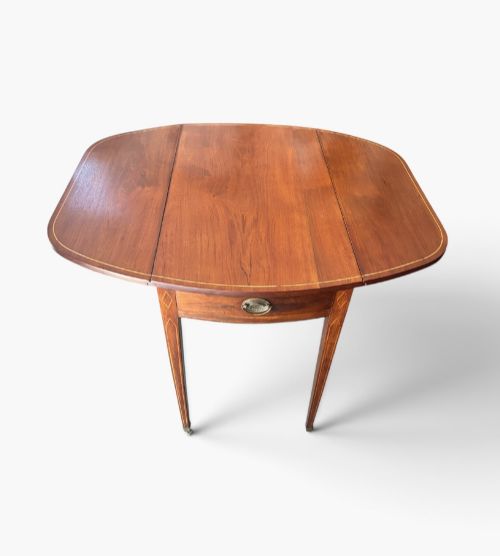
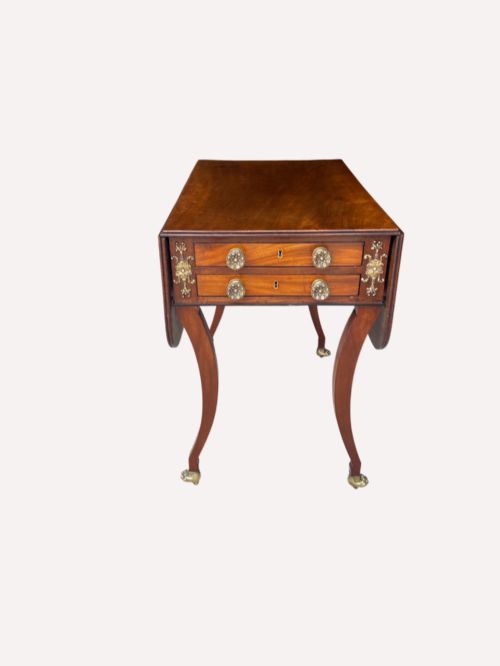
Regency Mahogany Pembroke Table
A regency mahogany pembroke table offers clever drop leaves and a neat footprint, designed for versatile living in both grand drawing rooms and quiet studies.
Regency Mahogany Pembroke Table
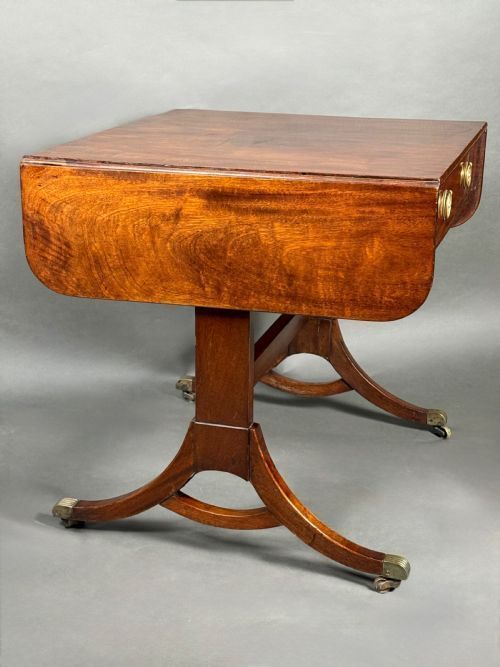
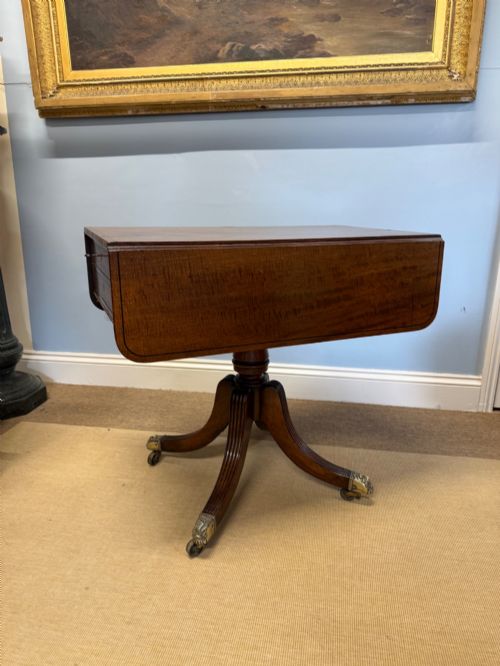
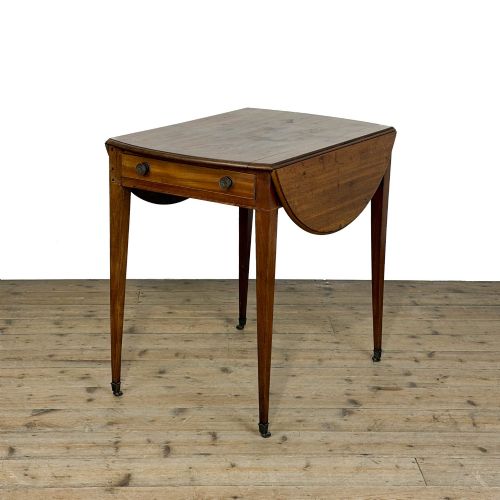
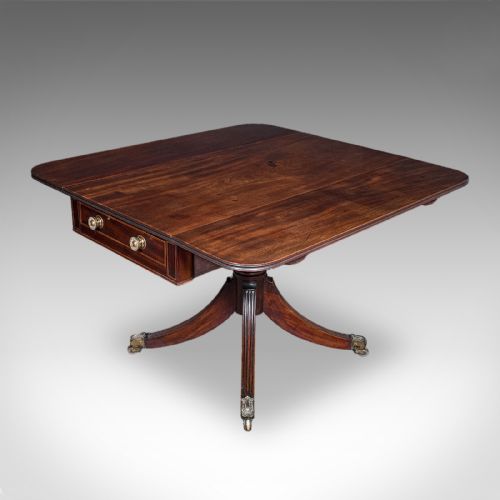
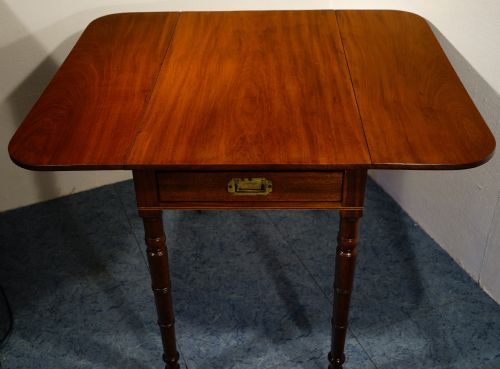
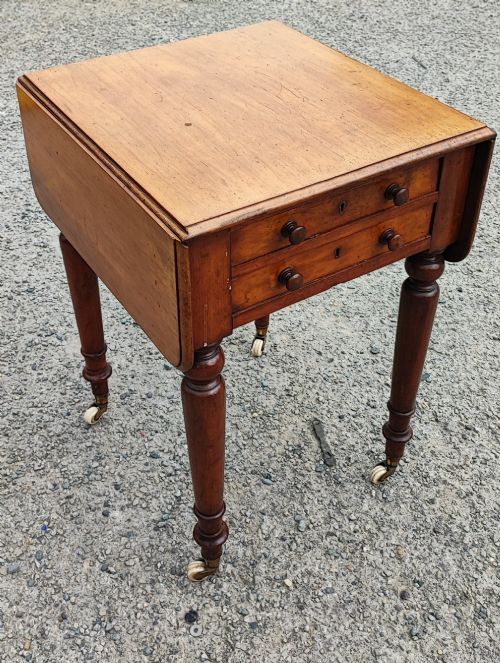
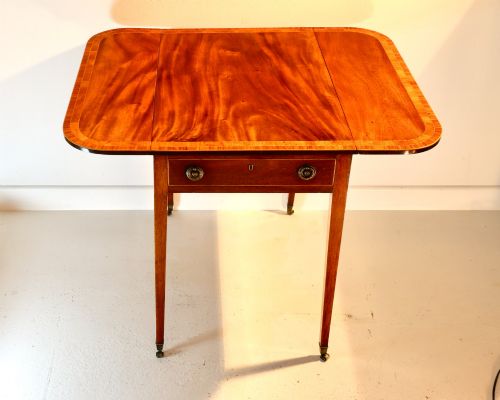
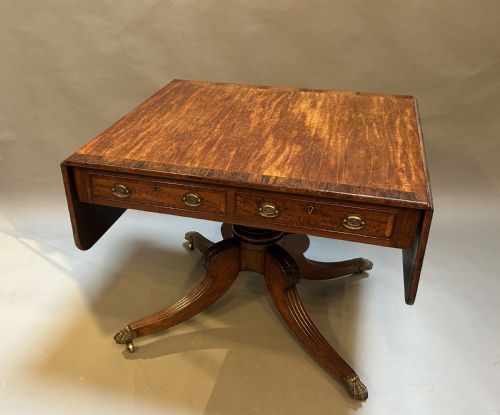
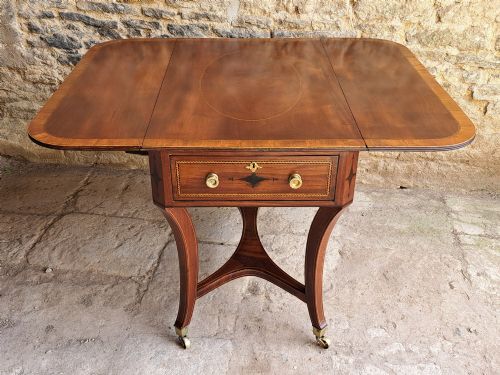
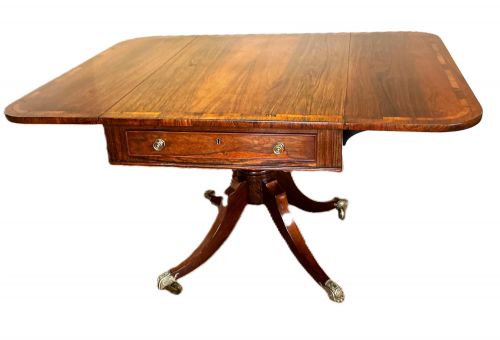
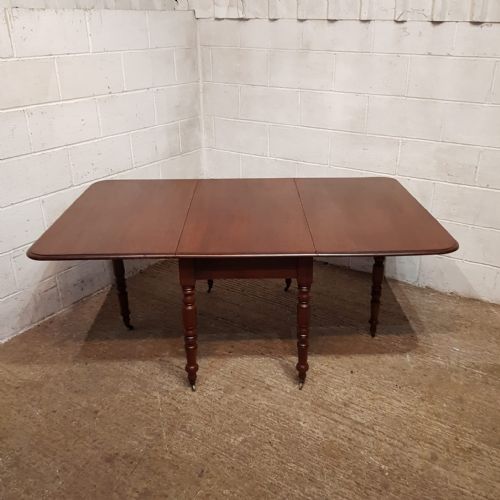
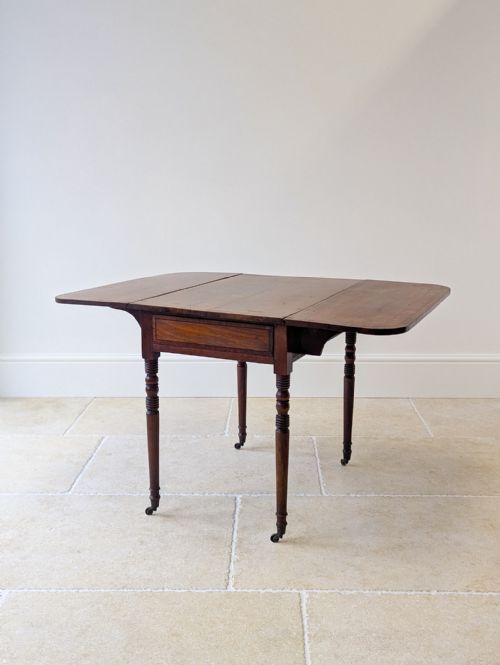
A regency mahogany pembroke table brings together drop-leaf utility and the refined lines typical of the early nineteenth century. Most examples span the Regency and Georgian periods, alongside related nineteenth-century forms such as sofa tables and drop-flap dining pieces.
Makers of the era designed these pieces to sit easily beside a sofa or stand independently in the centre of a room. Buyers encounter various sizes, from compact occasional tables to four-seater breakfast variants.
Materials and Technique
Cabinetmakers relied heavily on rich timbers, utilising solid mahogany and figured flame mahogany for the primary surfaces. Finer examples incorporate contrasting details such as boxwood inlay, satinwood, and rosewood stringing.
Structural integrity relied on sturdy turning for pedestal columns or saber legs, frequently fitted with original brass castors for mobility. Drawers often incorporated hand-cut dovetailing and retained brass hardware or silver drawer fittings.
Judging the Workmanship
Quality rests on the choice of timber figure, where well-matched flame mahogany or plum pudding grain elevates a piece far above plain stock. Crispness in the boxwood inlay and precision in the drop-leaf hinges also separate standard workshop output from exceptional cabinet work.
Proportion and stability dictate overall merit, particularly in pedestal designs where the central column must support the extended leaves without sagging. Retaining original brass castors and functioning drawer locks adds considerable authority to an item.
Gillows Of Lancaster
The Regency Mahogany Pembroke Table Glossary
- Pembroke table
- A small occasional table featuring two hinged drop leaves on opposing sides, popular from the eighteenth century onwards.
- Drop leaf
- A hinged flap attached to the main table top that can be raised and supported to extend the surface area.
- Flame mahogany
- Timber cut from the fork of the mahogany tree to produce a dramatic, flame-like grain pattern prized by period cabinetmakers.
- Boxwood inlay
- Narrow strips of pale yellowish boxwood inserted into the darker mahogany surface to create contrasting geometric borders.
- Sofa table
- A rectangular drop-leaf table designed during the Regency period to stand directly in front of a sofa.
Regency Mahogany Pembroke Table: Frequently Asked Questions
How were pembroke tables originally used?
These tables served multiple functions in period homes, easily moved beside a chair for writing, dining, or needlework. Their folding leaves allowed them to be tucked against a wall when floor space was required.
In larger rooms, they doubled as lamp stands or breakfast tables for one or two diners. Their adaptable nature made them indispensable items of everyday furniture.
What distinguishes a sofa table from a pembroke?
Sofa tables are generally wider than they are deep, designed specifically to sit parallel to the long side of a sofa. They frequently feature trestle ends or twin pedestals rather than the four legs typical of smaller pembroke designs.
Pembroke tables tend to have squarer proportions when the leaves are down. Both types utilise drop leaves, but their intended placement in the room differs.
How do I identify a Regency period piece?
Regency furniture dates roughly from the early nineteenth century, marked by classical restraint and neoclassical influences. Look for saber legs, brass paw castors, and crisp architectural mouldings rather than heavy carving.
Timbers are often deeply figured, sometimes enhanced with subtle stringing in contrasting woods. Proportion remains balanced and light throughout.
Will a drop-leaf table support daily dining?
Many larger examples were built as breakfast or dining tables and easily accommodate four people when fully opened. The rule joints and underframes on these sturdy models provide reliable support for everyday use.
Smaller occasional or work versions are better suited for lamps and books rather than heavy meal service. Checking the stability of the bracket supports under the leaves will confirm its capacity.