
Regency Mahogany Buffet Server
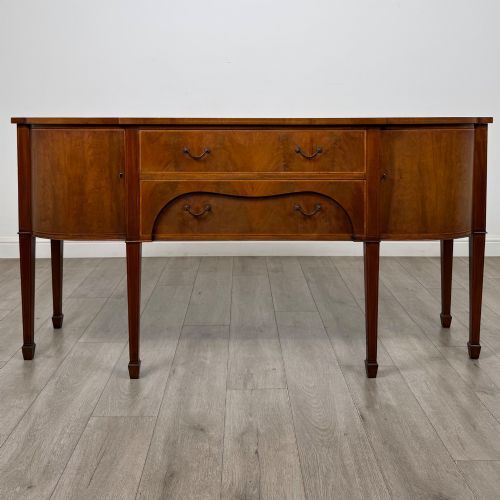
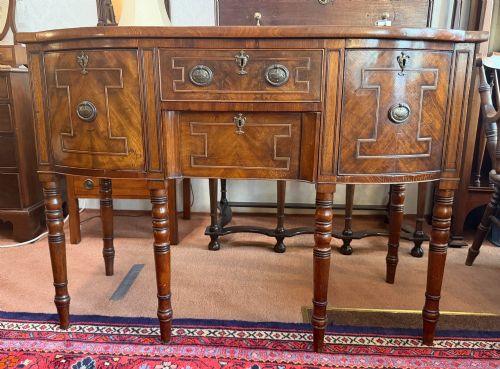
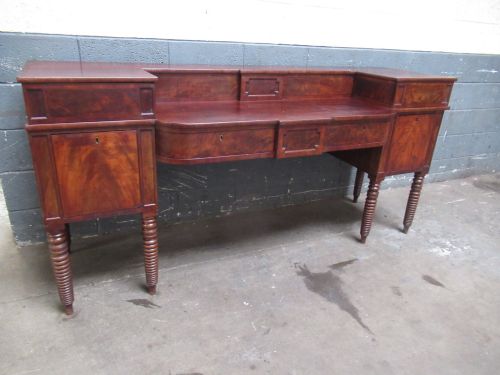
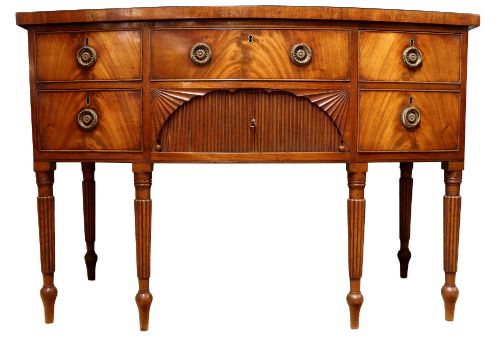
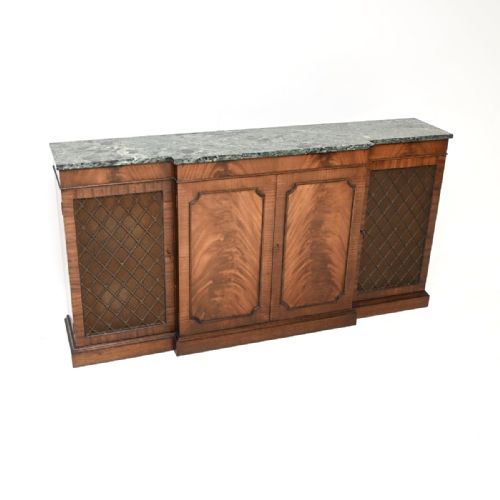
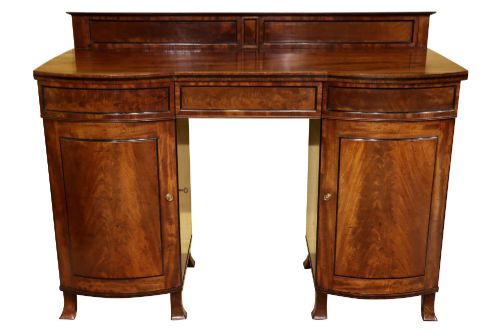
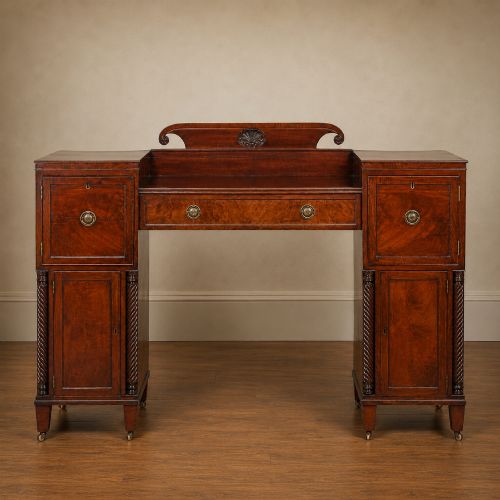
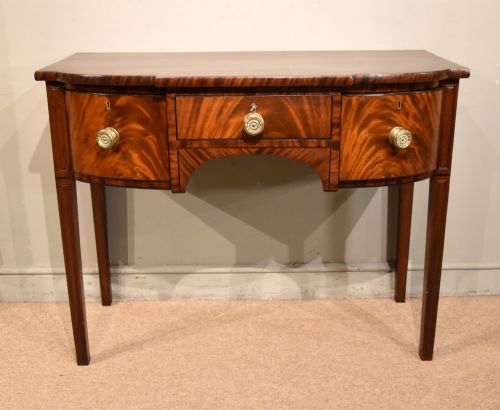
These pieces of regency mahogany buffet server furniture combine formal dining utility with striking timber figuring for sophisticated rooms.
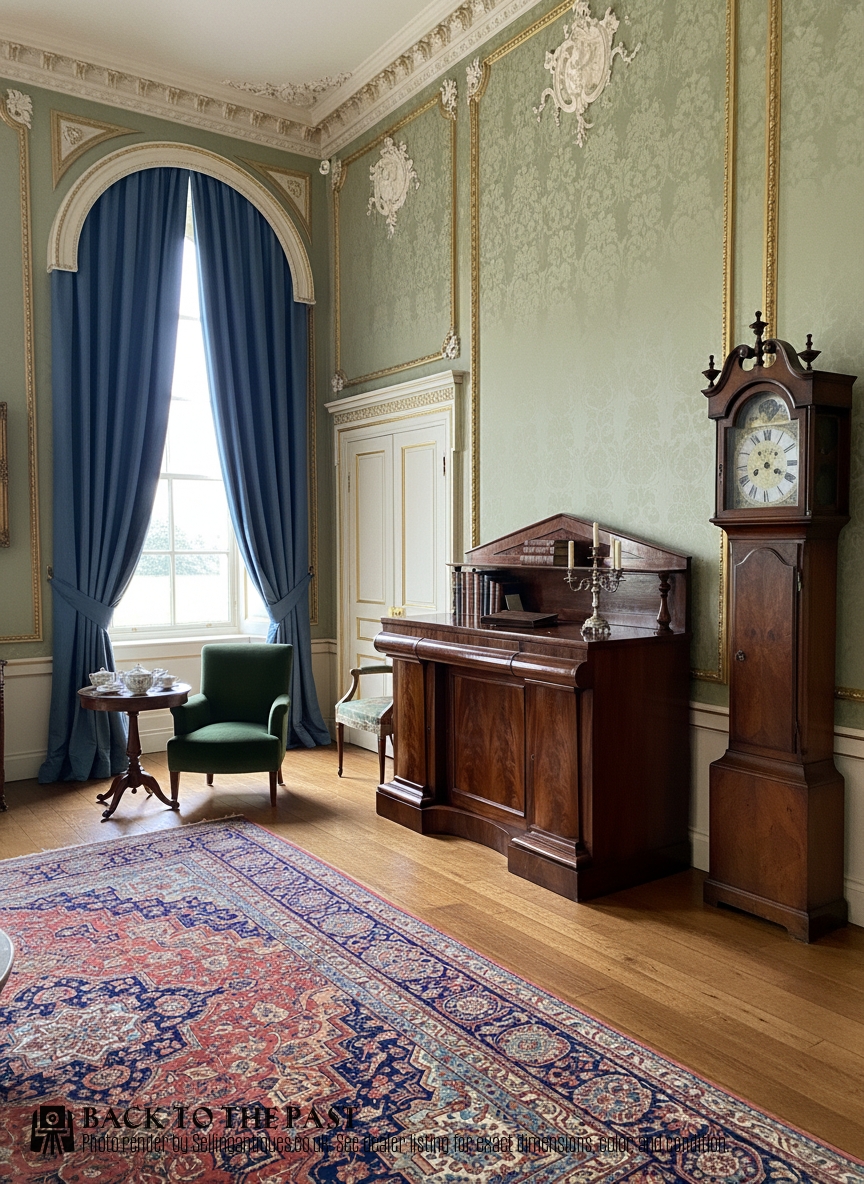
Regency Mahogany Buffet Server
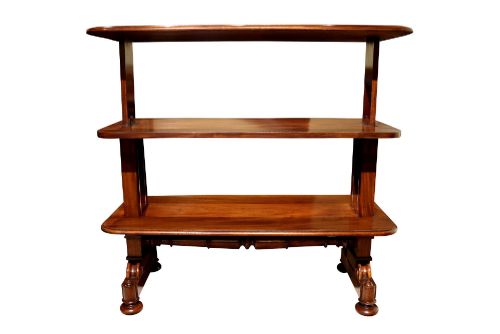
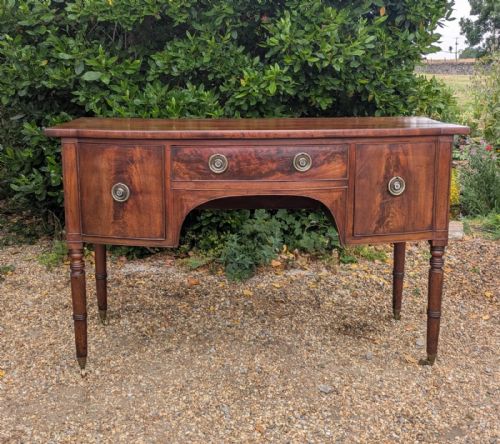
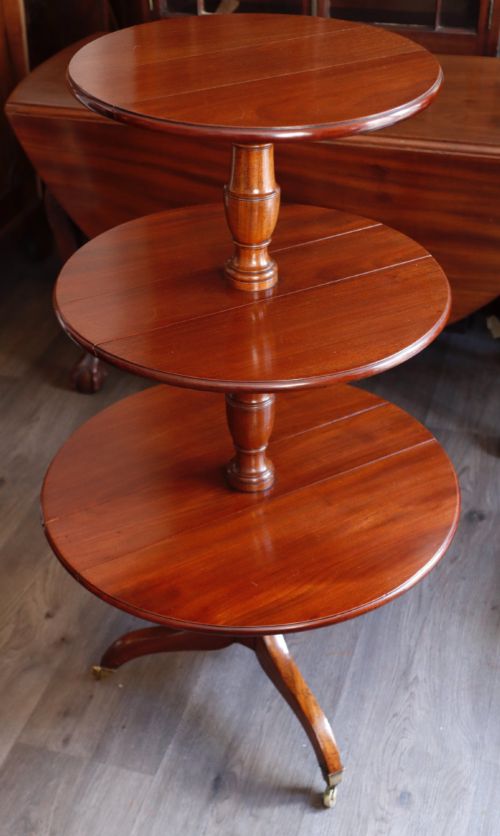
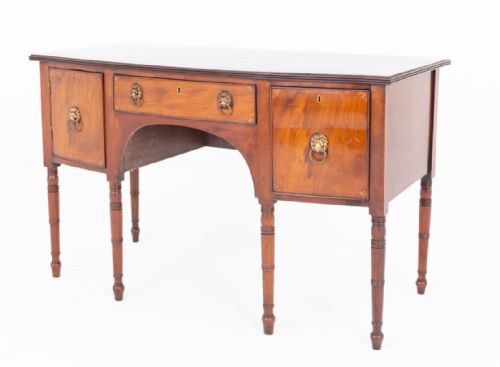
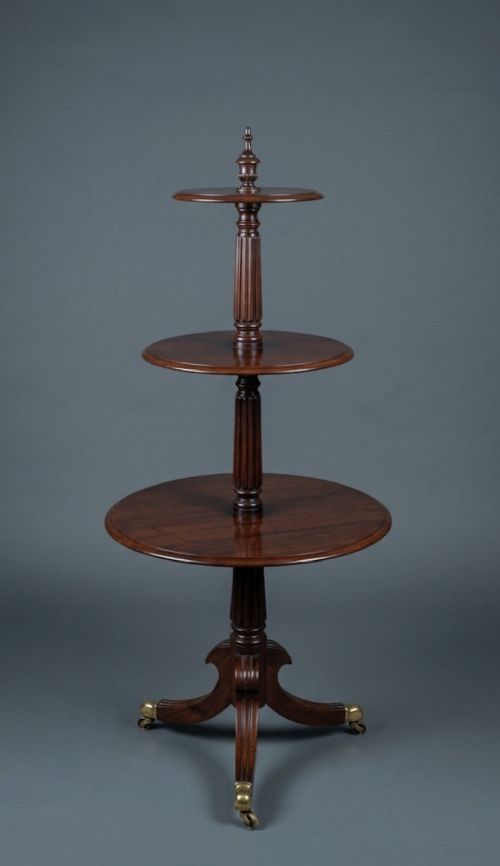
A regency mahogany buffet server encompasses grand dining room furniture designed for serving food and displaying silver, spanning the nineteenth century alongside Georgian and Victorian iterations. Buyers frequently encounter bow-fronted sideboards, pedestal formats, and tiered serving tables across this selection.
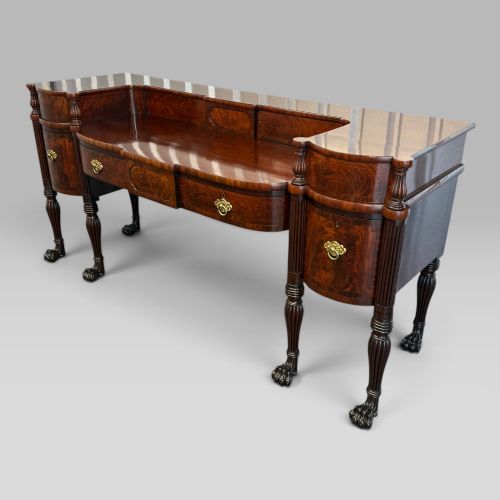
The prevailing aesthetic draws heavily upon Regency, William IV, and George IV styling, with regional variations appearing from Scottish and Irish workshops. Pieces range from straightforward bow-front configurations to breakfront designs incorporating brass inlay and marble tops.
Craftsmanship and Proportion
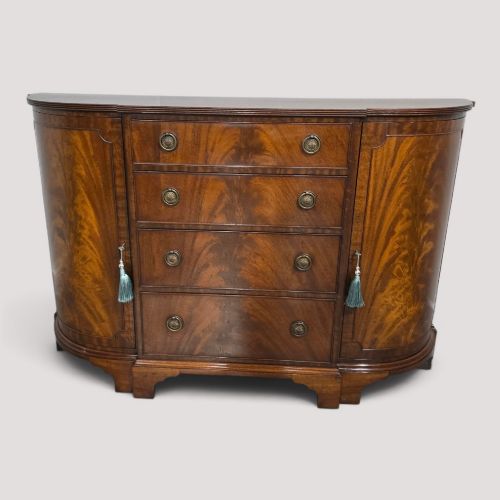
The refinement of a regency mahogany buffet server rests upon the selection of timber veneers, where symmetrical flame patterns indicate superior material grading. Drawer construction details, such as hand-cut dovetails and solid mahogany linings, separate utilitarian pieces from high-status examples.
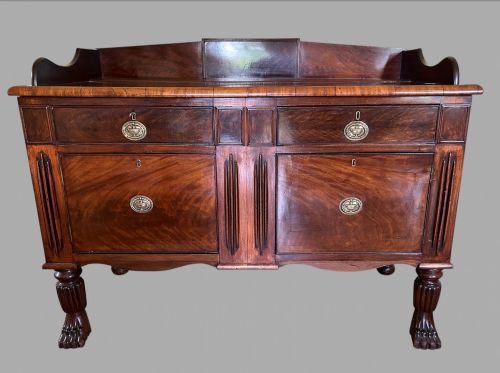
Proportion and decorative restraint govern visual success, distinguishing balanced Regency forms from later revival pieces. The integration of finer elements like brass stringing or carved lion paw feet alters the perceived weight of the furniture.
Several pieces stand firmly upon carved lion paw feet, ready to prowl across the dining room floor at a moment's notice.
Gillows·Robert Strahan & Co
The Regency Mahogany Buffet Server Glossary
- Bow-front
- A convex curved front profile popular on nineteenth-century sideboards to soften room angles. This shape allows deeper storage capacity in the central section while maintaining clearance around the edges.
- Flame mahogany
- A veneer cut from the fork of the mahogany tree where the branch meets the trunk. This method yields a distinctive feather-like grain pattern prized for decorative cabinet fronts.
- Breakfront
- A cabinet or sideboard whose central section projects forward from the flanking outer cupboards. This architectural arrangement creates depth and shadow play across the elevation.
- Stringing
- Thin inlaid lines of contrasting timber, such as boxwood or ebony, embedded into the primary surface. It outlines drawer perimeters and top edges to frame the wood figure.
- Pedestal sideboard
- A form comprising two distinct pedestals flanking a central serving surface or recessed cupboard. They often incorporate cellaret drawers for bottle storage.
Regency Mahogany Buffet Server: Frequently Asked Questions
What is a buffet server used for?
These pieces functioned historically as auxiliary serving surfaces during large formal meals, holding dishes, glassware, and silver. Today they provide substantial surface display space and concealed storage within dining rooms or hallways.
Interior compartments often include specialised drawers for cutlery or deep spaces for bottles, adapting easily to modern entertaining needs.
How do I identify a Regency period piece?
Regency furniture typically displays classical architectural restraint, clean linear proportions, and sophisticated use of brass inlay or figured veneers. Look for architectural motifs influenced by classical antiquity rather than heavy Victorian carving.
Construction methods inside the drawers, such as hand-cut dovetails and matching secondary timbers, help confirm the nineteenth-century date of origin.
Where should I place a sideboard?
Sideboards suit dining rooms, large hallways, or spacious living areas where their long horizontal proportions anchor the wall space. Ensure you measure the floor clearance for opening drawers and doors fully.
Keep these timber pieces away from direct heat sources and strong sunlight to protect the fragile mahogany veneers from drying and fading.
What is flame mahogany veneer?
Flame mahogany is a decorative wood veneer harvested from the junction where branches meet the main tree trunk. The cutting process exposes a dramatic, fiery ripple effect across the grain.
Cabinetmakers arranged these figured veneers symmetrically across drawer fronts to create striking visual patterns that define high-status furniture.