
Vintage Mahogany Buffet Credenza
These vintage mahogany buffet credenza examples offer substantial dining storage, pairing rich timber with classic forms from Georgian to Edwardian periods.
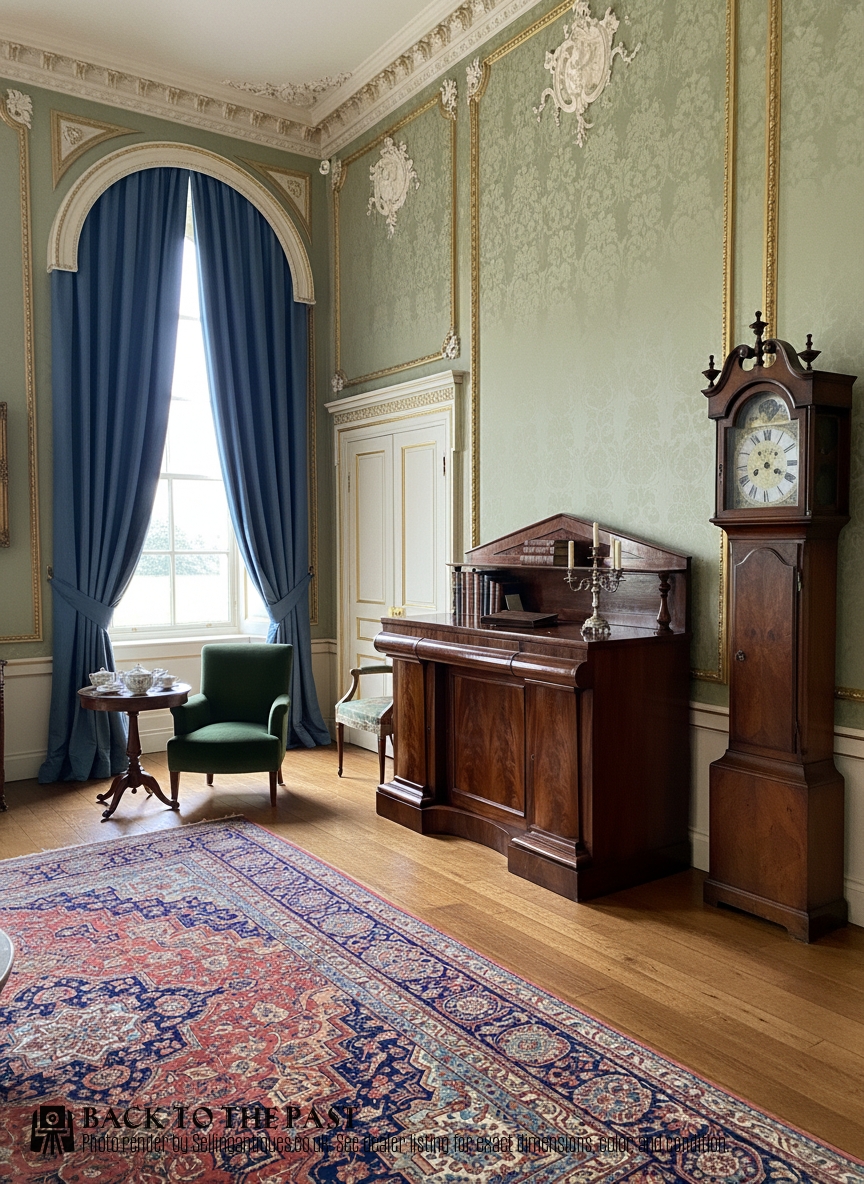
Vintage Mahogany Buffet Credenza
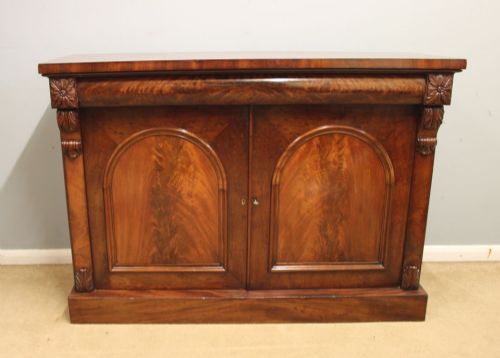
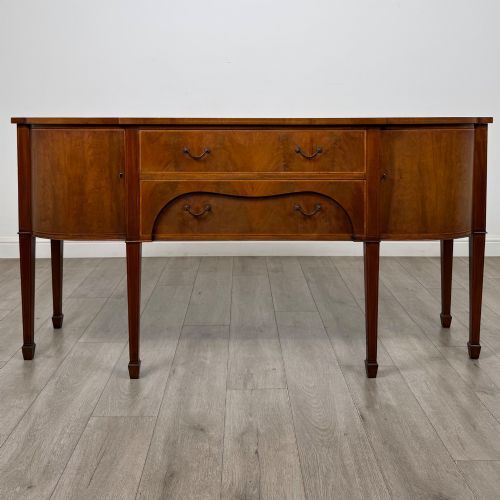
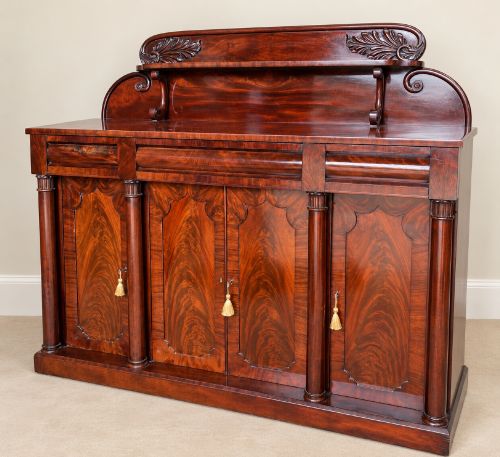
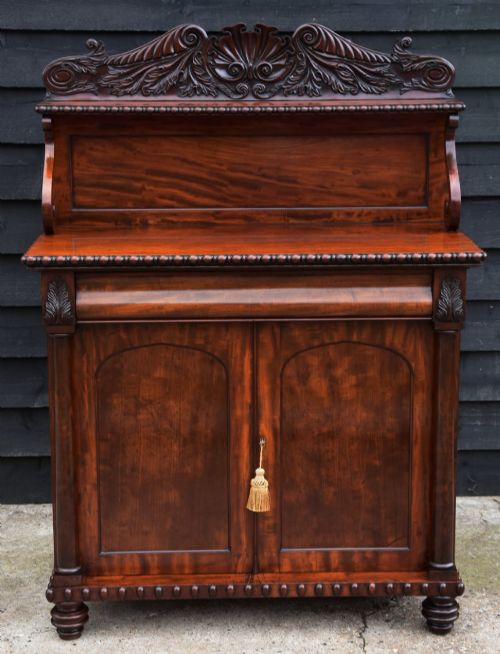
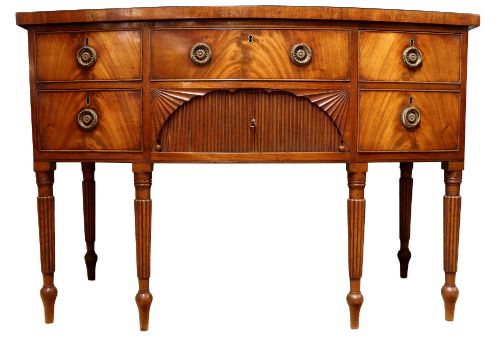
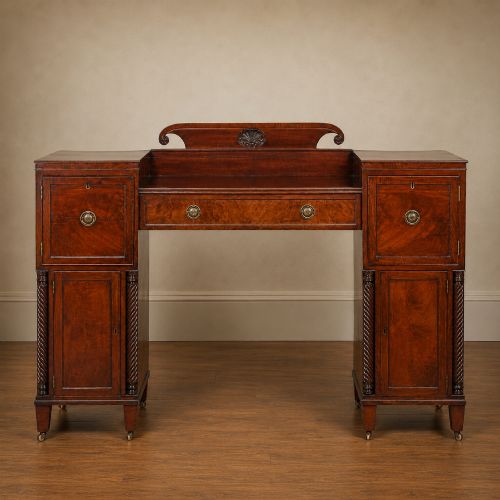
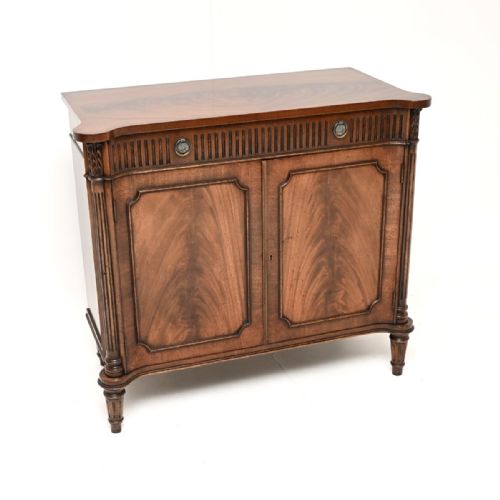
A vintage mahogany buffet credenza serves as a principal dining room storage piece, encompassing sideboards, cabinets, chiffoniers, and servers designed to hold silver, linen, and china. When exploring this selection, buyers encounter forms ranging from strict Georgian and Regency designs to ornate Victorian and Edwardian interpretations.
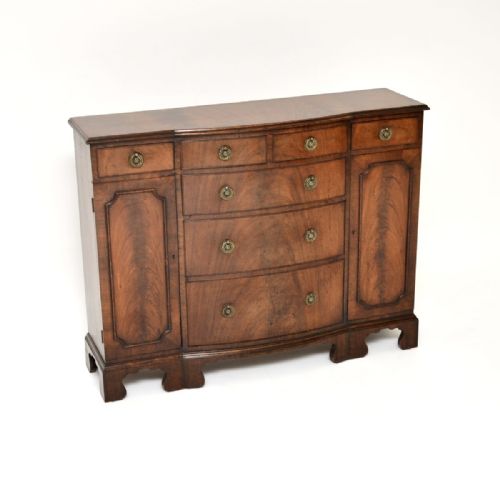
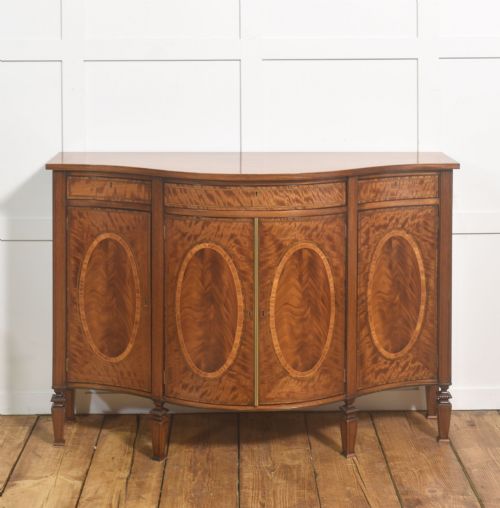
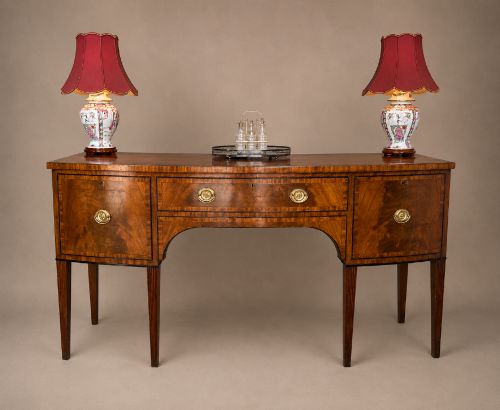
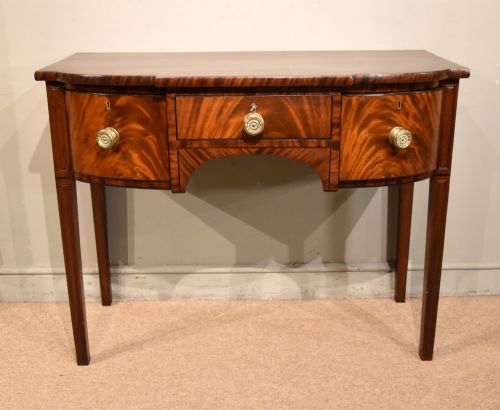
The most common pieces met on this page date from the nineteenth and early twentieth centuries, spanning revival styles like Sheraton Revival and George III alongside original period pieces. These items combine deep storage capacity with display surfaces, appearing in bow front, breakfront, and pedestal formats.
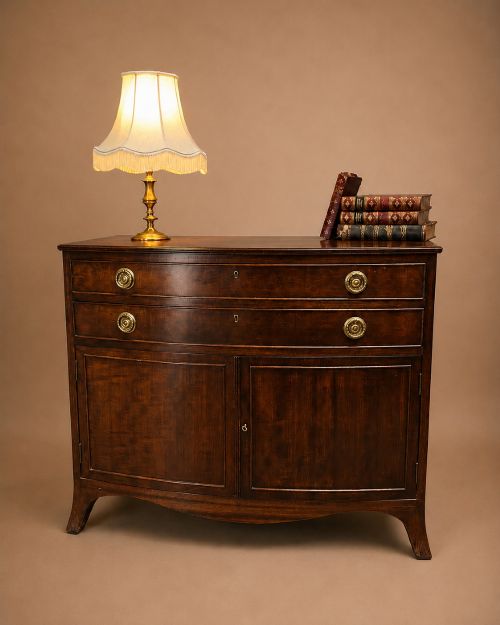
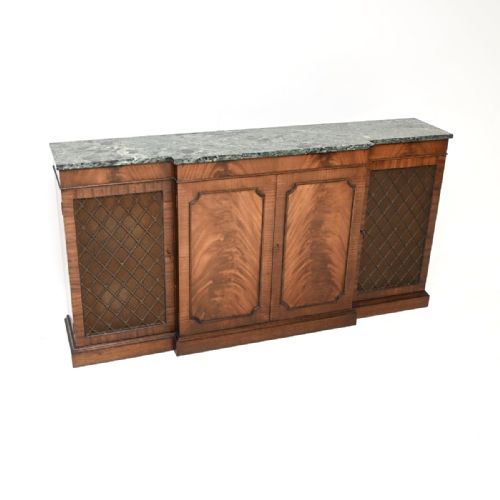
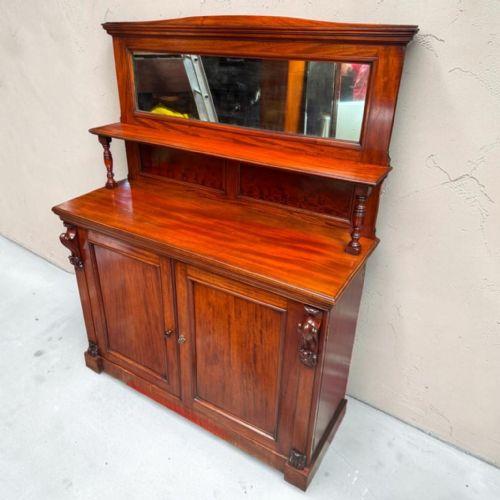
Makers and workshops utilised diverse structural forms, from simple two-door cupboards to elaborate side cabinets fitted with mirror backs, marble tops, and grill fronts. Each configuration reflects the dining customs of its specific era, balancing utility with decorative presence.
Materials and construction methods
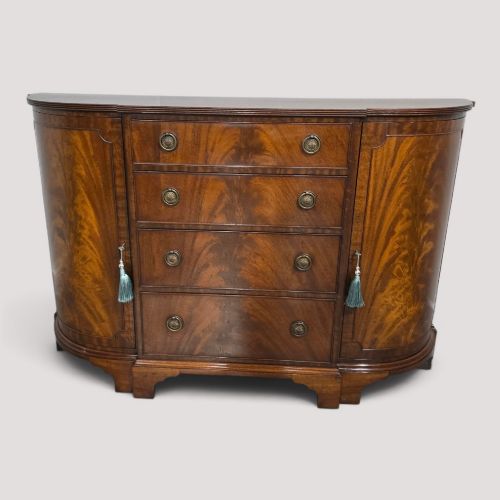
Cabinet makers relied primarily on solid mahogany and flame mahogany veneer, often selecting figured timber to create striking grain patterns across door panels and drawer fronts. Secondary woods provided structural stability for carcases and internal framing.
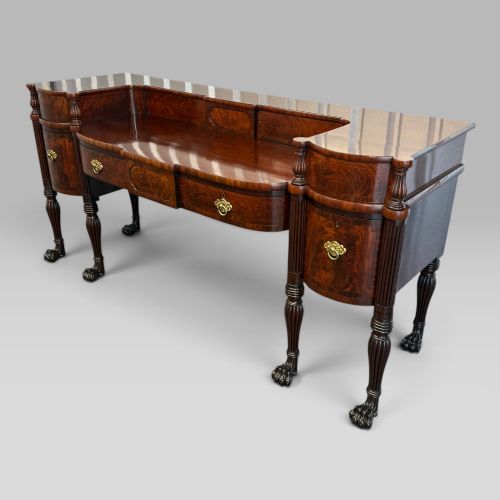
Inlay work defined finer pieces, incorporating contrasting boxwood and satinwood strings, brass fittings, and marquetry motifs to outline borders and central cartouches. Specialist elements such as lion paw feet, turned legs, and brass grillwork completed the construction.
Listings feature mahogany, brass, satinwood, boxwood, and marble across periods spanning the Georgian era to the early twentieth century.
Assessing quality and craftsmanship
The distinction between standard utility items and superior examples lies in the selection of the timber and the precision of the cabinet work. Finely figured flame mahogany veneer matched symmetrically across drawer banks indicates a higher tier of production.
M. D. Miller & Sons
The Vintage Mahogany Buffet Credenza Glossary
- Flame mahogany
- A veneer cut from timber where the grain creates a flickering, flame-like pattern. This prized figure appears on prominent display surfaces.
- Bow front
- A convex, curved front shape popular in sideboard design. This profile softens the angles of dining room furniture.
- Chiffonier
- A low sideboard or cabinet featuring shelves or a mirror back. These pieces evolved during the nineteenth century for parlour and dining use.
- Breakfront
- A cabinet design where the central section projects forward from the flanking sides. This creates architectural depth and visual division.
- Inlay
- A technique where contrasting materials are inserted into recessed cavities in the wood surface. Satinwood and boxwood frequently form these decorative lines.
Vintage Mahogany Buffet Credenza: Frequently Asked Questions
How do I date a mahogany sideboard?
Dating relies on observing structural characteristics, hardware styles, and timber treatments. Georgian and Regency pieces show distinct classical proportions and simpler, robust construction.
Later Victorian and Edwardian examples often incorporate revival motifs, mirror backs, and extensive decorative inlay work characteristic of turn-of-the-century production.
Where should I place a credenza?
These pieces suit dining rooms, large hallways, or living spaces where substantial surface area and enclosed storage are required. Their depth demands adequate floor clearance along a primary wall.
Positioning them away from direct heat sources protects the polished mahogany finish and prevents veneer splitting.
How do I care for mahogany furniture?
Maintenance involves dusting with a soft cloth and applying appropriate wax polish periodically to nourish the wood. Avoiding excessive moisture preserves the integrity of the polish.
Keeping the timber away from rapid temperature changes ensures the solid wood and veneers remain stable over time.