



William IV Dining Room Credenza
These heavy mahogany pieces bring a commanding presence to a room, offering grand proportions and deep timber tones.
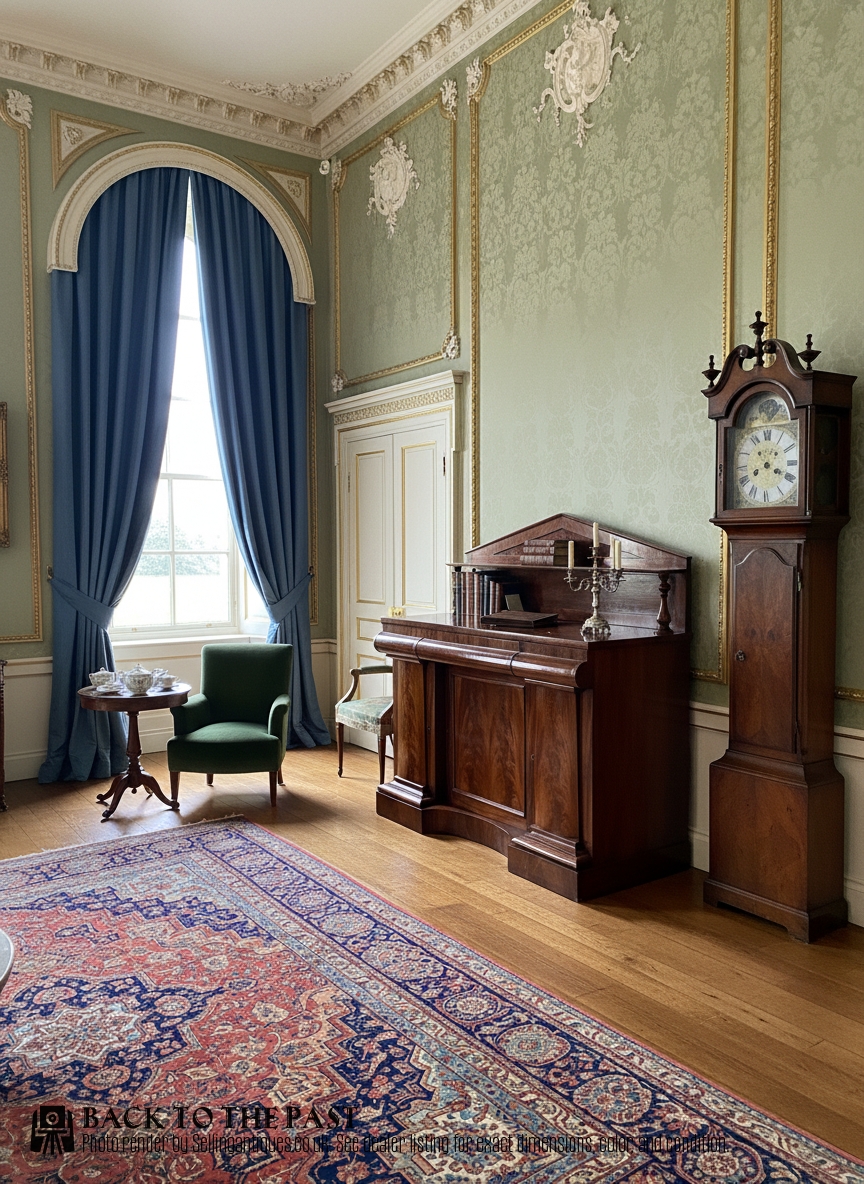
William IV Dining Room Credenza
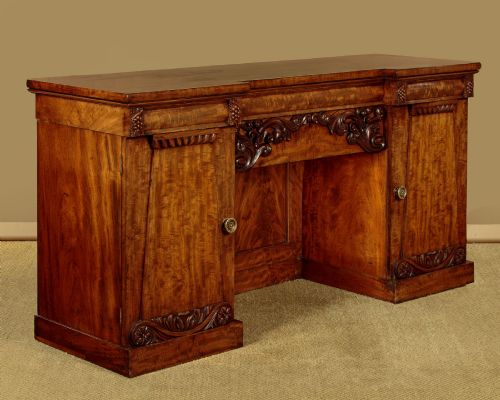
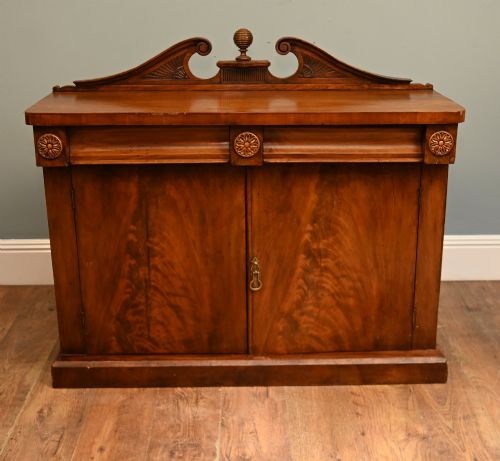
A william iv dining room credenza typically appears as a substantial sideboard, buffet, or chiffonier originating from the nineteenth century. These heavy timber storage pieces served dining rooms as monumental serving surfaces and storage cabinets for silver and linen.
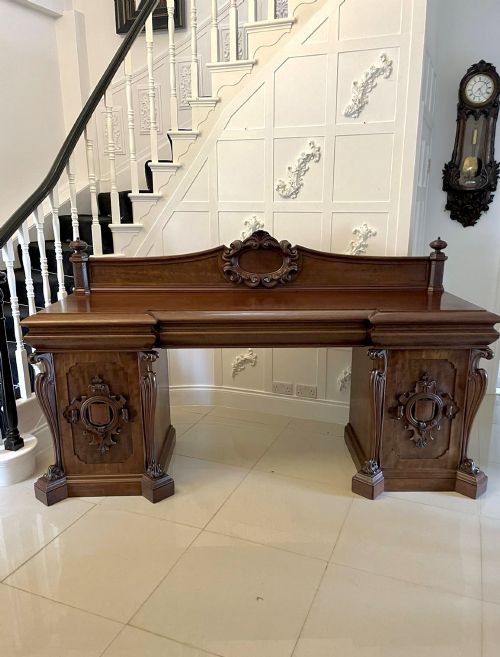
The versions most commonly met on this page belong to the nineteenth century, including specific pieces from around eighteen thirty and eighteen thirty-five. They take the form of pedestal sideboards, breakfront sideboards, and side cabinets built for formal dining spaces.
How They Were Made
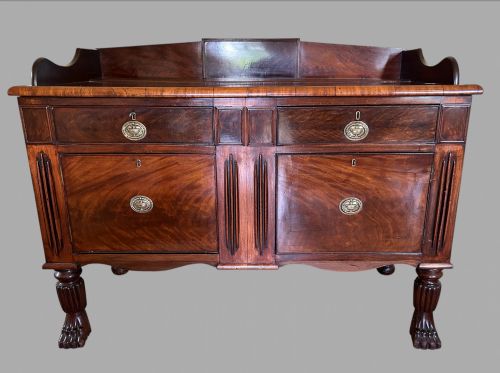
Cabinetmakers built these pieces using solid mahogany and flame mahogany veneer over secondary timbers. The striking grain patterns on the drawer fronts and doors come from carefully selected veneers matched across the surface.
Makers integrated brass details such as gallery rails, handles, or mounts into the heavy timber construction. Carved wooden elements like scrolled consoles and turned supports provide structural strength and architectural detail.
William IV Dining Room Credenza Retail Price Guide 2026
Typical asking prices for william iv dining room credenza among the pieces listed under this phrase on Sellingantiques today, from the lower quarter to the upper quarter. They describe what is for sale here now, not the wider market.
Many pedestals conceal hidden cellarette drawers once lined with lead to keep dining wine cool on blocks of ice.
What Varies in Quality
The grade of mahogany and the symmetry of the flame veneers set exceptional examples apart from simpler utilitarian pieces. Highly figured timbers exhibit rich movement and depth across the main display surfaces.
Carving depth and the precision of architectural mouldings indicate the skill of the original workshop. Finer pieces display crisp hand-carved details on pedestals and backsplashes rather than plain timber surfaces.
The William IV Dining Room Credenza Glossary
- Flame mahogany
- A veneer cut from the fork of the mahogany tree to create a distinctive flickering flame pattern. It decorates the primary doors and drawer fronts of better pieces.
- Breakfront
- A cabinet design where the central section projects forward from the flanking outer cupboards. This architectural arrangement creates depth and shadow across the front elevation.
- Chiffonier
- A low sideboard or cabinet equipped with enclosed shelving beneath and often a raised back shelf. It provides compact storage for dining rooms lacking space for a full pedestal sideboard.
- Pedestal sideboard
- A heavy dining room base featuring two large pedestals flanking a central section with drawers. The pedestals usually conceal cellarette drawers or cupboards for bottles.
William IV Dining Room Credenza: Frequently Asked Questions
Where did these pieces stand?
These large timber units stood against the main dining room wall to hold serving dishes during large meals.
Servants used the broad top surface for carving meats and pouring wine away from the main dining table.
How do I clean the wood?
Dust the mahogany surfaces regularly with a soft, dry cloth to prevent grit accumulation on the finish.
Apply a traditional beeswax polish occasionally to nourish the timber and maintain a deep natural lustre.
Can I store heavy items inside?
The solid mahogany construction provides robust internal shelving suitable for heavy tableware and serving platters.
Original cabinet interiors often include partitioned spaces designed specifically for storing wine bottles securely.
What defines this period style?
Pieces from this era combine heavy classical proportions with bold carved scrolls and rich figured veneers.
Designers drew inspiration from ancient architectural forms while retaining practical storage for nineteenth century dining rooms.