
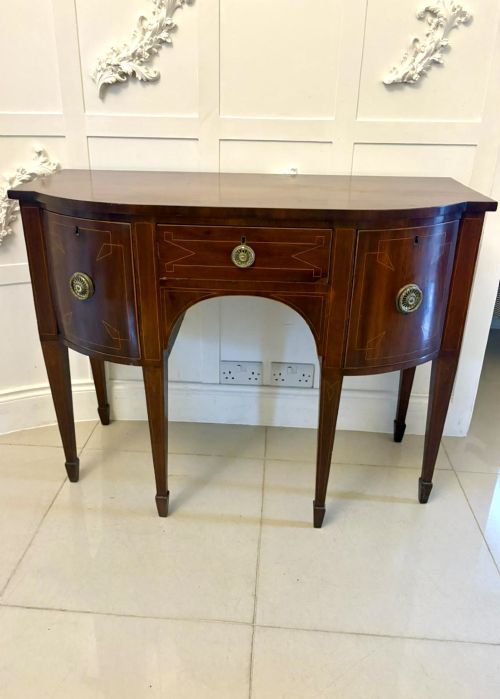
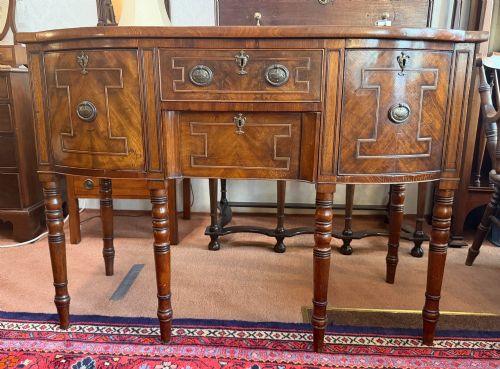
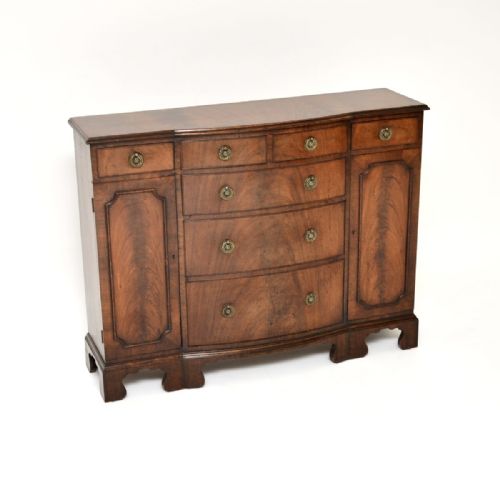
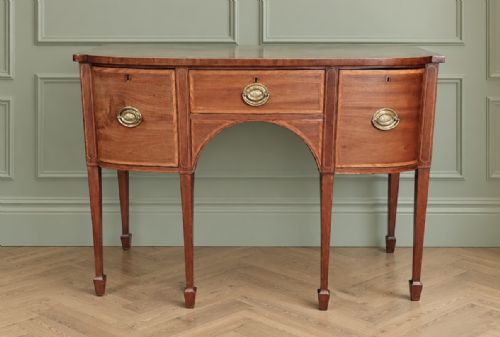
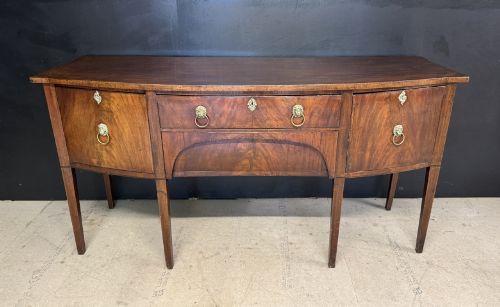
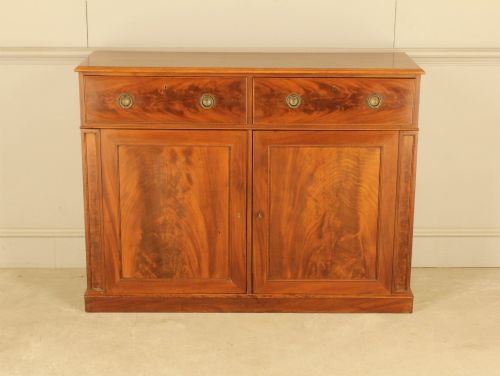
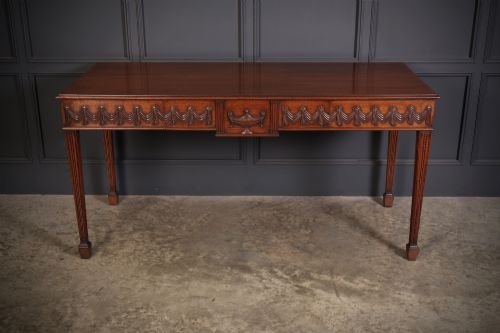
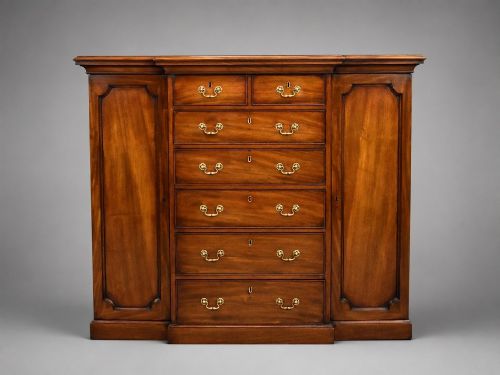
Georgian Style Mahogany Server
A georgian style mahogany server brings disciplined dining room elegance into the modern home with rich timber and classical proportions.
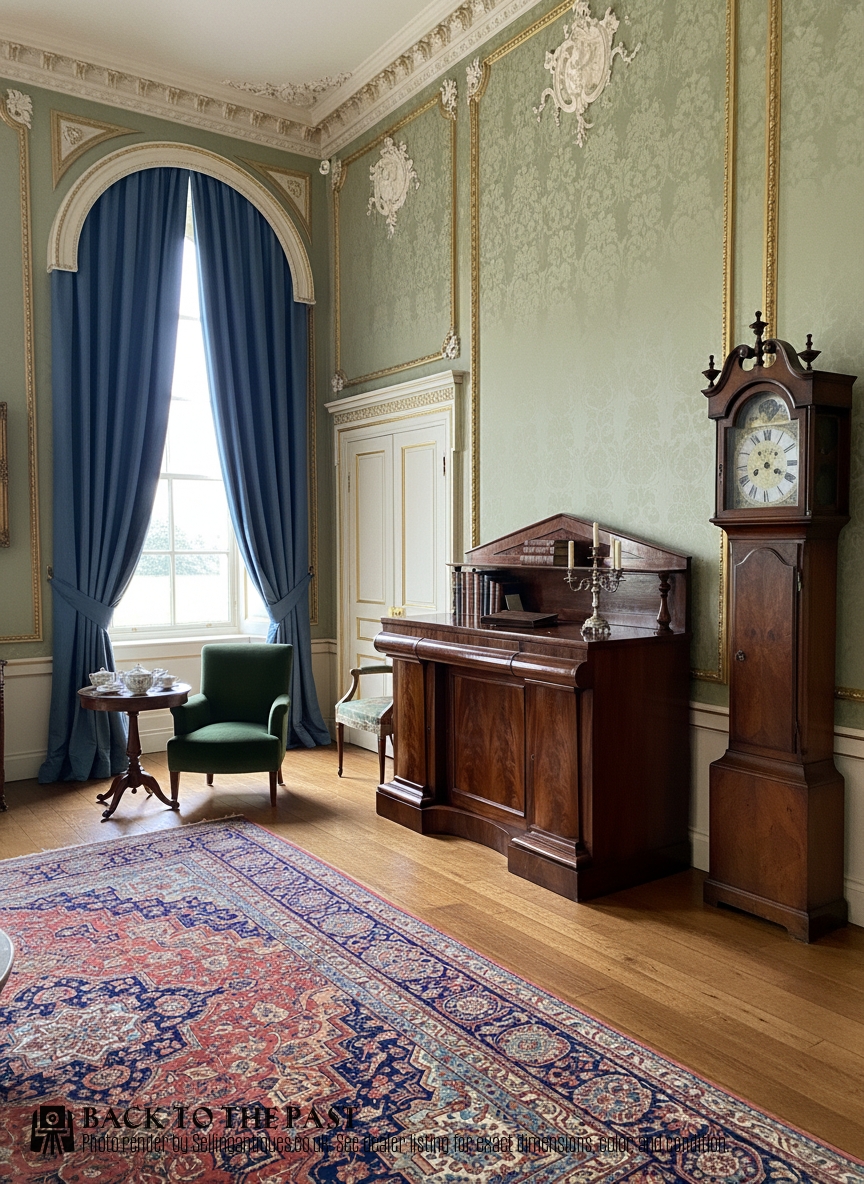
Georgian Style Mahogany Server
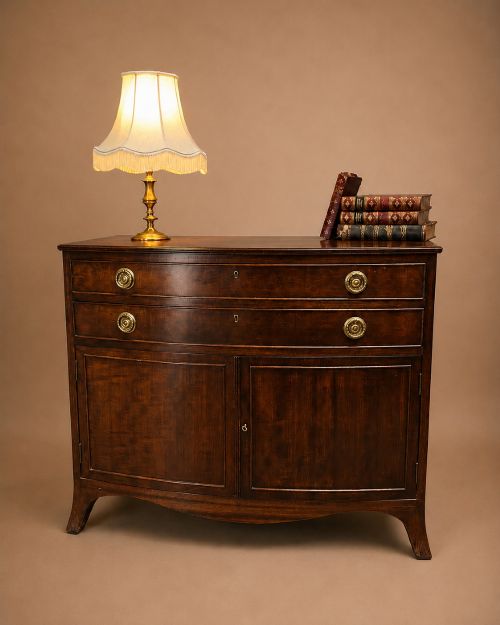
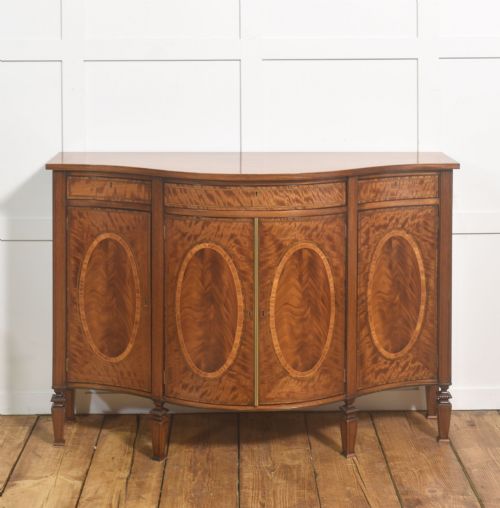
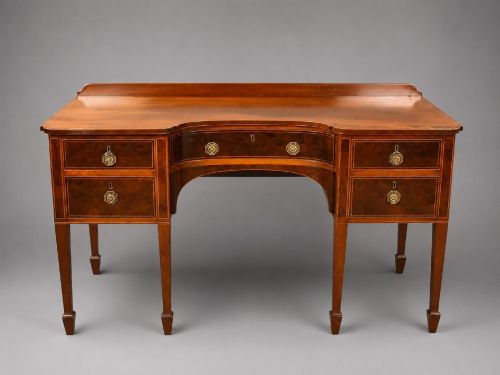
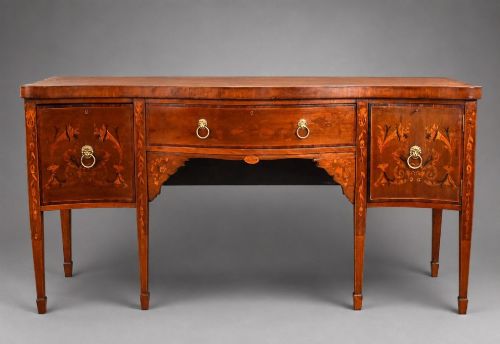
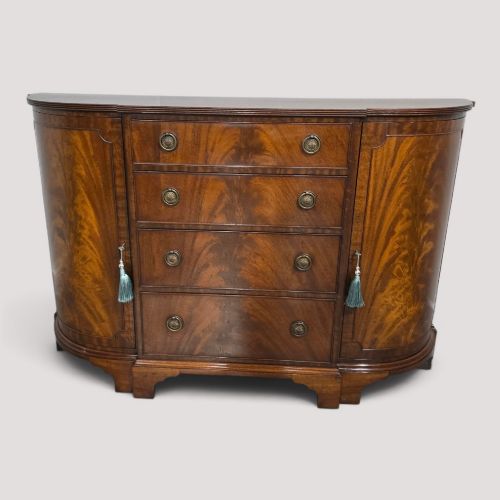
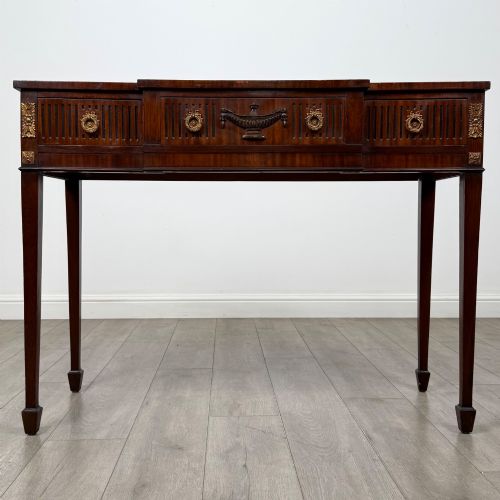
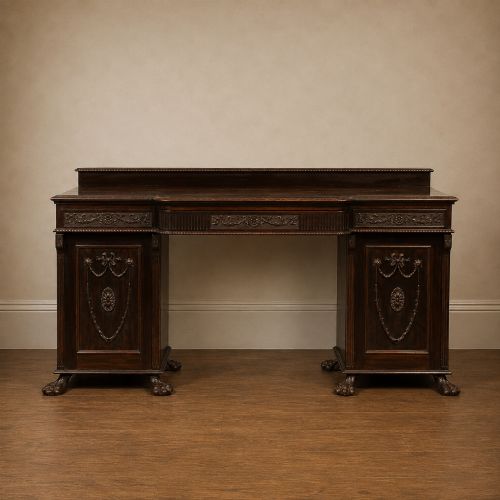
When you search for a georgian style mahogany server, you look at foundational dining room case pieces designed for service, storage, and display. The forms range from strict geometric pedestal layouts to sweeping serpentine and bow-front shapes that soften a room's geometry.
You are most likely to meet revival pieces from the Edwardian era and the early twentieth century alongside genuine eighteenth and nineteenth-century pieces. Makers of all periods adopted the restrained classical vocabularies associated with Sheraton, Chippendale, and Adam.
The category overlaps comfortably with related serving tables, sideboards, and side tables built to hold silver, linen, and glassware. These pieces anchor a dining interior with functional surface area and disciplined historical ornament.
How they were made
Joiners built these pieces using solid mahogany bodies and selected flame mahogany veneers over stable secondary timbers. Cabinetmakers manipulated grain directions to create natural pattern contrasts across large drawer fronts and top panels.
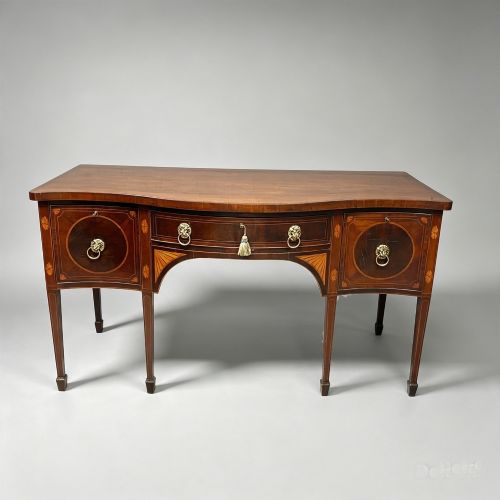
Craftsmen enriched the mahogany surfaces with contrasting stringing and banding using boxwood and satinwood. Marquetry inlays introduced classical floral and architectural motifs that catch the light from multiple angles.
Hardware played a functional and decorative role, featuring cast brass handles and occasional paw feet that anchored the heavier proportions. Joinery relied on precise dovetailing for drawers and robust frame construction to support heavy loads.
Listings feature eighteenth-century origins alongside Edwardian and 1920s revivals, constructed in solid mahogany with satinwood inlay.
What varies in quality
The hierarchy of quality rests on the selection of timber and the ambition of the outline. Pieces featuring symmetrical flame veneer and complex serpentine curves demand greater woodworking skill than flat-fronted alternatives.
Execution of inlay separates standard workshop production from exceptional cabinet work. Crisp boxwood stringing and balanced satinwood panels demonstrate precise hand-cut joinery rather than stamped imitation.
Proportion and stance dictate visual success, where the relationship between leg height, drawer depth, and top surface feels balanced. Original hardware and undisturbed surface patination elevate the standing of any surviving example.
Gillows·M. D. Miller & Sons
The Georgian Style Mahogany Server Glossary
- Serpentine
- A front outline that curves outward in the centre and inward toward the ends, creating a flowing undulating shape. This profile requires advanced woodworking skill to shape accurately.
- Bow-front
- A convex curved cabinet front that swells outward from the corners. The curve adds softness and visual depth to a standard rectangular sideboard.
- Satinwood
- A pale yellow exotic timber used primarily for contrasting inlay and banding against dark mahogany. It provides bright visual accents on drawer borders and friezes.
- Breakfront
- A cabinet form where the central section projects forward from the flanking wings. This architectural arrangement creates distinct zones for storage and display.
- Dumb waiter
- A tiered serving stand featuring revolving circular trays mounted on a central pillar. These pieces provided convenient access to dishes without requiring constant servant attendance.
Georgian Style Mahogany Server: Frequently Asked Questions
What is a mahogany server used for?
These pieces functioned historically as auxiliary tables for holding dishes, silverware, and serving platters during large meals.
Today they serve similar practical duties in dining rooms while acting as display surfaces for lamps, ceramics, and decorative objects.
How do I spot a revival piece?
Revival pieces built around nineteen-ten or nineteen-twenty often show standardised interior construction methods and uniform machine-cut dovetails.
Examining the secondary timbers and the wear patterns on the drawer runners helps reveal the true age of the piece.
Why choose a serpentine front?
The curved outline breaks up the heavy rectangular mass typical of large dining furniture, adding a sense of movement.
This sophisticated shaping indicates a higher grade of cabinetmaking and creates pleasant plays of light across the timber.
How do I care for mahogany?
Keep the timber away from direct sunlight and strong heat sources to prevent the natural oils from drying out.
Apply a traditional wax polish occasionally and buff with a soft cloth to maintain the protective sheen.