
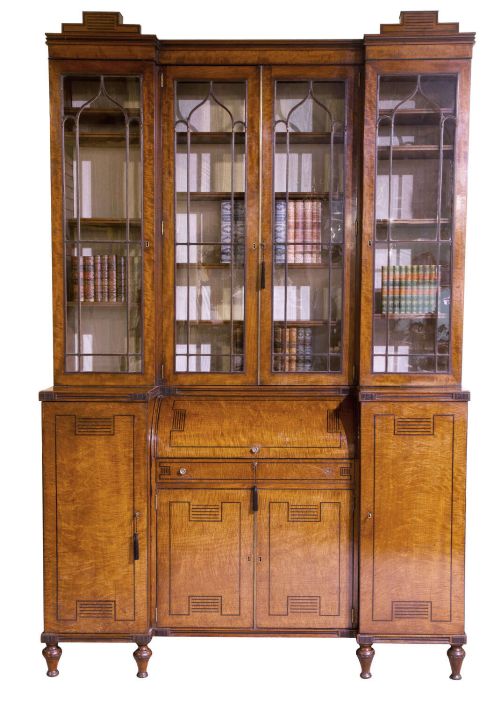
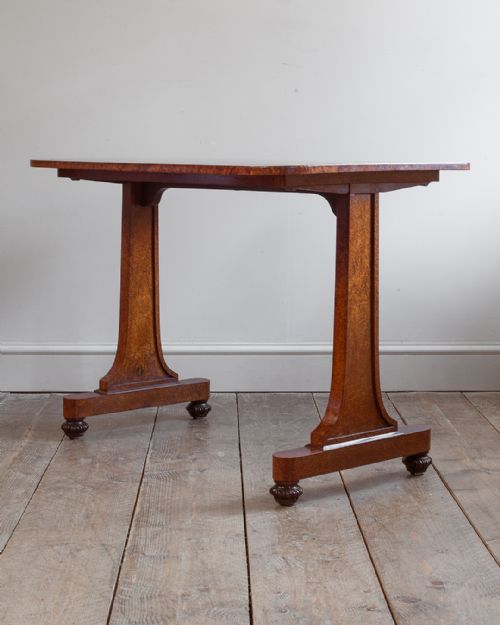
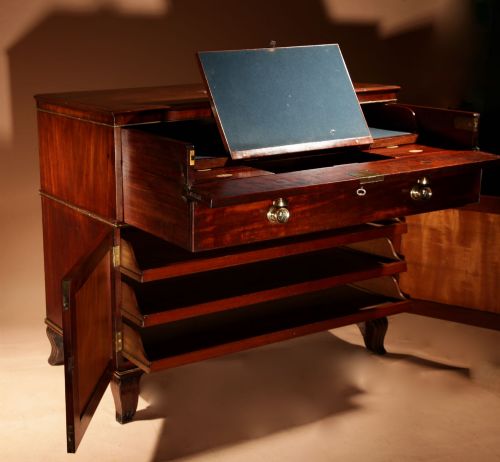
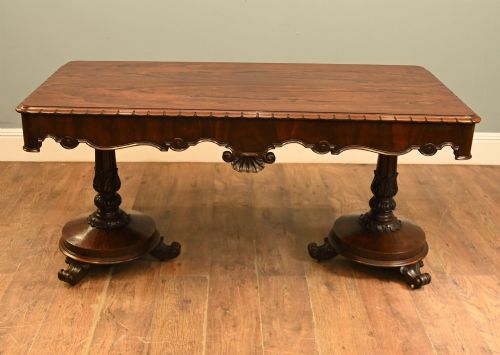

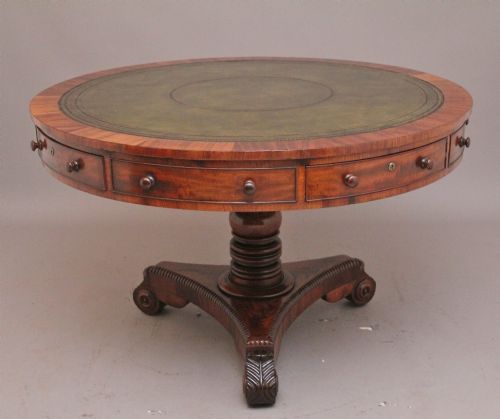
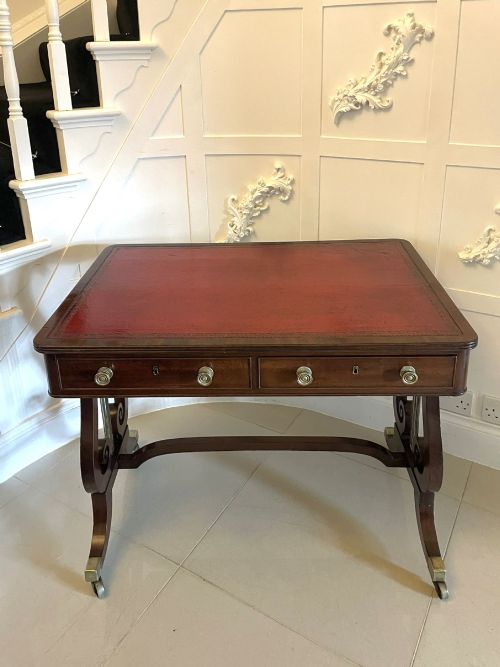
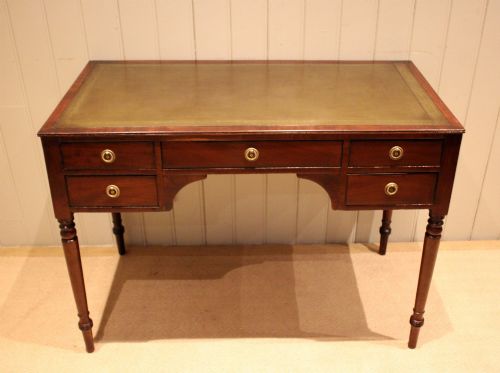
Regency Library Writing Desk
A regency library writing desk is a substantial piece built for scholarly pursuits, offering generous surfaces and refined proportions that suit both traditional and modern rooms.
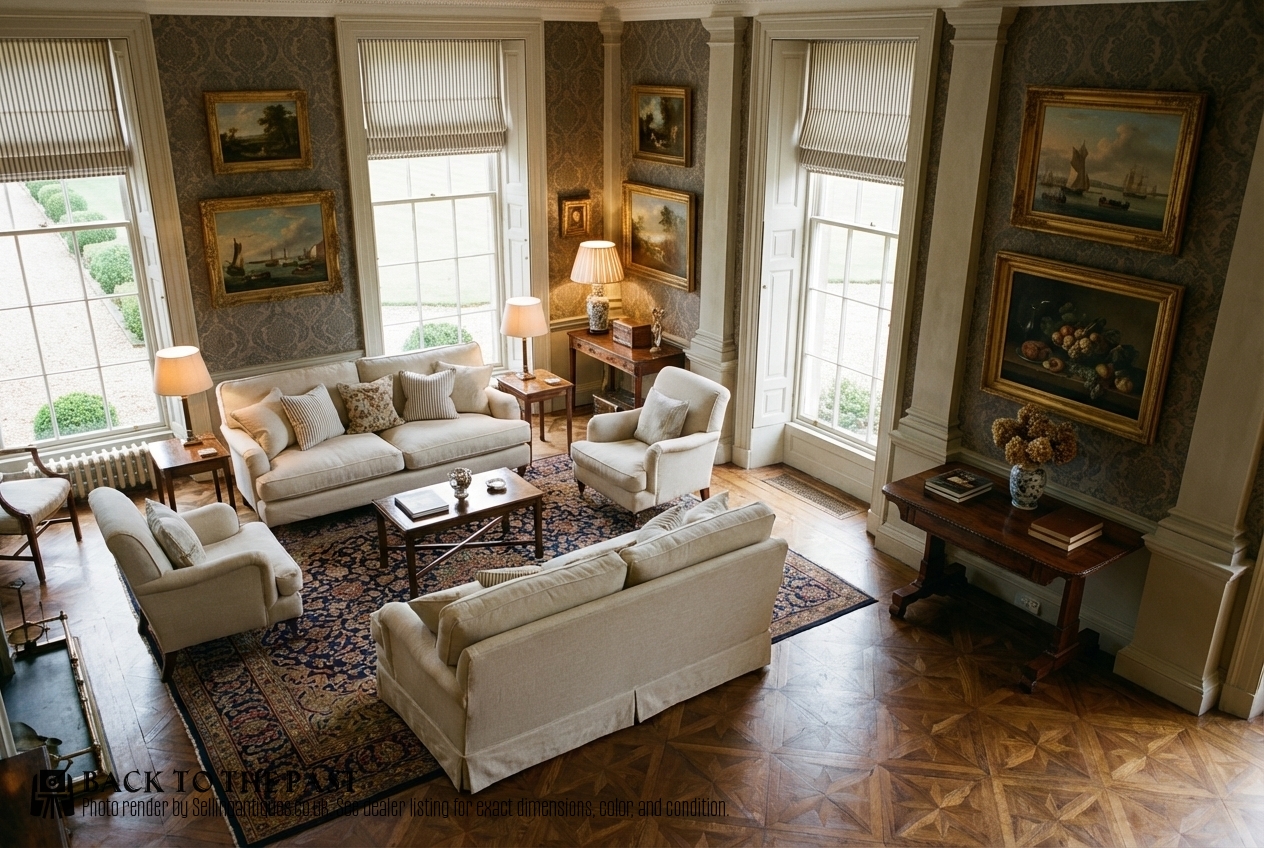
Regency Library Writing Desk
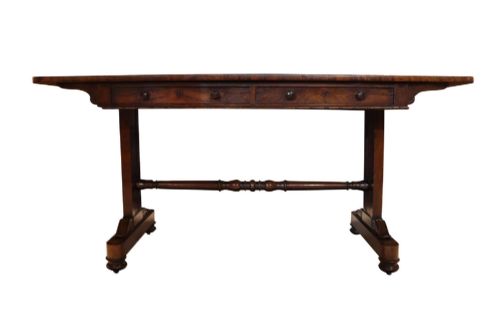
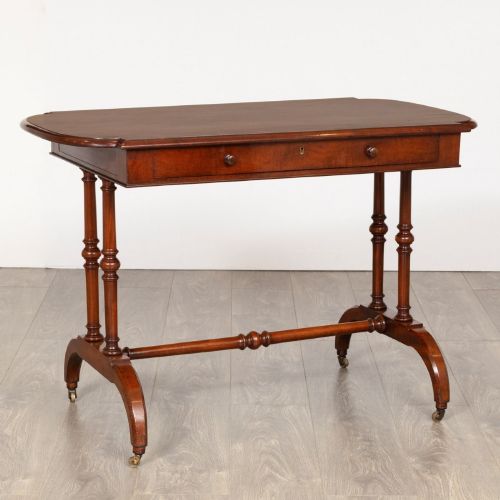
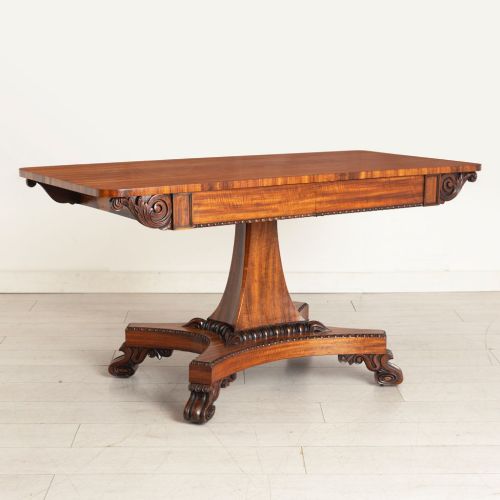
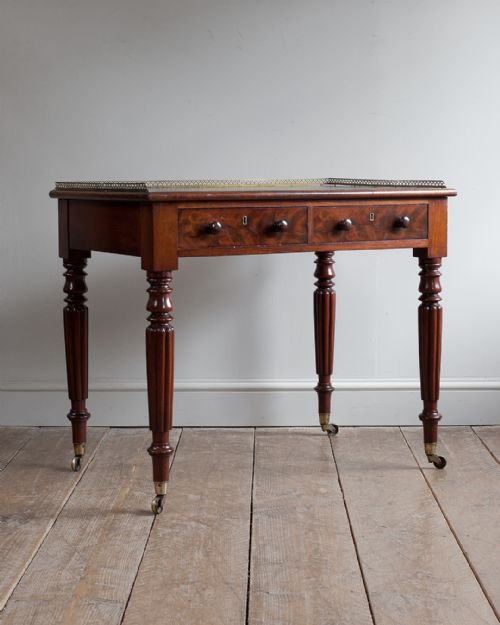
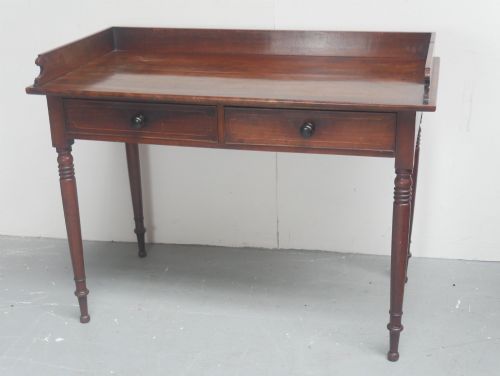
When you search for a regency library writing desk, you look at freestanding tables and freestanding writing desks designed to sit proudly in the centre of a room rather than against a wall. The pieces appearing here span the Georgian, Regency, William IV, and early Victorian eras, alongside select later interpretations.
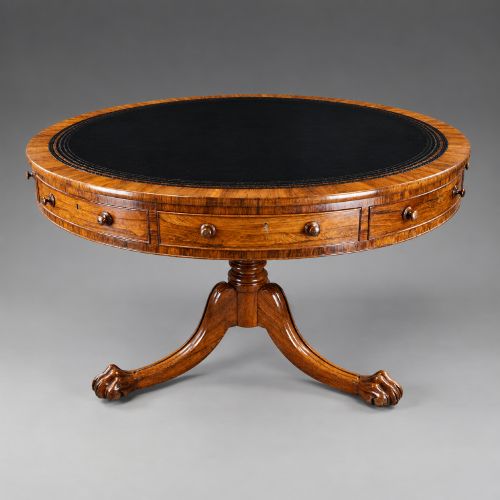
Mahogany and rosewood dominate the surviving forms, frequently paired with inset leather working surfaces. Alongside standard writing tables and library tables, the selection includes drum tables and sofa tables that served specialised functions in grand residences.
Materials and Construction
Cabinet makers utilised dense imported timbers such as mahogany and rosewood, often selecting figured veneers for top surfaces and drawer fronts. Exotic woods like pollard oak, burr yew, and goncalo alves appear on finer examples, adding rich tonal contrast.
Brass fittings, including castors, handles, and gallery rails, provide structural support and functional mobility. Leather inserts, commonly worked with blind and gilt tooling, create a durable writing surface atop the timber carcase.
The documented periods span the Georgian era through the Regency, William IV, and Victorian periods up to the 1930s.
Distinctions in Quality
The sophistication of the timber selection and the precision of the cabinet work separate standard utility tables from exceptional examples. Dense, well-figured grain patterns and symmetrical veneer matching indicate a maker of higher standing.
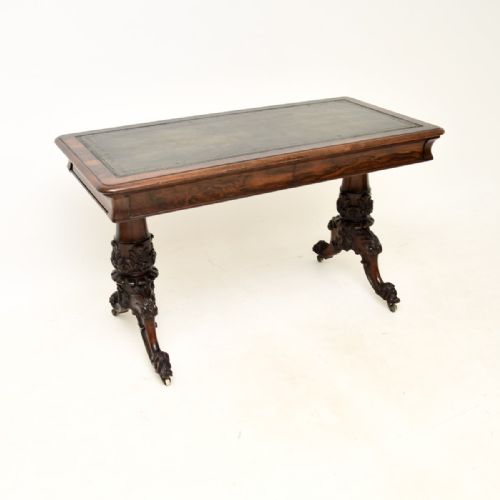
Carved details such as lion paws, giltwood accents, and finely turned pedestals reflect the hand of skilled artisans. Thoughtful proportions and uncompromised secondary woods throughout the drawer linings signal superior workshop origin.
Williams and Gibton·Gillows of Lancaster·George Smith
The Regency Library Writing Desk Glossary
- Drum table
- A circular library table with a revolving or stationary top surrounded by an arrangement of frieze drawers and dummy drawers. These tables typically rest on a central pillar supported by a tripod or platform base.
- Sofa table
- A rectangular occasional or writing table featuring drop flaps on either end, designed historically to stand in front of a sofa. They frequently incorporate double drawer banks and paired trestle supports.
- Partners desk
- A large double-sided writing desk fitted with drawers and cupboards on both opposing faces, allowing two people to work opposite one another. They represent the grandest scale of nineteenth-century library furniture.
- Freestanding
- Finished on all four sides so the piece can stand in the middle of a room without backing against a wall. This attribute distinguishes principal library tables from simpler side tables.
- Frieze
- The horizontal band beneath the tabletop that houses the drawers. On better pieces, this section carries decorative inlay, brass mounts, or matched flame mahogany veneers.
Regency Library Writing Desk: Frequently Asked Questions
Where did these desks sit?
These tables were designed for the principal libraries, studies, and drawing rooms of large country houses and town residences. Because they are finished on all sides, they stood away from the walls in the middle of the room.
Owners gathered around them to write letters, manage estate accounts, and read heavy leather-bound volumes. Their central placement allowed light from tall windows to fall across the working surface from any angle.
How do I use one today?
A library table functions naturally as a generous writing desk or a central display surface in a study, living room, or hallway. The deep drawers provide practical storage for stationery, modern laptops, and small household items.
Pacing them away from the wall lets the finished back and sides be appreciated properly, mirroring their original placement in nineteenth-century interiors.
Are these tables good for working?
Most antique library tables offer wide tops and comfortable knee clearance beneath the frieze drawers, making them suitable for daily writing or computer use. The inset leather surfaces provide a smooth, matte texture that absorbs glare.
Buyers should check the height against modern seating, as nineteenth-century chair clearances can occasionally sit lower than contemporary office standards.
How do I tell Regency from Victorian?
Regency pieces dating from the early nineteenth century favour classical restraint, clean architectural lines, and delicate brass inlays. Mahogany and rosewood veneers display crisp figuring with minimal heavy carving.
Victorian and William IV examples from later decades tend toward heavier proportions, bolder pedestal bases, and more exuberant carved ornamentation such as scrollwork and lion paws.