






Regency Lead Crystal Glass
Regency lead crystal glass brings heavy, brilliant-cut vessels and serving pieces into the dining room.
Regency Lead Crystal Glass
When searching for regency lead crystal glass, buyers encounter table glass shaped for serving wine, water, spirits, and condiments during the Georgian and Regency periods. The selection on this page centres on rummers, decanters, jugs, bowls, and salt cellars made around eighteen hundred and the early nineteenth century.
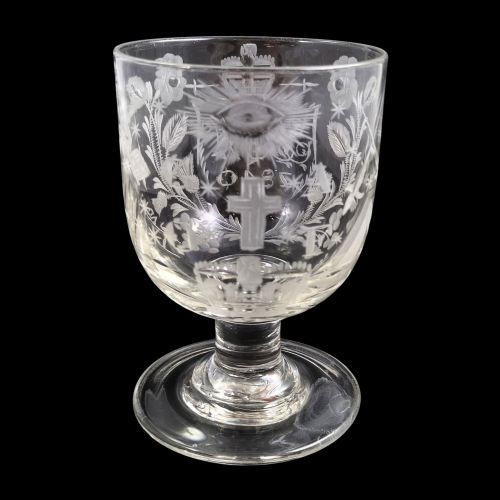
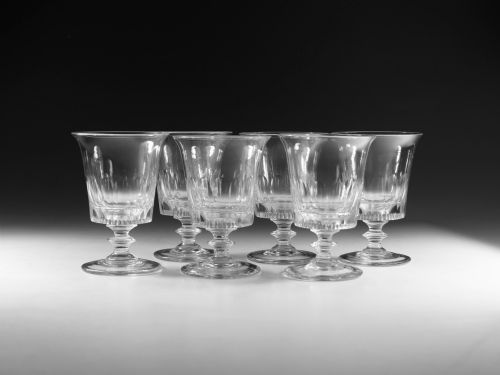
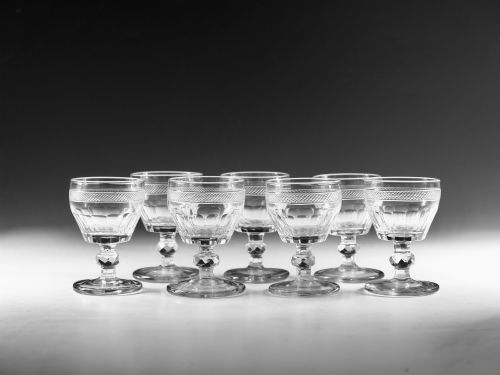
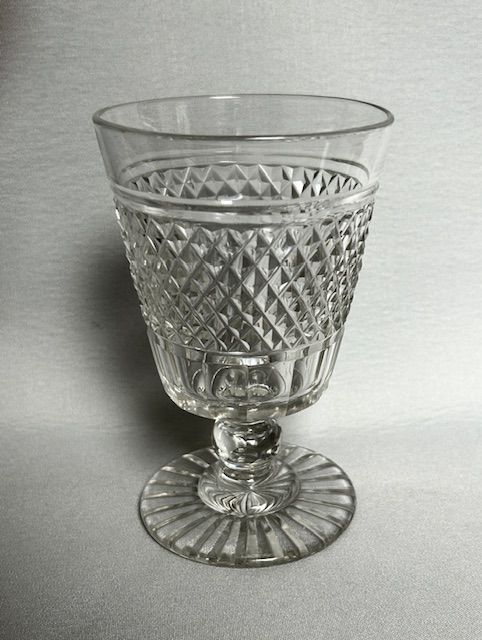
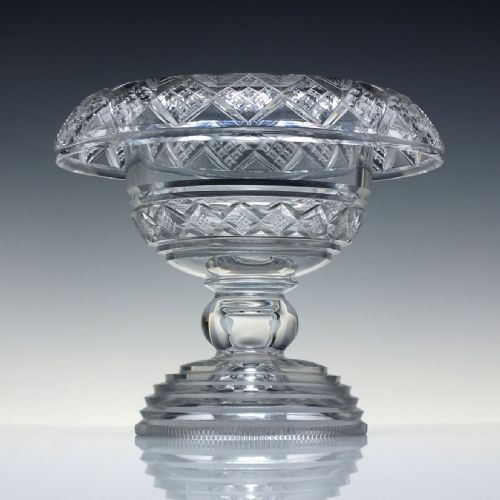
Drinking vessels dominate the forms, particularly heavy rummers and dram glasses alongside larger table items such as celery vases and fruit bowls. Anglo-Irish production heavily influences the style through deep cutting and substantial weight.
While most pieces date from the Georgian and Regency eras, occasional Victorian and later examples appear alongside the dominant early nineteenth-century stock.
Materials and technique
Lead crystal and lead glass form the foundation of these pieces, providing the dense weight and high refractive index necessary for deep cutting. Artisans shaped the metal by blowing and moulding before applying intricate surface decoration.
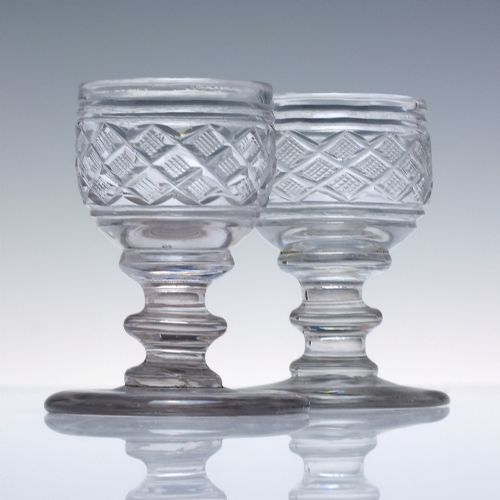
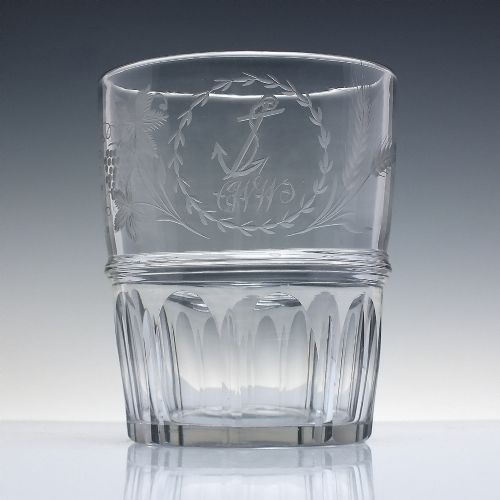
Cutter's work defines the aesthetic, utilising hobnail patterns, pillar and prism cuts, blaze cutting, and diamond facets to catch the light. Engraving frequently complements the cutting, showing motifs like hops and barley, armorial crests, and shipping scenes.
Decanters, rummers, and salt cellars represent the primary object types recorded in the inventory.
Assessing the material
Clarity of the metal and crispness of the cutting distinguish the finest examples from heavier, duller production. Sharp, deep facets refract light cleanly, whereas worn or shallow cutting flattens the appearance of the vessel.
Proportion and weight dictate the balance of the piece, particularly in pedestal bases and square lemon-squeezer feet. Original matching sets command greater interest than assembled groups due to uniformity in manufacture.
The Regency Lead Crystal Glass Glossary
- Rummer
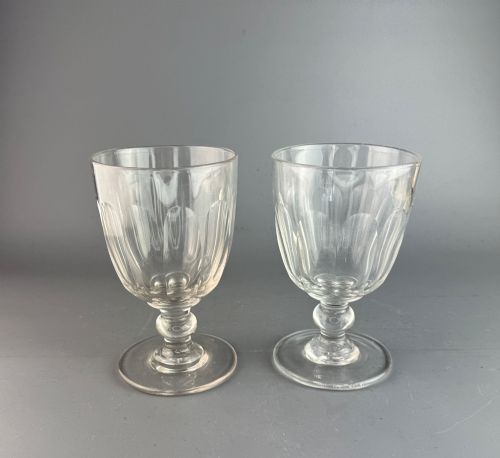
- A large drinking glass used for wine, beer, or punch during the Georgian period. These heavy vessels often feature cut stems and engraved bowls.
- Lemon-squeezer base
- A square, moulded glass foot with a stepped profile resembling a citrus juicer. This sturdy form is typical of heavy rummers and decanters from around eighteen hundred.
- Pillar and prism cut
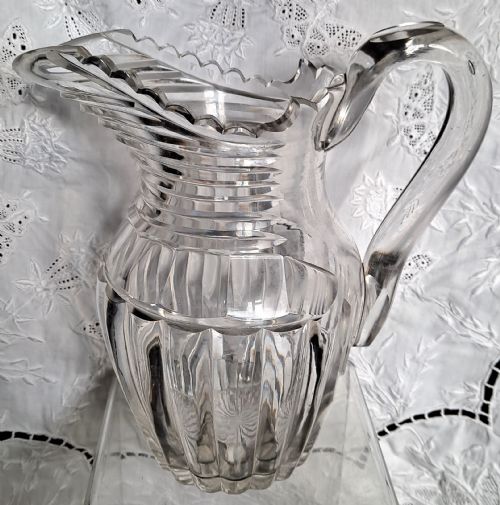
- Linear facets ground into the body of decanters or jugs. This technique creates parallel bands that reflect light deeply.
- Hobnail pattern
- A raised, diamond-shaped surface cutting that resembles the hobnails on stout boots. It provides a tactile grip and brilliant sparkle on bowls and rummers.
Regency Lead Crystal Glass: Frequently Asked Questions
How do I use antique rummers?
These large drinking vessels serve well for modern water glasses, dessert bowls, or casual wine drinking at the table. Their robust lead crystal construction makes them surprisingly durable for daily use.
Hand washing in lukewarm water keeps the lead crystal clear and prevents thermal shock. Avoid abrasive scrubbers to protect the historic cut facets.
How do I spot an Anglo-Irish piece?
Anglo-Irish glass displays exceptional weight, deep brilliant cutting, and a slightly greyish or dark refractive tint to the metal. Irish glasshouses produced heavy bowls, decanters, and rummers that felt noticeably denser than standard English wares.
Look for deep hobnails and broad flutes that catch the light sharply. The scale of these items often tends toward the monumental.
Are ship decanters stable on tables?
The wide, conical base of a ship's decanter prevents tipping when a vessel rolls at sea. This practical design translates well to modern dining tables on uneven surfaces.
Their low centre of gravity makes them particularly secure for serving wine during crowded gatherings. They fit easily into older sideboard cabinets due to their shorter height.
What is a celery vase?
Celery vases are tall, pedestal-mounted vessels designed to stand upright on the dining table to hold stalks of celery. Victorians and Georgians displayed the vegetable as a prized table centrepiece.
Today, these deep vessels function ideally as flower vases or glassware storage. Their sturdy stems and cut bodies add height to a table setting.