

Regency Cut Crystal Glass
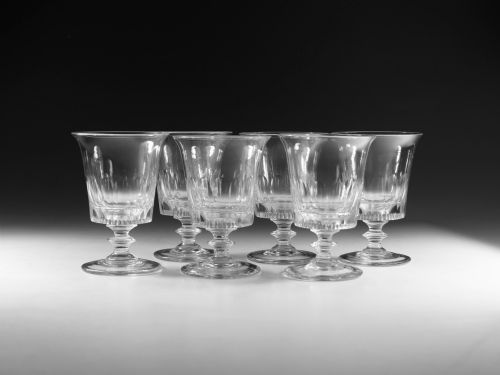
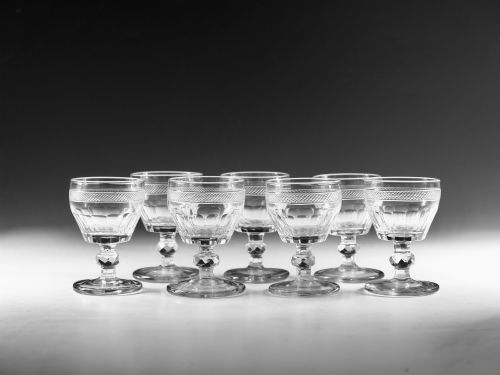
Regency cut crystal glass pieces are brilliant, heavy items of tableware and lighting that catch the light with deep facets, bringing sparkle and substance to a room.
Regency Cut Crystal Glass
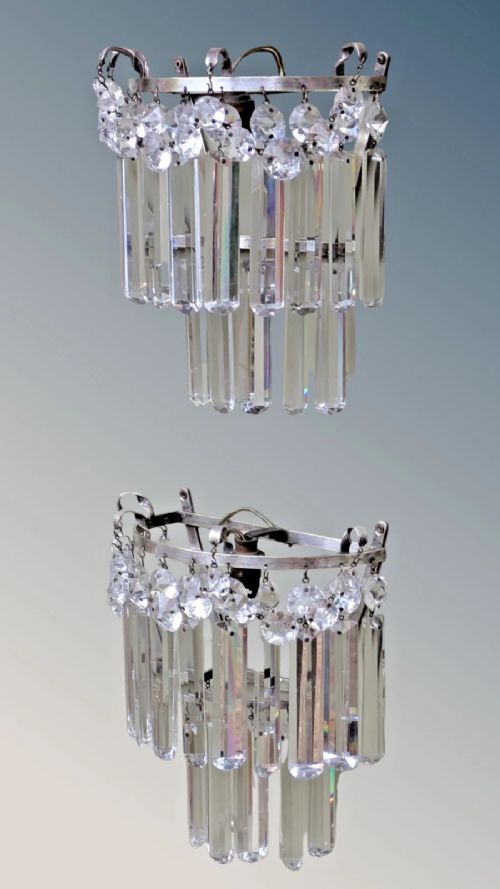
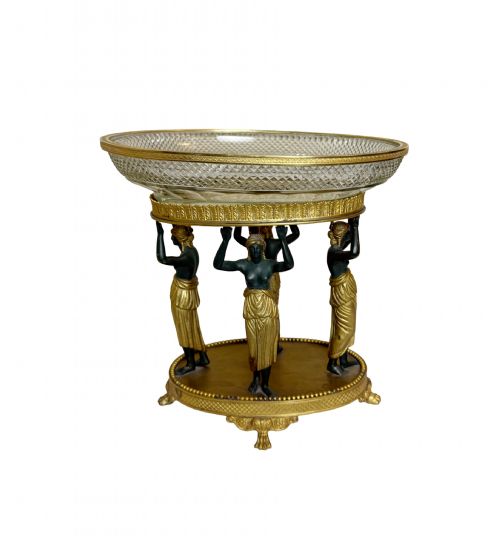
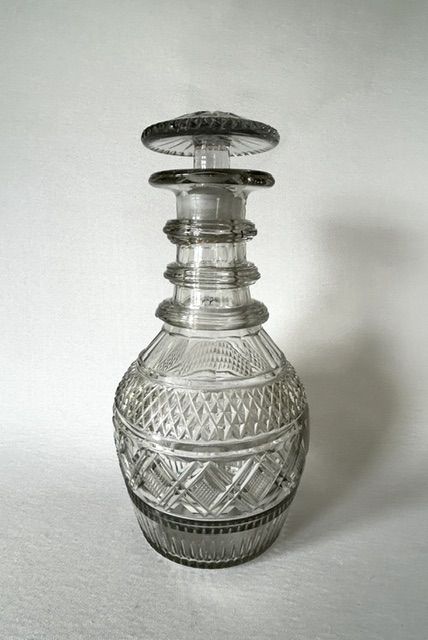
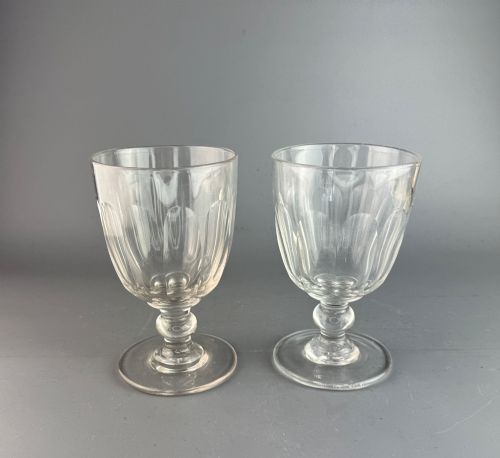
The periods represented span the early nineteenth century and later decades, drawing on English and Irish workshops as well as continental styles including French Empire and French Regency. Irish production appears frequently through heavy standing bowls, port glasses and decanters marked by deep, crisp facets and brilliant metal. While original Regency examples date from the early eighteen hundreds, the inventory also incorporates later nineteenth-century rummers and twentieth-century interpretations like Regency Revival light fittings.
Assessing quality in cut glass
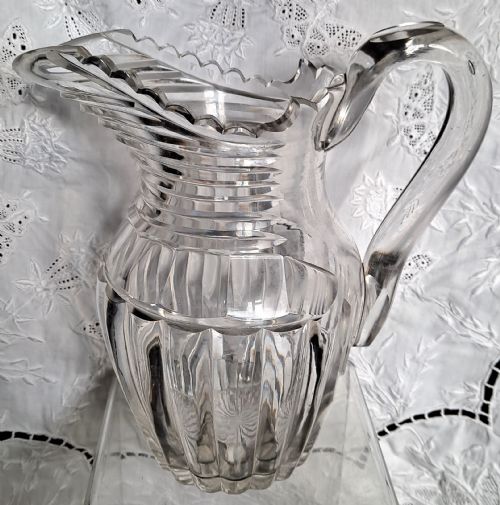
Quality in these items rests upon the clarity of the metal and the crispness of the cutting rather than the mere presence of decoration. Superior pieces possess a high degree of transparency without internal cloudiness, bubbles or striations, alongside sharp facet junctions that feel distinct to the touch. The depth and precision of the wheel-cut patterns determine how successfully the object refracts light, separating mass-produced commercial items from exceptional tableware.
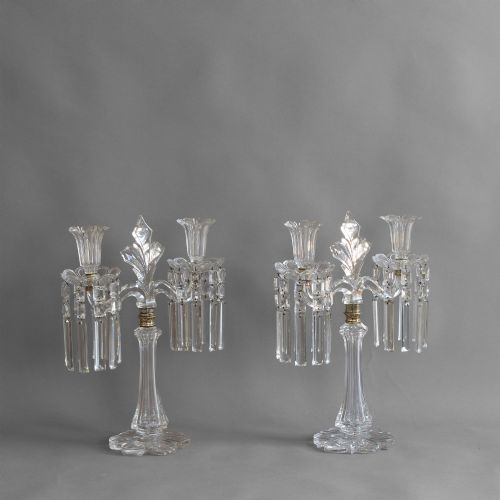
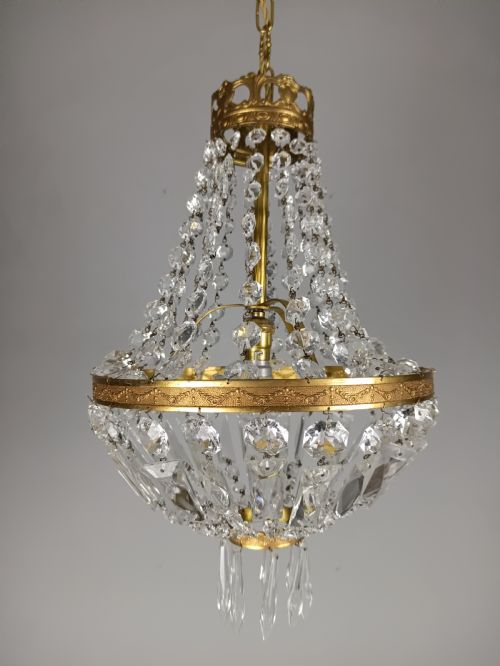
Weight and balance also dictate standard, particularly in drinking vessels, decanters and standing bowls where heavy lead crystal provides a satisfying heft and stability. In lighting, the quality depends on the integration of the brass or gilt bronze mounts with the cut glass components, ensuring the prisms and drops hang correctly and complement the overall proportion of the fixture.
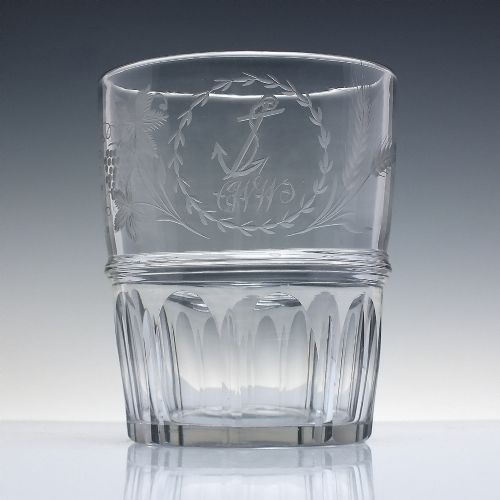
Early glass tumblers known as flip glasses were once used to consume strong ales in a single swift motion.
William Rudkins London
The Regency Cut Crystal Glass Glossary
- Rummer
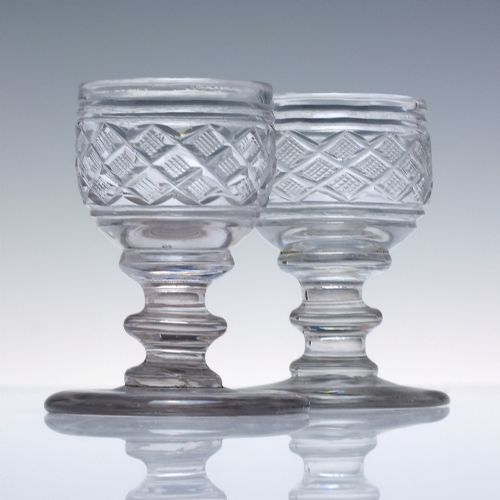
- A large, heavy drinking glass popular in the eighteenth and nineteenth centuries, typically used for ale, wine or punch. They frequently feature bucket bowls supported on short stems and lemon squeezer feet.
- Lemon squeezer base
- A square, moulded glass foot with indented corners resembling a traditional kitchen lemon squeezer. This form is characteristic of Georgian and Regency table glass.
- Hobnail cut
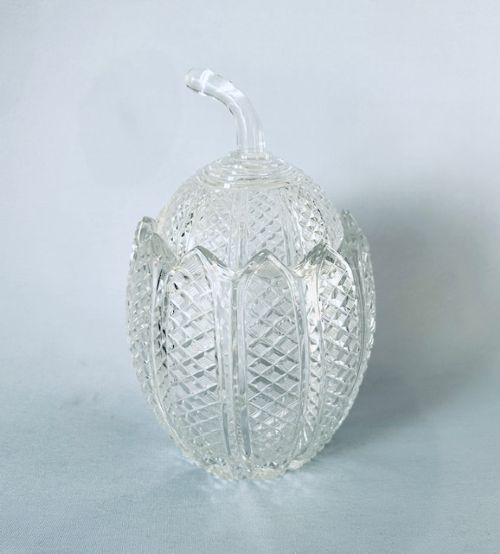
- A raised, diamond-shaped geometric pattern cut into the surface of the glass, resembling the hobnails used in heavy boots. It creates intense light refraction across the object.
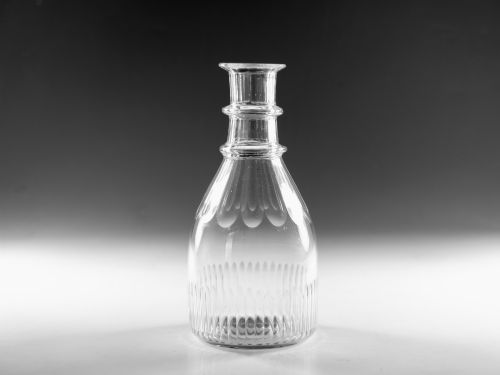
- Ship's decanter
- A decanter with a broad, flat base and a conical body designed to prevent tipping on the rolling floor of a vessel at sea. They are frequently fitted with heavy stoppers and neck rings.
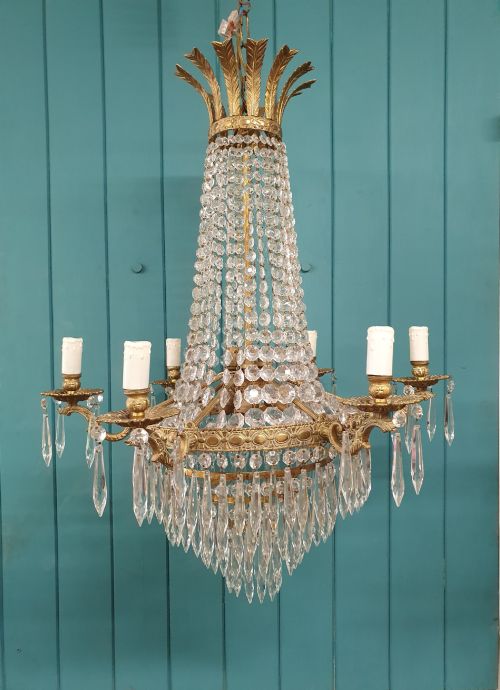
- Bag chandelier
- A light fitting featuring a basket or bag-shaped lower section composed of numerous small glass beads or crystals strung together. They became popular for reflecting candle or gas light within smaller rooms.
Regency Cut Crystal Glass: Frequently Asked Questions
Were these decanters meant for wine?
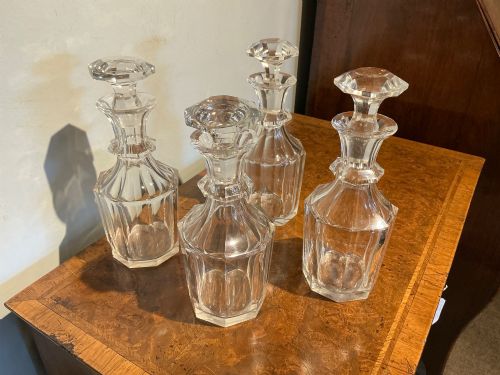
Many of these vessels were produced to hold port, sherry, whiskey or water on the dining table. The heavy lead crystal protected the contents and added stability during circulation.
Specialised forms like ship's decanters and liqueur sets served specific roles in domestic hospitality during the Regency period.
How can I date a cut glass piece?
Examine the base for pontil marks, weight, and the style of the cutting to establish a period. Georgian and Regency examples often feature polished pontils and deep, hand-cut facets.
Later nineteenth-century and twentieth-century revival pieces may show machine-moulded bases or different chemical compositions within the glass.
Can I use antique rummers daily?
These glasses are robust enough for occasional use if handled with care and washed by hand. The heavy lead crystal provides durability, but old glass remains vulnerable to thermal shock.
Many collectors prefer to display them as part of a table setting or cabinet collection to preserve their condition.