
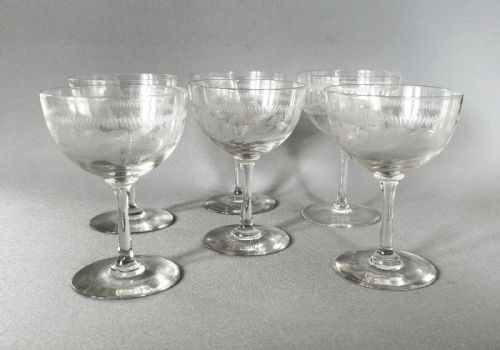


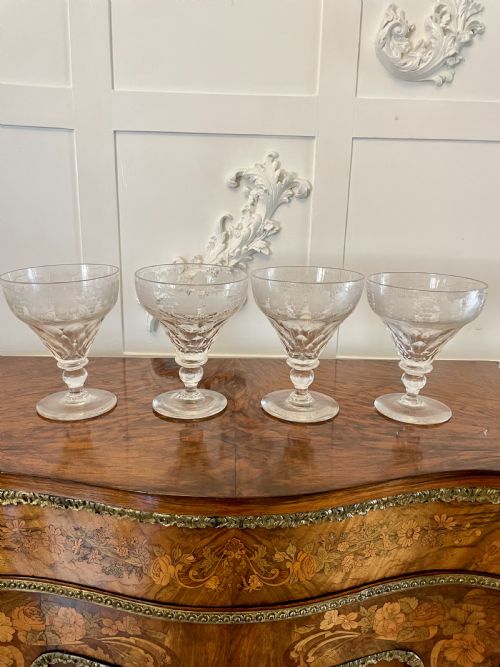

Antique Glass Cocktail Coupe
An antique glass cocktail coupe brings genuine nineteenth- and early-twentieth-century weight and sparkle to any modern home bar.
Antique Glass Cocktail Coupe
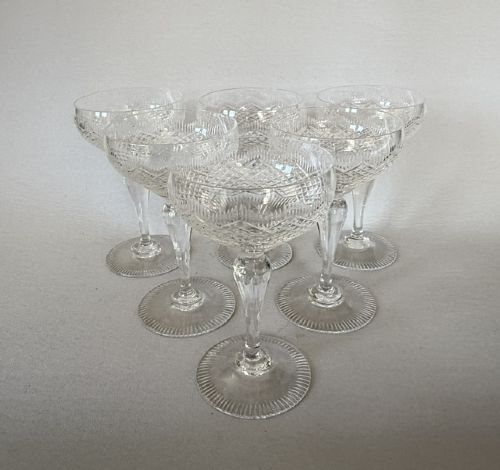
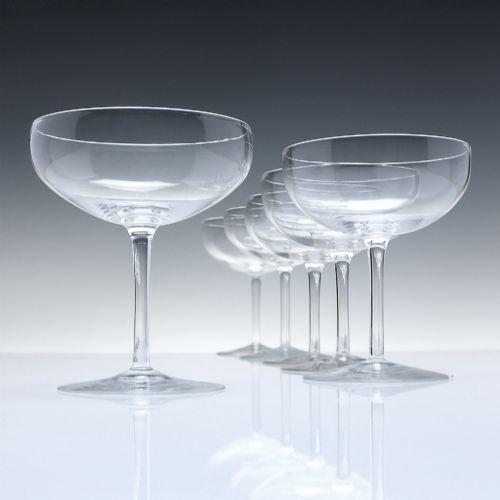
An antique glass cocktail coupe is a shallow-bowled glass originally designed for champagne or sparkling wine, which now serves sophisticated drinks with period character. The pieces found here span the Victorian, Edwardian, Art Deco, Historicism and Regency periods, moving through forms like champagne coupes, bowls and champagne glasses.
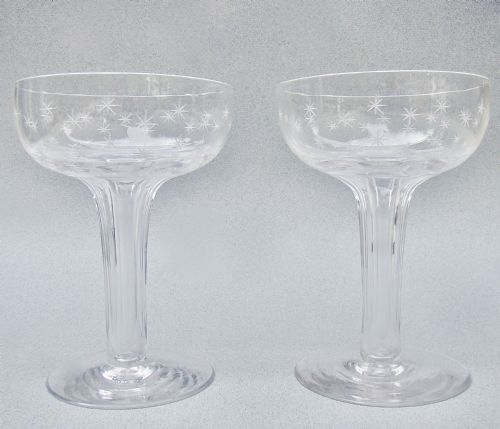
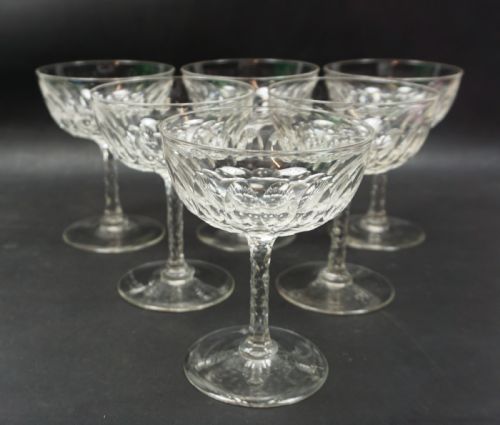
You are most likely to encounter sets of six or pairs, with cut glass and crystal appearing frequently across these listings. Forms range from hollow-stemmed bowls to large crystal vessels with facet-cut stems and patterned rims.
The origins stretch across English production and continental makers, incorporating coloured glass overlays such as green and red over crystal alongside traditional clear glass.
How they were made
Maker's workshops utilised heavy lead crystal and clear glass, shaping them by hand before applying decorative surface treatments. Skilled hands cut deep facets into stems and bowls, or wheel-engraved motifs such as fruiting vines and Greek key patterns directly into the material.
Some vessels received delicate enamel work, as seen in specialised continental ranges, whilst others combined coloured glass overlays with clear crystal beneath. This meant fusing layers of coloured glass to the base metal before cutting away sections to reveal the contrasting transparent body.
Fruiting vines and ancient Greek key patterns quietly conspired to keep Victorian and Edwardian toasts well-dressed for over a century.
What varies in quality
Quality rests upon the crispness of the wheel-cut or etched decoration and the clarity of the underlying lead crystal. Sharp, deep facet cuts and precisely aligned motifs distinguish finer production from simpler commercial output.
The weight and balance of the stem relative to the bowl also indicate the maker's ambition, alongside the evenness of any coloured glass overlay applied to the vessel.
Fritz Heckert
The Antique Glass Cocktail Coupe Glossary
- Champagne coupe
- A shallow-bowled stemglass designed for sparkling wine and widely utilised today for serving cocktails. Its broad rim allows the aromas of the drink to release quickly.
- Lead crystal
- Glass containing a high proportion of lead oxide, which increases weight, brilliance and refractive index. This material allows for deeper and sharper decorative cutting.
- Facet cut
- A decorative technique involving flat, polished planes ground into the surface of the glass. It creates geometric patterns that catch and reflect light.
- Over crystal
- A method where a layer of coloured glass is fused over a clear crystal body. The outer layer is then partially cut away to reveal the contrasting clear glass beneath.
- Hollow stem
- A stem formed with an internal channel connected to the bowl. This historical construction feature requires particular skill from the glassblower.
Antique Glass Cocktail Coupe: Frequently Asked Questions
Were these originally meant for cocktails?
Most of these pieces were initially produced as champagne bowls or glasses during the Victorian and Edwardian eras. The shallow bowl shape suits sparkling wines, which made the transition to short cocktail serves natural.
Over time, modern drinking habits turned these vintage vessels into favoured glassware for drinks served straight up without ice.
How do I care for antique crystal?
Wash your glassware gently by hand in warm water using a mild detergent. Avoid sudden temperature changes to protect the older lead crystal from thermal shock.
Store the pieces upright on stable shelving and keep them away from crowded stacking to protect delicate rims and cut stems.
Can I mix different sets together?
Mixing pairs and larger sets depends on matching general scale, period styles and decorative treatments like cutting or etching. Victorian star-cut pieces can sit alongside Edwardian geometric patterns if the glass tone and weight complement each other.
Table settings look most intentional when pieces share similar material density or manufacturing techniques, even if the exact motif differs.
How do I date a glass coupe?
Dating relies on observing the form, weight, material composition and decorative style recorded in the physical piece. Victorian examples often feature star-cutting and heavier proportions, while Edwardian pieces frequently showcase lighter Greek key patterns or simpler columnar stems.
Examine the pontil mark on the underside of the base, as the method of its finishing offers clues to the period of manufacture.