


Vintage Champagne Glass
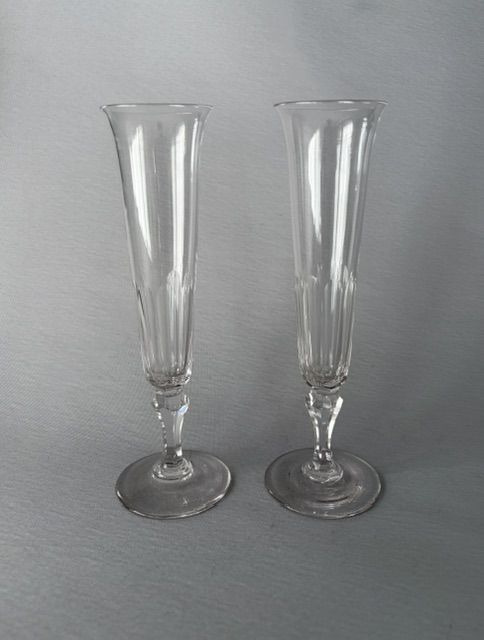
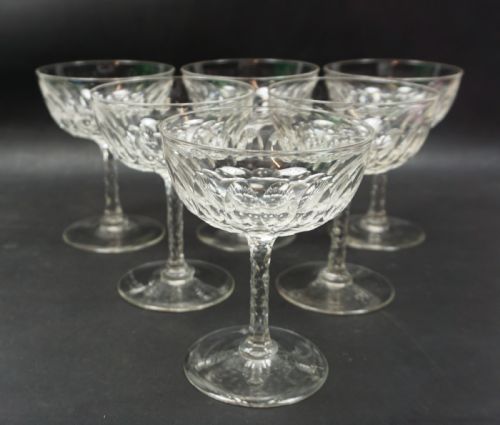
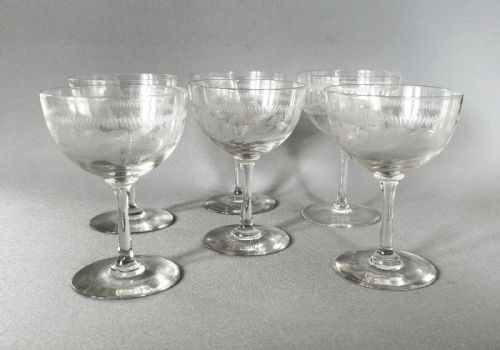
A vintage champagne glass brings the weight of past dining rooms to the table, taking the form of shallow coupes, hollow stems and slender flutes.
Vintage Champagne Glass
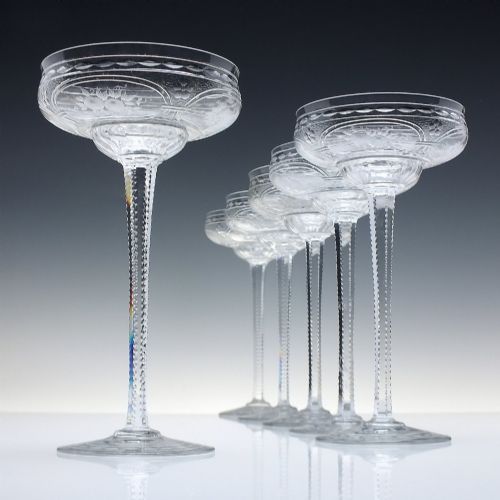
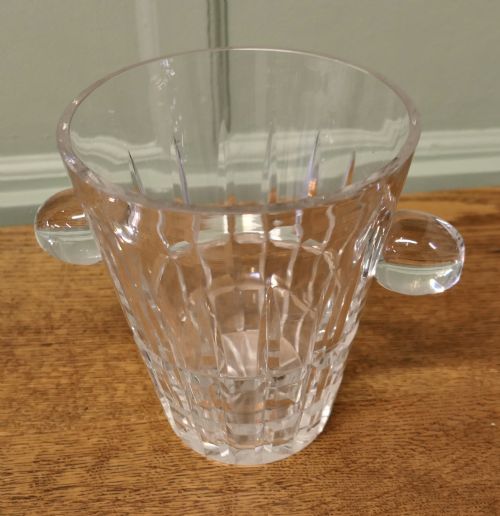
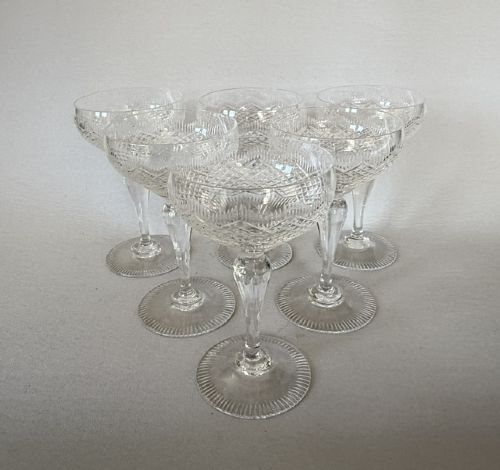
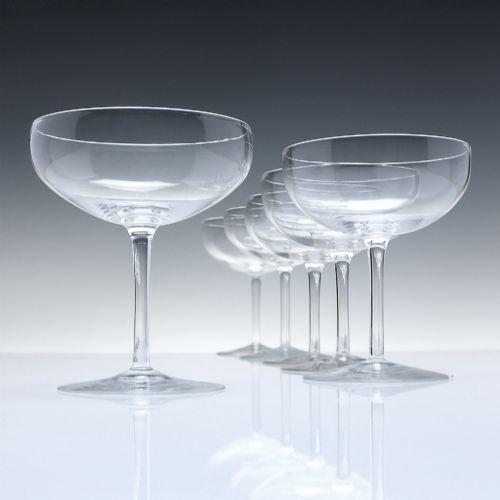
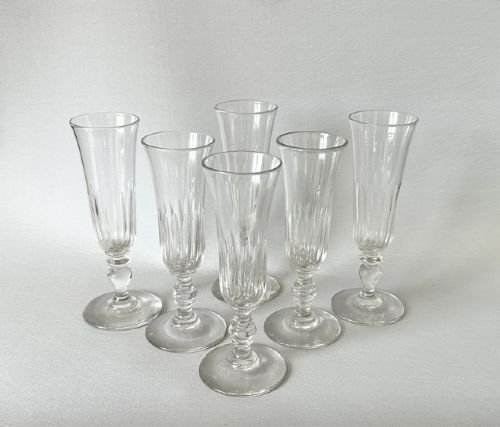
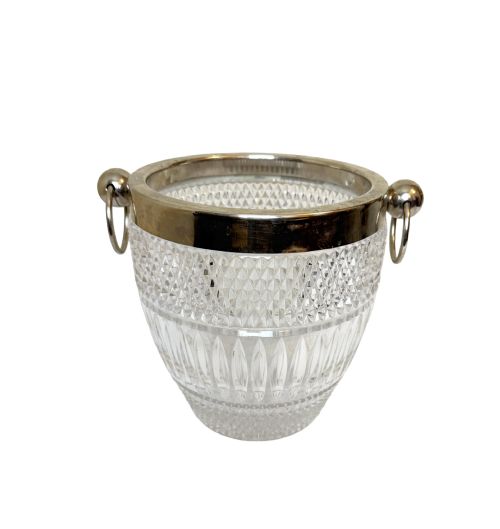
When you search for a vintage champagne glass, you encounter glassware spanning the Victorian, Edwardian, Art Deco and Regency periods, alongside pieces from the nineteenth and twentieth centuries. The selection encompasses champagne coupes, flutes, bowls, and larger service pieces like ice buckets and coolers.
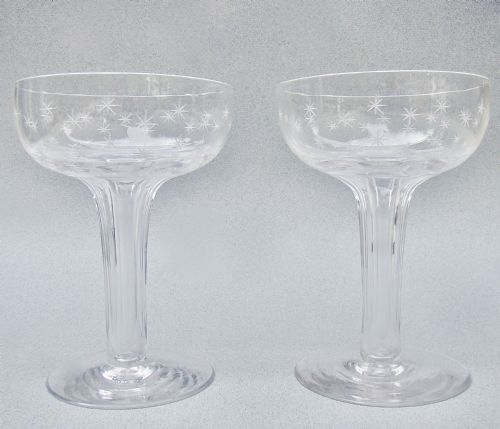
Coupes and hollow stem glasses appear frequently, often formed as matched sets for dining. The inventory ranges from plain glass to heavily cut and engraved vessels originating from English, French and European makers.
Materials and Techniques
Makers utilised glass, cut crystal, and lead crystal, shaping pieces through hand blowing and deep wheel cutting. Coloured glass appears in red, green, amber, and cranberry overlays, where layers are cut back to reveal the clear metal beneath.
Decoration relies on wheel engraving and etching to produce motifs such as Greek keys, dolphins, convolvulus, and fruiting vines. Selected pieces incorporate metal mounts in brass, silver plate, or gilt bronze.
The inventory records English, French, and European provenance, spanning nineteenth-century Regency to twentieth-century design.
Assessing the Pieces
Quality rests on the crispness of the wheel cutting and the depth of the engraving across the bowl and stem. Clear, heavy lead crystal and uniform thickness in matched sets indicate superior workshop standards.
The integration of metal mounts, such as silver-plated handles or gilt bronze rims, distinguishes standard vessels from elaborate presentation coolers and buckets.
Richardsons Birmingham·Moser Crystal·Otto Prutscher·Wiener Werkstätte·Riihimaki·Adelbert Niemeyer
The Vintage Champagne Glass Glossary
- Coupe
- A broad, shallow-bowled glass designed for sparkling wine and champagne. This form dominates nineteenth and early twentieth-century dining.
- Lead Crystal
- Glass containing metallic oxide to increase weight, brilliance and resonance. It allows for deep, sharp wheel cutting.
- Overlay
- A technique where a layer of coloured glass is fused over a clear body. The outer layer is partially cut away to create contrasting patterns.
- Hollow Stem
- A glass stem left open into the bowl. Victorian examples often utilise this feature for visual effect.
- Wiener Werkstätte
- An association of visual artists and designers active in Vienna. They produced influential modernist glass and decorative arts.
Vintage Champagne Glass: Frequently Asked Questions
How do I clean vintage crystal safely?
Wash pieces by hand in warm water using a mild detergent, supporting the bowl and base separately. Avoid sudden temperature changes to prevent thermal shock.
Place a towel in the bottom of the sink to cushion the glass during washing. Dry immediately with a lint-free linen cloth to maintain clarity.
Can I use these glasses for modern sparkling wine?
Coupes function well for sparkling wines that benefit from aeration, though shallow bowls allow bubbles to dissipate faster than traditional flutes. Flutes and hollow stem glasses preserve carbonation for longer periods.
Consider the capacity of the bowl when serving, as historical glasses are often smaller than contemporary stemware.
How do I distinguish Edwardian from Victorian glass?
Victorian pieces often feature heavier cutting, star-etched bases, and complex floral or botanical engravings. Coloured overlays are particularly prevalent in mid to late nineteenth-century production.
Edwardian examples tend towards lighter geometric patterns, such as Greek keys, reflecting transitional tastes toward neoclassical revival and early modernism.
What is the difference between crystal and glass?
Crystal contains mineral content, traditionally lead oxide, which increases the weight, refractive index, and durability of the material. This composition permits sharper facets during cutting.
Plain glass lacks this metallic oxide content, resulting in a lighter feel and less brilliance when held to the light.