




Regency Lacquer Table
A regency lacquer table brings a dark surface, gilt figures and quiet utility into a room.
Regency Lacquer Table
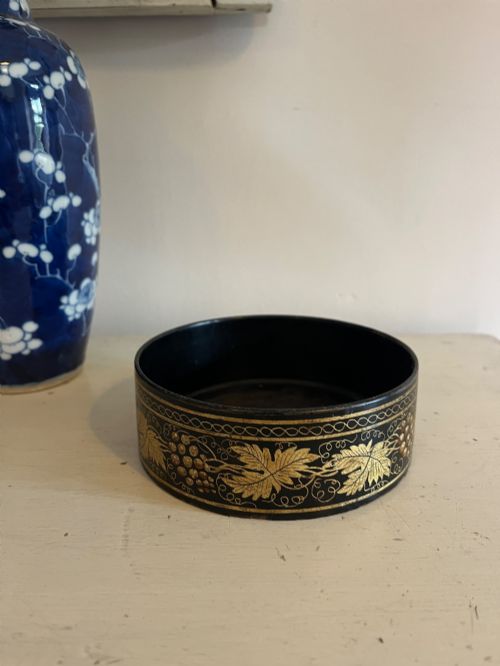
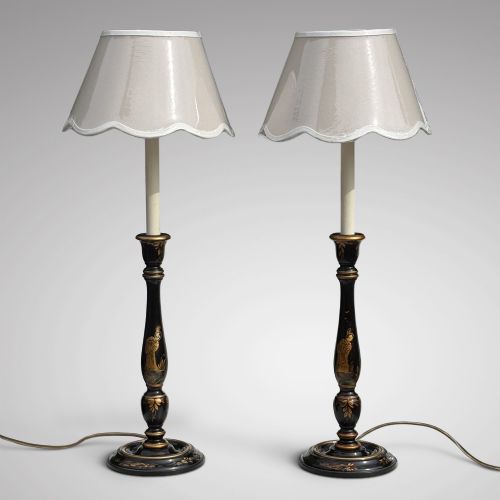
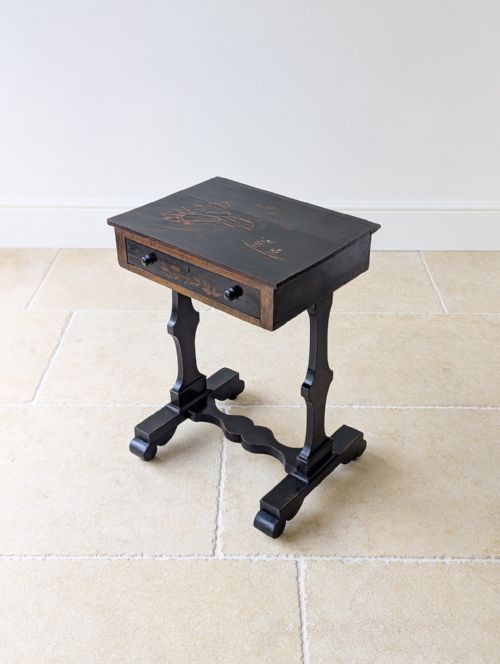
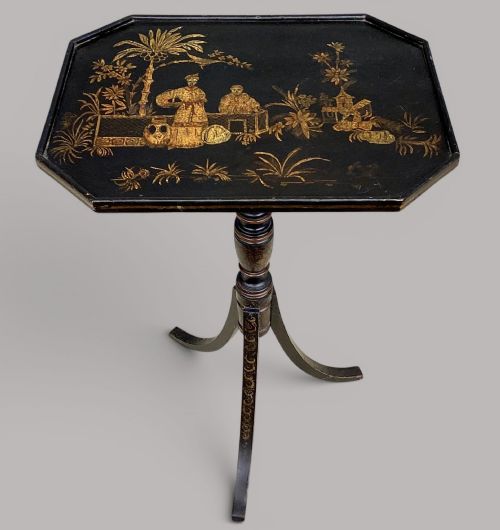
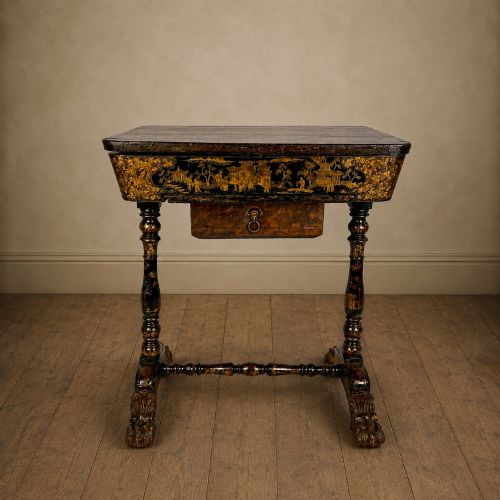
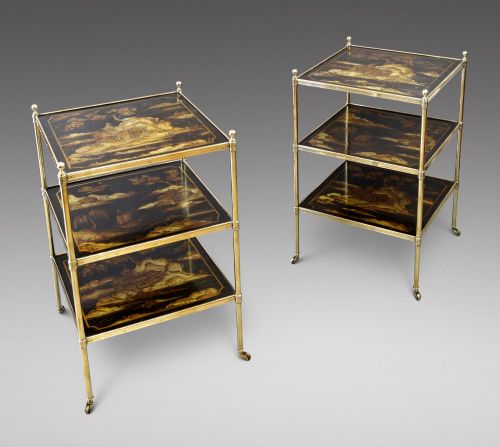
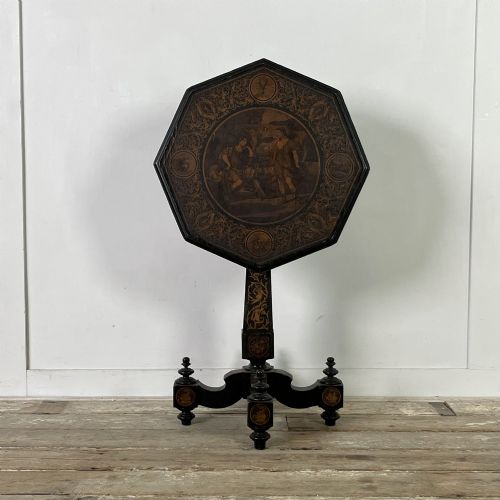
A regency lacquer table spans small occasional pieces, tilt-top work tables and nests designed for mobility and display. Many examples show Chinoiserie decoration with black and gilt motifs derived from Chinese export goods or domestic interpretations.
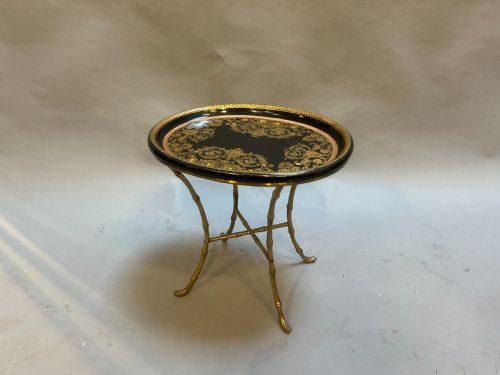
Beyond standard occasional tables, the selection includes work tables equipped for sewing, trays mounted on stands, and larger console pieces set against walls.
While genuine period pieces date from the nineteenth century, later revivals from the twentieth century frequently adopt similar forms and black lacquer finishes.
Materials and Construction
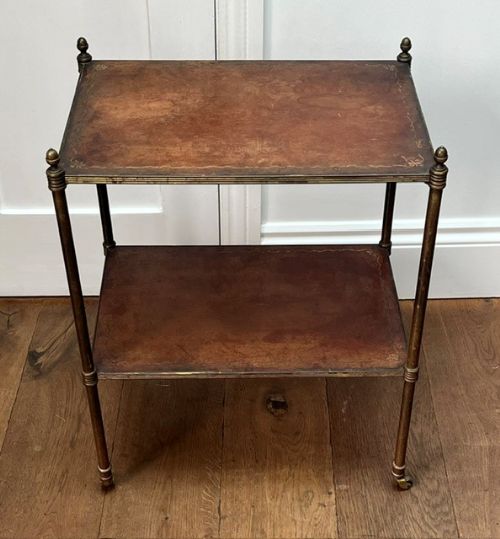
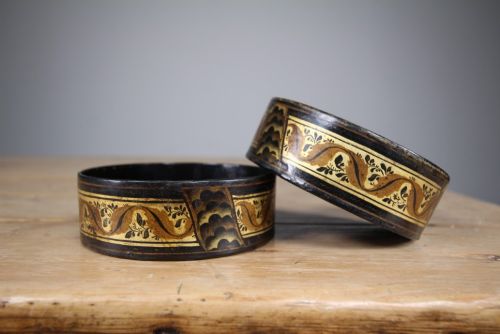
Makers built these pieces using wood, papier-mâche, and ebonised timber as bases for multiple layers of lacquer. Surfaces received detailed hand-painted ornament in gold leaf, sometimes complemented by brass mounts, tooled leather, or penwork details.
Papier-mâche provided a stable, smooth foundation for trays and occasional tables, taking high-gloss finishes and intricate gilt work without warping.
Brighton Pier boxes bring seaside ink-work straight into the drawing room.
Craft and Condition
Quality rests on the depth of the lacquer finish and the precision of the hand-painted or gilt ornamentation. Pieces with crisp brushwork and well-preserved original surfaces stand apart from simpler or later decorative items.
The integrity of the underlying structure, whether wood or papier-mâche, determines how well a table has survived decades of daily use.
Jennens & Bettridge·Stobwasser
The Regency Lacquer Table Glossary
- Chinoiserie
- European interpretation of Chinese artistic motifs. This decorative style employs gilt figures, pavilions and landscapes on black or dark grounds.
- Papier-mâche
- Compressed paper pulp mixed with glue and resin, then baked and pressed. It formed a remarkably tough base for japanned and lacquered trays and tables.
- Ebonised
- Wood treated to imitate ebony. This dark finish provided a stark, uniform backdrop for gilt decoration.
- Japanning
- European imitation of East Asian lacquer work. Artisans built up layers of varnish and resin, often curing them in heated ovens before applying gilt details.
Regency Lacquer Table: Frequently Asked Questions
What is a work table?
A work table is a small piece designed for needlework, often fitted with compartments, drawers, or fabric bags beneath the top.
These tables were popular in the nineteenth century for domestic sitting rooms where sewing and writing took place.
How do I care for lacquer?
Lacquer surfaces require dusting with a soft, dry cloth and protection from direct sunlight and excessive heat.
Avoid liquid cleaners, polishes containing silicone, or abrasive materials that might dull the finish.
What is penwork?
Penwork is a decorative technique using India ink applied with a pen to create fine, etched line drawings on wood or paper-mâche surfaces.
It often mimics ivory inlay and appears on boxes, tea caddies, and small tables from the Regency period.
Are papier-mâche tables fragile?
Papier-mâche is surprisingly tough and stable when manufactured well, but moisture and heavy impacts can damage the core and crack the lacquer layers.
Careful placement away from damp areas ensures these pieces endure normal household use.