


Chinoiserie Tier Table
These chinoiserie tier table examples bring layered surfaces and painted decoration into a room, offering practical display space with distinctive character.
Chinoiserie Tier Table
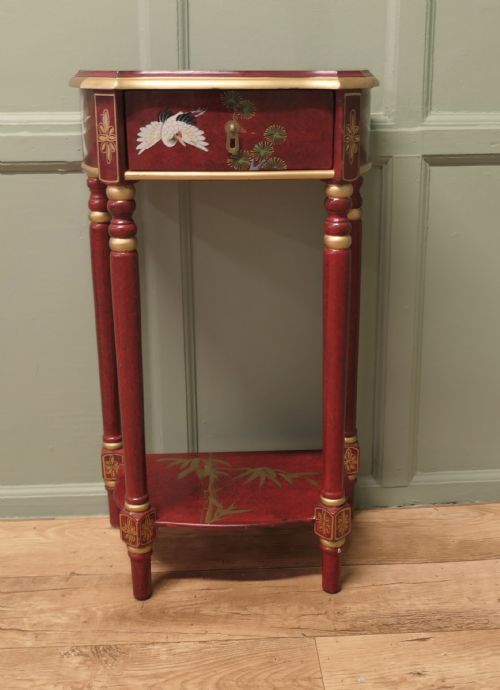
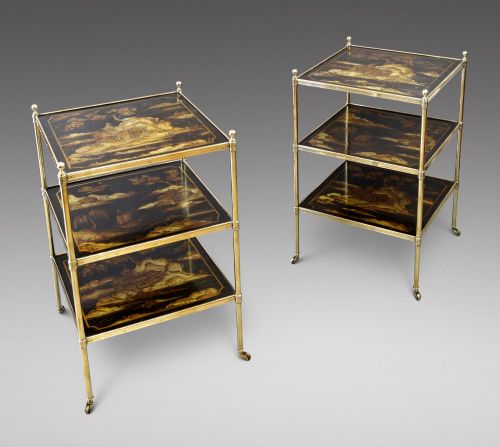
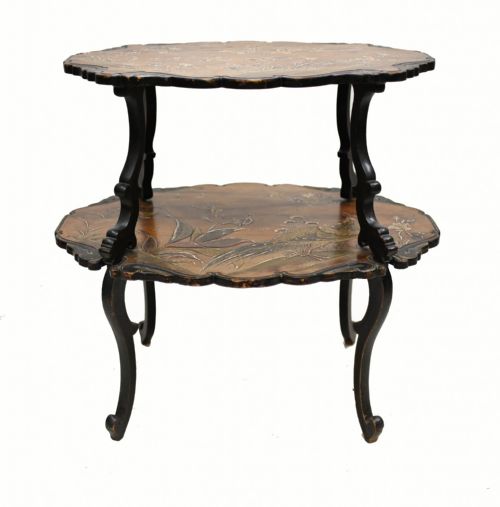
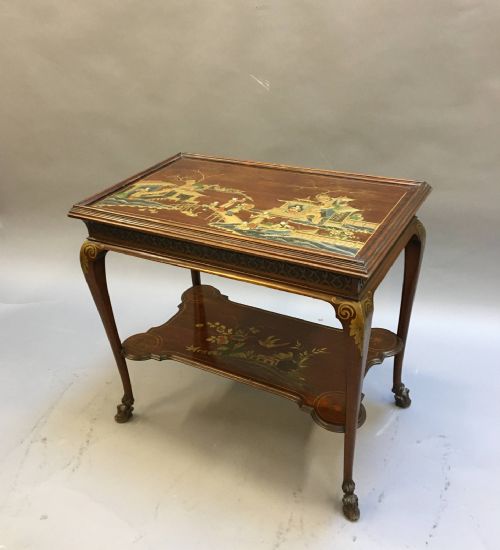
A chinoiserie tier table brings multi-level display surfaces to a room, most frequently appearing as a two-tier or three-tier side table, occasional table, or sewing table. The form combines practical shelving with decorative orientalist motifs, making it a distinctive surface for a corner or beside a chair.
The versions most commonly met on this page span the nineteenth century, the Victorian era, and the Regency period, alongside later 1930 pieces and an 1890 French etagere. Makers and designers utilised bamboo, hardwood, and ebonised wood to build these stacked frameworks.
Surfaces frequently feature lacquer work, gold leaf, and gilt decoration in black and red finishes. Buyers encounter everything from bamboo sewing tables with lacquered panels to French japanning and Regency chinoiserie occasional tables.
Materials and Construction
Makers constructed the tiered frameworks of these tables using natural bamboo, sturdy hardwood, and ebonised wood. Brass components occasionally appeared to accent the structure or support multiple shelves on etageres and side tables.
Decoration relied heavily on lacquer applied to wooden or panelled surfaces. Craftsmen built up layers to receive intricate gold leaf and gilt painting, often combining black and red finishes to create the characteristic visual depth.
Listings feature pieces spanning the Regency period, Victorian era, nineteenth century, and into the 1930s.
Judging Quality and Execution
The division between ordinary and exceptional work rests in the execution of the surface decoration and the integrity of the tiered structure. Finer examples display crisp, detailed gold leaf and hand-painted motifs that retain their register across multiple shelves.
Structural execution also separates pieces, visible in how cleanly the bamboo or hardwood supports are joined to each tier. Superior framing ensures the stacked shelves remain level and stable without relying on heavy modern fixings.
Gabriel Viardot
The Chinoiserie Tier Table Glossary
- Etagere
- A piece of furniture consisting of a set of open shelves for displaying small objects. These tiered stands often serve as side or occasional tables.
- Japanning
- A type of European finish that emulates Japanese lacquer work. It involves applying successive coats of varnish and heat-drying them before decoration is added.
- Bamboo
- A woody grass used for lightweight furniture framing. Victorian makers utilised tiger bamboo to create exotic structural supports for tiered tables.
- Gilt
- Covered thinly with gold leaf or gold paint. This technique highlights the raised details and borders on lacquered furniture surfaces.
Chinoiserie Tier Table: Frequently Asked Questions
What is a chinoiserie tier table?
A chinoiserie tier table is a multi-shelved piece of furniture decorated with painted orientalist motifs, lacquer, and gilt work. These tables offer stacked surfaces for display while introducing striking visual patterns to a room.
They appear primarily as side tables, occasional pieces, or sewing tables with two or three tiers constructed from wood, bamboo, or ebonised frames.
How were these tables used originally?
Historically, these tables served as functional display pieces in reception rooms and parlours. The multiple tiers allowed owners to exhibit small ornaments, tea service items, or sewing accessories.
Sewing tables specifically incorporated compartments or baskets within their stacked design, combining practical needlework storage with accessible upper surfaces.
How do I care for lacquered surfaces?
Lacquered and gilt surfaces require gentle maintenance to preserve the painted decoration and finish. Dusting with a soft, dry cloth prevents particle buildup without risking abrasion to the gold leaf.
Keep these tables away from direct sunlight and fluctuating heat sources to prevent the wood and lacquer from drying out or cracking over time.
How can I tell a Regency piece apart?
Regency chinoiserie tables often display specific stylistic traits associated with the early nineteenth century, including refined use of black, gilt, and red decoration. The proportions and joinery reflect the neoclassical influences popular during that period.
Later Victorian and 1930 interpretations tended to utilise alternative materials like bamboo or incorporated different japanning techniques, creating a distinct visual distinction.