


Regency Chinoiserie Table
A regency chinoiserie table brings together elegant British classical forms and intricate eastern-inspired motifs, offering a distinctive surface for lamps, writing, or display.
Regency Chinoiserie Table
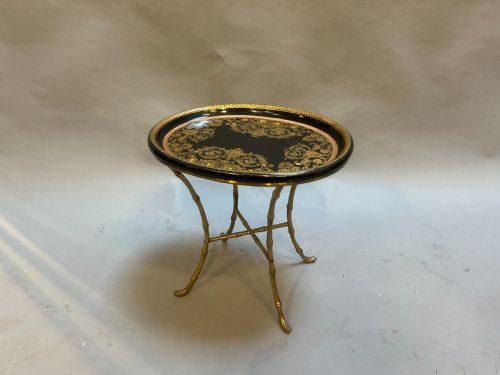
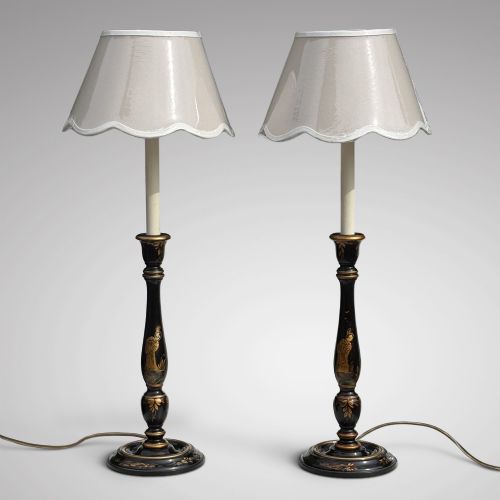
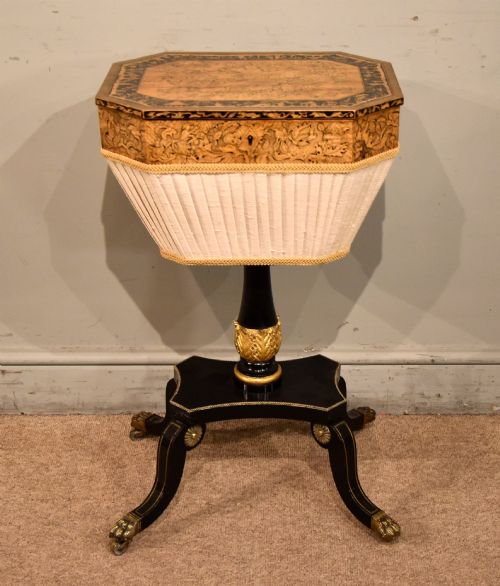
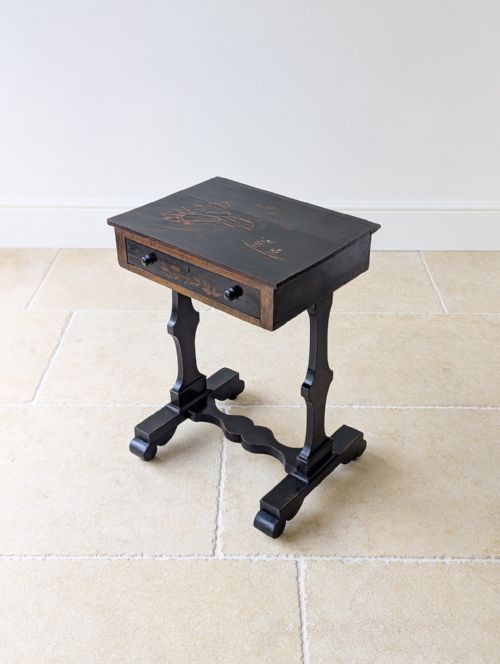
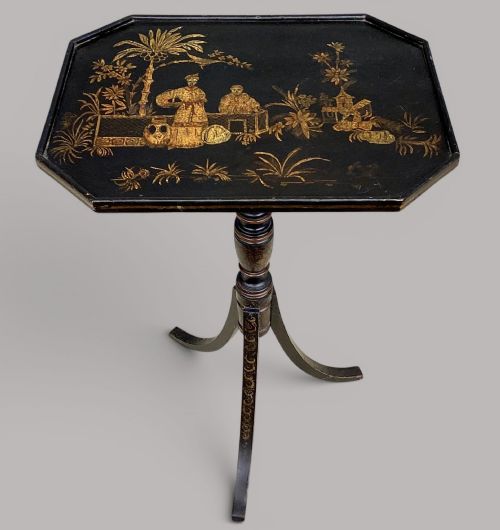
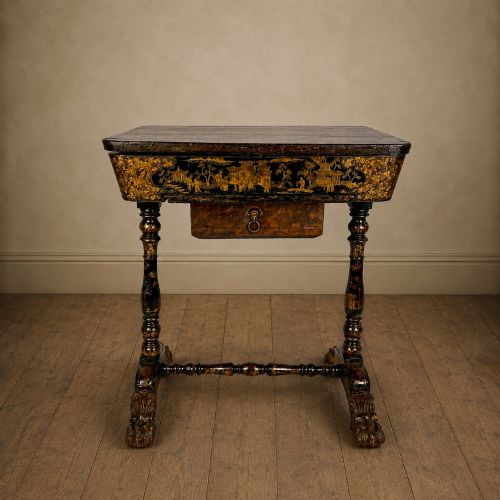
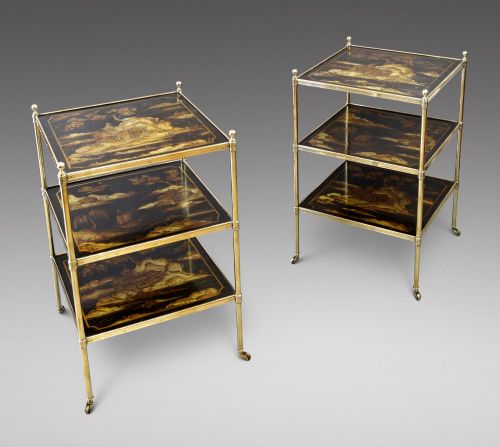
Buyers frequently encounter work tables, sewing tables, and tray tables elevated on stands, many displaying characteristic black and gilt decoration. Forms also include tripod tables and console tables that integrate classical proportions with hand-painted oriental scenes.
The material execution often spans lacquered wood, ebonised wood, and papier-mâché, reflecting both British craftsmanship and Chinese export production. These tables served practical parlour and drawing room functions while doubling as decorative statements of refined taste.
How they were made
The construction of a regency chinoiserie table relies heavily on wood, papier-mâché, and bamboo forms finished with layers of lacquer. Artisans applied black, red, or ochre paint before building up intricate ornamentation using gold leaf and hand-painted details.
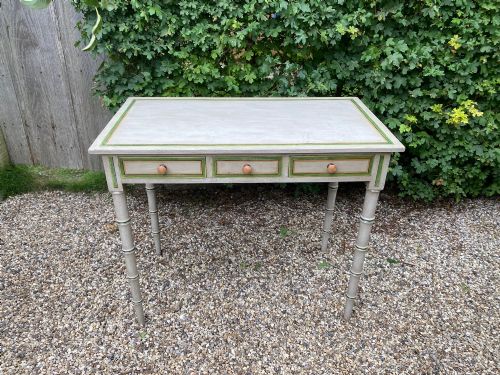
Specialised techniques such as penwork involved delicate ink drawing on wood or ivory panels, while japanning simulated Asian lacquerware through layered varnishes and metallic dust. Structural elements frequently utilised ebonised wood or painted faux bamboo to complement the exotic pictorial surfaces.
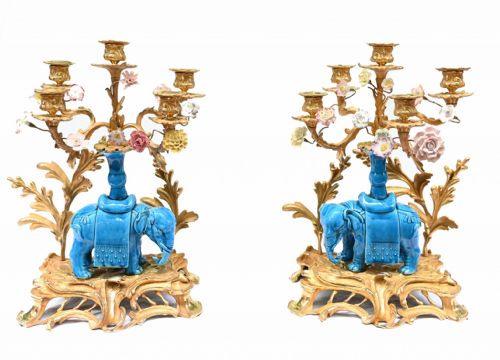
Elephant candelabras and faux bamboo frames bring a delightful menagerie into formal rooms.
What varies in quality
The distinction between tiers of quality rests largely on the fidelity and preservation of the hand-painted or gilded decoration. Pieces retaining their original lacquer surfaces, polychrome pigments, and delicate gold leaf demonstrate superior artistic execution compared to later, simpler reproductions.
Structural integrity and the survival of original components, such as silk fitted interiors in sewing tables or authentic stands for papier-mâché trays, elevate the standing of a piece. Finer examples display meticulous attention to detail in the penwork and joinery that withstands the passage of time.
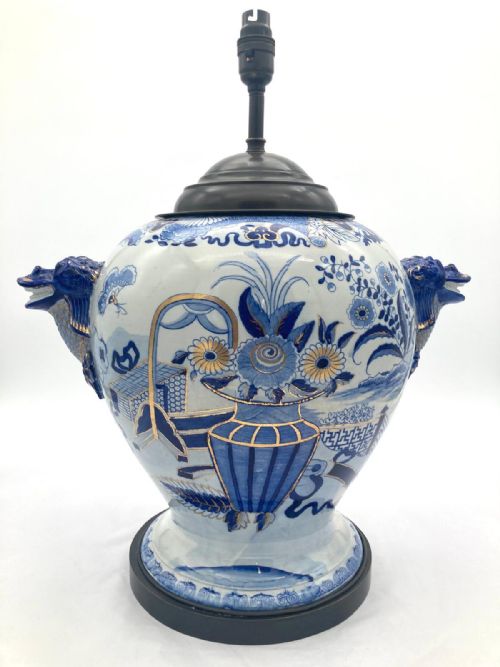
Miles Mason·Hicks and Meigh
The Regency Chinoiserie Table Glossary
- Chinoiserie
- European artistic style reflecting Chinese and East Asian motifs, popular in furniture and decorative arts. It employs picturesque landscapes, figures, and pagodas executed in paint, lacquer, or gilt.
- Japanning
- European imitation of Asian lacquerwork created by applying resin varnishes and metallic powders to a wooden base. The surface is cured and polished to achieve a glossy, dark finish.
- Papier-mâché
- Composite material made from paper pulp or layers of paper reinforced with glue, moulded and dried into rigid forms. It provides a smooth base for lacquer and painting on trays and small tables.
- Penwork
- Decorative technique using fine ink lines to draw intricate designs directly onto a prepared wooden or ivory surface. It is often finished with a clear protective varnish.
- Faux bamboo
- Wood turned and carved to imitate the segmented stalks of natural bamboo. It appears frequently in painted furniture of the period.
Regency Chinoiserie Table: Frequently Asked Questions
What is a regency chinoiserie table used for?
These tables served various domestic purposes in drawing rooms and parlours, including needlework, writing, serving wine, or displaying decorative objects.
Smaller variants like nest tables and occasional tables offered versatile surfaces that could be moved around the room as needed.
How do I identify a genuine period piece?
Authentic nineteenth-century pieces typically exhibit traditional timber construction methods, hand-mixed pigments, and genuine wear consistent with age.
Examining the lacquer layers and the style of the hand-painted gilt decoration helps distinguish early production from later twentieth-century revivals.
How do I care for lacquered furniture?
Lacquered surfaces require gentle dusting with a soft, dry cloth and protection from direct sunlight and excessive heat.
Avoiding moisture and chemical polishes preserves the delicate gold leaf and painted oriental motifs over time.
What distinguishes japanning from lacquer?
Japanning is a European technique developed to replicate imported Asian lacquerware using varnishes and heat-cured paints.
While true Asian lacquer utilises specific tree saps, japanning relies on European resin mixtures applied to wood or papier-mâché bases.