
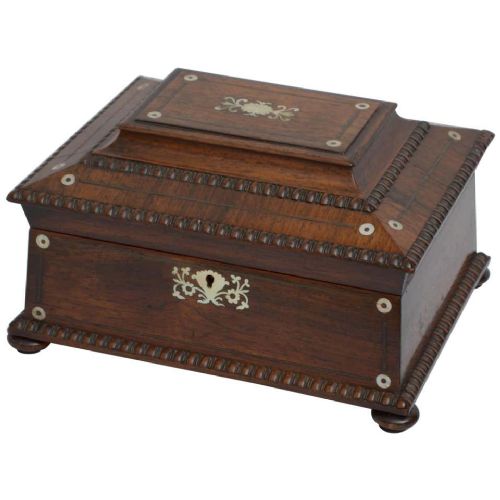
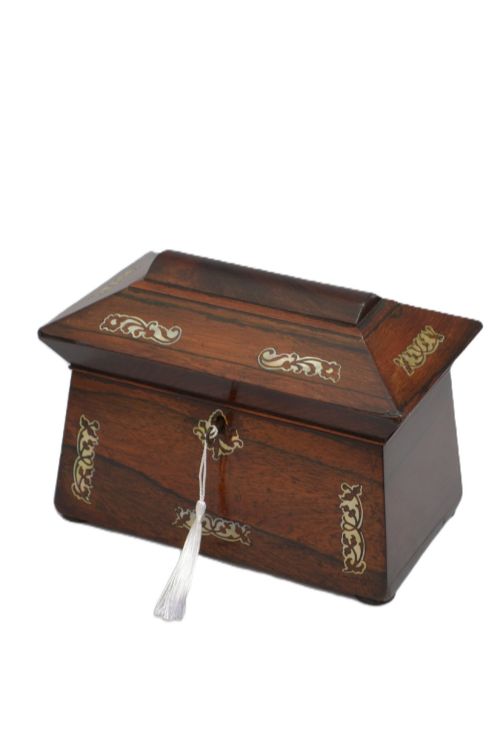


Regency Jewellery Casket
A regency jewellery casket is a small portable cabinet designed for valuables, and these refined pieces bring period elegance to a dressing table.
Regency Jewellery Casket
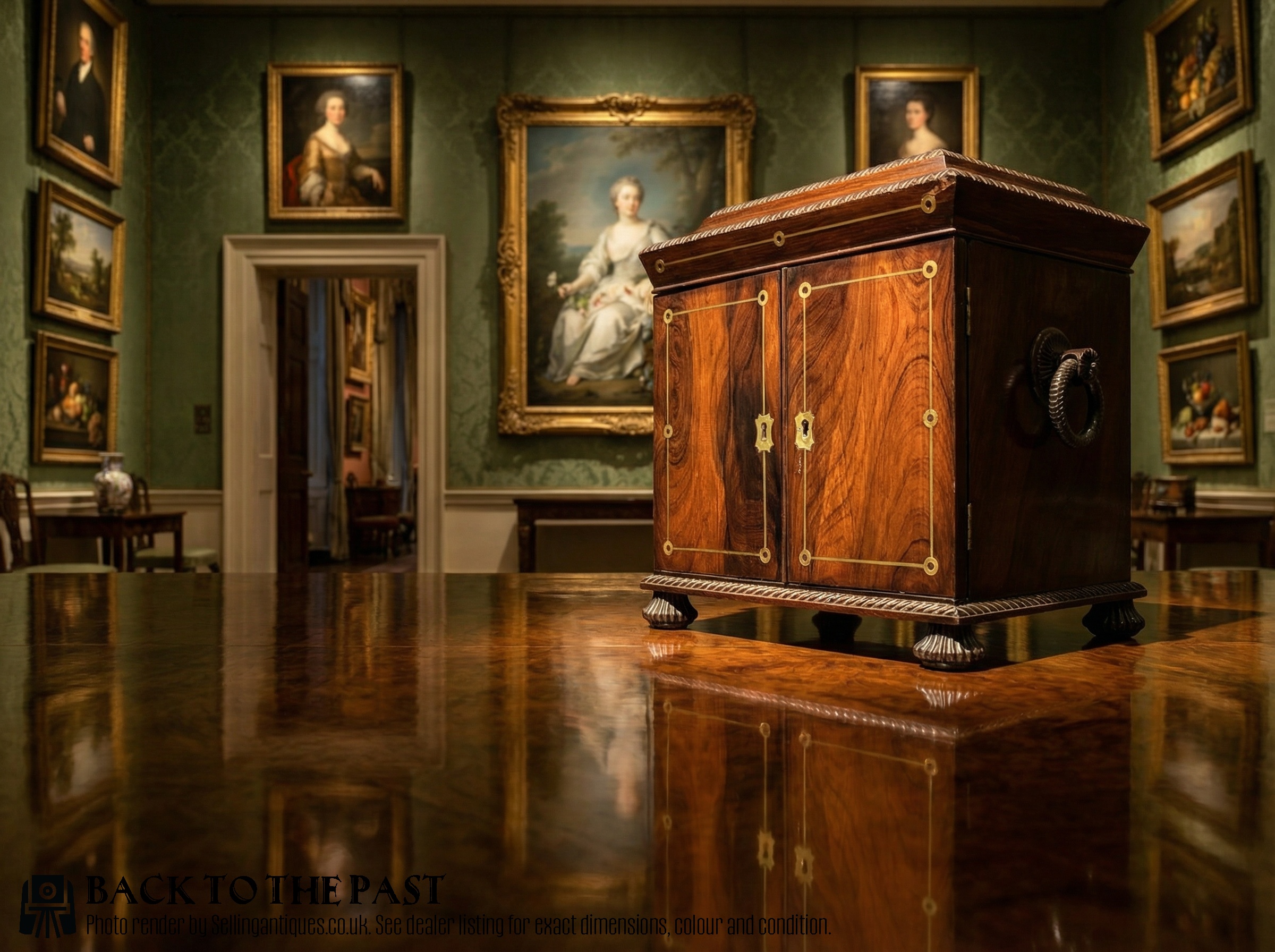
A regency jewellery casket is a portable receptacle designed to hold trinkets, rings, and keepsakes, appearing most frequently in rosewood, mahogany, and leather-bound forms across this selection. These items emerge from the late Georgian and Regency eras into the early Victorian decades, spanning the turn of the nineteenth century up to eighteen fifty.
The assortment includes related luxury containers such as workboxes, sewing boxes, and document chests which share the same domestic interior purpose. Makers constructed these caskets for affluent households, utilising decorative techniques suited for prominent placement on ladies' dressing tables and drawing room desks.
How they were made
Craftsmen built wooden carcasses from dense timbers like rosewood, coromandel, and yew, frequently applying veneers and decorative inlays of mother-of-pearl, cut brass, and tortoiseshell. Surface ornamentation also involved penwork, japanning, and leather binding tooled with blind or gilt patterns.
Interiors typically feature fitted compartments, silk linings, and small mirrors, while exteriors rely on cast brass mounts, handles, and claw and ball feet for support. Construction methods combined fine cabinetmaking joinery with specialised decorative arts such as Brighton chain pier penwork.
One surviving leather-bound writing slope and jewellery box preserves the specific engraved initial "K", offering a direct link to its original nineteenth-century owner.
What varies in quality
Quality depends upon the choice of timber and the precision of the decorative inlays, where finely cut brass work or rich tortoiseshell elevates a piece above standard veneered boxes. The complexity of the interior arrangement and the survival of original silk linings and fitted trays distinguish superior examples.
The refinement of exterior mounts, such as rosette-shaped brass feet or detailed penwork panels, marks the difference between basic utilitarian boxes and luxury caskets made for elite patrons.
The Regency Jewellery Casket Glossary
- Penwork
- A decorative technique using fine ink drawings on a prepared surface, often depicting architectural views or chinoiserie scenes. This detailed handwork was popular on boxes during the Regency period.
- Japanning
- A European imitation of East Asian lacquerware created by applying layers of resin and varnish. Yellow japanned boxes feature painted or stencilled Orientalising motifs.
- Sarcophagus-shaped
- A box design featuring a flared, pedestal-based silhouette resembling an ancient stone coffin. This architectural form was favoured by cabinetmakers during the Regency and William IV periods.
- Workbox
- A portable container fitted with compartments for sewing implements, threads, and small accessories. These boxes often doubled as repositories for jewellery and letters.
- Tortoiseshell
- The mottled brown and amber shell of the hawksbill turtle used to veneer luxury boxes. It is frequently inlaid with silver or mother-of-pearl.
Regency Jewellery Casket: Frequently Asked Questions
What were regency jewellery caskets used for?
These caskets served to secure precious jewellery, rings, and personal trinkets on bedroom tables and boudoirs.
They also functioned as portable desks or repositories for keepsakes, letters, and needlework tools.
How do I distinguish Regency from William IV boxes?
Regency boxes often display restrained classical lines, delicate brass inlay, and penwork decoration dating from the early nineteenth century.
William IV pieces tend towards heavier proportions, including sarcophagus shapes and more robust rosewood construction.
Are these caskets lined with original materials?
Many retain their period silk, velvet, or paper linings inside the fitted compartments and lid interiors.
Over the decades, some interiors experience replacement linings while the exterior cabinetwork remains entirely original.
How should I care for a tortoiseshell or leather box?
Keep these sensitive materials away from direct sunlight and excessive humidity to prevent warping or cracking of the delicate veneers.
Dust gently with a dry cloth and avoid applying modern chemical polishes to historic leather or shell.