
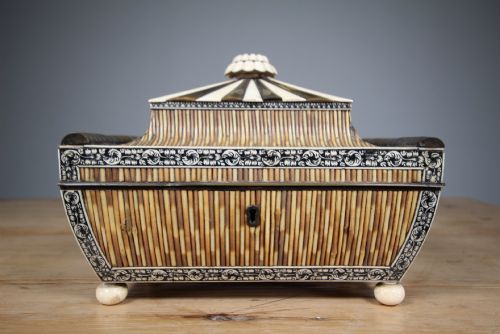
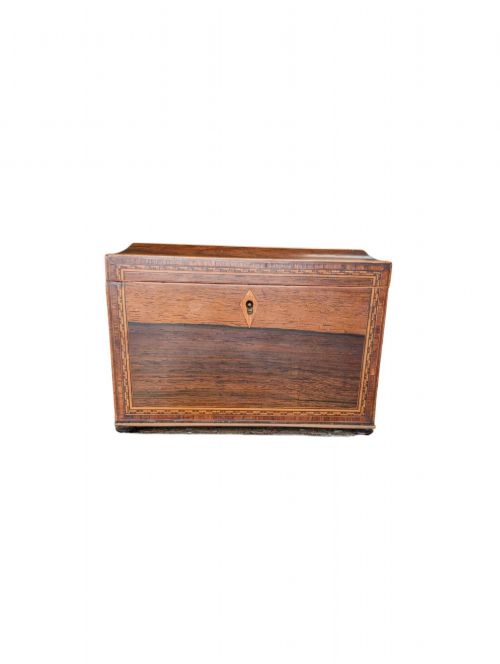
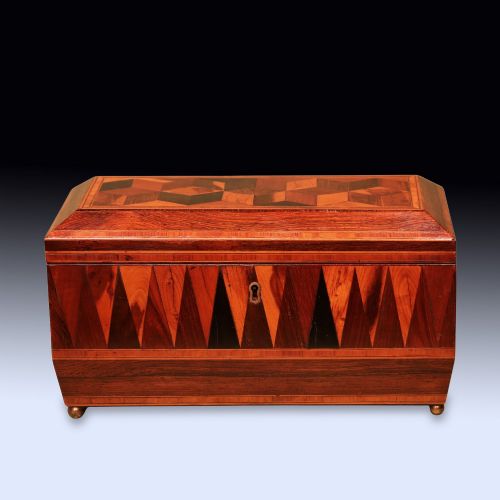


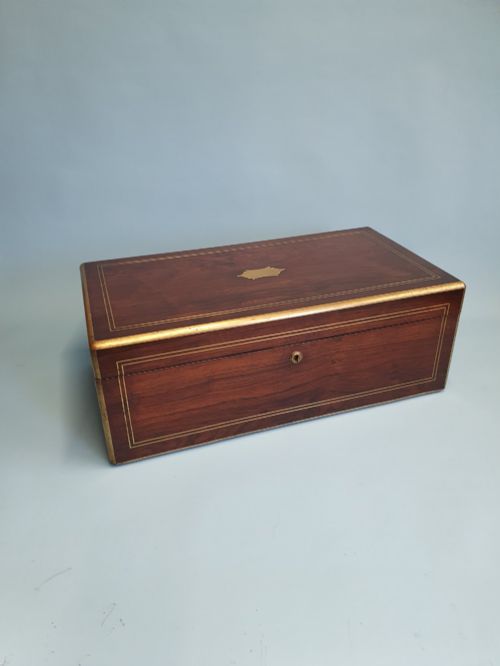
Regency Inlaid Box
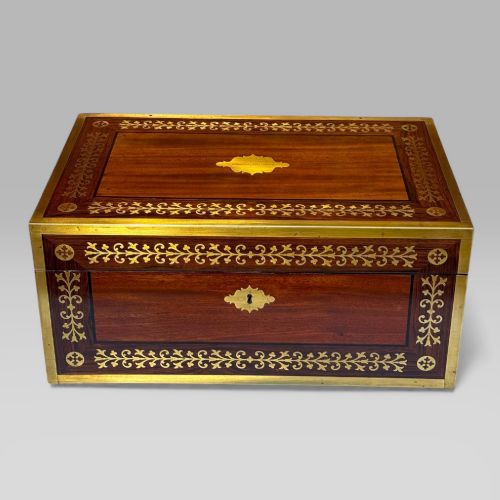
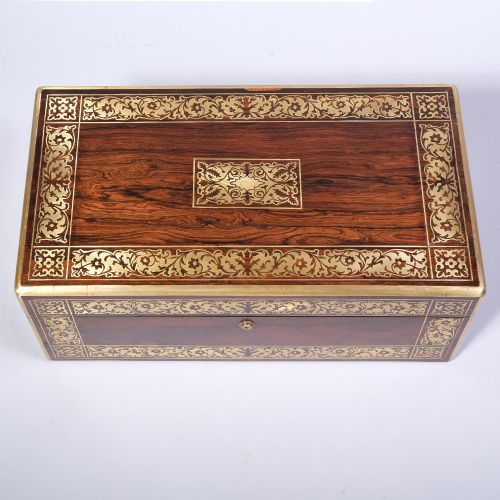
A regency inlaid box brings together figured rosewood and precision brass stringing for a desk or dressing table.
Regency Inlaid Box
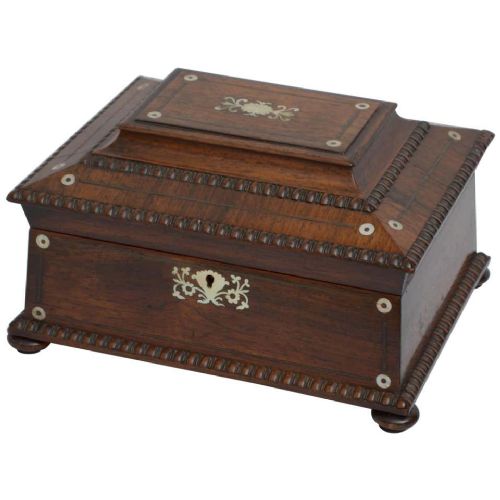
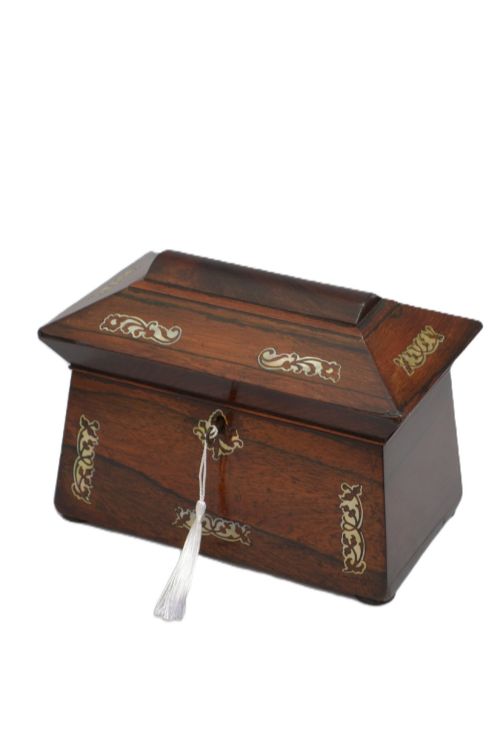
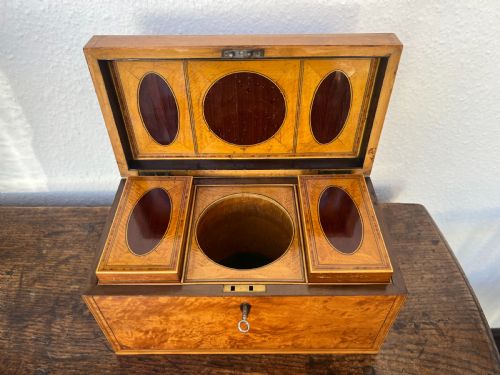
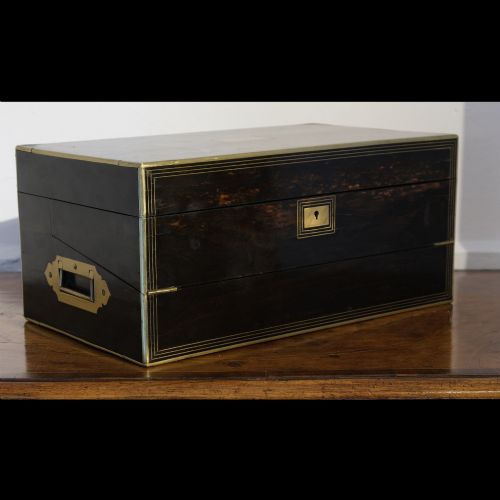
A regency inlaid box encompasses portable desk furniture, tea caddies, and jewellery receptacles produced during the early nineteenth century. The typical specimen encountered here is a rectangular or sarcophagus-shaped rosewood box decorated with contrasting brass inlay or boxwood stringing.
Makers designed these pieces for specific domestic tasks, dividing the interiors for writing implements, tea leaves, or personal trinkets. Many incorporate secret drawers, lift-out trays, and compartments tailored to the orderly habits of the period.
Materials and Construction
Cabinetmakers constructed carcass frames from dense tropical hardwoods like mahogany and rosewood, often veneered over firmer secondary timbers. They introduced lighter woods such as satinwood, boxwood, and ebony to create geometric banding and pictorial motifs.
Brass stringing and cut-brass inlay required meticulous hand-sawing into channels carved directly into the wood surface. Craftsmen secured these metal lines with animal hide glue before scraping and polishing the entire exterior flush.
Listings feature rosewood, mahogany, satinwood, and tortoise shell alongside brass and mother-of-pearl inlay across the nineteenth century.
Evaluating Craftsmanship
Quality rests upon the precision of the joinery and the complexity of the internal fittings. Superior examples feature tightly mitred corners, perfectly flush brass work, and original velvet or leather linings within secret compartments.
Secondary woods and carcass thickness also indicate grade, with finer boxes utilising solid rosewood or choice amboyna rather than simpler pine or mahogany foundations. The integrity of the original locking mechanisms and escutcheons separates standard production from workshop masterworks.
The Regency Inlaid Box Glossary
- Sarcophagus form
- A box design featuring a steep, waisted lid rising to a flat top, mimicking classical monumental architecture. This shape gained popularity during the Regency period for tea caddies and large work boxes.
- Writing slope
- A portable desk fitted with a hinged, slanted writing surface that folds flat for transport. Inside, it provides storage for stationery, inkwells, and nibs.
- Stringing
- Narrow inlay lines of contrasting wood or metal set flush into the surface of a panel. It defines the borders of lids and drawer fronts.
- Tunbridge ware
- Woodware decorated with mosaic patterns built from tiny tinted wood prisms. The technique creates detailed pictorial or geometric veneers.
- Teapoy
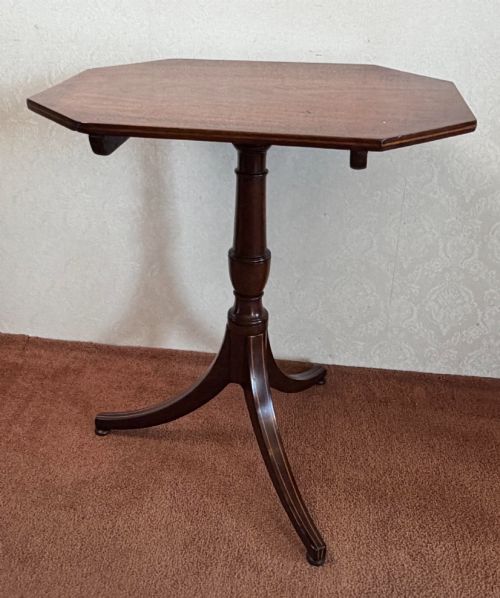
- A small stand or large caddy designed to hold multiple varieties of tea. They often rest on a central pillar with tripod legs.
Regency Inlaid Box: Frequently Asked Questions
What is the difference between a tea caddy and a writing box?
Tea caddies feature internal lidded compartments designed to store loose tea leaves, sometimes accompanied by a glass mixing bowl. Writing boxes open to reveal a sloping baize-lined surface and dedicated slots for inkwells and pens.
While both share exterior brass inlay and rosewood construction, their internal architecture dictates their original domestic purpose.
How do I identify a Regency period box?
Regency boxes typically display classical restraint, relying on architectural proportions, rosewood veneers, and geometric brass inlay rather than heavy carving. They date from the early nineteenth century, roughly spanning the Regency era and the reign of William IV.
Examine the secondary woods inside and the style of the brasses for corroboration of this period.
Are the brass inlays usually original?
Most brass stringing and cut-brass plaques found on these boxes remain original to the piece. Close inspection under magnification reveals the natural ageing of the brass and the matching patina of the surrounding adhesive.
Replacement inlay often shows cleaner channel cuts and brighter, unoxidised metal surfaces.
How should I care for a rosewood box?
Keep the wood away from direct sunlight and sudden humidity shifts to prevent the rosewood veneer from lifting. Apply a microcrystalline wax occasionally to nourish the finish without building up sticky residue.
Avoid using liquid polishes that can seep under loose brass stringing and damage the internal linings.