


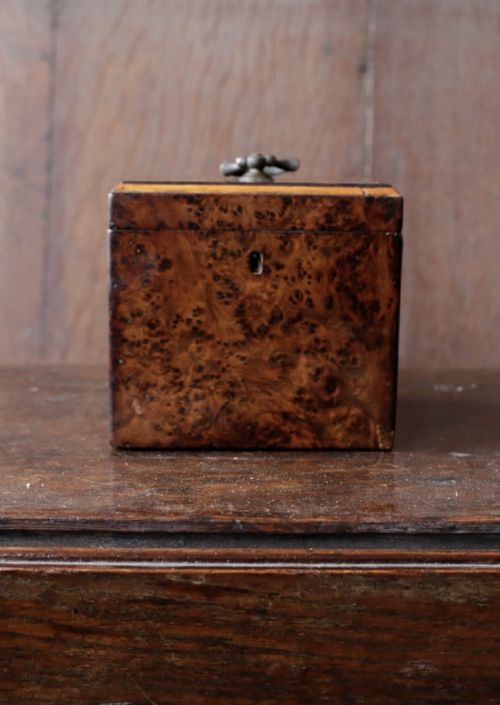


Burr Yew Box
Burr yew box describes small timber containers clad in intricately figured knot-wood veneers that collectors prize for rich natural grain patterns.
Burr Yew Box
A burr yew box brings together compact household storage and the distinctively swirling grain patterns found in yew tree growths. Buyers seeking a burr yew box will find tea caddies, jewellery cases, and writing desks originating across the Georgian, Regency, and Victorian eras.
Tea caddies and workboxes represent the most common forms encountered in this timber, often taking geometric shapes like cubes, hexagons, or semi-circular outlines. These pieces served practical domestic roles in past centuries while displaying the status of exotic wood veneers.
The selection ranges from simple table boxes to fitted compendiums containing compartments for stationery, sewing implements, or glass containers. Dating typically spans from the late eighteenth century through the nineteenth century, with occasional early twentieth-century examples appearing.
Materials and construction methods
Cabinet makers applied thin slices of burr yew veneer over a solid timber carcass, securing the decorative grain to visible exterior surfaces. This technique allowed workshops to maximise the limited yield of highly figured knot growths from yew trees.
Contrasting stringing and inlay work using ebony, boxwood, and marquetry frequently bordered the main panels to frame the swirling burr patterns. Brass hinges, locks, and occasional bone or glass internal components completed the construction of functional storage pieces.
Burr Yew Box Retail Price Guide 2026
Typical asking prices for burr yew box among the pieces listed under this phrase on Sellingantiques today, from the lower quarter to the upper quarter. They describe what is for sale here now, not the wider market.
Listings for this phrase frequently feature Georgian and Regency tea caddies alongside Victorian writing boxes, incorporating brass, ebony, and boxwood details.
Assessing quality in burr yew timber containers
Quality rests upon the density and visual complexity of the burr figure across the exterior panels, where tighter and more varied knot formations indicate superior selection. The skill of the cabinet maker shows in the precise alignment of veneer grains across corners and lids.
The survival of internal fittings, such as removable trays, glass mixing bowls, or velvet linings, elevates the integrity of boxes designed for specific tasks like tea storage or needlework. Original brass hardware and clean inlay work without missing stringing further distinguish finer examples.
The Burr Yew Box Glossary
- Burr yew
- A growth deformity on a yew tree that produces intricate, swirling patterns when sliced into veneer. Cabinet makers prized this wood for decorative furniture and small containers.
- Tea caddy
- A container designed to store dry tea leaves securely before infusion. Georgian and Regency examples often featured internal lidded compartments and glass mixing bowls.
- Stringing
- Thin inlay lines of contrasting wood, such as boxwood or ebony, used to outline panels on a box. This decorative technique highlights the geometric form of the piece.
- Workbox
- A container fitted with compartments for sewing implements, threads, and small tools. Many Victorian and Georgian iterations included writing slopes or mirrors.
- Teapoy
- A small stand or table designed to hold tea canisters and mixing bowls. Some versions incorporate substantial box bodies atop central pedestals.
Burr Yew Box: Frequently Asked Questions
What were burr yew boxes used for?
These containers held valuable household items including dry tea leaves, sewing gear, stationery, and jewellery. Their decorative exteriors suited placement on prominent tables in reception rooms.
Interior fittings often included lidded compartments, small glass vessels, and velvet-lined trays tailored to the specific function of the piece.
How do I date an antique burr yew box?
Dating relies on construction methods, hardware types, wood species combinations, and overall furniture styles. Georgian and Regency pieces often feature delicate boxwood stringing and hand-cut dovetails.
Victorian iterations frequently introduce heavier proportions, stereoscopes, or complex mechanical interiors reflecting changing industrial capabilities.
Are all burr yew boxes made entirely of solid burr yew?
Most examples use thin veneers of burr yew applied over a stable secondary timber carcass to prevent warping. Solid burr wood of sufficient size for an entire box is exceptionally uncommon due to the nature of tree growths.
Secondary woods visible on interiors or bases typically include pine, mahogany, or general cabinet timbers.
How should I care for a burr yew box?
Keep the timber away from direct sunlight and sudden temperature shifts to protect the antique veneer from drying and lifting. Gentle dusting with a dry cloth suffices for routine maintenance.
Applying occasional specialist wax helps nourish the old polish without building up excessive residue on the figured grain.