




Regency Inlaid Cupboard
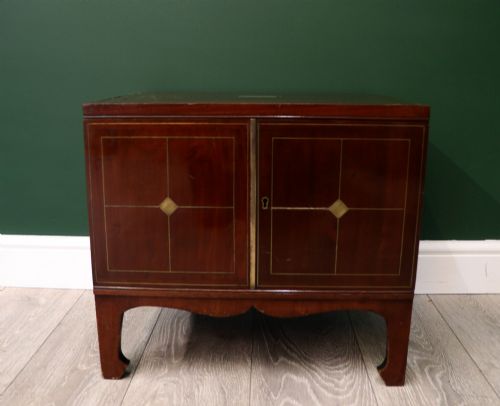
Regency inlaid cupboard designs combine timber with fine stringing to create practical storage pieces that anchor a room.
Regency Inlaid Cupboard
A regency inlaid cupboard encompasses several forms designed for storage, from bedside tables and corner units to large linen presses and side cabinets. The pieces span periods including the Regency, Georgian and Victorian eras, reflecting shifting domestic needs over time.
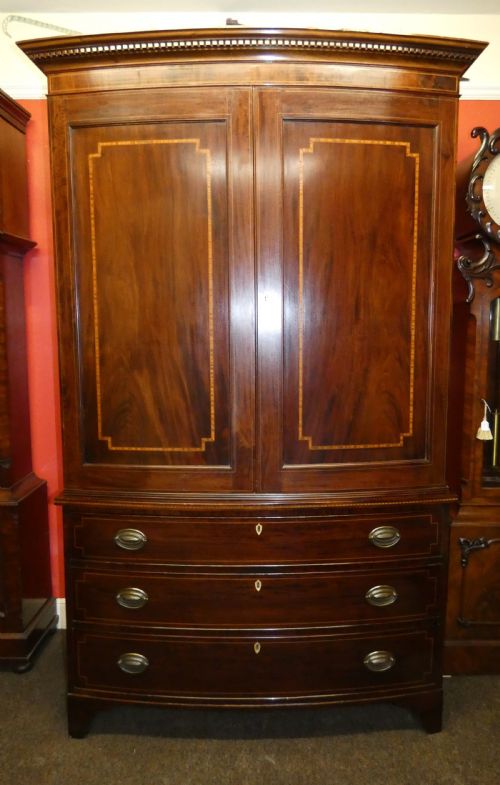
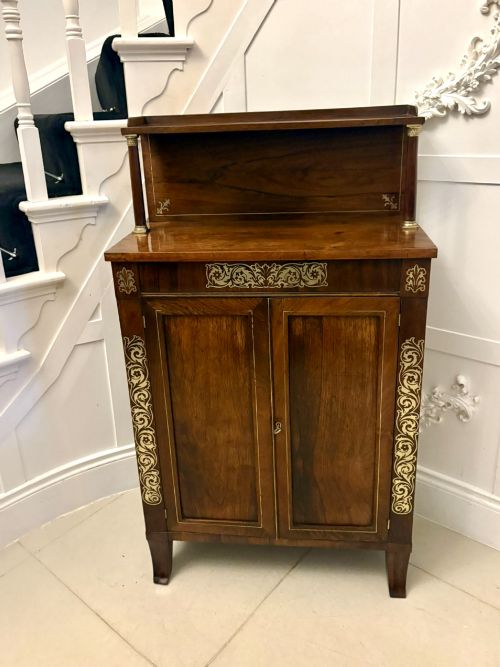
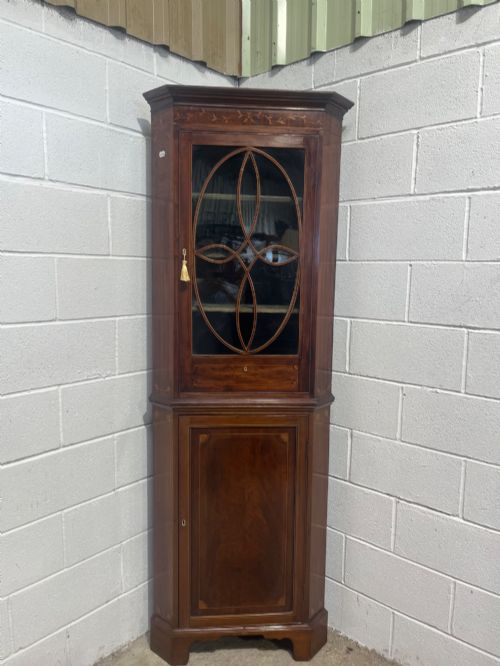
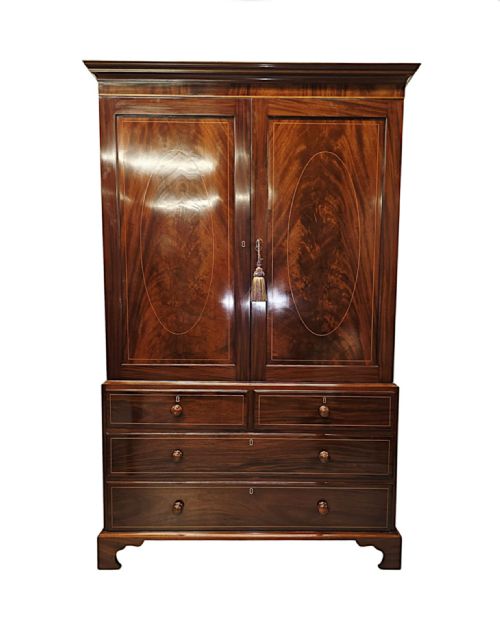
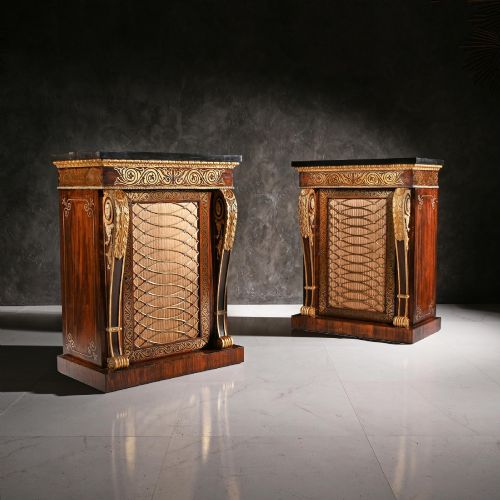
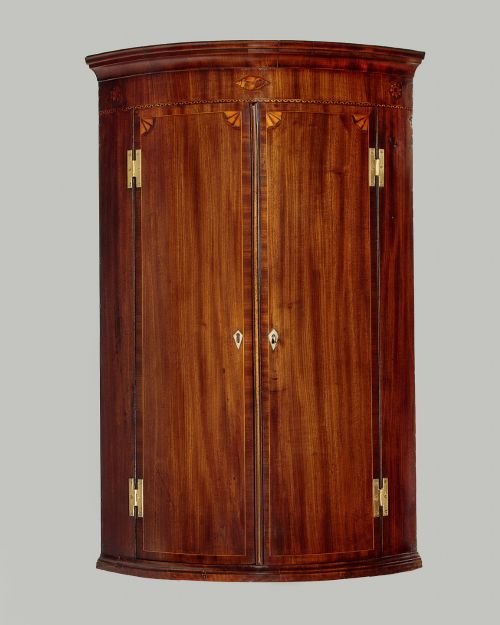
The version most commonly met on this page is the mahogany or rosewood side cabinet, frequently decorated with contrasting stringing or brass inlay. Buyers often encounter bowfront corner cupboards and tall linen presses alongside smaller bedside variants.
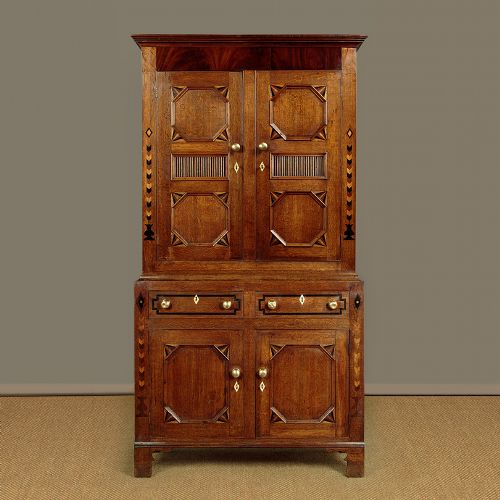
Origins vary across English workshops, Welsh vernacular makers and Channel Island cabinet makers, bringing distinct regional interpretations to the category. These items served specific functions in period interiors, from holding linen to displaying glassware and books.
Materials and construction methods
Cabinet makers utilised dense hardwoods such as mahogany, rosewood and walnut as the primary structural foundations. These timbers were often selected for figured grain patterns like flame mahogany or amboyna.
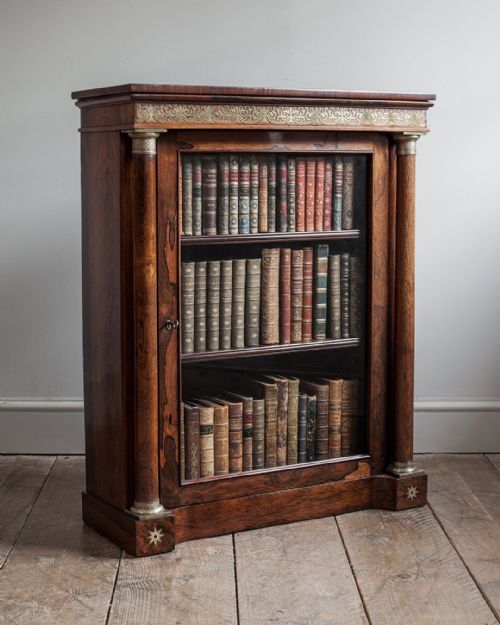
Decoration relied on contrasting lighter woods such as satinwood and boxwood, alongside dark ebony and polished brass details. Metal inlay was meticulously routed into the timber surface to form linear patterns and geometric motifs.
One exceptional mahogany bedside cabinet includes a pull-out step, ensuring early morning risers could reach high places with dignity.
Evaluating craftsmanship and detail
The standard of timber selection and the precision of the inlay work separate pieces across the range. Finer examples display tightly figured veneers and crisp, unbroken lines of contrasting wood or brass.
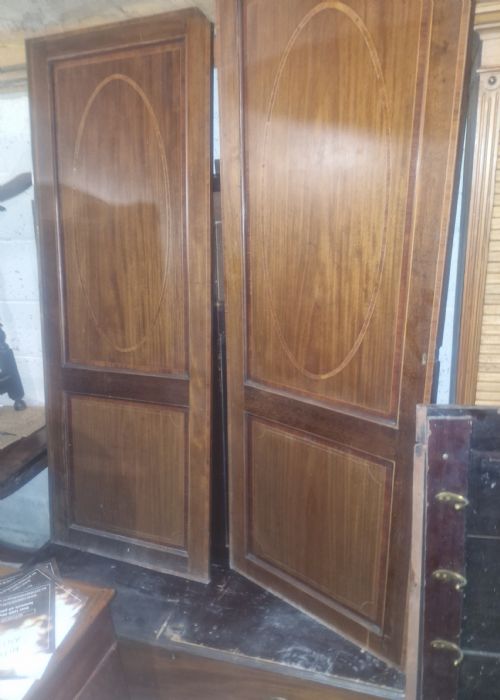
Structural integrity and the retention of original fittings, such as brass handles and glazed doors, influence the overall calibre of the item. Subtle refinements like simulated rosewood graining or specialist interior pull-out steps indicate higher workshop ambition.
Louis Constantin Le Gaigneur·Harrods
The Regency Inlaid Cupboard Glossary
- Inlay
- A decorative technique where pieces of contrasting material are inserted into a recessed timber surface to form patterns. This method defines the surface decoration on these storage pieces.
- Linen Press
- A tall storage unit featuring upper sliding trays or shelves enclosed by doors, traditionally used for textiles. Many examples incorporate a chest of drawers in the lower section.
- Chiffonier
- A low sideboard or cabinet equipped with enclosed lower shelving and frequently surmounted by a small upper shelf or mirrored back. These items emerged during the early nineteenth century.
- Pier Cabinet
- A narrow display cabinet designed to fit the wall space between windows. They commonly feature glazed doors to protect books or ceramics.
- Stringing
- Thin strips of contrasting light or dark wood inlaid into the timber surface in linear bands. It provides delicate borders around door panels and drawer fronts.
Regency Inlaid Cupboard: Frequently Asked Questions
What is a regency inlaid cupboard?
A regency inlaid cupboard is a period storage piece constructed from timbers like mahogany or rosewood and decorated with contrasting wood or brass details. These items include bedside cabinets, corner units and sideboards.
They were built during the late eighteenth and nineteenth centuries to serve specific domestic storage and display functions. The category spans compact night stands to large architectural linen presses.
Where were these cupboards placed?
These storage pieces were positioned throughout period homes according to their specific form and purpose. Corner cupboards filled unused wall angles, while bedside cabinets sat beside sleeping quarters.
Larger side cabinets and chiffonieres occupied principal living spaces and dining rooms. Pier cabinets stood in narrow wall spaces between windows to display ceramics and books.
How do I care for rosewood furniture?
Rosewood surfaces require protection from direct sunlight and sudden temperature shifts to prevent timber splitting and fading. Regular dusting with a soft, dry cloth preserves the polished finish.
Application of appropriate wax feeds the dense grain without building up residue. Avoid placing hot items or liquids directly onto the wood.
How do I identify a linen press?
A linen press is identified by its tall architectural proportions, featuring double upper doors that open to reveal sliding wooden trays. These internal trays were designed for flat linen storage before the widespread use of wardrobes.
The base section typically incorporates a chest of drawers configuration. Many examples rest on bracket feet or short pedestal bases.