
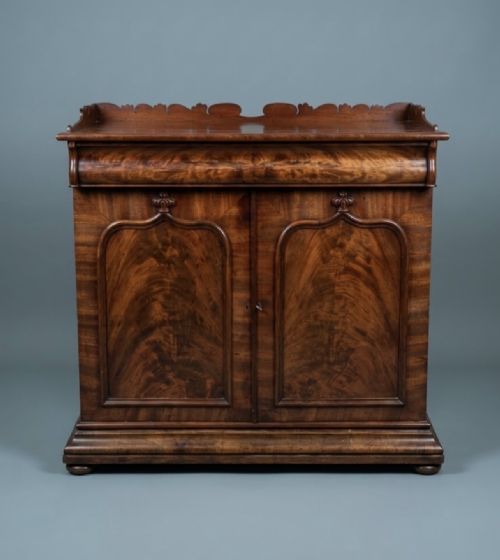
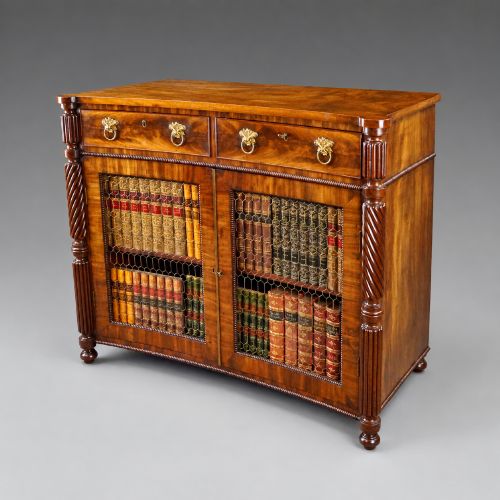
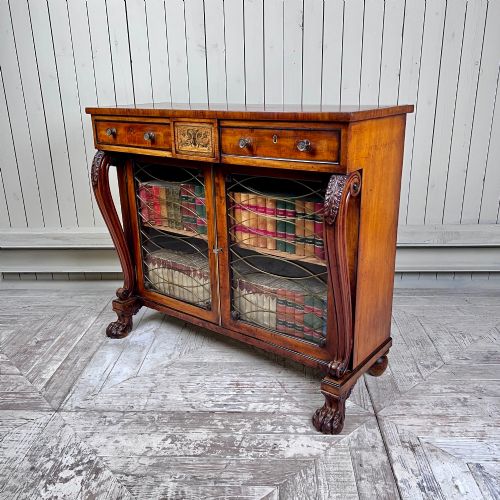
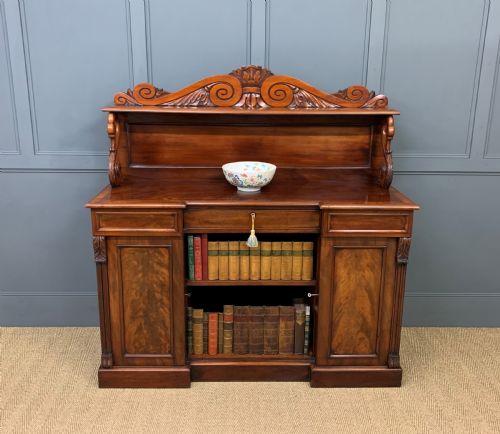
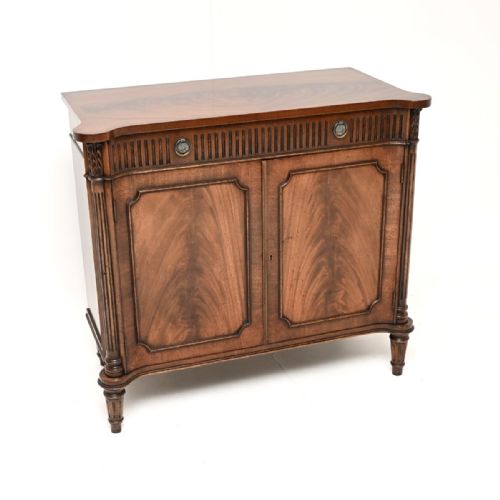
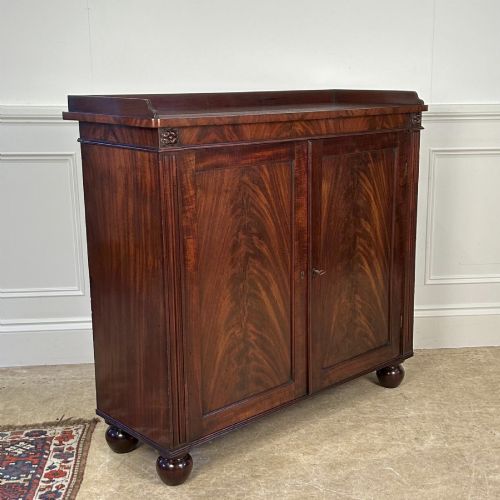
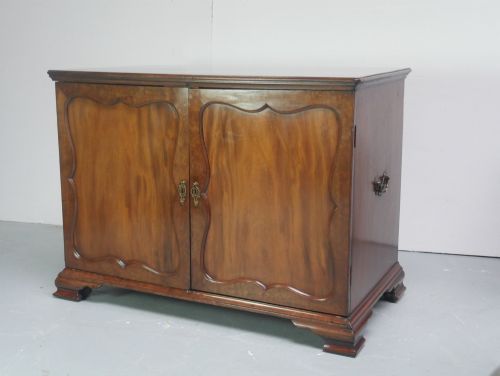
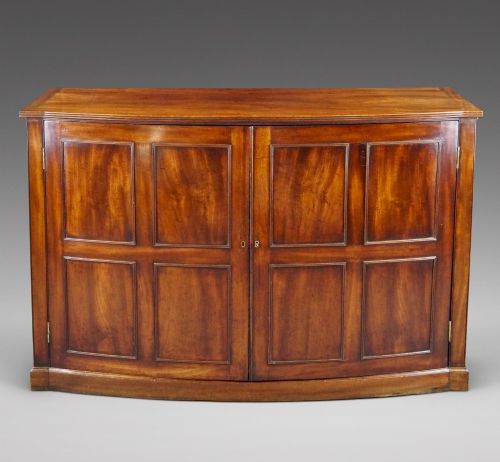

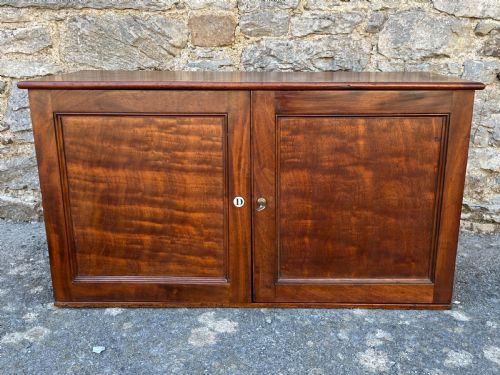


Low Mahogany Sideboard
A low mahogany sideboard brings steady timber and grounded proportions to a dining room or hall.
Low Mahogany Sideboard
A low mahogany sideboard offers surface length and enclosed storage below dining height, keeping rooms ordered without heavy vertical bulk. When you search for a low mahogany sideboard, you encounter Georgian, Regency and Victorian cabinetwork, alongside Edwardian revivals and later pieces.
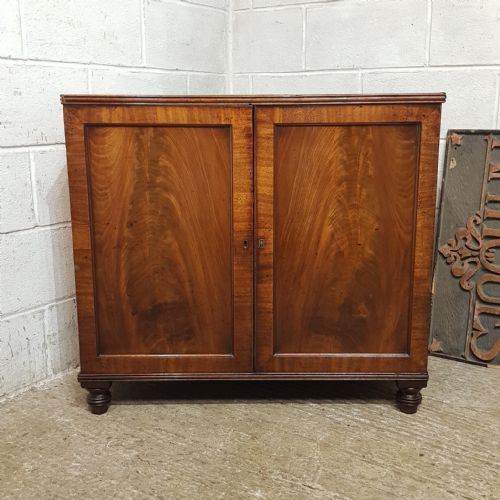
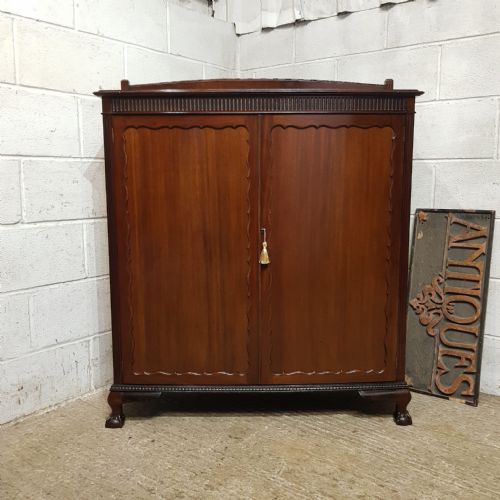
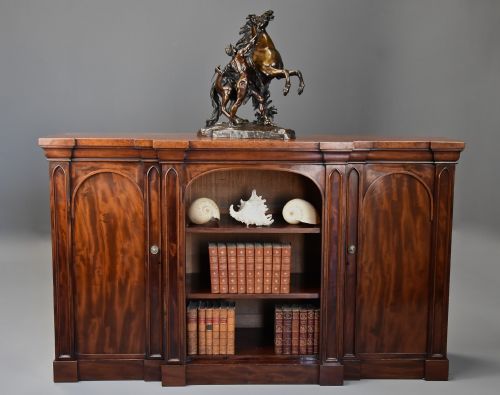
The form encompasses dwarf linen presses, compact side cabinets, low cupboards and open-shelf chiffoniers with timber doors. The proportion remains low to the floor, often resting on short bracket feet, turned supports or defined plinths rather than tall sideboard legs.
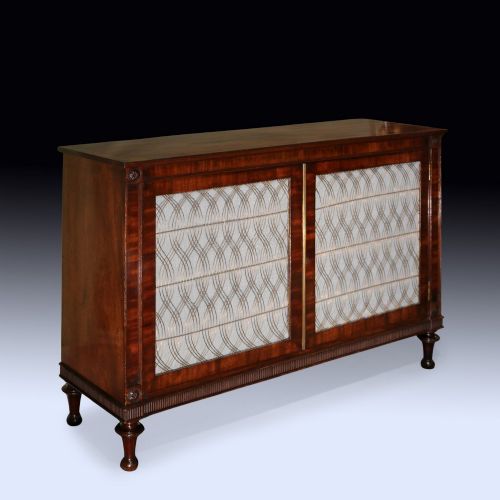
Georgian and Regency examples rely on architectural restraint and fine timber selection, whilst later Victorian and Edwardian iterations incorporate breakfront lines, brass grilles or deeper drawer configurations. Most pieces on this page utilise two doors flanked by simple pilasters or modest pedestals.
Materials and construction
Makers built these cabinets using solid mahogany carcasses faced with carefully chosen flame mahogany veneer or plum pudding mahogany to accentuate the grain on drawer fronts and door panels. Secondary timbers such as oak or pine appear in drawer linings and internal shelving.
Detailing relied on contrasting stringing in satinwood or ebony, alongside cast brass handles, escutcheons and wire grilles. Cabinetmakers joined framing with traditional dovetailing on drawers and pegged mortise and tenon joints on structural carcase work.
Object forms span low cupboards, chiffonier bookcases, linen presses and military filing cabinets.
Factors of quality
Quality rests upon the selection of timber figure and the precision of the cabinetmaker's joinery, particularly where veneers meet at mitred corners and curved bow-fronts. Superior pieces display continuous grain matching across doors and drawers, whereas standard versions utilise simpler, unfigured boards.
The refinement of internal fittings, original brass hardware and secondary wood selection separate standard workshop production from signed pieces by makers such as Gillows. Construction integrity shows in the weight of the timber and the smooth running of drawers without excessive packing.
Gillows·Whytock and Reid·Bowman Brothers·Collinson and Lock·Waring and Gillow
The Low Mahogany Sideboard Glossary
- Chiffonier
- A compact low cabinet featuring enclosed shelves below, sometimes surmounted by a small bookcase tier. This form gained popularity during the Regency period.
- Breakfront
- A piece of furniture where the central section projects forward from the flanking wings. This architectural arrangement creates depth and shadow across large cabinet fronts.
- Flame mahogany
- Timber cut from the fork of the mahogany tree to produce a flickering, flame-like grain pattern. Cabinetmakers reserved this veneer for principal display surfaces.
- Dwarf press
- A shortened linen press designed to fit beneath windows or within domestic chambers. These pieces combine shallow upper sliding trays with lower cupboard doors.
- Stringing
- Thin inlaid lines of contrasting wood used to edge panels and drawer fronts. This decorative technique defines geometric borders on Georgian and Regency cabinetwork.
Low Mahogany Sideboard: Frequently Asked Questions
What rooms suit a low mahogany sideboard?
These cabinets suit dining rooms, hallways and drawing rooms where horizontal surface space is required without blocking light or windows. Their compact height leaves wall space clear above for mirrors or artwork.
In contemporary interiors, they function well as media consoles or serving credenzas, storing tableware and linens behind closed doors while keeping the room uncluttered.
How do I distinguish Regency from Georgian pieces?
Georgian pieces from the eighteenth century lean towards architectural classical proportions, often featuring bracket feet, straightforward brasses and fielded door panels. Mahogany tones tend to be rich and deep through age.
Regency examples from the early nineteenth century introduce bolder brass inlay, gilt mounts, wire grilles and Egyptian Revival or classical motifs. The timber figure on Regency work is frequently more pronounced and dramatic.
How should I care for mahogany furniture?
Maintain mahogany surfaces by dusting with a dry, soft cloth and avoiding silicone-based polishes that build up residue over time. Occasional applications of traditional beeswax nourish the timber without harming the finish.
Keep pieces away from direct heat sources and strong sunlight to prevent the mahogany grain from fading and the underlying veneers from drying out.
Were these sideboards used for dining?
Georgian and Regency sideboards and low cabinets served primarily in dining rooms to hold silver, serving dishes and wine coolers. Lower cupboards stored linen, glassware and folio volumes.
Over successive decades, their domestic role expanded into libraries and drawing rooms as general storage cabinets for books, papers and household sundries.