


Warm Brown Chiffonier
A warm brown chiffonier brings rich timber grain and useful lower storage into a room, offering the practical presence of a Victorian or Regency sideboard.
Warm Brown Chiffonier
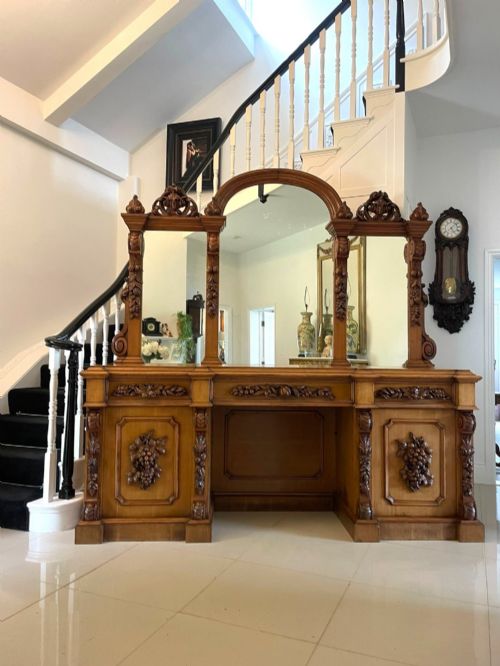
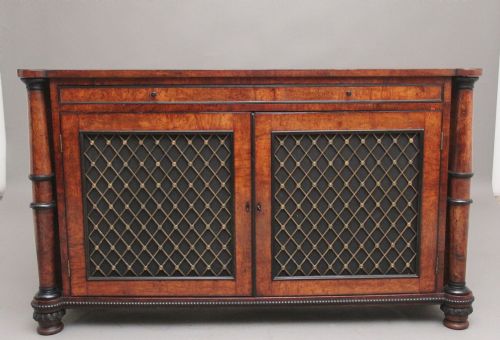
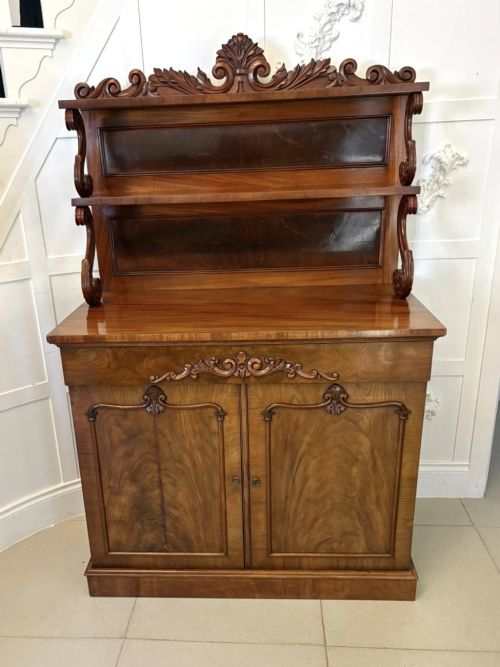
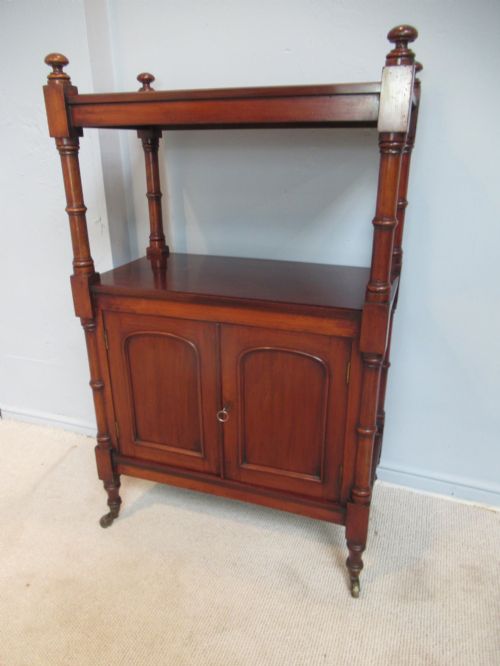
A warm brown chiffonier is a low cabinet designed for dining rooms and living spaces, combining a compact footprint with deep surface display and enclosed shelving below. The examples found here span the nineteenth century, including Victorian, Regency, Edwardian, and William IV periods.
Buyers seeking a warm brown chiffonier will encounter variations from the 1860s through to the Edwardian era, showing both restrained Regency lines and heavier Victorian carving. These lower case pieces served historically to hold glassware and linens, making them adaptable as modern media consoles or hallway cupboards.
How they were made
Cabinet makers utilised solid timbers alongside carefully selected wood veneers, laying flame mahogany, pollard oak, or plum pudding figure across the primary surfaces to create striking grain patterns. Secondary structural elements such as oak and cedar provide internal stability for shelves and drawers.
One persistent Victorian cabinet maker left a hand sign-written signature inside, proving that even storage furniture appreciates a personal label.
What varies in quality
Quality rests in the choice and matching of timber veneers, where superior pieces display symmetrical flame or plum pudding figures across the full width of the doors. The depth of colour and the preservation of the original polished finish separate standard utility cupboards from finer reception room furniture.
The refinement of architectural details, such as turned columns, breakfront proportions, and solid brass fittings, distinguishes standard cabinet work from more ambitious workshop production.
The Warm Brown Chiffonier Glossary
- Chiffonier
- A low sideboard or cabinet, typically featuring enclosed cupboards beneath a flat top or a raised upper shelf tier. This form became a staple of nineteenth-century dining and living rooms.
- Breakfront
- A piece of furniture where the central section projects forward from the flanking outer cabinets. This arrangement adds visual depth and architectural presence to sideboards and bookcases.
- Flame Mahogany Veneer
- A thin slice of timber cut from the fork of the mahogany tree, showing a flamed, feather-like grain pattern. Cabinet makers applied this to prominent door and drawer surfaces for decorative impact.
- Pollard Oak
- Timber taken from trees that have been pollarded, producing dense, gnarled growth rings with intense patterning. It was prized by nineteenth-century makers for small cabinets and specialist pieces.
Warm Brown Chiffonier: Frequently Asked Questions
What is a chiffonier?
A chiffonier is a low nineteenth-century cabinet designed for storage and display, usually featuring enclosed doors beneath a surface or tier.
They sit lower than standard tall sideboards, making them suitable for smaller dining spaces or living rooms.
How do I style a chiffonier?
Place a chiffonier against a living room or dining room wall where its timber grain can act as a focal point.
The top surface provides space for lamps or decorative objects, while the lower cupboards conceal books and tableware.
Are these pieces solid wood?
Most pieces combine solid structural frames with decorative wood veneers applied to the visible door and drawer fronts.
Timbers such as mahogany and oak form the carcass, while specialised cuts create the figured surfaces.
How do I date a chiffonier?
Dating relies on architectural style, timber choice, and construction methods, ranging from Regency restraint to heavy Victorian carving.
Edwardian pieces often introduce lighter walnut tones and mirror backs into the design.