

Small Victorian Cabinet
When you search for a small victorian cabinet, you enter a world of compact mahogany bedside chests, walnut pier cabinets, and miniature display pieces designed for nineteenth-century rooms.
Small Victorian Cabinet
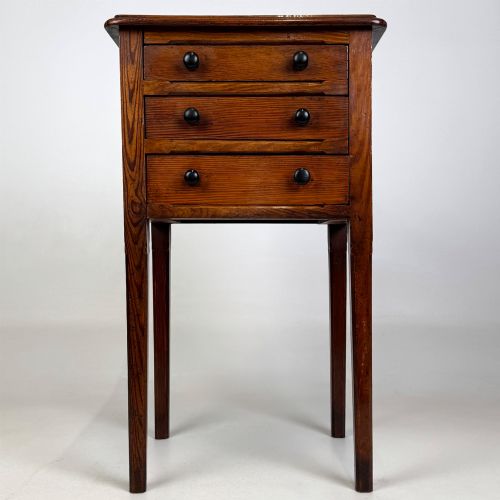
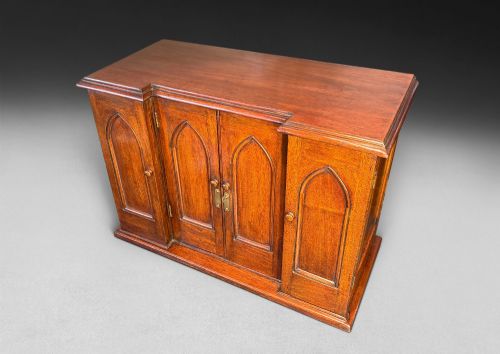
A small victorian cabinet encompasses a remarkably diverse group of compact nineteenth-century storage forms, ranging from bedside chests and nightstands to tabletop collectors' drawers and wall-mounted cupboards. These domestic items served specific practical functions in bedrooms, parlours, and studies, often built to maximise storage space without dominating the room.
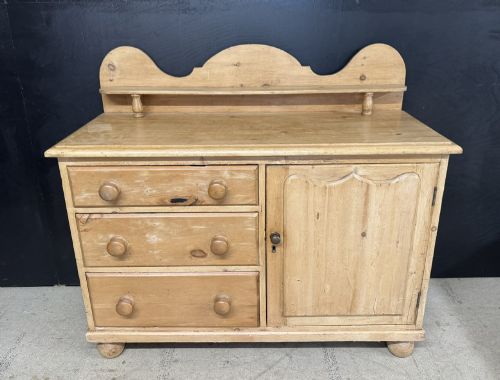
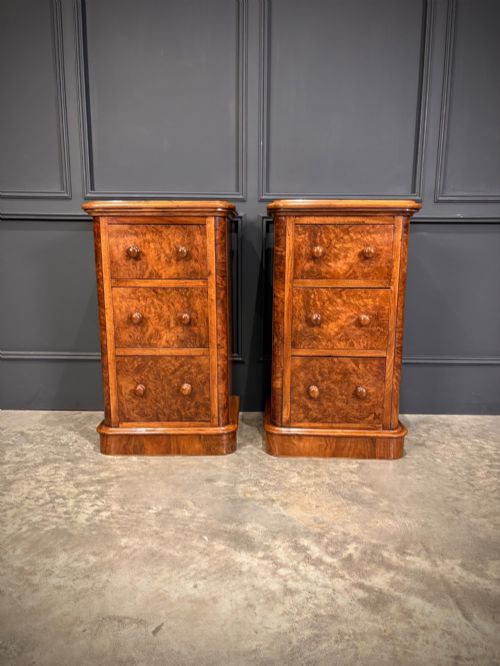
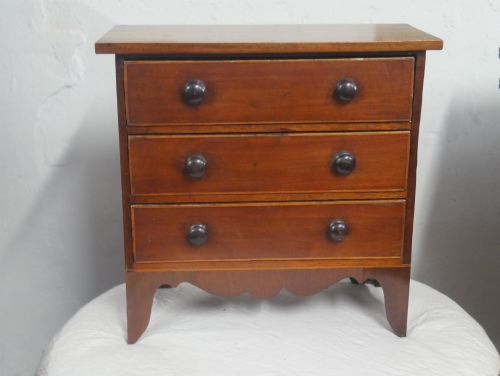
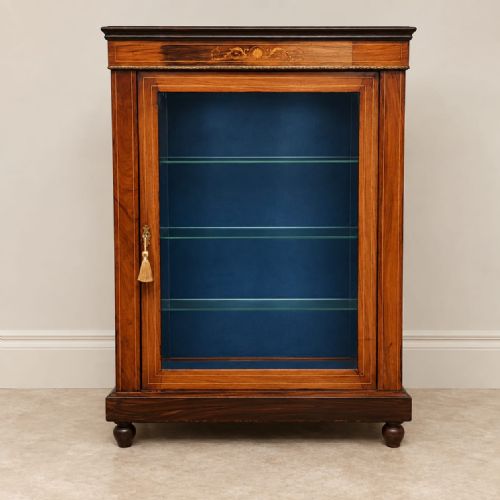
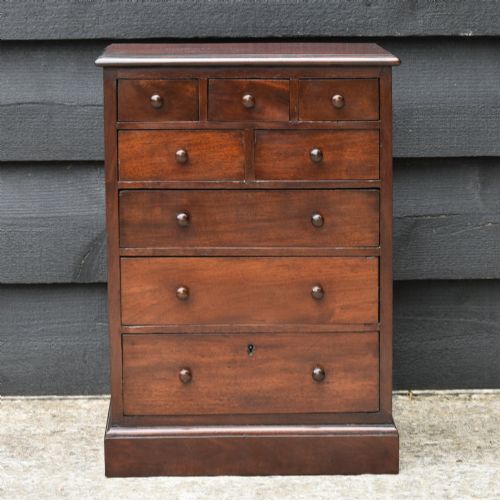
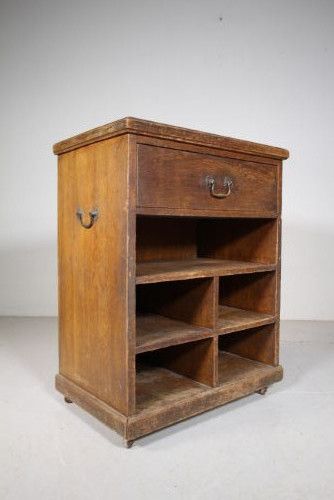
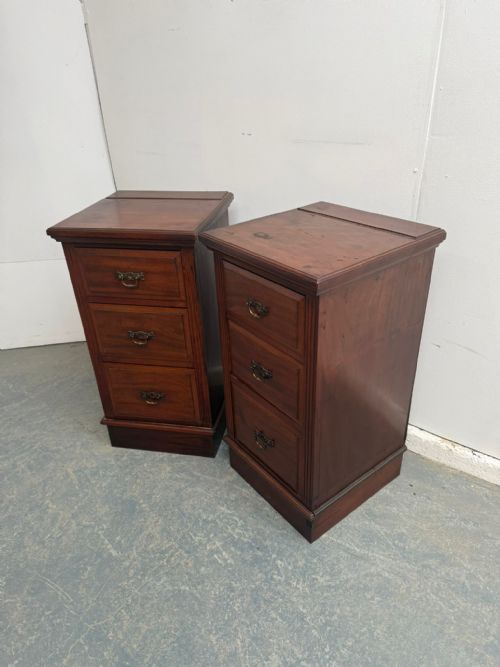
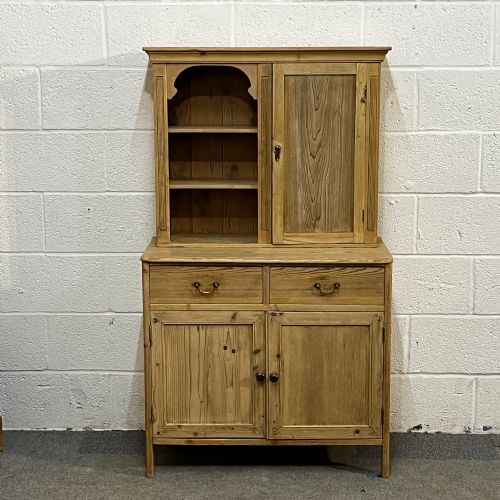
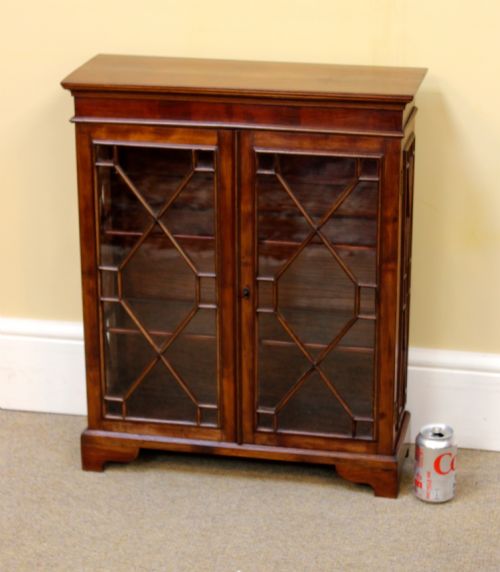
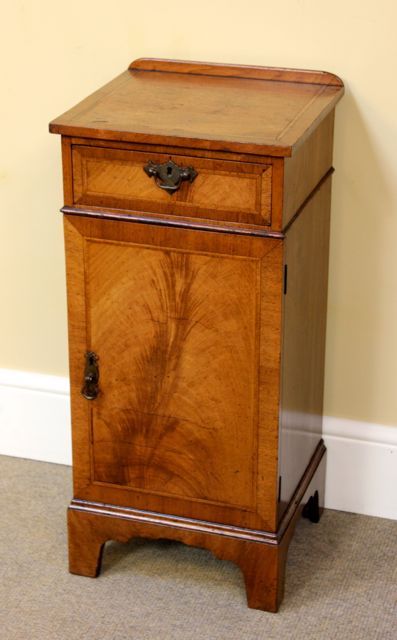
The selections recorded here appear most frequently as mahogany or walnut bedside cabinets with multiple small drawers, alongside glazed pier cabinets and miniature apprentice pieces. Pine and oak variants also surface regularly, spanning rustic farmhouse cupboards to refined glazed display cases.
Makers and workshops produced these forms across the broader Victorian era, with dates stretching from the mid-nineteenth century towards nineteen hundred. Buyers encounter both freestanding floor models and smaller hanging or table-top variations designed for limited spaces.
What varies in quality
The grade of timber selection and veneer matching defines the upper tiers of these pieces, particularly where figured burr walnut or matched mahogany grain adorns the primary facades. Superior examples display meticulous attention to secondary timbers and the crispness of inlaid satinwood or marquetry details.
Structural refinement also separates standard utility cupboards from finer parlour furniture, evident in the precision of drawer construction, the integration of brass castors, and the elegance of proportions in smaller scaled items like pier cabinets and apprentice chests.
Miniature apprentice chests gave young woodworkers a chance to practise tiny dovetails before tackling full-sized wardrobes.
Edwards and Roberts·Luxmore of Ilfracombe·Harrods
The Small Victorian Cabinet Glossary
- Pier cabinet
- A low freestanding display or storage cabinet designed specifically to fit the narrow wall space between windows, frequently featuring glazed doors and walnut veneers.
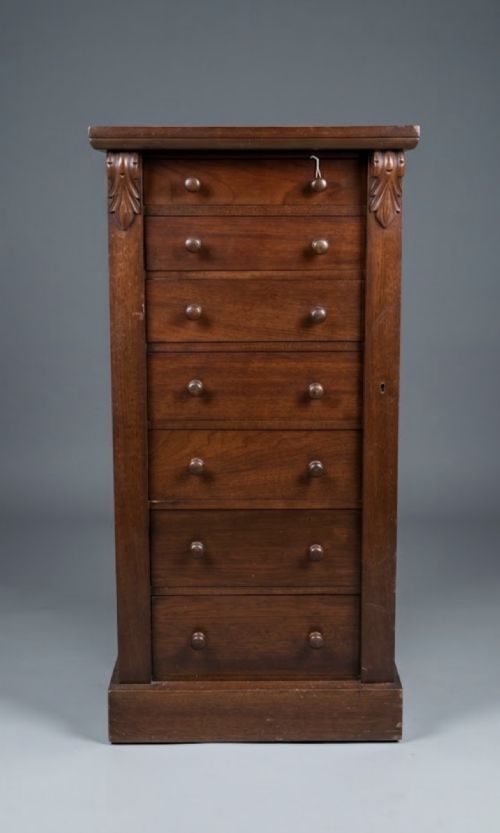
- Wellington chest
- A tall, narrow chest of drawers secured by a hinged locking stile that fastens down the right side and locks with a key.
- Marquetry
- Decorative veneer work forming pictorial or geometric patterns using various woods, shells, or ivory inlaid into the primary surface.
- Chinoiserie
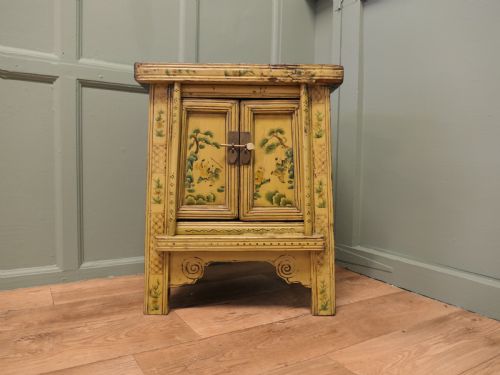
- European decorative style employing simulated Chinese motifs, often featuring hand-painted figures, pagodas, and landscapes on a lacquered or painted ground.
Small Victorian Cabinet: Frequently Asked Questions
What is an apprentice piece cabinet?
An apprentice piece is a miniature version of a larger chest or bureau built by a trainee craftsman to prove skill to masters.
These small models display the exact dovetailing, drawer construction, and polishing techniques found on full-sized nineteenth-century furniture.
Where were bedside cabinets placed?
Bedside chests and cabinets stood beside sleeping quarters to hold night-time necessities, chamber pots, or personal books.
They usually featured a small cupboard door or two to three small drawers suited for compact spaces.
How do I spot a pier cabinet?
A pier cabinet is identified by its narrow, shallow proportions designed to sit flush against the wall space between windows.
These pieces frequently incorporate glazed doors to showcase porcelain or small decorative collections within a drawing room.
What is a Wellington chest?
A Wellington chest is a tall, narrow stack of drawers secured by a unique hinged vertical locking side bar.
This locking mechanism fastens over the right edge of the drawers and fastens with a single key for security.
Are these cabinets made of solid wood?
Construction varies between solid hardwoods like mahogany and oak, and secondary framing timbers faced with fine veneers.
Walnut and burr walnut examples typically use softwood or secondary hardwood carcases covered in decorative veneer sheets.