




Victorian What Not Cabinet
A victorian what not cabinet provides open display and enclosed storage, offering a distinct nineteenth-century solution for small rooms.
Victorian What Not Cabinet
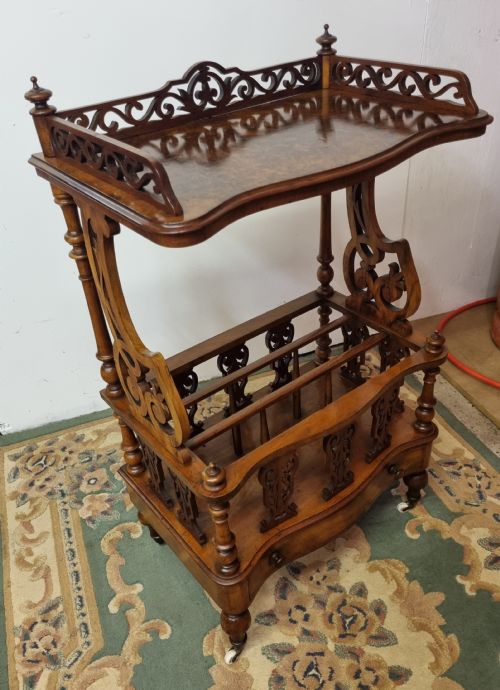
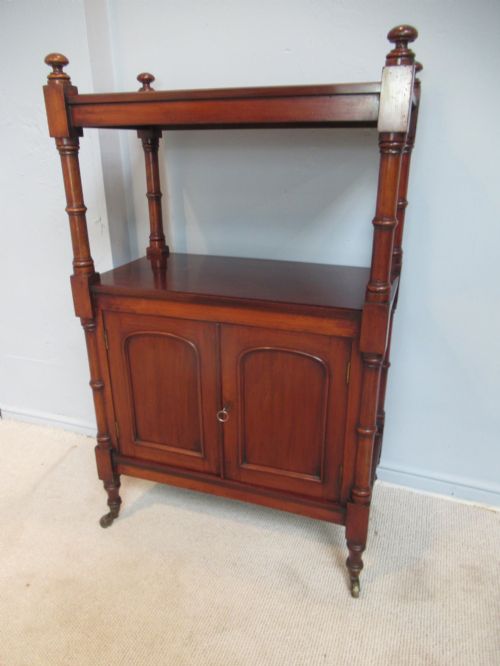
A victorian what not cabinet appears across the nineteenth century in forms ranging from open corner units to multi-functional music cabinets and canterburys. These pieces combine tiered shelving with lower cupboards or drawers, designed to hold books, sheet music, or decorative objects.
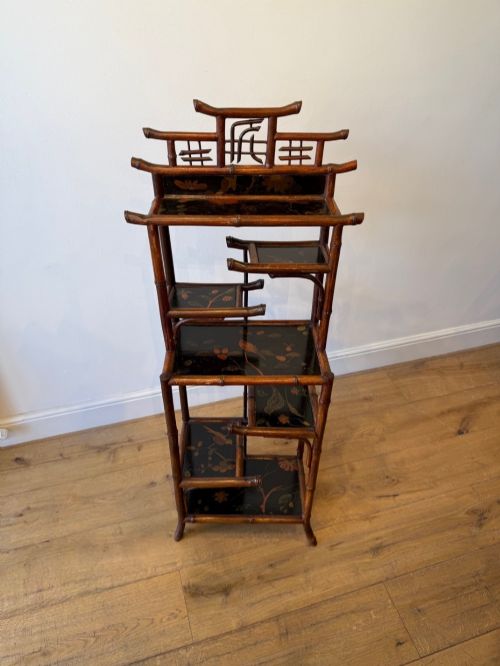
The versions most common on this page date from the eighteen fifties to the eighteen nineties. Walnut, burr walnut, rosewood, and mahogany dominate the inventory, frequently supplemented by bamboo and lacquer variants from the turn of the century.
Materials and Construction
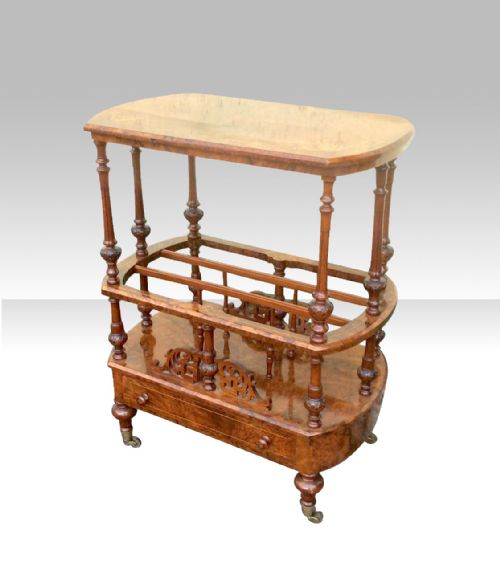
Cabinet makers utilised dense hardwoods such as walnut, rosewood, and mahogany, often applying burr walnut veneers to prominent surfaces for varied grain patterns. Inlaid decoration in contrasting woods adds linear detail to tabletops and door panels.
Structural elements incorporate turned supports, brass hardware, and ceramic components. Lighter constructions employ bamboo frames fitted with lacquer panels to achieve an alternative aesthetic.
Listings demonstrate materials ranging from traditional walnut and rosewood to late nineteenth-century bamboo and lacquer.
Quality Variations
Depth of timber selection and precision of joinery determine the standing of an individual piece. Burr walnut veneers chosen for symmetry and rich figuring elevate the appearance above plain grain surfaces.
Complexity of function and integration of multiple uses separate standard tiers from sophisticated examples. Pieces combining storage cupboards, music compartments, and display shelving demonstrate greater cabinet-making ambition.
The Victorian What Not Cabinet Glossary
- Canterbury
- A low stand featuring vertical partitions for holding sheet music or newspapers, often integrated beneath a cabinet or tabletop. These pieces frequently incorporate small drawers.
- Whatnot
- A piece of furniture consisting of a series of open shelves for displaying ornaments, popular throughout the Victorian period. They stand on the floor or hang upon walls.
- Burr walnut
- Wood taken from a growth or burl on the walnut tree, showing intricate and swirling grain patterns. Cabinet makers prized this material for veneering primary surfaces.
- Chiffonier
- A low sideboard or cabinet equipped with enclosed lower storage and a shelf above. The form evolved during the nineteenth century to serve dining and drawing rooms.
- Ebonised
- Wood treated with a dark stain or finish to imitate ebony. This treatment appears on mahogany and other timbers to create a contrasting monochromatic effect.
Victorian What Not Cabinet: Frequently Asked Questions
What is a whatnot cabinet?
A whatnot cabinet is a multi-tiered piece of nineteenth-century furniture designed for displaying ornaments while occasionally providing enclosed storage below.
These items range from standing corner units to wall-mounted shelves and music cabinets.
How were canterburys used?
Canterburys served as dedicated stands for storing sheet music, folios, and newspapers within domestic drawing rooms.
Many examples include drawers or small cabinets for related accessories.
What woods are typical?
Makers relied on dense hardwoods such as walnut, burr walnut, rosewood, and mahogany for structural stability and decorative grain.
Late nineteenth-century pieces also utilise bamboo and lacquer.
How to date these cabinets?
Dating relies on timber choice, hardware, and stylistic shifts between mid-Victorian walnut pieces and late Victorian ebonised or bamboo designs.
Specific construction methods and veneer applications offer further chronological markers.