
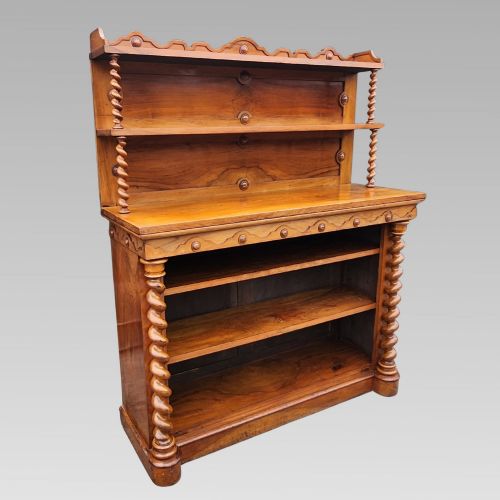
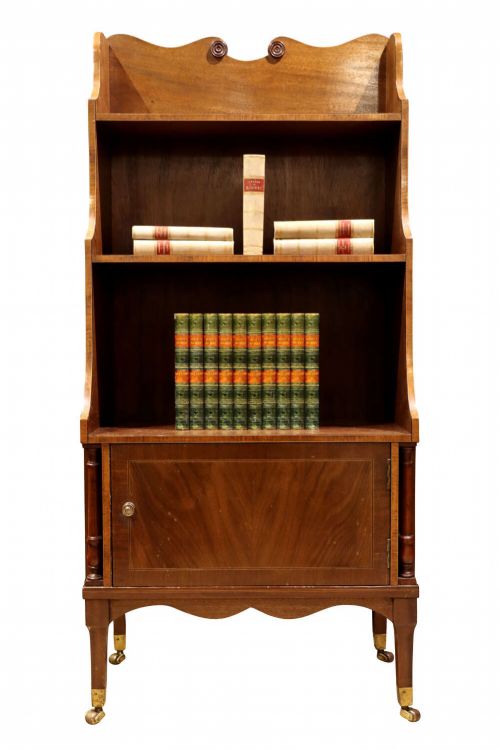
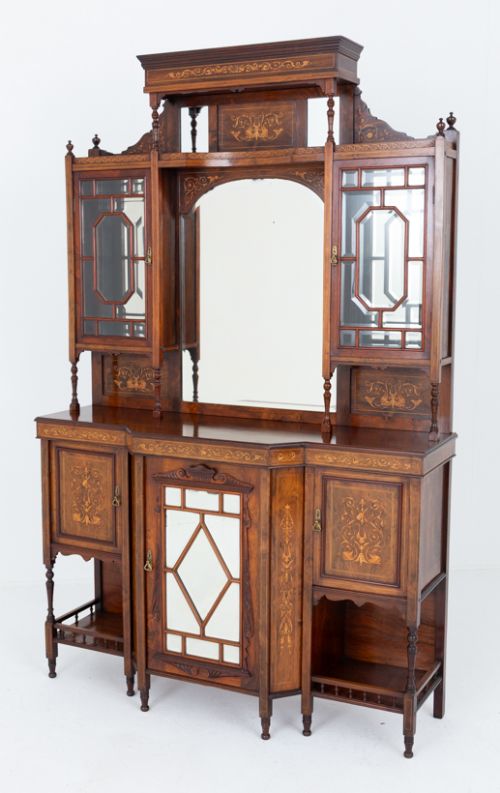


Late Victorian Chiffonier
A late victorian chiffonier combines lower cupboards with upper display space, offering practical storage and surface display for the home.
Late Victorian Chiffonier
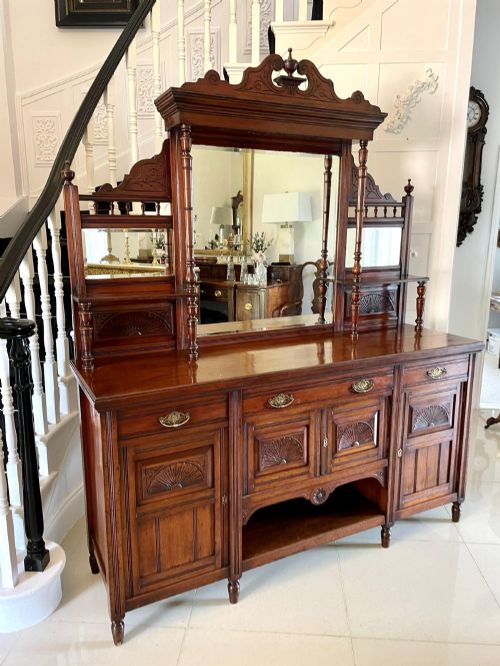
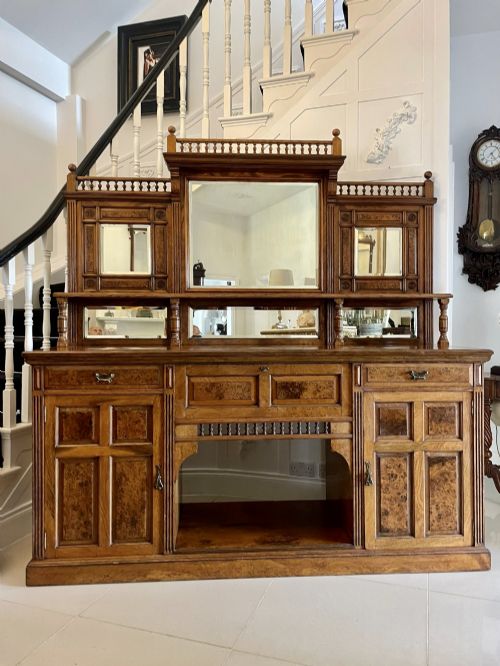
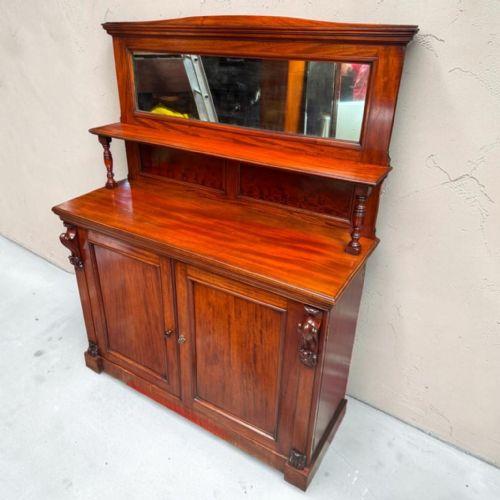
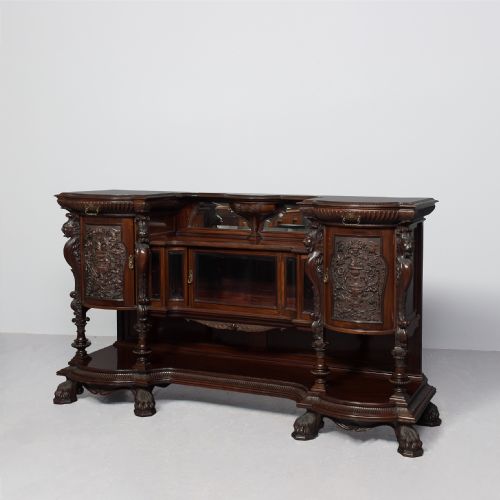
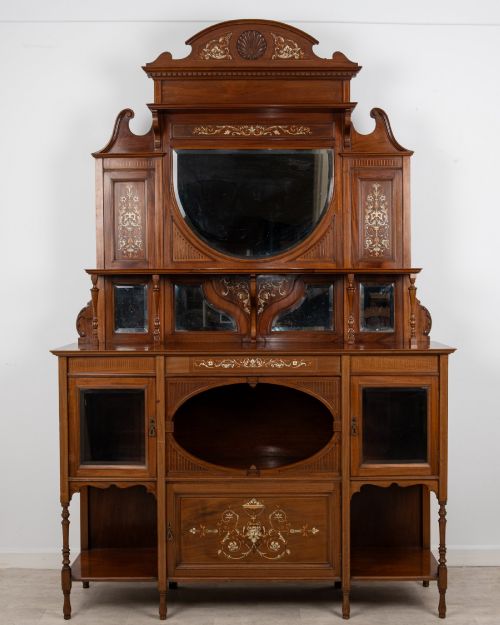
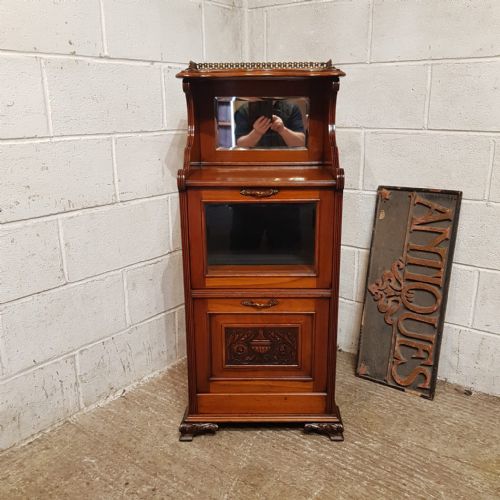
A late victorian chiffonier stands as a practical hybrid piece, typically combining enclosed lower storage with open shelving or a mirror back. The pieces encountered here span the Victorian era, specifically drawing from the late nineteenth century around eighteen eighty to nineteen hundred.
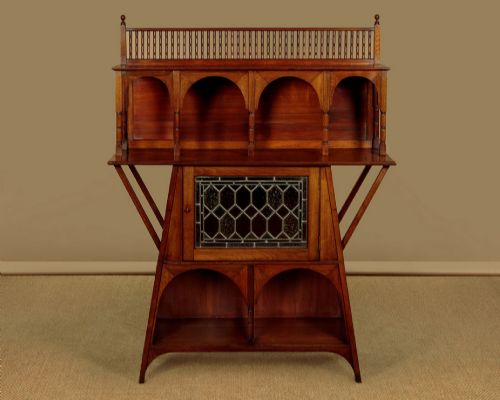
The form frequently overlaps with side cabinets, sideboards, and bookcase cabinets within the evidence. Buyers seeking this specific item will encounter variations featuring carved woodwork, glass panels, and inlaid details.
Origins stretch across English workshops as well as continental examples, reflecting diverse aesthetic movements from Arts and Crafts to Neoclassical. These furnishings served primarily in parlours and reception rooms for storing dining wares and displaying decorative objects.
How they were made
Construction relies heavily on dense hardwoods such as mahogany, walnut, and rosewood, often enhanced with contrasting boxwood and satinwood inlay. Cabinet makers utilised brass for castors and hardware, while mirror glass formed integral back panels for many of the larger sideboards and cabinets.
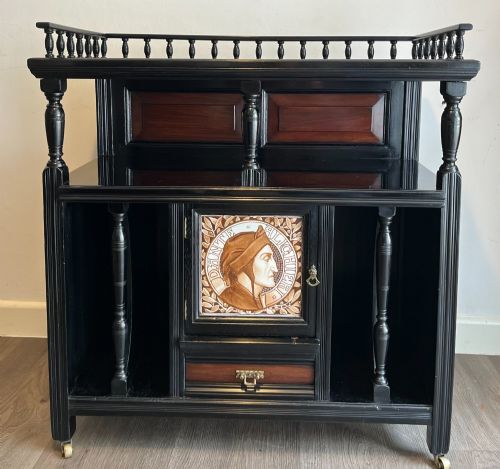
Surface decoration incorporated marquetry, ebonising, and gilt highlighting to achieve the rich textures favoured during the period. Carved wooden elements appear frequently, alongside structured glass doors designed to protect books and display items.
Listings feature woods including mahogany, walnut, rosewood, oak, and satinwood alongside mirror glass and brass hardware.
What varies in quality
The distinction between standard production and exhibition grade work lies in the complexity of the timber selection and the precision of the marquetry inlay. Pieces featuring figured pollard oak, burr walnut, or extensive hand-carved details sit at the higher end of the range.
Maker attribution significantly influences standing, with documented pieces from firms such as James Schoolbred or Liberty and Co demonstrating superior cabinet making standards. The integration of original brass castors, bevelled mirror glass, and fine satinwood stringing further elevates a piece.
Liberty and Co·Garnett and Sons·James Plunckett·Collinson and Lock·Maple and Co
The Late Victorian Chiffonier Glossary
- Chiffonier
- A low sideboard or cabinet, typically featuring cupboards beneath a shelf or mirror back. This form developed to serve dining and parlour storage needs.
- Marquetry
- Decorative woodwork where pieces of veneer are fitted into a ground to form floral or geometric patterns. Craftsmen utilised contrasting timbers like rosewood and satinwood to create these pictures.
- Ebonised wood
- Timber treated with a dark stain or finish to imitate ebony. This technique gained popularity during the Aesthetic Movement.
- Mirror back
- An upright wooden frame holding a glass mirror attached to the rear of a sideboard or cabinet. It reflects light and displays items placed on the surface below.
- Side cabinet
- A versatile enclosed piece of furniture designed to stand against a wall in a dining room or parlour. These items often include a mix of drawers, cupboards, and open display areas.
Late Victorian Chiffonier: Frequently Asked Questions
Where did people put a chiffonier?
These pieces traditionally stood in the dining room or parlour against a main wall. They provided a surface for serving food or drinks while storing table linen and china below.
In modern rooms, they function well in hallways or living spaces to store everyday items while displaying decorative objects on top.
How do I spot an Aesthetic Movement piece?
Aesthetic Movement items frequently display ebonised wood surfaces with gilt highlights or subtle Japanese inspired decoration. The design prioritised artistic visual effect over heavy historic revival styles.
Such cabinets often incorporate clean structural lines alongside contrasting wood veneers and brass hardware.
What is the difference between a sideboard and a chiffonier?
A sideboard generally serves dining functions with longer proportions and extensive lower cabinet space. A chiffonier tends to be more compact, often including an upper shelf or mirror back.
Both forms overlap frequently in nineteenth century terminology and workshop output.
Are mirror backs original to these cabinets?
Mirror backs were standard additions for many Victorian cabinets and sideboards produced from eighteen eighty onwards. They served to brighten rooms by reflecting natural light and enhanced the display of porcelain.
Examining the rebate and framing helps confirm that the mirror glass matches the age of the base cabinet.