



Spindle Gallery Cabinet
These spindle gallery cabinet pieces span Victorian and nineteenth-century eras, offering practical storage with distinctive turned uprights that define their architectural character.
Spindle Gallery Cabinet
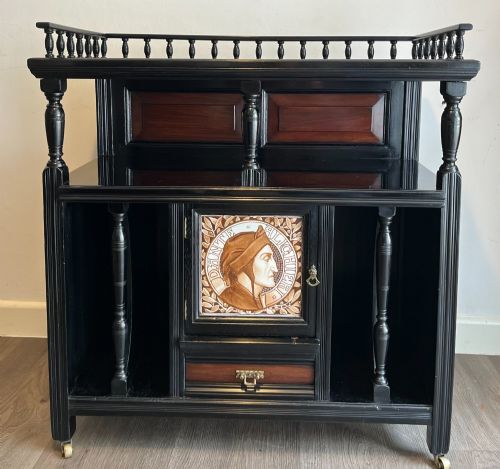
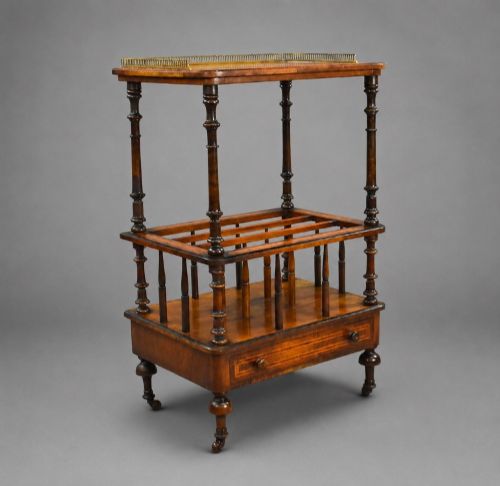
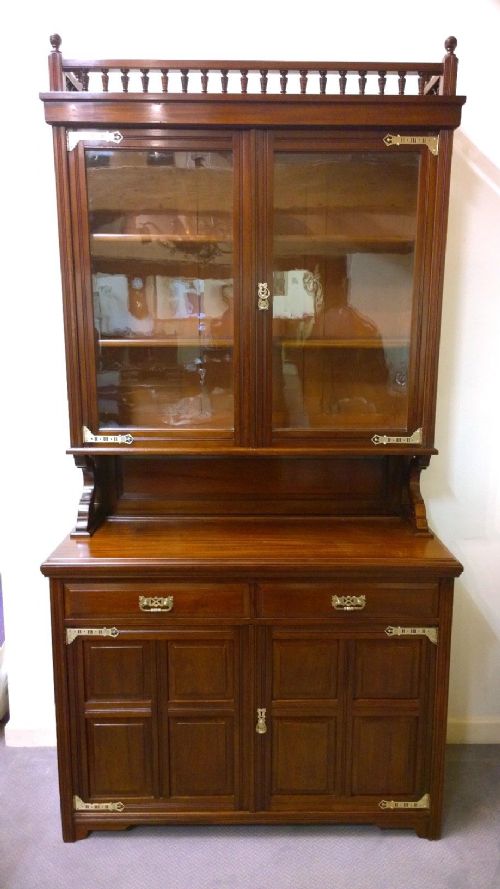
When you search for spindle gallery cabinet, you are looking at nineteenth-century and Victorian furniture designed for display and storage, typically incorporating open rails of turned wood at the top or on internal shelves. The pieces appearing here encompass various forms, from bedside cabinets and bookcases to sideboards, canterburys, and specialised collectors cabinets.
Most examples date from the Victorian era and the later nineteenth century, reflecting stylistic influences ranging from the Aesthetic Movement and Arts and Crafts to Gothic Revival and Breton folk traditions. Walnut, mahogany, and ebonised woods predominate, frequently accompanied by glass panels, mirrored backs, or brass hardware.
You are most likely to meet walnut or mahogany constructions featuring glazed doors or open shelving with characteristic raised galleries. Certain items originate from specific makers or regional workshops, while others emphasise functional display alongside traditional cabinetry.
Materials and construction methods
Makers utilised solid and veneered hardwoods, notably walnut and mahogany, alongside ebonised wood to achieve contrasting dark finishes. These surfaces were occasionally enhanced with gilt highlights, brass mounts, or inlaid details.
Structural joinery relied on traditional cabinet-making techniques appropriate to each form, whether housing glass doors for display cabinets or constructing turned spindles for galleries. Back panels frequently incorporated mirrors or straightforward timber boards, depending on the intended function of the piece.
Spindle Gallery Cabinet Retail Price Guide 2026
Typical asking prices for spindle gallery cabinet among the pieces listed under this phrase on Sellingantiques today, from the lower quarter to the upper quarter. They describe what is for sale here now, not the wider market.
Assessing quality in construction and design
The standard of timber selection and veneer matching largely distinguishes finer pieces from simpler utility furniture. Superior examples display carefully chosen burr walnut or rich mahogany grains paired with precise joinery in the turned spindles and framing.
Design ambition also marks the difference across the range, with workshop-attributed pieces or distinct stylistic movements such as the Aesthetic Movement and Arts and Crafts exhibiting more inventive configurations and refined decorative hardware than standard production items.
Heals·Lambs of Manchester·Liberty of London
The Spindle Gallery Cabinet Glossary
- Spindle gallery
- A decorative open rail composed of small turned wooden uprights, typically positioned along the top edge of a cabinet, shelf, or whatnot to keep items secure.
- Ebonised
- Timber treated with a finish that darkens the surface to resemble ebony, a technique favoured during the nineteenth century for dramatic contrast.
- Canterbury
- A low multi-section stand originally designed for holding sheet music, books, or portfolios, often integrated into larger cabinet designs.
- Purdonium
- A specialised household cabinet or box designed specifically for storing coal near a fireplace, frequently featuring a sloping front and internal metal scuttle.
- Aesthetic Movement
- A nineteenth-century design phase emphasising beauty and artistic expression over strict moral or narrative purpose in the decorative arts.
Spindle Gallery Cabinet: Frequently Asked Questions
What is a spindle gallery cabinet?
A spindle gallery cabinet is a nineteenth-century storage or display piece featuring an upper decorative rail made of turned wooden spindles.
These items range from bedside cupboards to larger bookcases and sideboards, combining enclosed storage with open display surfaces.
How do I date a Victorian cabinet?
Dating these cabinets involves examining the timber types, construction methods, and stylistic cues present in the piece. Victorian examples often utilise walnut, mahogany, or ebonised wood alongside specific decorative movements like the Aesthetic or Arts and Crafts styles.
Maker stamps, brass hardware styles, and regional joinery traditions further help narrow down the period of manufacture within the nineteenth century.
Where were these cabinets used?
These cabinets served multiple functions throughout nineteenth-century homes, acting as bedside storage, book repositories, or display surfaces in reception rooms.
Specialised forms like canterburys and collectors cabinets were tailored for specific organising tasks, while mirrored backs and glass doors allowed owners to showcase decorative objects.
How do I care for antique walnut furniture?
Caring for antique walnut and mahogany involves maintaining stable room temperatures and avoiding direct sunlight to protect the timber and veneer finishes.
Regular dusting with a soft, dry cloth preserves the surface, while occasional light conditioning helps prevent the wood from drying out over time.