
Vintage Document Cabinet
A vintage document cabinet organises paperwork with period character, appearing here in oak, mahogany and pine from the nineteenth and twentieth centuries.
Vintage Document Cabinet
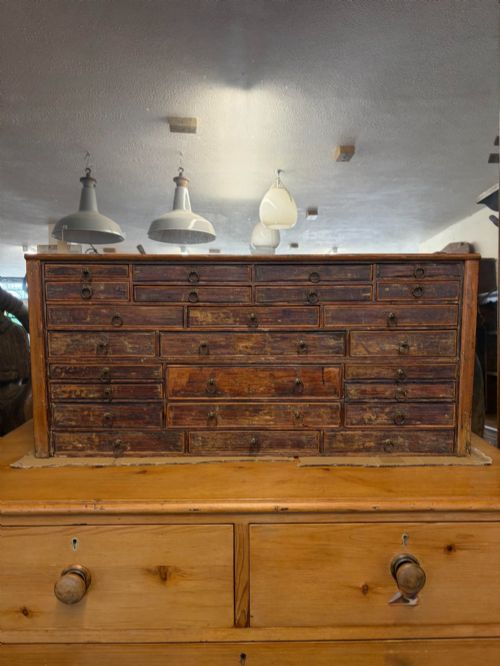
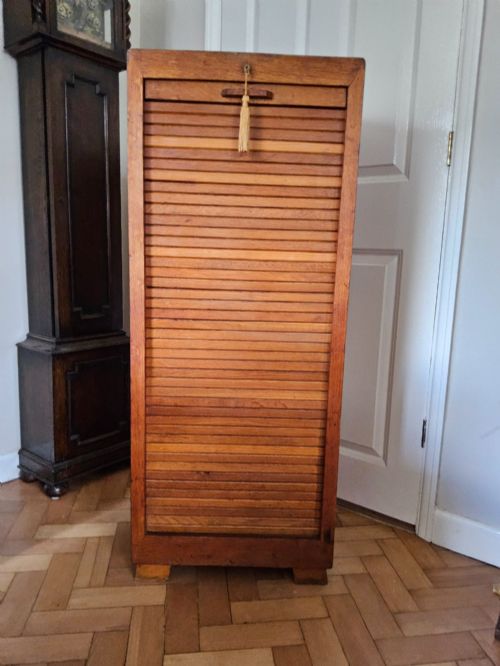
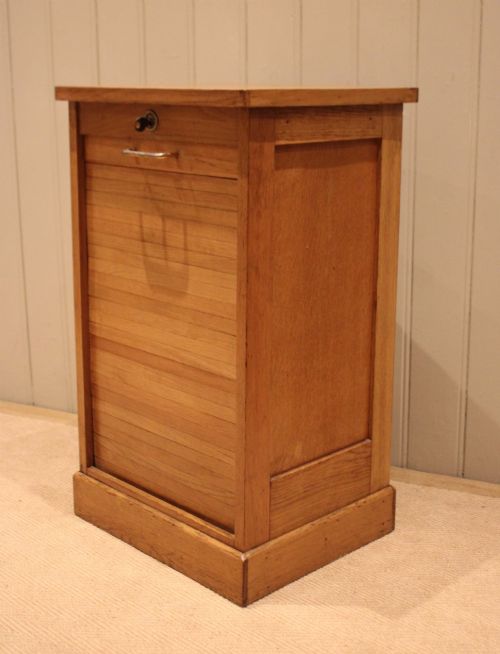
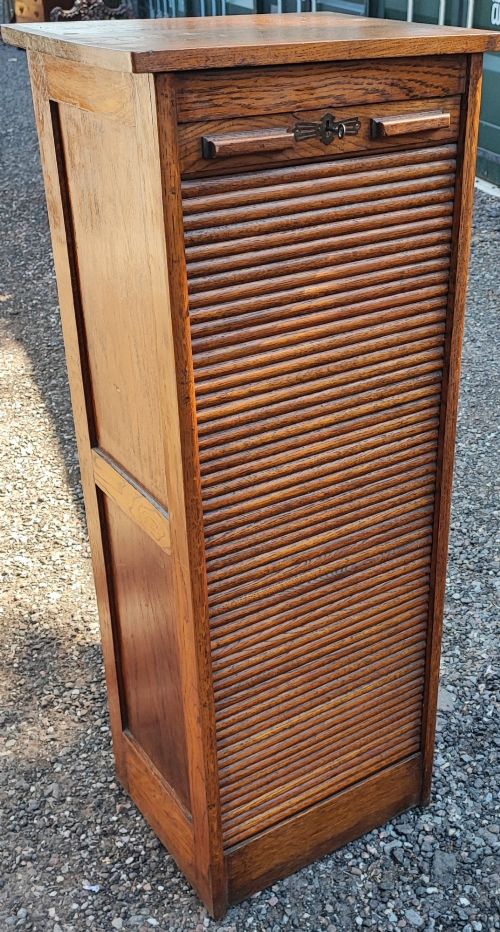
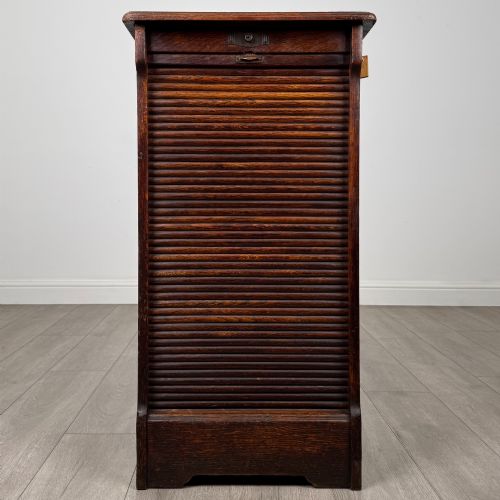
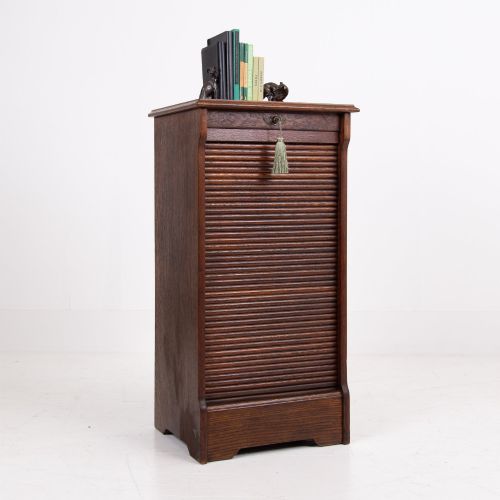
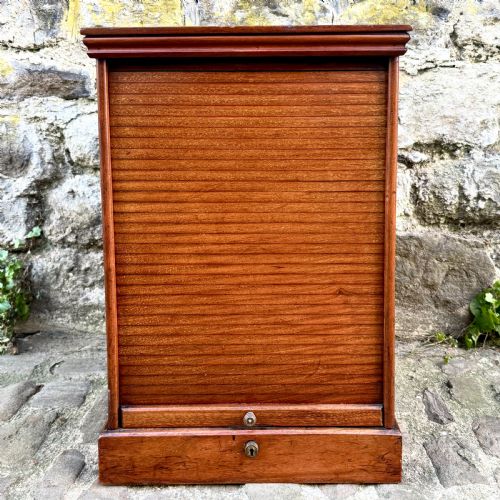
When you search for a vintage document cabinet, you encounter multi-drawer filing chests, tambour-front units and banks of pigeonholes designed for commercial or domestic sorting. These pieces originate from the Victorian and Edwardian eras through to the mid-twentieth century, capturing the functional design of past offices and studies.
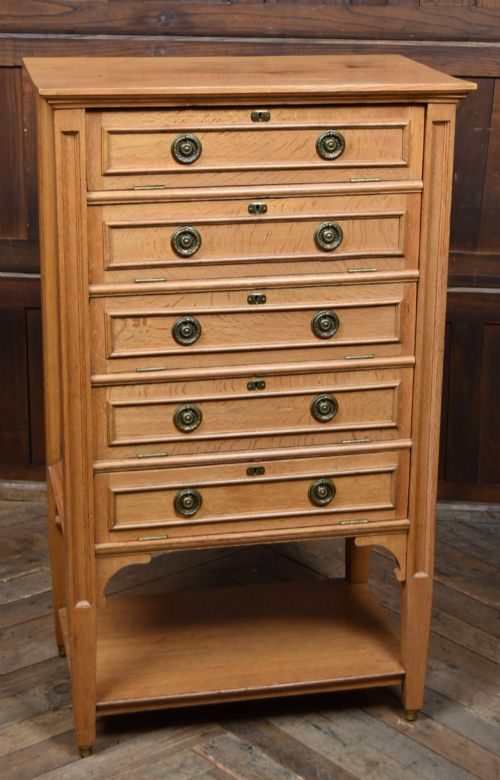
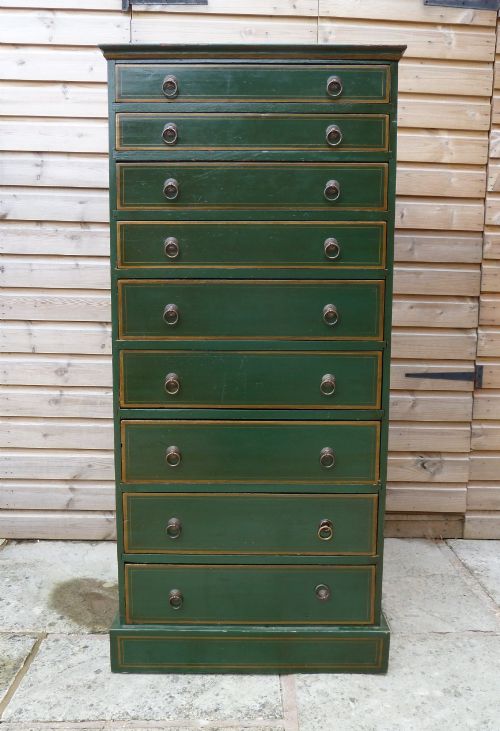
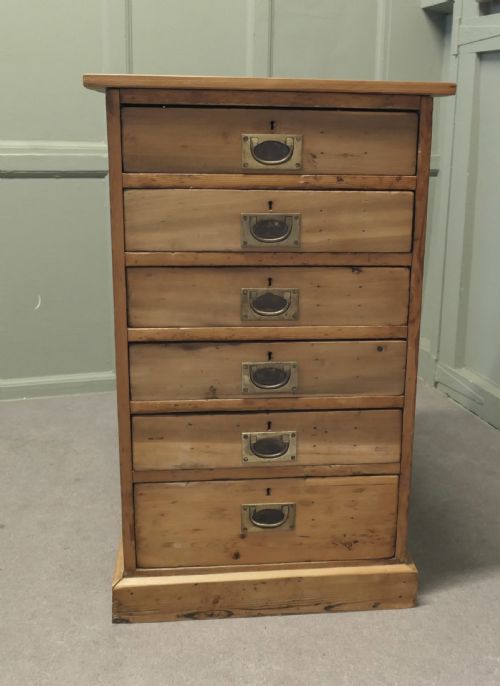
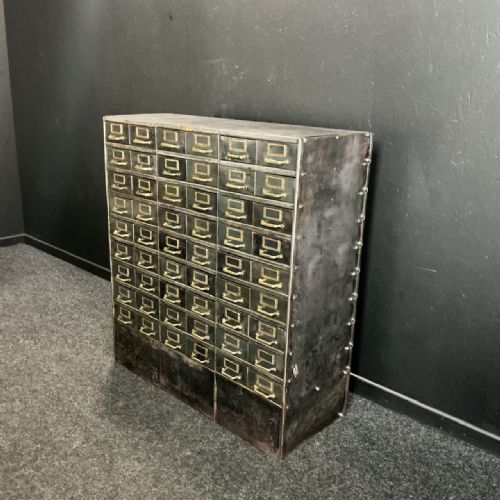
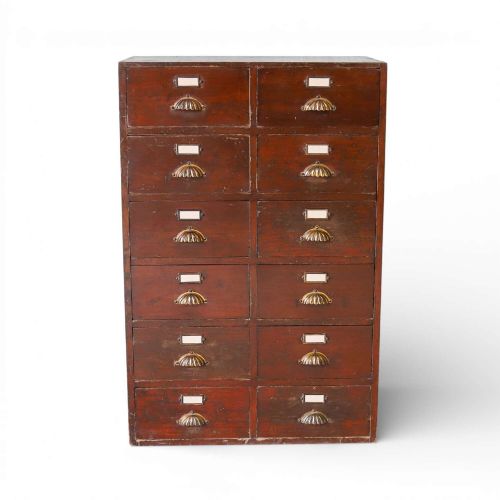
The most common examples on this page are oak and mahogany filing cabinets and banks of drawers featuring brass handles or label holders. Industrial metal pieces and painted pine office chests also appear alongside specialist forms like music cabinets and campaign styles.
How they were made
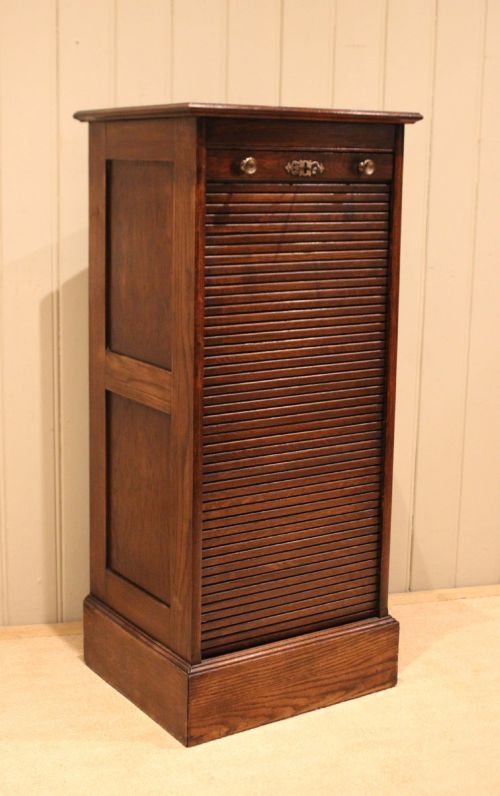
Cabinetmakers utilised solid timbers including oak, mahogany and pine, constructing carcases with dovetailed joints and solid drawer linings. Tambour doors utilised narrow wooden slats glued to a canvas backing to slide smoothly around a curved track.
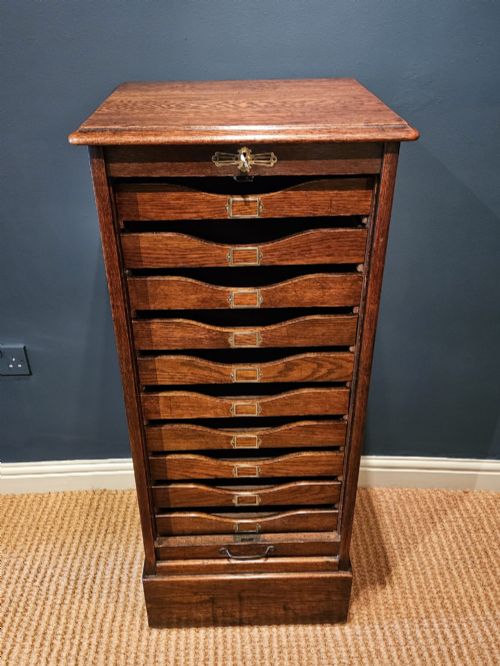
Hardware consists of brass pull handles, campaign flush mounts and card label holders, often secured with iron locking mechanisms. Finishes rely on traditional French polish or waxed surfaces that highlight the grain of the wood.
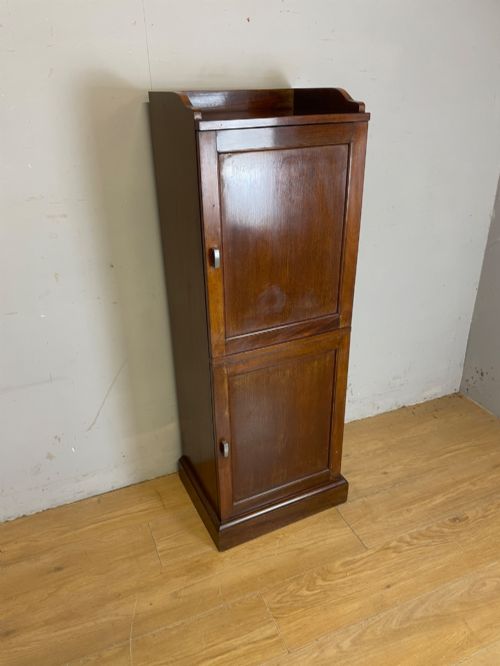
A Scottish estate gamekeeper's cabinet shares shelf space with nineteenth-century post office sorting shelves and patent letter files.
What varies in quality
Quality depends upon the integrity of the timber selection and the precision of the joinery, particularly in the construction of multiple drawer banks and sliding tambour tracks. Pieces constructed from solid mahogany or quarter-sawn oak with original brass hardware represent a higher tier of manufacture than utility pine alternatives.
The presence of maker-specific elements such as patented letter files or original operational tambour doors elevates a piece above standard commercial storage. Retaining original patination, surface finish and matching label holders distinguishes superior examples from heavily restored or altered items.
Luxmore's of Ilfracombe
The Vintage Document Cabinet Glossary
- Tambour
- A flexible door composed of narrow wooden strips attached to fabric, allowing it to slide around a curved enclosure. This mechanism conceals the interior shelving or drawers of a filing cabinet.
- Campaign
- Furniture constructed in sections with brass corners and recessed carrying handles, originally designed for easy transport by military officers. These pieces are built for durability and travel.
- Pigeon holes
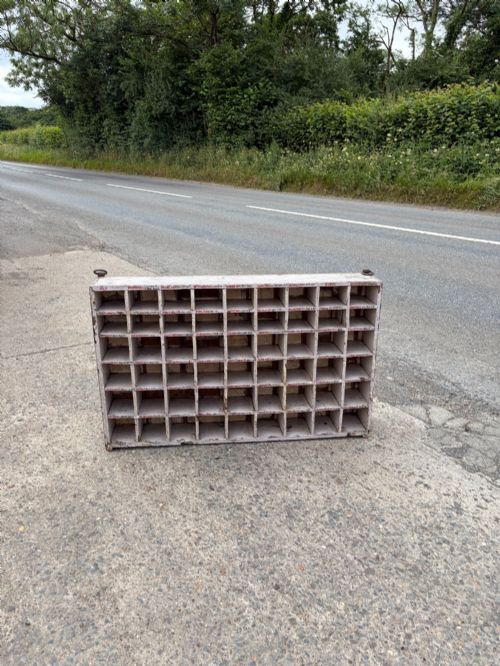
- Open compartments arranged in a grid for sorting letters, documents or sheet music. They typically sit atop a desk or form the interior of a specialised cabinet.
- Bank of drawers
- A large chest featuring numerous shallow drawers stacked vertically and horizontally. Such units were utilised in offices and institutions for filing large quantities of paperwork.
Vintage Document Cabinet: Frequently Asked Questions
How do I date an oak filing cabinet?
Dating relies on timber choice, construction methods and hardware styles. Victorian and Edwardian examples often feature quarter-sawn oak, hand-cut dovetails and solid brass label holders.
Later twentieth-century versions introduce simpler plywood backs, machine-cut joints and stamped metal pulls. Patent marks or paper labels inside the drawers can also narrow down the year of manufacture.
Can I use these cabinets for modern paperwork?
Many vintage document cabinets accommodate modern paper sizes within their shallow drawers or pigeonholes. Certain configurations designed specifically for ledgers or correspondence fit contemporary documents without modification.
It is advisable to check the internal drawer dimensions listed for each cabinet against standard paper sizes. Some specialist filing cabinets may require folders trimmed to fit older internal layouts.
What is a campaign document cabinet?
A campaign document cabinet is a portable storage piece built for military use during travel. It incorporates brass bound corners, flush inset handles and often separates into distinct modular sections.
The sturdy construction protects contents during transit while maintaining a refined appearance. Mahogany and brass are typical materials for these portable campaign pieces.