

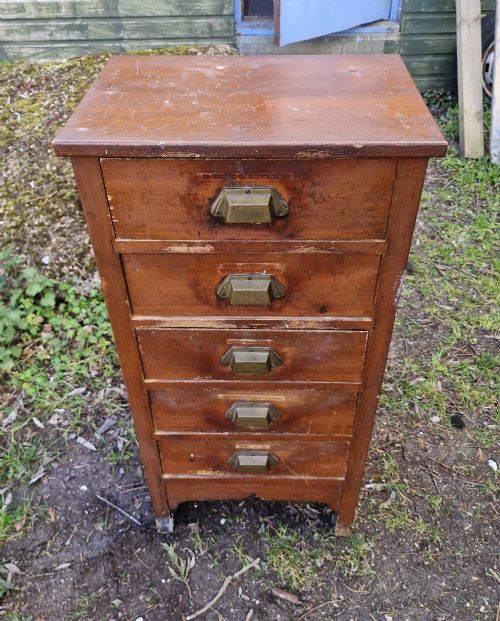


Edwardian Bank of Drawers
An edwardian bank of drawers brings heavy workshop utility and dense pine, oak, or mahogany storage into a modern interior.
Edwardian Bank of Drawers
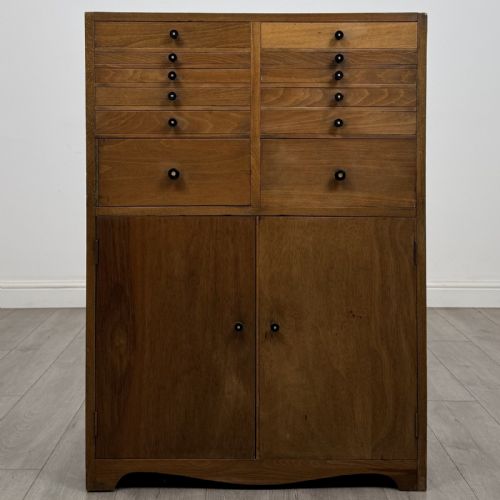
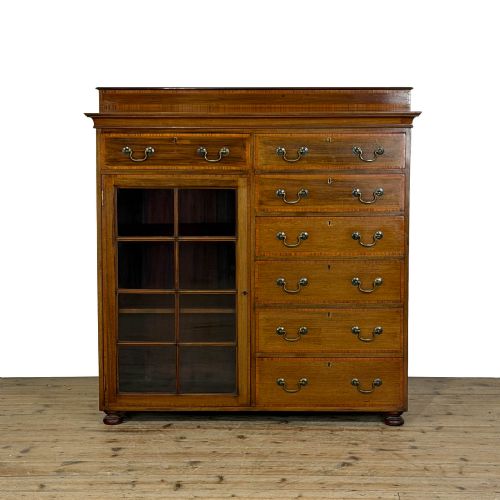
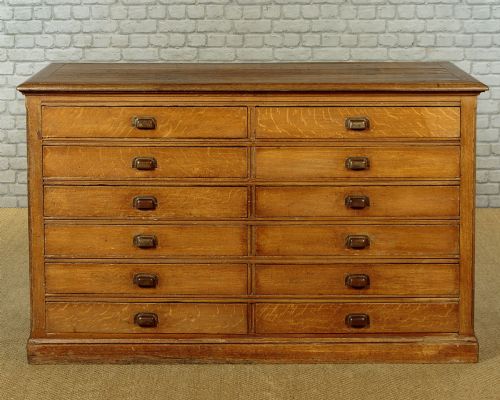
An edwardian bank of drawers provides multi-drawer storage built originally for commercial, office, or shop use. These pieces range from tall haberdashery cabinets and pharmacy chests to long filing units and desktop collector cabinets.
The version most commonly met on this page is the large mahogany or oak bank of drawers dating around nineteen ten. Many examples feature numerous small compartments designed for systematic sorting rather than domestic clothing storage.
The form spans straightforward pine office units and satin walnut fronted small drawers to massive triple banks and watchmaker cabinets. Buyers select them for high capacity and distinct period character.
Materials and construction
Timbers like oak, mahogany, walnut, and pine form the primary structure of these cabinets, providing robust weight and durability. Carpenters joined drawer frames solidly to withstand frequent commercial opening and closing.
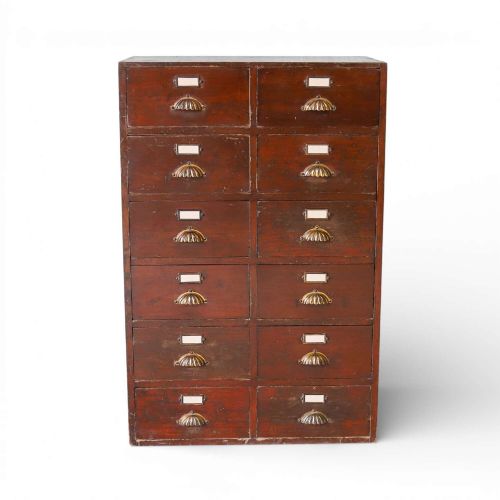
Original brass hardware appears frequently, including shell pulls, label holders, and scalloped handles that indicate specific filing or shop functions. Paint and polished wood surfaces finish the exteriors according to their original workplace environments.
Edwardian Bank of Drawers Retail Price Guide 2026
Typical asking prices for edwardian bank of drawers among the pieces listed under this phrase on Sellingantiques today, from the lower quarter to the upper quarter. They describe what is for sale here now, not the wider market.
Materials across these listings span oak, mahogany, walnut, pine, metal, and paint, reflecting both office and commercial workshops.
Distinctions in quality
The finest examples display superior timber selection, such as figured mahogany or walnut fronts, paired with complete original brass label holders and shell pulls. Scale also dictates tier, with large triple banks or extensive multi-drawer shop units representing more ambitious commercial commissions than simple single-tier office pieces.
Construction integrity separates standard utility items from superior workshop pieces. Smooth drawer movement, retained original backboards, and intact internal dividers elevate the standing of a cabinet.
The Edwardian Bank of Drawers Glossary
- Bank of drawers
- A multi-tiered set of numerous small drawers built into a single housing unit. These were originally deployed in shops, offices, and workshops for inventory or paperwork.
- Haberdashery cabinet
- A large glass-fronted or multi-drawer display unit used in drapery and clothing shops. They often contain many shallow drawers for small items.
- Shell pull
- A stamped or cast brass handle shaped like a semi-circular shell. This design frequently incorporates a small frame to hold a paper label.
- Pharmacy chest
- A tall set of small drawers used in apothecary settings to store medicines and dry ingredients. They often feature numerous identical compartments.
- Satin walnut
- A timber trade name often applied to certain varieties of American red gum used in British cabinetmaking. It yields a smooth, warm-toned grain.
Edwardian Bank of Drawers: Frequently Asked Questions
How were these cabinets originally used?
These multi-drawer units served in offices, shops, and pharmacies to sort documents, hardware, and dry goods systematically.
Businesses required heavy, reliable storage that allowed staff to locate small items quickly during daily trade.
Are these drawers suitable for clothing?
Many banks of drawers provide shallow compartments originally intended for office files, watch parts, or shop stock rather than bulky garments.
Deeper models or large mahogany chests accommodate clothing easily, while shallow multi-tier units suit accessories or papers.
How do I distinguish Edwardian from Victorian pieces?
Edwardian pieces often display lighter timbers, simpler linear details, and machine-cut dovetails compared to heavier Victorian counterparts.
Archival titles and stylistic cues help separate nineteen-hundred pieces from earlier nineteenth-century pharmacy or estate furniture.
Do these cabinets come in multiple sections?
Larger formats, such as triple banks or massive shop units, frequently separate into modular blocks for transport and placement.
Checking the construction reveals whether a large bank of drawers was built as one solid carcass or multiple stacked modules.