




Apothecary Drawer Unit
These apothecary drawer unit examples are practical banks of small compartments designed for organisation, offering tactile storage for modern interiors.
Apothecary Drawer Unit
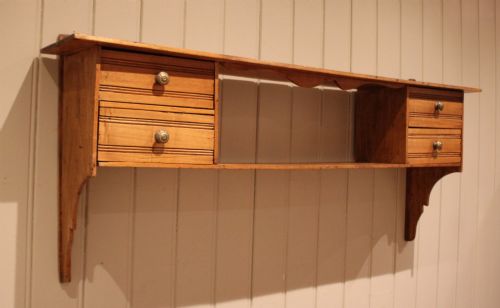
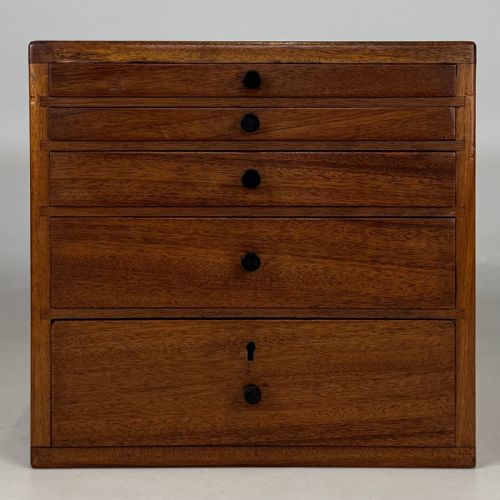
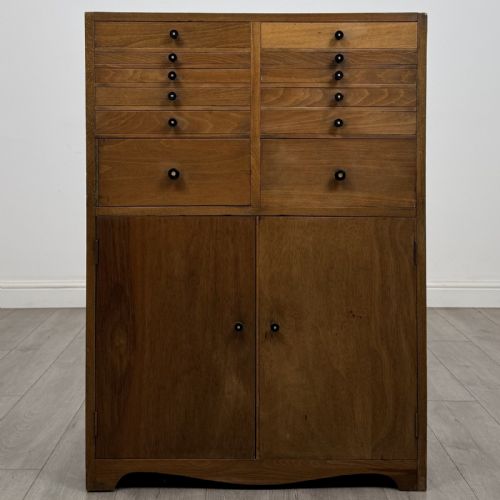
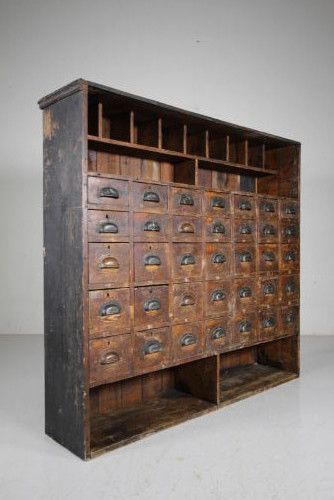
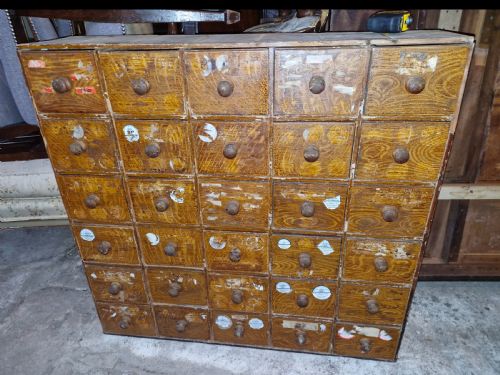
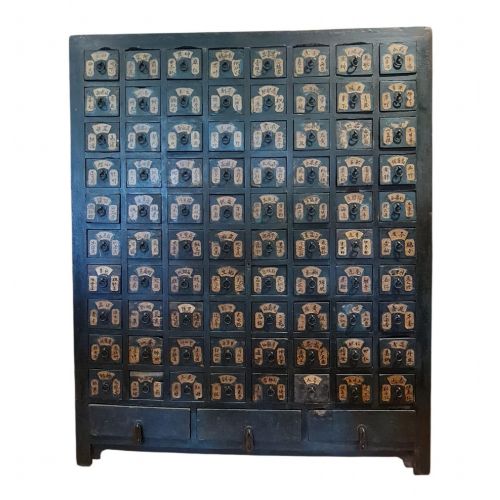
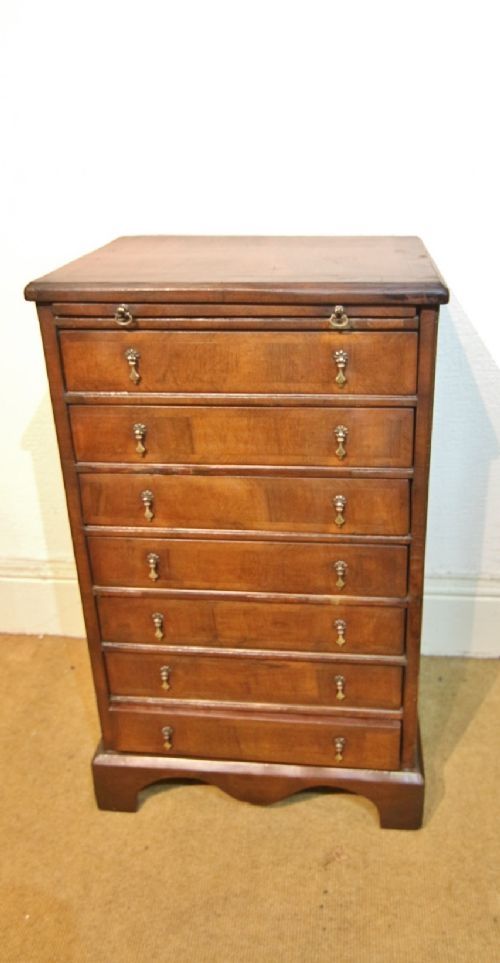
An apothecary drawer unit serves as a functional bank of multiple small drawers, originally built for organising medicinal herbs, pharmacy stock, or shop goods. These items appear across various forms, including tall banks of drawers, chemist shop fittings, and large storage cabinets.
The pieces on this page span the nineteenth century through the early twentieth century, encompassing Victorian and Edwardian periods alongside industrial and utilitarian styles. Regional variations include English chemist fittings, Hungarian shop pieces, and Chinese elm medicine cabinets from Shanxi Province.
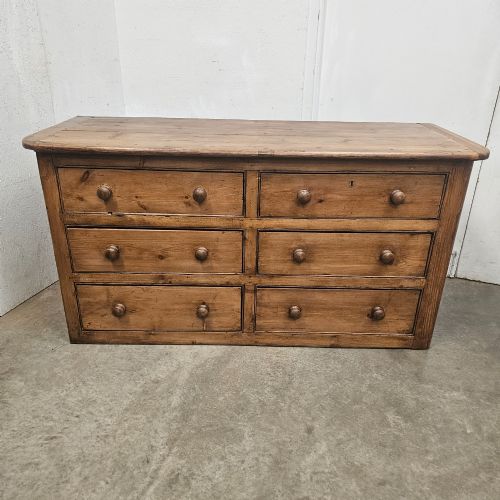
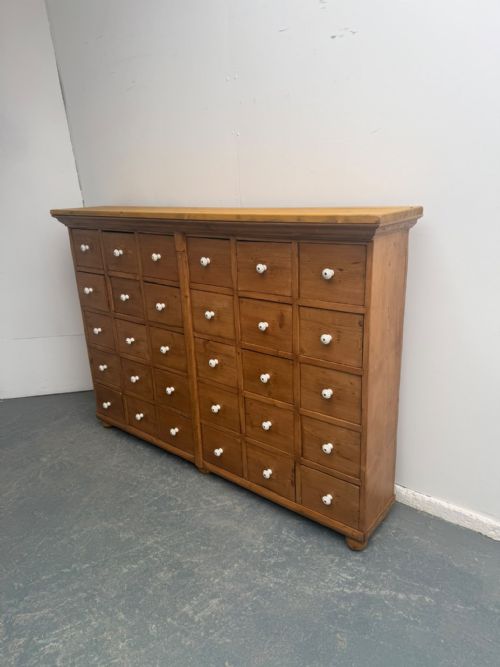
Buyers frequently encounter pine construction among these items, often found in large multi-drawer configurations originally used in European commercial spaces. Mahogany, walnut, oak, fruitwood, and elm also appear alongside specialised forms like seed chests, specimen cabinets, and haberdashery units.
Materials and construction
Makers utilised solid timbers such as pine, mahogany, oak, and elm to construct the main carcasses and numerous small drawer boxes. Joinery focused on durability to withstand daily commercial use in chemists, shops, and workrooms.
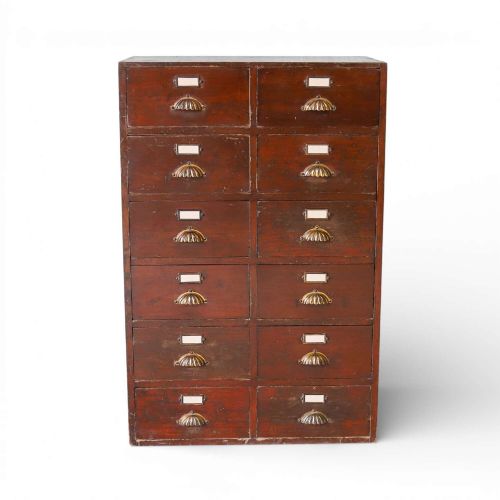
Hardware details included brass shell pulls and integrated metal label holders attached to individual drawer fronts for content classification. Glass panels occasionally appeared on specialised display cabinets and storage compartments.
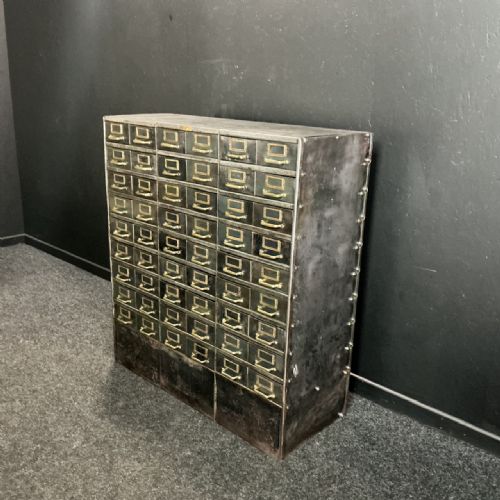
Finishes ranged from natural polished wood grains to originally painted surfaces in white and cream on Hungarian shop fittings. Stained deal and industrial iron components also feature across specific utilitarian pieces.
Apothecary Drawer Unit Retail Price Guide 2026
Typical asking prices for apothecary drawer unit among the pieces listed under this phrase on Sellingantiques today, from the lower quarter to the upper quarter. They describe what is for sale here now, not the wider market.
Distinctions in quality
Quality rests upon the integrity of the original multi-drawer configuration, the retention of period hardware such as brass pulls and label holders, and the structural soundness of the timber carcass. Pieces retaining their original painted or polished surfaces demonstrate greater integrity than those altered over time.
The scale and complexity of the drawer arrangement dictate the character of the piece, from modest medical carrying chests to substantial banks comprising dozens of individual drawers. Finer examples display precise joinery designed to support heavy daily use in commercial pharmacy and shop environments.
Luxmore's of Ilfracombe
The Apothecary Drawer Unit Glossary
- Bank of drawers
- A large cabinetry structure housing numerous small drawers arranged in rows and columns. This format was standard for trade and apothecary storage.
- Shop fitting
- Fixtures and furniture built specifically for commercial retail spaces, including chemist shops and drapers. These pieces were anchored to commercial interiors.
- Shell pull
- A semi-circular stamped metal handle shaped like a seashell, frequently combined with a label holder. They are typical on period mercantile drawers.
- Specimen chest
- A specialised small-drawer cabinet intended for organising natural history samples or botanical collections. These interiors often feature shallow drawers.
- Deal
- An old term for softwood timber, specifically fir or pine, utilised extensively in utilitarian and workshop cabinetry. It provided an economical material for large storage units.
Apothecary Drawer Unit: Frequently Asked Questions
What were apothecary drawer units originally used for?
These drawer units served primarily in apothecary shops, chemists, and commercial stores to sort medicines, dried herbs, seeds, and small retail goods. The numerous small compartments allowed merchants to maintain an organised inventory of dry ingredients and hardware.
Over time, many of these multi-drawer banks transitioned from commercial work spaces into domestic interiors for practical storage and display.
How do I identify a Victorian apothecary unit?
Victorian examples typically feature dense timber construction in pine, mahogany, or walnut, often displaying heavy banks of graduated drawers with turned wooden knobs or brass pulls. Look for period construction methods and utilitarian shop fitting designs dating from the nineteenth century.
Labels, ironmongery details, and original painted finishes help separate Victorian pieces from later twentieth-century industrial reproductions.
Are these drawer units suitable for modern homes?
These drawer units fit well in contemporary kitchens, studies, and hallways where organised storage for small items is required. Their multiple compartments accommodate stationery, craft supplies, and everyday household accessories.
Placement depends on the depth and height of the cabinet, as many apothecary and haberdashery banks require substantial floor space.
What is the difference between an apothecary chest and a haberdashery cabinet?
Apothecary chests generally feature numerous small, narrow drawers designed for storing medicinal ingredients and herbs in a chemist environment. Haberdashery cabinets often incorporate wider shallow drawers and glass-fronted compartments intended for displaying textiles and clothing accessories in shops.
Both forms belong to the broader category of multi-drawer commercial storage but served distinct retail trades.