






Victorian Apothecary Drawers
When you search for victorian apothecary drawers, you are looking at multi-drawer storage built for chemists, shops and collectors during the nineteenth century.
Victorian Apothecary Drawers
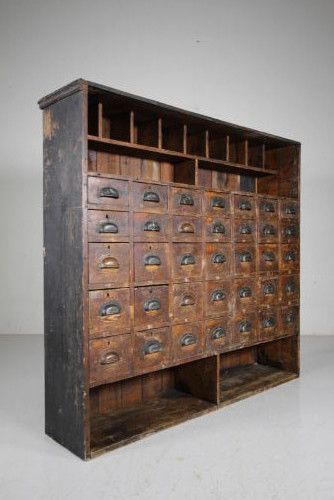
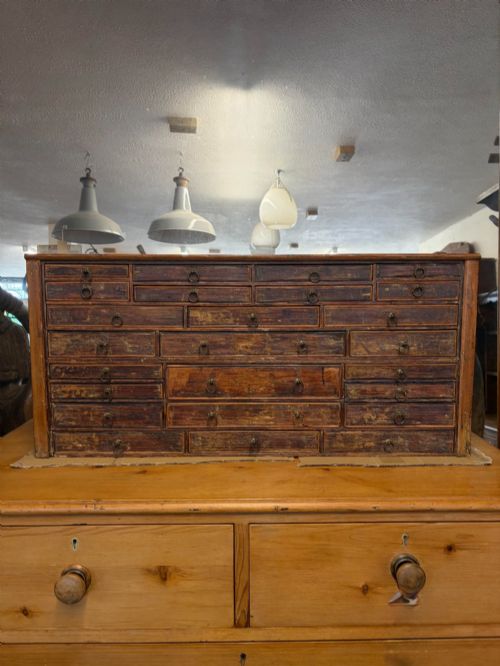
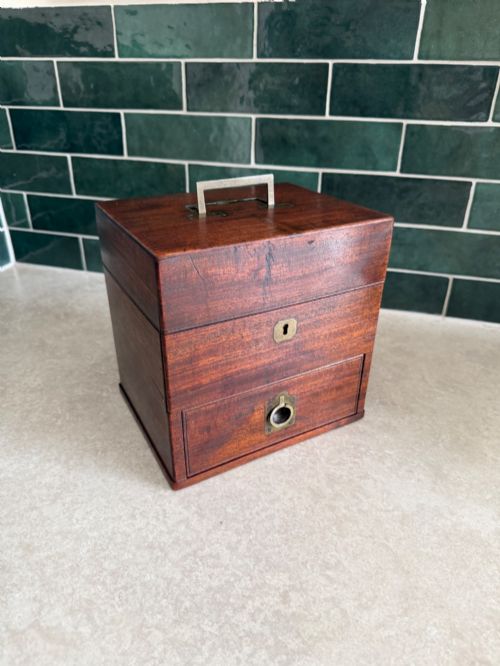
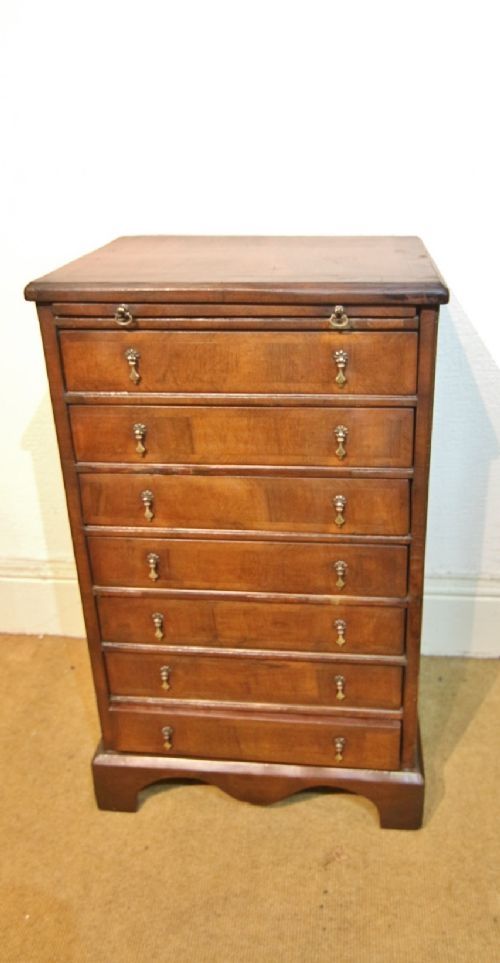
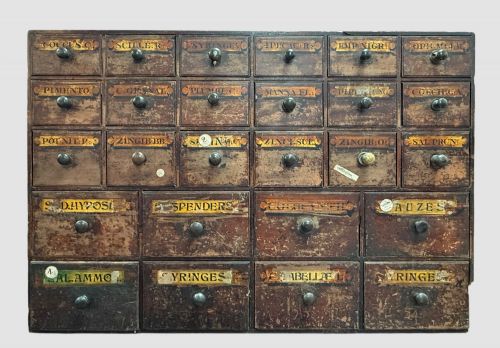
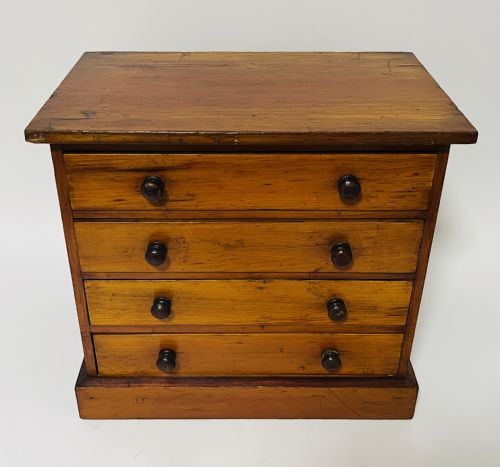
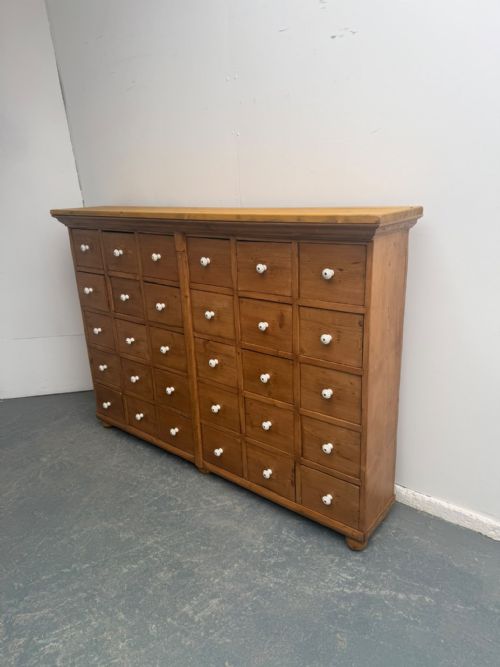
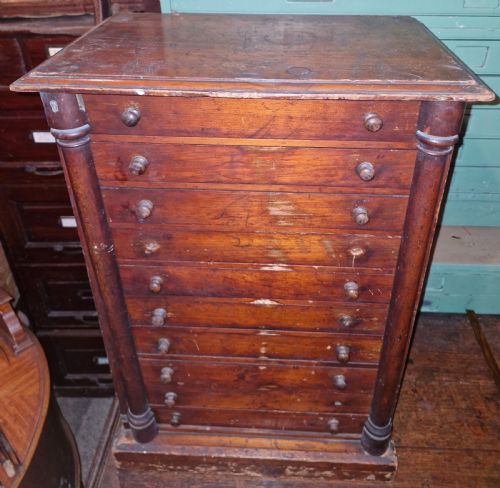
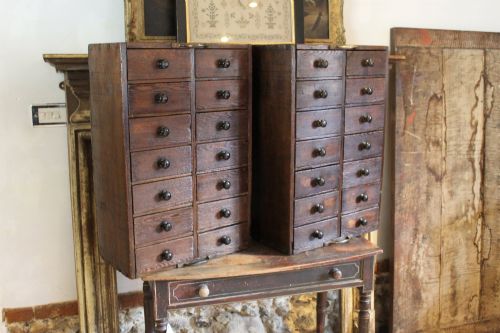
Victorian apothecary drawers encompass multi-drawer banks, chemist shop fittings, spice chests and specimen cabinets built primarily during the nineteenth century and the early decades of the twentieth century. These practical pieces served professional trades, holding medicines, seeds, microscope slides and watch parts in numerous small compartments.
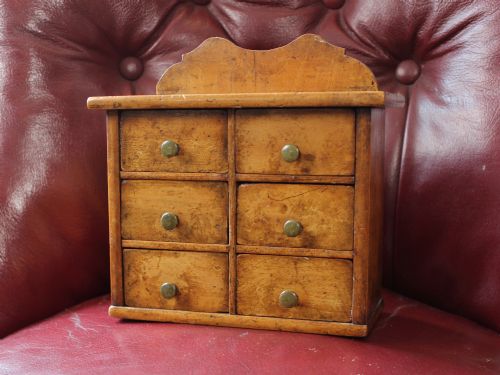
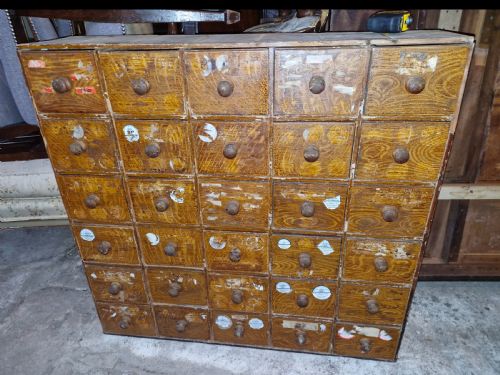
The version most commonly met on this page is the pine or mahogany bank of drawers, often originating from chemist shop fittings or utilitarian workspaces. Buyers also encounter fruitwood spice drawers, walnut collectors cabinets and painted shop fittings from Hungarian and English workshops.
Materials and Construction
Carpenters utilised durable timbers such as pine, mahogany, walnut, fruitwood, teak and deal to construct these sturdy multi-drawer carcasses. Drawer fronts frequently feature inset brass pull handles, sometimes paired with glass fronts or small label holders for organisation.
Workshop construction methods prioritised utilitarian strength, visible in solid wood dovetailed drawer joints and original painted or stained finishes. Many pieces retain traces of their working history, from hand-painted shop colours to polished hardwood surfaces.
Victorian Apothecary Drawers Retail Price Guide 2026
Typical asking prices for victorian apothecary drawers among the pieces listed under this phrase on Sellingantiques today, from the lower quarter to the upper quarter. They describe what is for sale here now, not the wider market.
Some nineteenth-century drawers still retain faint scents of dried roots and apothecary mixtures preserved in the timber.
Judging Quality and Origin
Quality rests in the scale of the drawer bank, the choice of primary timber, and the intact survival of original hardware such as brass pulls and glass panels. Dense hardwoods like solid mahogany and burr walnut mark out superior cabinet work compared to standard utility pine.
Provenance and original trade context elevate specific pieces, particularly those bearing identifiable connections to chemist shop fitters like G Treble London or provincial businesses such as Luxmore's of Ilfracombe. Unaltered original paint surfaces and substantial drawer counts also distinguish notable examples.
Luxmore's of Ilfracombe·G Treble London·D Napier & Sons
The Victorian Apothecary Drawers Glossary
- Bank of Drawers
- A multi-drawer storage unit designed with numerous horizontal tiers. These functional pieces originated in commercial shops, apothecaries and workshops.
- Specimen Cabinet
- A specialised cabinet built to house natural history collections, fossils or botanical samples. They often feature shallow drawers to protect delicate items.
- Haberdashery Cabinet
- A commercial shop fitting featuring many small drawers or glass-fronted compartments. Merchants used them to store textiles, cottons and small dry goods.
- Deal
- A British term for softwood timber, typically pine or fir, commonly used in nineteenth-century utilitarian furniture and shop fittings.
- Dovetail
- A traditional wood joint formed by interlocking wedge-shaped fingers. This method provides robust construction for drawer corners.
Victorian Apothecary Drawers: Frequently Asked Questions
What were apothecary drawers originally used for?
These multi-drawer units served chemists, apothecaries and pharmacists for storing medicinal herbs, dry ingredients, powders and prepared remedies.
Beyond medical use, similar drawer banks equipped seed merchants, haberdashers, watch repairers and natural history collectors who needed systematic storage for small items.
How do I distinguish an apothecary chest from a spice chest?
Apothecary chests generally form large, substantial banks of drawers salvaged from commercial chemist shop fittings and back-room pharmacies. They often feature dozens of individual drawers with brass pulls and glass panels.
Spice chests are typically smaller wall-hanging or table-top boxes made from fruitwood, oak or pine, designed for domestic kitchens rather than commercial trade.
What woods are typical for these cabinets?
Nineteenth-century makers relied on sturdy softwoods like pine and deal for utilitarian shop fittings, frequently finishing them with paint or stain.
Finer collectors cabinets and apothecary pieces utilised dense hardwoods including mahogany, walnut, burr walnut, fruitwood and teak to ensure long-term durability.
How do I live with a bank of drawers at home?
These large storage units provide practical organisation for modern interiors, fitting well into kitchens, home offices and living spaces as statement storage.
Their numerous small compartments make them ideal for sorting stationery, cutlery, collections or craft supplies while retaining historic character.