
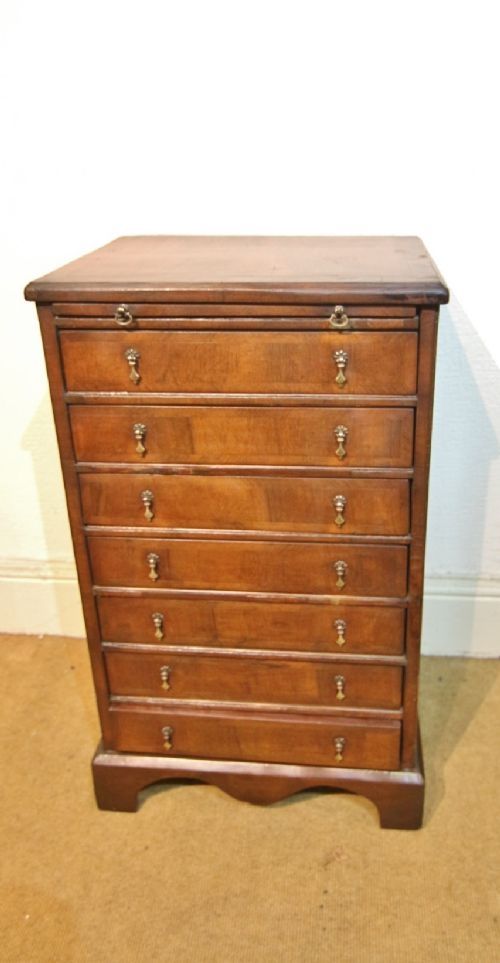


Tall Wooden Specimen Cabinet
A tall wooden specimen cabinet organises small treasures in narrow drawers.
Tall Wooden Specimen Cabinet
When you search for a tall wooden specimen cabinet, you find tall storage pieces designed to hold natural history items, coins, or small curiosities. They often take the form of chests of drawers, banks of drawers, and apothecary cabinets originating from the nineteenth century. These upright cases organise many shallow compartments behind panelled or glazed enclosures.
The versions most commonly met on this page span the Victorian era, alongside pieces dating around eighteen-eighty, nineteen hundred, and nineteen-twenty. Makers built them in forms like Wellington chests, watchmakers' banks of nine drawers, and double chemist drawers. Their tall proportions suit the display and sorting of compact collections.
Materials and construction
Cabinet makers utilised dense hardwoods such as walnut, red walnut, fruitwood, mahogany, teak, and pine to build these sturdy frames. These timbers provided the structural strength needed to support multiple stacked drawers without sagging under weight.
Cabinet styles visible across the inventory include Victorian, industrial, grand regency, and Georgian revival.
Distinctions in quality
The grade of timber and the precision of the drawer joints separate simpler utility cupboards from finer collector pieces. Figured walnut or rich mahogany surfaces show careful selection by the original maker, whereas utilitarian pine versions serve purely functional storage roles.
Hardware integrity and the smoothness of the internal runners define the daily utility of the cabinet. Original brass handles and well-fitted drawer enclosures indicate higher craftsmanship during construction.
The Tall Wooden Specimen Cabinet Glossary
- Specimen cabinet
- A piece of furniture fitted with numerous shallow drawers designed for organising natural history collections, fossils, or small artefacts. These cabinets protect delicate items from dust and light.
- Bank of drawers
- A tall chest comprising many stacked horizontal compartments built into a single upright carcass. Such units originate from workshops, laboratories, and merchant offices.
- Wellington chest
- A tall vertical chest of drawers secured by a hinged locking side pilaster that fastens over the drawer edges. This specific form provides added security for valuable contents.
- Fruitwood
- Dense timber gathered from fruit-bearing trees, utilised by cabinet makers for turning and fine drawer construction. It offers a smooth grain and warm tone.
Tall Wooden Specimen Cabinet: Frequently Asked Questions
What did people store in a specimen cabinet?
Owners used these tall drawer units to house natural history specimens, including insects, fossils, botanical samples, and geological finds. Collectors also utilised the shallow spaces for coins, medals, and small trinkets.
The narrow depth of each drawer prevented items from rolling into one another or hiding beneath deeper layers. This layout kept delicate scientific and historical collections orderly and accessible.
How do I date a wooden specimen cabinet?
Dating relies on observing construction methods, timber choices, and overall stylistic markers such as Victorian proportions or Georgian revival influences. Nineteenth-century examples often display hand-cut dovetails and traditional timber framing techniques.
Hardware styles like brass drop handles or recessed campaign pulls offer further clues to the manufacturing decade. Comparing the secondary woods inside the drawers helps confirm the period.
Where should I place a tall cabinet at home?
Tall cabinets require stable placement against a flat wall where their vertical proportions can be appreciated without risk of toppling. Positioning them away from direct sunlight protects the timber finish and any stored materials.
These pieces work well in studies, libraries, or living spaces where small collections deserve organised storage. Their narrow footprint allows them to fit into tighter wall spaces than wide sideboards.
Are these cabinets suitable for modern collections?
The shallow drawers prove ideal for storing modern items like jewellery, watches, fountain pens, or artist supplies. The compartmentalised layout keeps small accessories sorted and easy to view.
Using heritage furniture for contemporary storage brings traditional craftsmanship into daily use. The enclosed drawers protect modern items from dust while adding historical character to a room.