



Brass Cup Handle Drawers
Brass cup handle drawers are utilitarian pieces built for storage, combining sturdy cabinetry with the tactile grip of metal hardware.
Brass Cup Handle Drawers
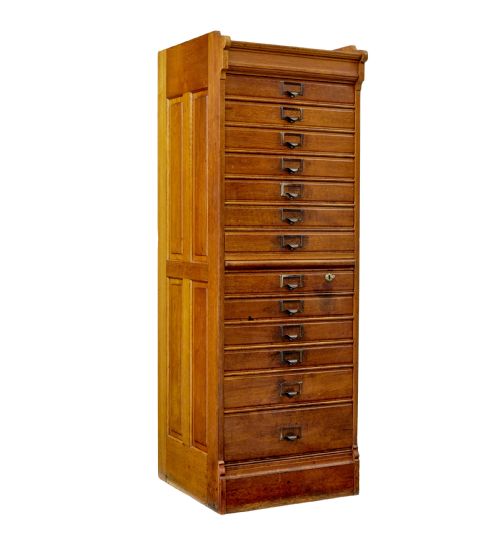
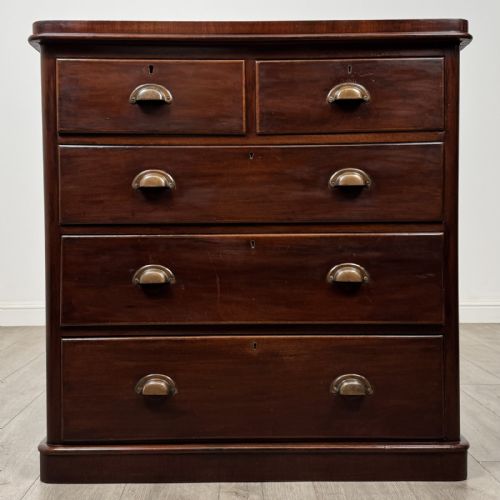
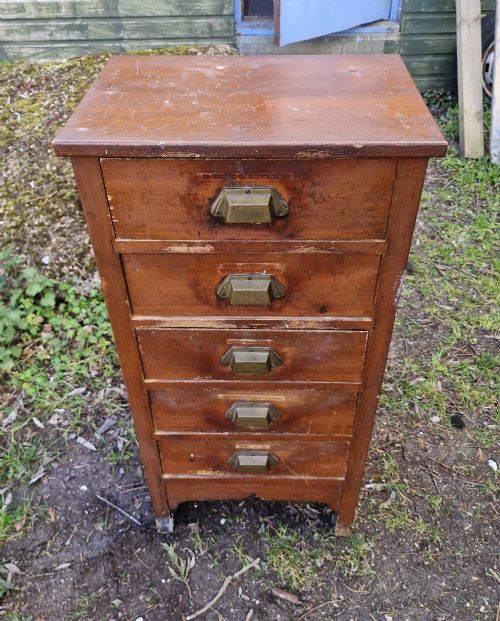
Brass cup handle drawers encompass storage furniture fitted with semi-circular metal pulls, spanning filing cabinets, chests of drawers, desks, shop counters, banks of drawers, and plan chests. These forms serve functional storage needs across commercial, office, and domestic settings, built to handle regular use.
The versions most commonly met on this page date from the Edwardian period and the early twentieth century, alongside utility pieces from the mid-century. Walnut, oak, pine, pitch pine, mahogany, and satin walnut form the main carcases, housing multiple tiers of drawers equipped with brass pulls.
How they were made
Makers constructed these cabinets using solid timbers such as oak, walnut, mahogany, and pine, building carcases designed to withstand heavy daily use in offices, shops, and homes. Drawers are fitted cleanly into their frames to run smoothly within banks and filing units.
Hardware consists of brass cup handles, also described as scalloped brass handles, which are screwed securely to the drawer fronts to provide a firm grip. Secondary woods like pitch pine and satin walnut appear internally and on drawer fronts, reflecting the practical construction methods of the period.
Brass Cup Handle Drawers Retail Price Guide 2026
Typical asking prices for brass cup handle drawers among the pieces listed under this phrase on Sellingantiques today, from the lower quarter to the upper quarter. They describe what is for sale here now, not the wider market.
School teachers and drapers needed dozens of drawers to keep order; now you just need them for stray keys.
What varies in quality
Quality rests in the choice of timber and the proportion of the piece, with dense hardwoods like walnut and mahogany offering a finer grain than utility pine carcases. The weight and casting of the brass cup handles also distinguish standard utility hardware from more substantial period examples.
Construction detail separates simple workshop builds from finer cabinet work, seen in the arrangement of multi-drawer banks, flight configurations, and the neat integration of panelled sides on counters and plan chests.
The Brass Cup Handle Drawers Glossary
- Cup handle
- A semi-circular metal pull shaped like an inverted cup, designed for fingers to slip underneath when opening a drawer. These are also known as bin pulls or scalloped handles.
- Bank of drawers
- A multi-tiered cabinetry unit housing numerous small or medium drawers stacked vertically or horizontally. Such banks were standard in offices, shops, and filing rooms.
- Plan chest
- A wide, shallow multi-drawer cabinet designed originally for storing architectural plans, maps, and large sheets of paper. They offer deep, flat storage capacity.
- Pitch pine
- A resinous North American pine species utilised for its durability and strong grain pattern in utilitarian and Edwardian furniture. It withstands heavy wear.
- Drapers counter
- A long shop counter fitted with multiple drawers for storing textiles and haberdashery. These counters served commercial retail spaces.
Brass Cup Handle Drawers: Frequently Asked Questions
What rooms suit a bank of drawers?
Banks of drawers fit well in studies, kitchens, and hallways where multiple small storage compartments help organise everyday items. Their structured arrangement brings practical surface space and tidy division.
Larger configurations function effectively as standalone storage units or sideboards in living areas, providing deep capacity without dominating the room floor space.
How do I maintain brass cup handles?
Brass handles require occasional dusting with a dry cloth to prevent the buildup of grime in the curved recess. Avoid harsh metal polishes unless necessary, as handling over time develops a natural patina.
Check the fixing screws periodically to ensure the pulls remain firmly attached to the drawer fronts during daily use.
What is the difference between an office cabinet and a plan chest?
Office cabinets usually feature a vertical stack of drawers designed for vertical filing and general paperwork storage. Their narrow profile occupies less floor area.
Plan chests provide wide, shallow drawers built specifically for flat large-format documents, offering a much broader footprint and lower overall height.
How do I identify Edwardian pieces?
Edwardian pieces date from the early twentieth century and often utilise walnut, satin walnut, or pitch pine. They balance domestic elegance with practical utility construction.
Hardware on these pieces typically includes cast brass cup handles, and the internal framing shows standard period joinery techniques without mid-century utility simplifications.