



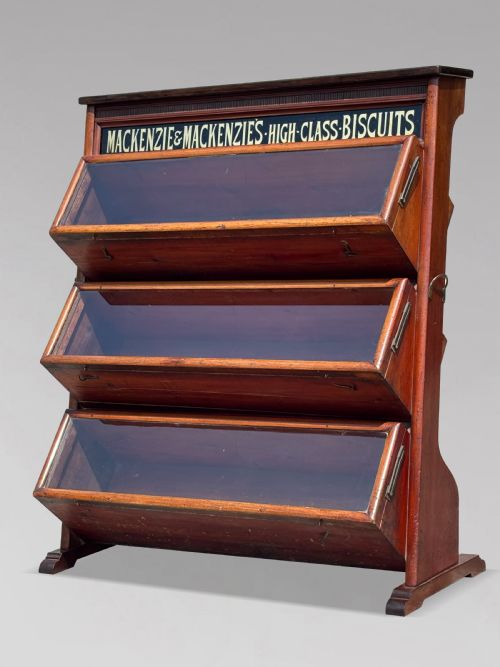


Mahogany Shop Counter
When you search for a mahogany shop counter, you enter a utilitarian world of trade designed to showcase wares.
Mahogany Shop Counter
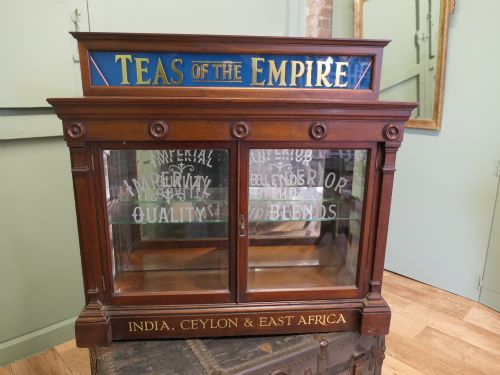
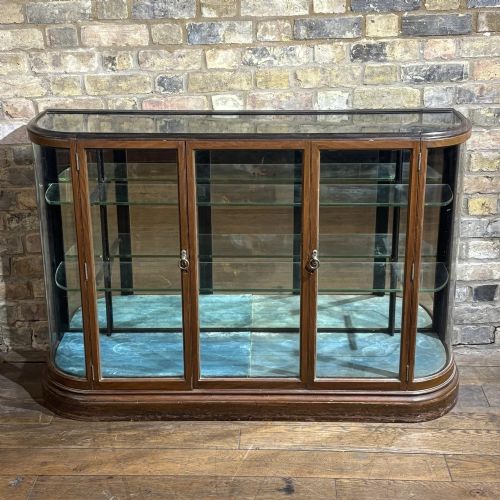
A mahogany shop counter serves as the primary barrier and display surface in historic retail environments, ranging from long serving tables to compact countertop display cases. These pieces frequently incorporate glass panels to protect goods while offering clear visibility to customers standing on the other side.
The selections available span from the Victorian period through the Edwardian era and into 1920s commercial designs, reflecting changes in retail architecture. Buyers encounter freestanding service counters alongside smaller glazed table top units and specialised haberdashery cabinets fitted with multiple drawers.
Many examples retain specific commercial identities linked to confectioners, chemists, and drapers, showing how merchants promoted goods like chocolate, sewing cottons, and tea. These function as heavy-duty furniture built to endure decades of daily mercantile use.
Materials and Construction
Makers relied heavily on solid mahogany and hardwood frames combined with secondary timbers like pine to construct the foundational carcase of each mahogany shop counter. Glass panels, often secured with brass fittings or bronze framing, created transparent barriers for display enclosures.
Interiors frequently integrated mirrored backs to reflect light through the display space, while brass hardware, coin bowls, and lock mechanisms provided functional security. Surfaces were polished to a durable finish capable of resisting constant handling and environmental wear.
Mahogany Shop Counter Retail Price Guide 2026
Typical asking prices for mahogany shop counter among the pieces listed under this phrase on Sellingantiques today, from the lower quarter to the upper quarter. They describe what is for sale here now, not the wider market.
Surviving shop counters occasionally retain faint ghost marks where tobacco tins and chocolate boxes sat undisturbed for decades.
Assessing Commercial Quality
Construction methods and timber selection dictate the relative quality of a mahogany shop counter, distinguishing utilitarian storage from bespoke commercial joinery. Pieces produced by established shopfitters typically display superior carcass rigidity, tighter glazing joints, and more sophisticated cabinetry details such as bow ends or integrated drawer banks.
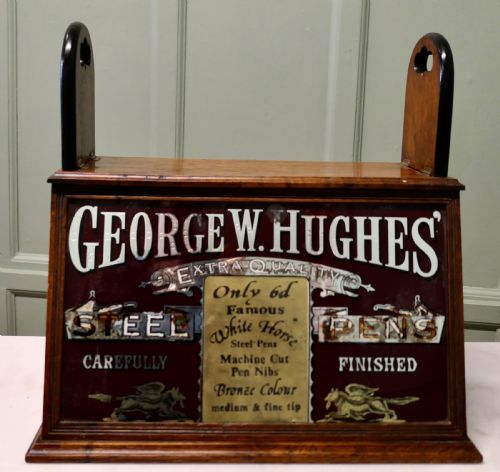
The survival of original glass, functional brass hardware, and authentic manufacturer branding or sign-written advertising adds considerable integrity. Later alterations, replaced panels, or compromised secondary timbers separate standard workshop production from finer surviving examples of period retail fixtures.
F. Sage & Co.·John Stow Ltd·Parnall & Sons·Mappin & Webb·Pollards
The Mahogany Shop Counter Glossary
- Haberdashery cabinet
- A multi-drawer retail unit specifically engineered for storing small sewing items, ribbons, and buttons. These fixtures feature shallow drawers to organise small stock efficiently.
- Countertop display case
- A portable or fixed glass enclosure designed to sit directly upon a main serving counter. They elevated delicate items like chocolate and cosmetics into the direct line of sight.
- Bow end
- A curved glass or timber termination at the extremity of a counter. This profile softened sharp angles and enhanced viewing angles for customers.
- Shopfitter
- A commercial joinery firm responsible for manufacturing complete interior fittings for businesses. Companies like F. Sage and Co. designed bespoke counters and display cabinets.
Mahogany Shop Counter: Frequently Asked Questions
What were mahogany shop counters used for?
Merchants utilised these sturdy fixtures both as a physical barrier between staff and patrons and as an active merchandising surface. They facilitated transactions while keeping valuable merchandise secure within glazed compartments.
Specialised variations served specific trades, housing apothecary jars, bolts of drapers fabric, or confectionery displays designed to encourage impulse purchases at the point of sale.
How do I date a shop counter?
Dating relies on observing structural characteristics, timber usage, and commercial hardware styles relative to documented periods. Victorian examples often display heavier timber sections and traditional joinery, while 1920s versions introduce sleeker commercial lines and bronze framing.
Maker plaques and original sign-written advertising graphics provide definitive manufacturing attribution, aligning specific pieces with known active dates of historic retail firms.
Are these counters suitable for modern homes?
These pieces adapt readily to contemporary domestic interiors as kitchen islands, sideboards, or prominent display furniture in living spaces. Their generous proportions and glass enclosures offer practical storage alongside display capabilities for collections.
Placing a commercial counter in a home requires verifying floor space dimensions and door clearances, as many freestanding units were built for expansive Victorian and Edwardian shop floors.
What is a haberdashery counter?
A haberdashery counter is a specific retail fixture defined by banks of shallow drawers or integrated glass display wells built to organise small sewing goods. Drapers and clothiers used them to sort cotton reels, buttons, and ribbons systematically.
The high concentration of drawers makes these particular counters highly functional for modern domestic storage of small items.