
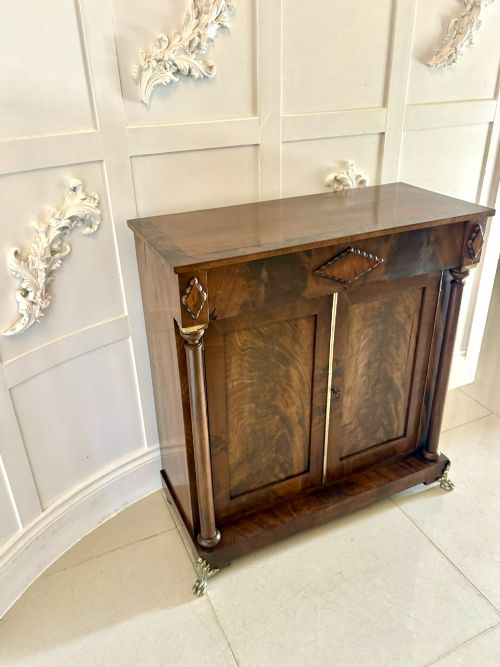
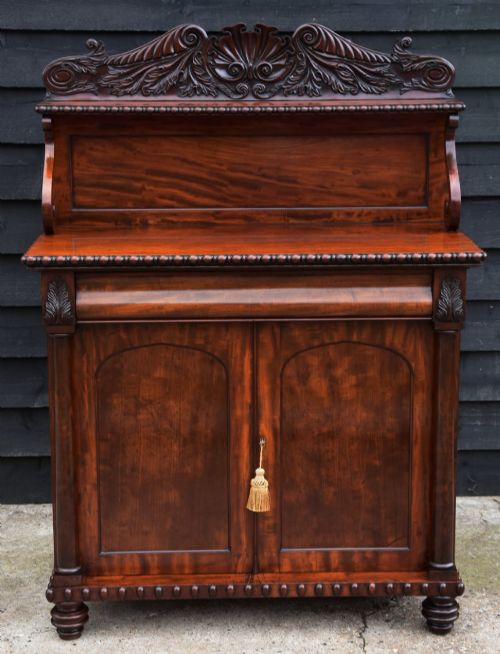
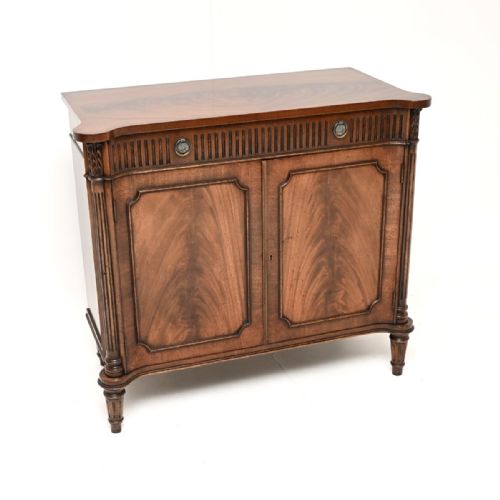
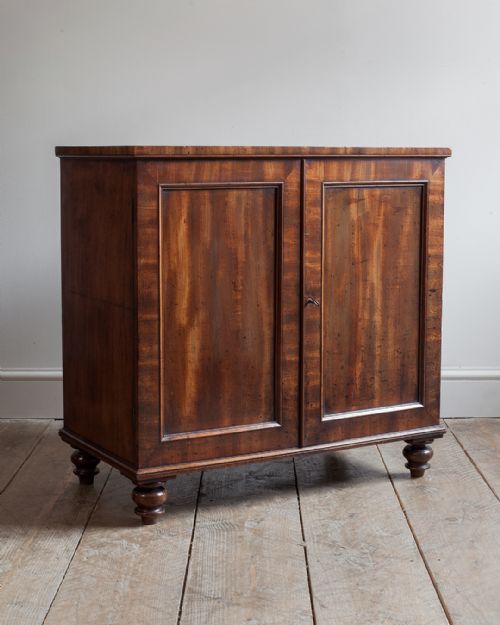
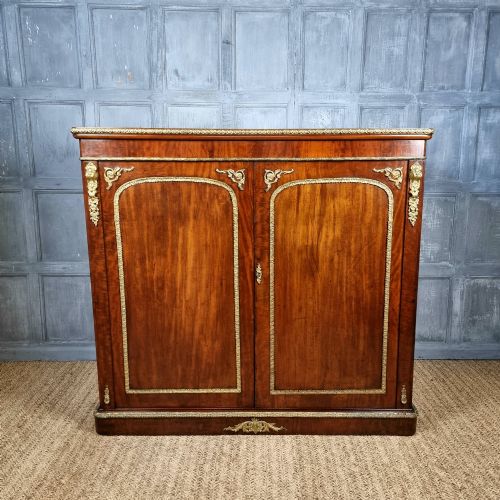
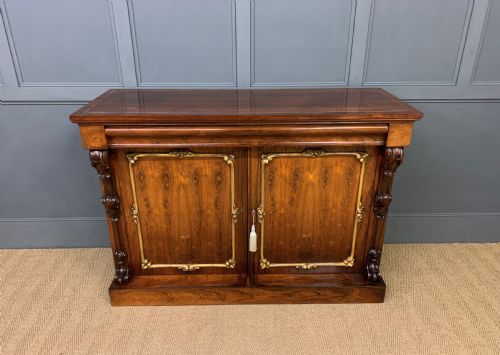
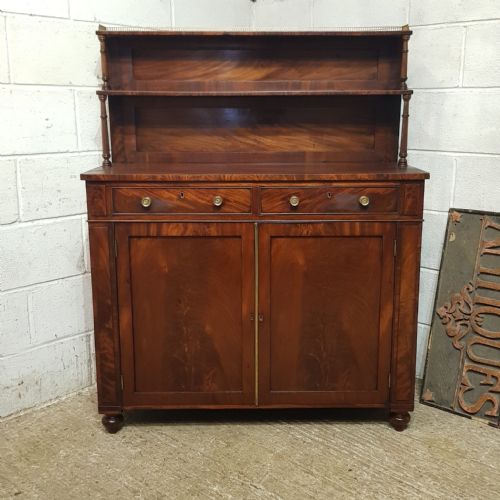
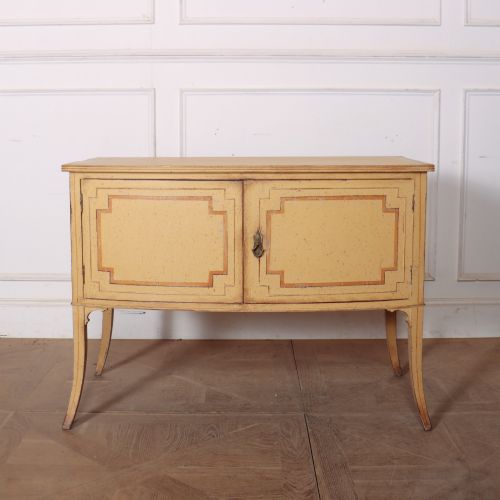
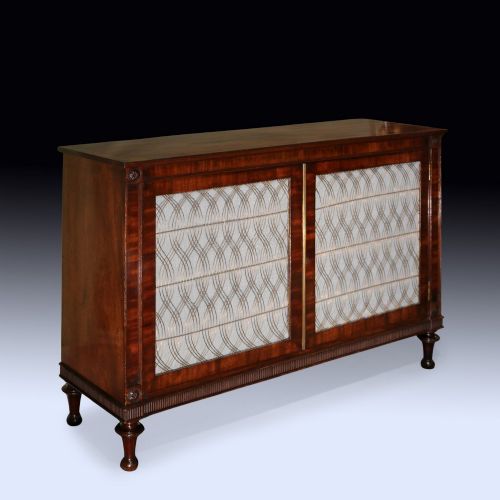
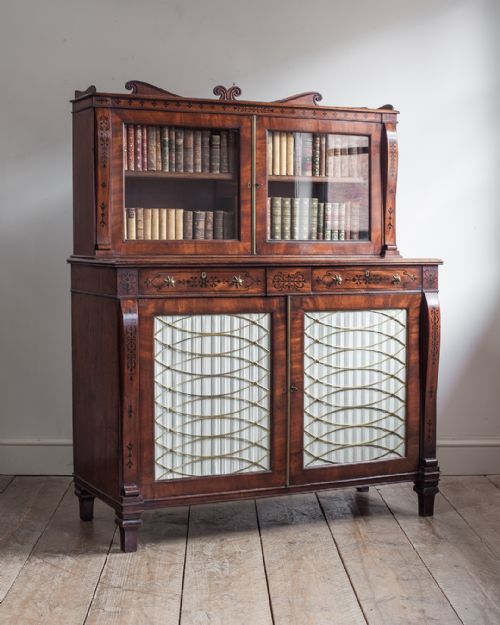


Regency Two Door Credenza
A regency two door credenza offers refined storage, bringing balanced proportions and rich timbers into a room.
Regency Two Door Credenza
A regency two door credenza encompasses side cabinets, chiffoniers, and low cupboards designed for domestic storage and display. These pieces originate predominantly from the Regency and Victorian periods, with examples also spanning the nineteenth century.
The selections on this page centre on timber constructions with paired doors, appearing as side cabinets or chiffoniers. Makers constructed these items primarily in mahogany, rosewood, and oak to serve formal interiors.
Materials and Construction
Cabinet makers utilised solid timbers alongside flame mahogany veneer, rosewood, and pollard and burr oak to create striking grain patterns on the two doors. These surfaces often received hand-polished finishes to enhance the natural figure of the wood.
Craftsmen integrated brass inlay, ormolu mounts, and brass grilles into the designs, particularly on pieces reflecting the Regency and Empire styles. Structural integrity relied on traditional joinery methods suited to low cupboards and side cabinets.
Periods represented span from Georgian and Regency eras through to the late Victorian period.
Distinctions in Quality
The standard of a regency two door credenza rests upon the selection of timber veneers and the precision of brass detailing. Superior examples display carefully matched flame mahogany or rich rosewood grains across both doors, coupled with refined brass inlay or mounts.
Execution of secondary details, such as interior shelving, door alignment, and overall proportions, separates standard items from exceptional pieces. Workshop attribution to makers like Gillows further distinguishes higher-tier pieces.
Gillows·S Jamar
The Regency Two Door Credenza Glossary
- Chiffonier
- A low sideboard or cabinet, typically featuring enclosed storage behind two doors with a shelf superstructure or flat top. This form became popular during the Regency period for dining rooms and parlours.
- Flame mahogany
- A veneer cut from the fork of the mahogany tree, producing a distinctive flickering flame pattern. Cabinet makers prized this wood for the principal surfaces of high-status furniture.
- Ormolu
- Gilded bronze used for decorative mounts and accents on furniture. Artisans applied these metallic details to highlight architectural lines on cabinets and sideboards.
- Palisander
- A dense tropical timber, often referred to as rosewood, valued for its deep colour and dark grain markings. It frequently appears on Regency and nineteenth-century cabinet work.
- Brass grille
- A lattice of fine wire or metal strips fitted into cabinet doors in place of wood or glass. This feature allowed ventilation or the display of fabric linings behind the doors.
Regency Two Door Credenza: Frequently Asked Questions
Where did people place a regency two door credenza?
These cabinets served primarily in dining rooms and drawing rooms for storing glassware, linens, and silver.
Households also positioned them in hallways and parlours where a low surface was useful for display.
How do I distinguish Regency from William IV pieces?
Regency pieces often display lighter proportions with classical brass inlay and refined bracket feet.
William IV furniture tends to feature heavier, bolder forms with larger turned columns and darker timbers.
What is the difference between a chiffonier and a side cabinet?
A chiffonier traditionally includes a raised shelf back attached to the top surface for displaying small items.
A side cabinet presents a simple flat top above the two doors without any superstructure.
Can these cabinets fit into modern rooms?
Their compact height and shallow depth make them practical for contemporary living spaces as media stands or side storage.
The warm tones of mahogany and rosewood complement both traditional and modern interior palettes.